
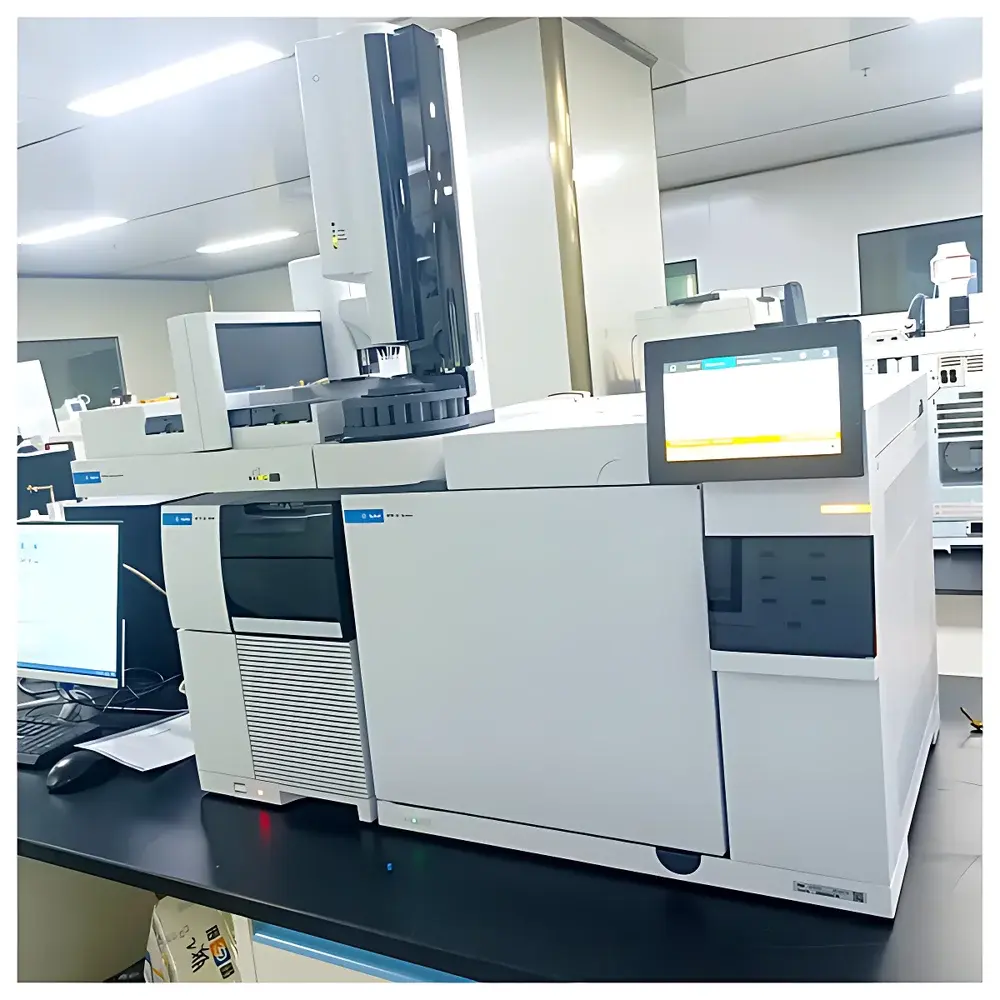
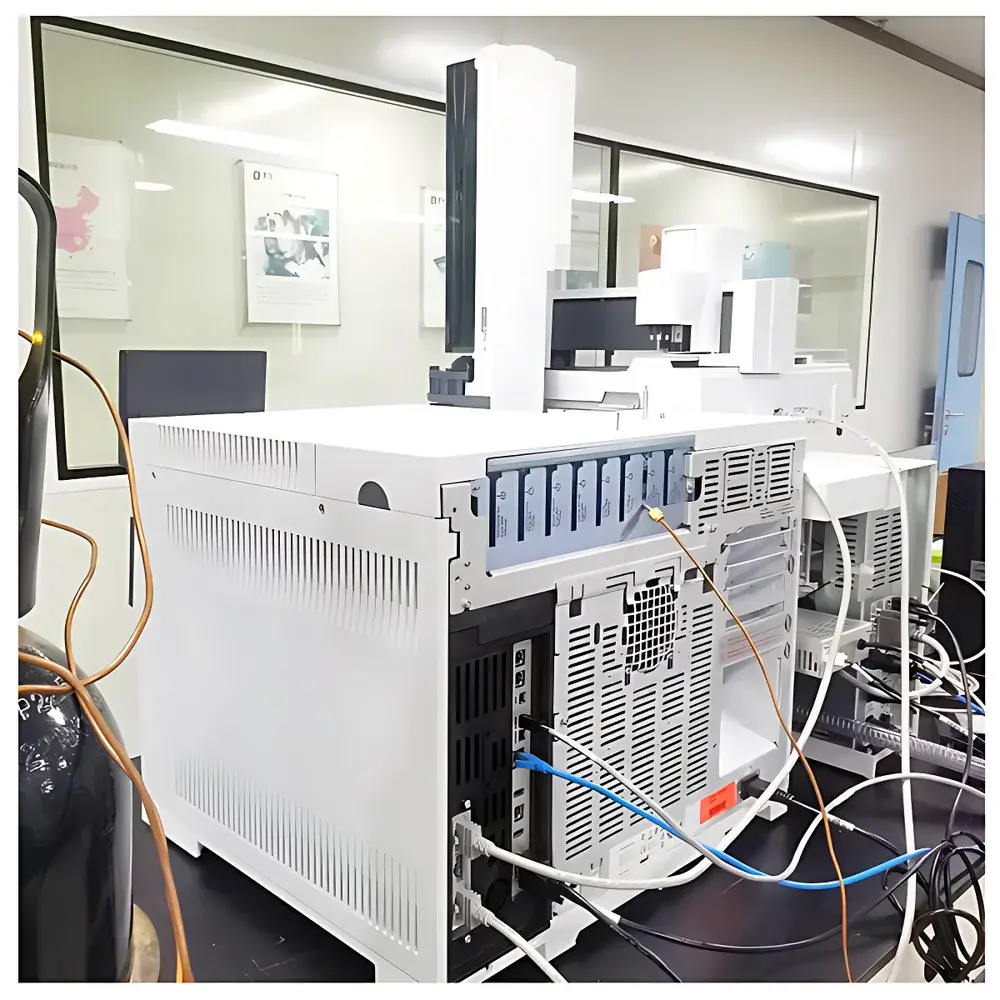
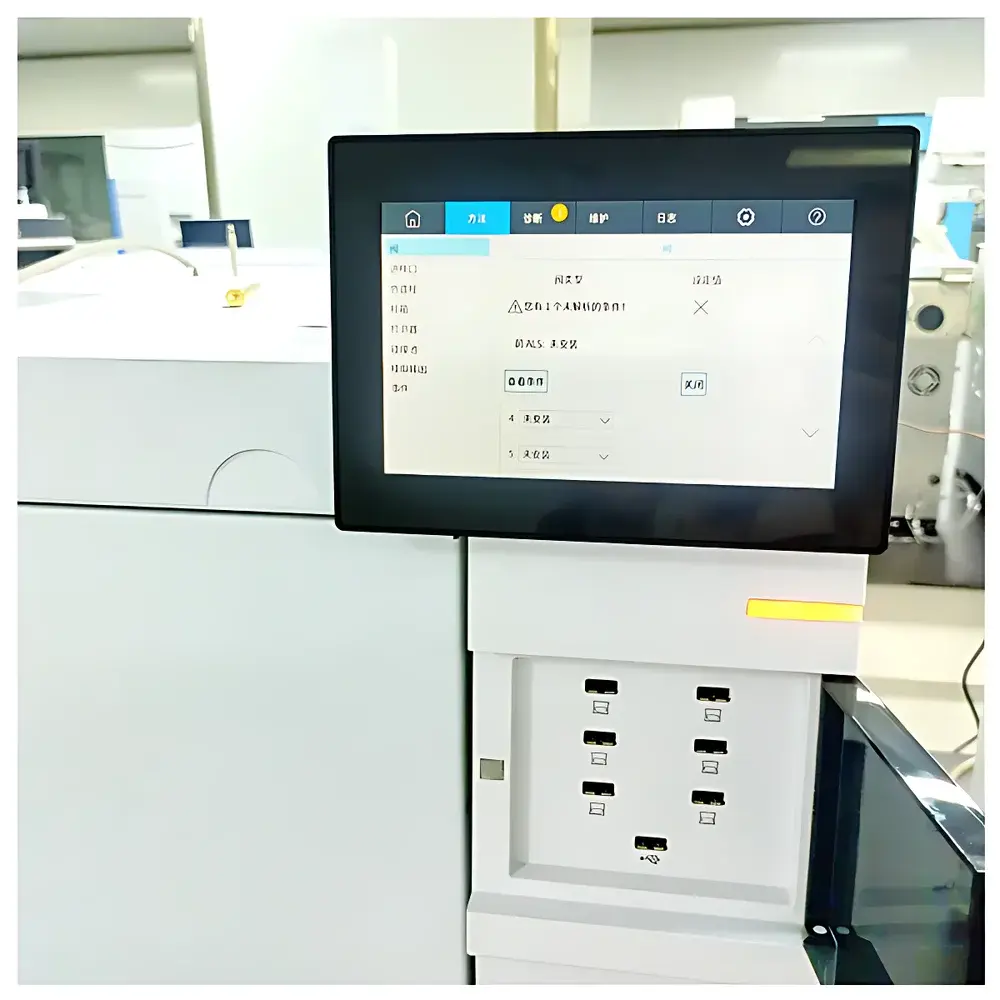
Agilent 8890-5977C GC/MSD Single Quadrupole Gas Chromatography Mass Spectrometer
| Brand | Agilent Technologies |
|---|---|
| Origin | USA |
| Model | 8890-5977C |
| Instrument Type | Single Quadrupole Mass Spectrometer |
| GC Configuration | Conventional Gas Chromatography-Mass Spectrometry System |
| Mass Range | m/z 0.6–1091 |
| Resolution | 1000 (at m/z 502, 10% valley) |
| Sensitivity | 1 fg IDL (octafluoronaphthalene, OFN, EI mode, 1 µL injection) |
| Scan Speed | ≤20,000 Da/s |
| Mass Accuracy | ±0.1 Da (with MassWorks calibration) |
| Oven Ramp Rate | Up to 125 °C/min |
| Detector Dynamic Range | 10⁶ (linear) |
| Pressure Control Precision | ±0.001 psi |
| Carrier Gas Compatibility | Helium (He), Hydrogen (H₂), Nitrogen (N₂) |
| Ionization Modes | Electron Ionization (EI, standard), Chemical Ionization (CI, optional) |
Overview
The Agilent 8890-5977C GC/MSD is a high-performance single quadrupole gas chromatography mass spectrometry system engineered for routine, high-throughput analysis in regulated and research laboratories. It integrates the robust, temperature-stable 8890 Gas Chromatograph with the 5977C Mass Selective Detector — a configuration optimized for precision, reproducibility, and operational resilience across diverse analytical domains including environmental monitoring, food safety testing, petrochemical profiling, forensic toxicology, and pharmaceutical residual solvent analysis. The system operates on fundamental principles of gas-phase separation followed by electron ionization (EI) or chemical ionization (CI), with mass analysis performed via radiofrequency (RF) and direct current (DC) voltage scanning across a quadrupole mass filter. Its design emphasizes inertness, thermal stability, and intelligent automation — critical attributes for maintaining method integrity under extended duty cycles and multi-user environments.
Key Features
- Hydro Inert Ion Source: A proprietary, passivated ion source specifically engineered for hydrogen carrier gas operation; minimizes in-source fragmentation and hydrogenation artifacts (e.g., nitrobenzene reduction), preserves peak shape for high-boiling compounds (e.g., PAHs), and delivers ≥50 fg IDL sensitivity with H₂ — eliminating dependency on scarce helium without compromising spectral fidelity.
- JetClean Auto-Cleaning Ion Source: Integrated pulsed plasma cleaning reduces manual maintenance intervals by up to 80%; enables uninterrupted 24/7 operation in high-sample-volume labs while sustaining consistent ion transmission and signal stability.
- Intelligent GC Platform Integration: The 8890 GC features embedded diagnostics, touchscreen control, and browser-based remote access; supports retention time locking (RTL), active flow control, and real-time leak detection — all synchronized with MassHunter software for method portability and audit-ready operation.
- Full Inert Flow Path: Includes de-activated liners, ultra-low-bleed columns (e.g., DB-5ms UI), inert inlet seals, and split/splitless injectors with low-diffusion geometry — ensuring minimal analyte adsorption, carryover, or catalytic degradation across trace-level analyses.
- CrossLab Smart Alerts: Cloud-connected notification engine delivers email alerts for consumable replacement (e.g., column lifetime, trap saturation), instrument downtime events, and preventive maintenance scheduling — supporting GLP-compliant lab management and minimizing unplanned downtime.
- MassWorks MS Calibration Technology: Enables mass accuracy of ±0.1 Da across the full m/z 0.6–1091 range without external calibration standards; facilitates confident elemental composition assignment and improves library match confidence for unknown screening workflows.
Sample Compatibility & Compliance
The 8890-5977C GC/MSD is validated for analysis of volatile and semi-volatile organic compounds (VOCs/SVOCs) in complex matrices — including water (EPA Method 524/8260), soil (EPA 8270), food (AOAC 2007.01, EN 15662), polymers (ISO 16000-6), and pharmaceuticals (ICH Q3C). Its hardware architecture and firmware comply with 21 CFR Part 11 requirements when deployed with MassHunter OpenLab CDS v11.0+ and enabled electronic signatures, audit trails, and role-based access control. System suitability testing, calibration verification (e.g., per ASTM D7214), and performance qualification protocols align with ISO/IEC 17025 and USP guidelines. All inert components meet USP Class VI biocompatibility standards for trace-level residue analysis.
Software & Data Management
Controlled exclusively via Agilent MassHunter Workstation software (v10.3+), the platform supports full acquisition, processing, reporting, and data archival in a single environment. Key modules include MassHunter Unknowns Analysis (for deconvolution, spectral library searching, and custom RTL library creation), MassHunter Quantitative Analysis (with internal standard calibration, matrix-matched curves, and IS correction), and MassHunter Qualitative Analysis (featuring compound overview dashboards and automated review workflows). Data files are stored in vendor-neutral .d format with embedded metadata (instrument parameters, sequence logs, calibration history), enabling long-term archiving and reprocessing. Integration with OpenLab CDS allows centralized instrument monitoring, electronic lab notebook (ELN) linkage, and compliance reporting for FDA, EMA, and PMDA submissions.
Applications
The 8890-5977C delivers validated performance for regulatory and research applications requiring robust quantitation and identification. It routinely achieves sub-pg/mL detection limits for pesticides in fruit extracts (EN 15662), detects SVOCs such as phthalates and PCBs in plastic leachates at 100 °C/min) and fast-scan acquisition of thermally labile compounds — including nitroaromatics, organophosphates, and heterocyclic drugs — without loss of resolution or sensitivity.
FAQ
What carrier gases are supported, and how does hydrogen affect method transfer?
The system supports He, H₂, and N₂. With the Hydro Inert ion source, H₂ methods achieve equivalent or superior sensitivity and peak shape versus He for most compounds — particularly high-boiling analytes. Method transfer requires only minor oven ramp adjustments; retention time locking ensures reproducibility across instruments.
Is the 5977C compliant with 21 CFR Part 11?
Yes — when configured with MassHunter OpenLab CDS v11.0+, enabled audit trail, electronic signatures, and secure user authentication, the system meets all technical and procedural requirements for regulated environments.
Can JetClean replace routine ion source maintenance entirely?
JetClean significantly extends cleaning intervals (typically 2–4 weeks vs. daily manual cleaning in high-throughput labs), but periodic visual inspection and scheduled replacement of extractor plates and lenses remain necessary per Agilent’s PQ protocol.
What is the maximum scan speed, and how does it impact quantitative precision?
The detector scans at ≤20,000 Da/s, enabling ≥12 data points across narrow GC peaks (FWHM ≈ 0.5 s) — satisfying FDA guidance for peak definition and ensuring RSDs <5% for replicate injections in SIM or full-scan modes.
How is mass accuracy maintained over extended runs?
MassWorks calibration corrects for RF/DC drift in real time using internal reference ions; combined with temperature-stabilized quadrupole rods and active oven control, mass stability remains within ±0.1 Da over 48-hour continuous operation.





