
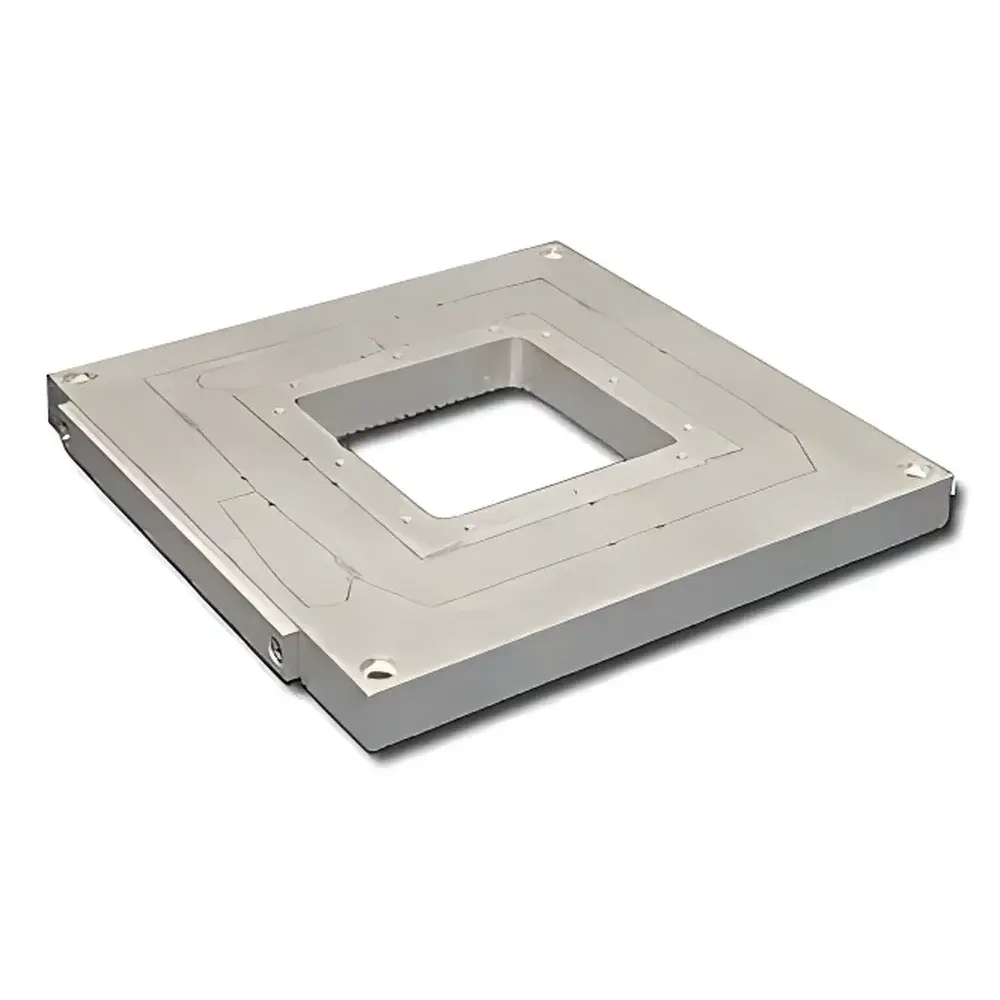
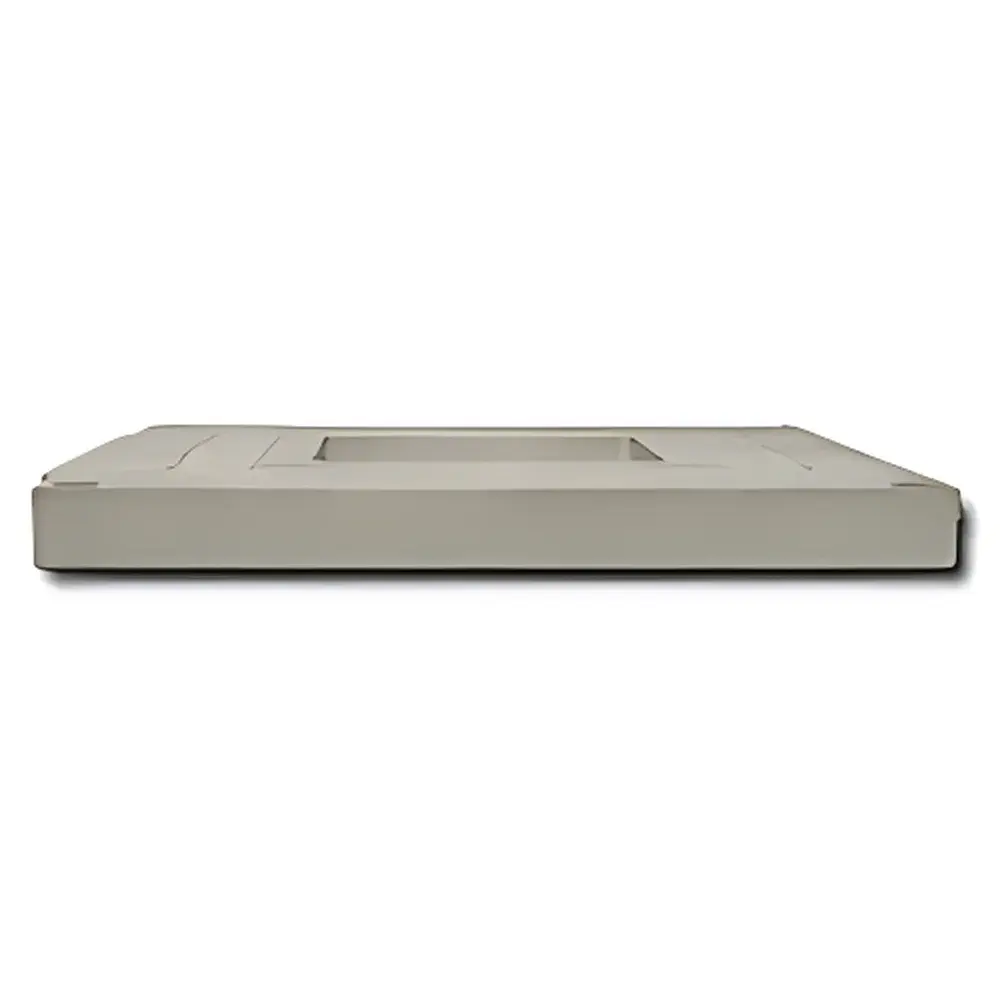
MCL Think Nano Nano-Bio Series Ultra-Low-Profile Dual-Axis Piezoelectric Positioning Stage
| Brand | MCL Think Nano |
|---|---|
| Origin | USA |
| Manufacturer Type | Authorized Distributor |
| Product Category | Imported Instrumentation |
| Model | Nano-Bio Series |
| Product Type | Motorized Translation Stage |
| Motion Range Options | 50 µm × 50 µm, 100 µm × 100 µm, 200 µm × 200 µm, 300 µm × 300 µm |
| Resolution | 0.1–0.6 nm (model-dependent) |
| Closed-Loop Feedback | PicoQ® Integrated Absolute Position Sensing |
| Structural Material | Aluminum (standard), Invar or Titanium (Nano-Bio2M & select models) |
| Resonant Frequency | 200–500 Hz (X/Y axis, model-dependent) |
| Stiffness | 1.0 N/µm |
| Angular Deviation (Roll/Pitch/Yaw) | ≤1 µrad / ≤1 µrad / ≤3 µrad |
| Max Load (Horizontal/Vertical) | 0.5 kg / 0.2 kg |
Overview
The MCL Think Nano Nano-Bio Series is an ultra-low-profile, dual-axis piezoelectric positioning stage engineered for high-precision nanoscale manipulation in space-constrained optical and scanning instrumentation. Designed using monolithic flexure architecture and driven by high-voltage piezoelectric actuators, the Nano-Bio Series operates on the principle of electrostrictive displacement with closed-loop feedback via proprietary PicoQ® capacitive position sensing. This enables absolute, drift-free, picometer-level positional repeatability without homing or reference calibration—critical for long-duration live-cell imaging, super-resolution microscopy, and closed-loop atomic force microscopy (AFM) scanning. Its minimal z-height (<12 mm for most variants) permits seamless integration beneath objective lenses of inverted microscopes (e.g., Nikon Eclipse Ti, Zeiss Axio Observer, Leica DMi8), within AFM head assemblies, and inside optical trap cavities where vertical clearance is limited to sub-millimeter tolerances.
Key Features
- Ultra-low mechanical profile: <12 mm total height across all standard configurations, enabling direct mounting under microscope objectives without adapter stacks or optical path extension.
- Large central aperture: Ø14 mm clear opening accommodates high-NA oil-immersion objectives (including 100×/1.49 NA Plan-Apochromat) and multi-lens light-sheet configurations without vignetting.
- PicoQ® integrated capacitive sensors: Provide true absolute position measurement with sub-nanometer resolution (0.1–0.6 nm, dependent on travel range) and <0.01% linearity error over full stroke.
- Monolithic aluminum construction (Nano-Bio100/200/300): Optimized for thermal and mechanical stability in ambient lab environments; Invar variant (Nano-Bio2M) reduces thermal drift to <10 nm/°C for extended time-lapse experiments.
- High resonant frequency and stiffness: Ranges from 200 Hz (Nano-Bio300) to 500 Hz (Nano-Bio2M), supporting fast raster scanning at >10 Hz frame rates with minimal phase lag and dynamic tracking error.
- Minimal angular deviation: Roll and pitch errors ≤1 µrad, yaw ≤3 µrad across full travel—preserving optical collimation and beam pointing stability during lateral repositioning.
Sample Compatibility & Compliance
The Nano-Bio Series is compatible with biological and soft-material samples requiring non-contact, vibration-isolated manipulation—including live cells on glass-bottom dishes, hydrogel-embedded tissue sections, and optically trapped microspheres. All models comply with ISO 9001-certified manufacturing protocols and meet electromagnetic compatibility (EMC) requirements per IEC 61326-1 for laboratory use. The Nano-Bio2M variant supports seamless interoperability with Veeco/Bruker NanoScope AFM controllers when paired with a Nano-Drive® controller (AR-10 option), enabling GLP-compliant audit trails and instrument calibration logging per FDA 21 CFR Part 11 when integrated into validated workflows.
Software & Data Management
Native control is provided through the Nano-Drive® software suite (v5.3+), offering real-time position monitoring, waveform generation (ramp, sine, Lissajous), and synchronized trigger I/O for camera/fluorescence excitation synchronization. APIs are available for MATLAB, Python (PyVISA), LabVIEW, and C/C++ development. Position noise spectra (RMS <0.05 nm @ 1 Hz bandwidth) and thermal drift logs are exportable in CSV/HDF5 formats. Firmware updates preserve traceable version history, and controller EEPROM stores calibration coefficients with write-protection—supporting ISO/IEC 17025-compliant metrological traceability.
Applications
- Super-resolution microscopy (STORM, PALM, STED): Sub-pixel sample translation for multi-position acquisition and drift correction.
- Closed-loop AFM scanner replacement: Direct integration with NanoScope systems for enhanced Z-feedback coupling and reduced hysteresis.
- Optical tweezers: Precise nanopositioning of trapped particles relative to fixed laser foci or microfluidic channels.
- Nanolithography: Maskless patterning via coordinated stage motion and pulsed laser exposure.
- Fluorescence correlation spectroscopy (FCS): Controlled diffusion-volume scanning across cellular compartments.
- Multi-modal correlative imaging: Synchronized movement between confocal, SIM, and TEM grid mapping stages.
FAQ
What is the maximum recommended load for vertical orientation?
0.2 kg—exceeding this may compromise closed-loop stability and angular performance. Custom high-load variants (up to 1.0 kg) are available upon engineering consultation.
Is the Nano-Bio Series compatible with third-party motion controllers?
Yes—open-command protocols (ASCII over USB/RS-232) and analog voltage input (±10 V) allow integration with Thorlabs Kinesis, PI GCS2, or custom FPGA-based systems.
How is thermal drift compensated in long-term imaging experiments?
The Invar-based Nano-Bio2M reduces coefficient of thermal expansion (CTE) to 1.2 × 10⁻⁶/°C; combined with active PicoQ® feedback, residual drift remains below 5 nm over 4 hours at ±0.5°C ambient fluctuation.
Can the central aperture be customized for non-circular optics?
Yes—custom aperture shapes (elliptical, D-shaped, or slot-cut) are supported under OEM agreements with lead times of 8–12 weeks.
Does the system support vacuum or inert-gas environments?
Standard models are rated for ambient air only; titanium-body variants (Nano-Bio100-Ti/Nano-Bio200-Ti) are available for dry nitrogen purged enclosures up to 10⁻³ mbar.



