
Ekspla SFG FS Broadband Sum-Frequency Generation Spectroscopy System
| Brand | Ekspla |
|---|---|
| Origin | Imported (Lithuania) |
| Model | SFG FS |
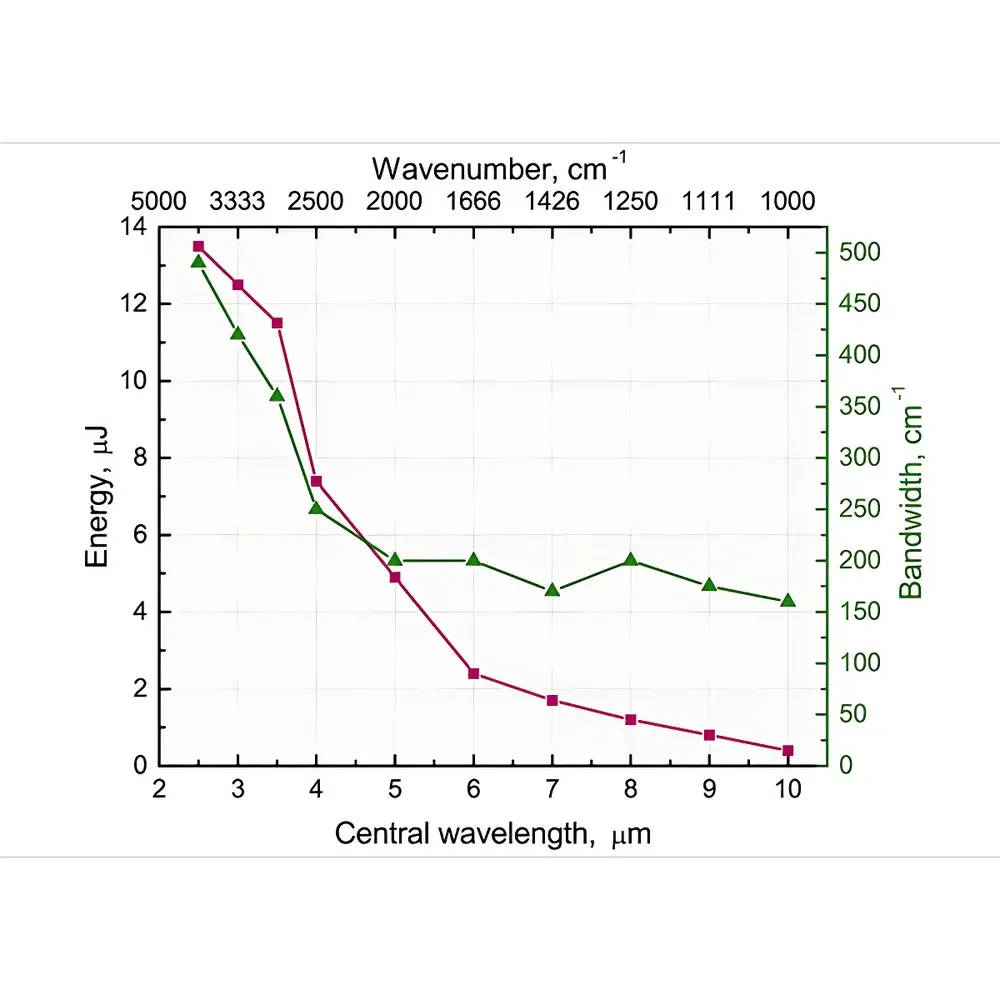
| Tuning Range (IR) | 2.3–10 μm (4300–1000 cm⁻¹) |
| Visible Beam | 532 nm, <2 cm⁻¹ linewidth, ~1 mJ pulse energy, 20–30 ps pulse duration |
| SFG Output Range | 432–505 nm |
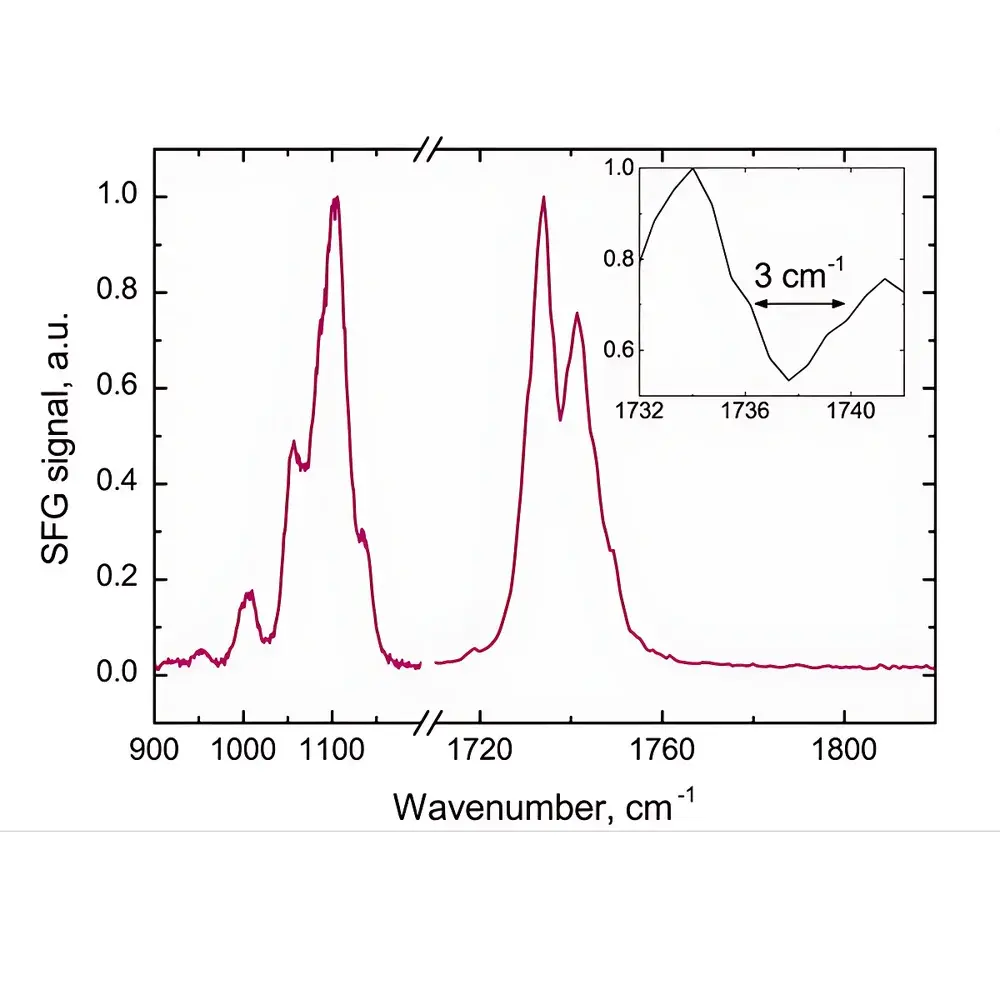
| Spectral Resolution | <6 cm⁻¹ |
| Detection Sensitivity | ~10 photons/shot |
| Acquisition Rate | 10 Hz |
| Polarization Purity | >1:100 (linear, selectable) |
| IR Pulse Energy | 200–20 μJ |
Overview
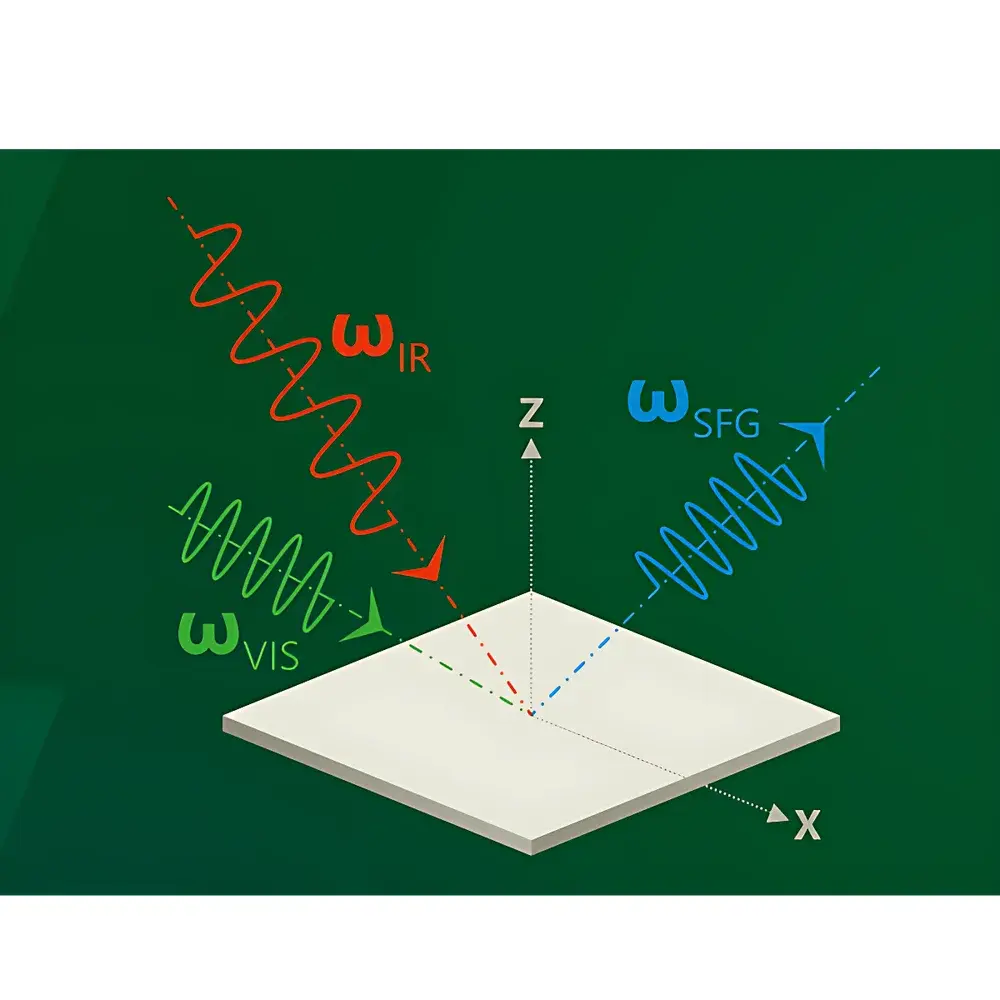
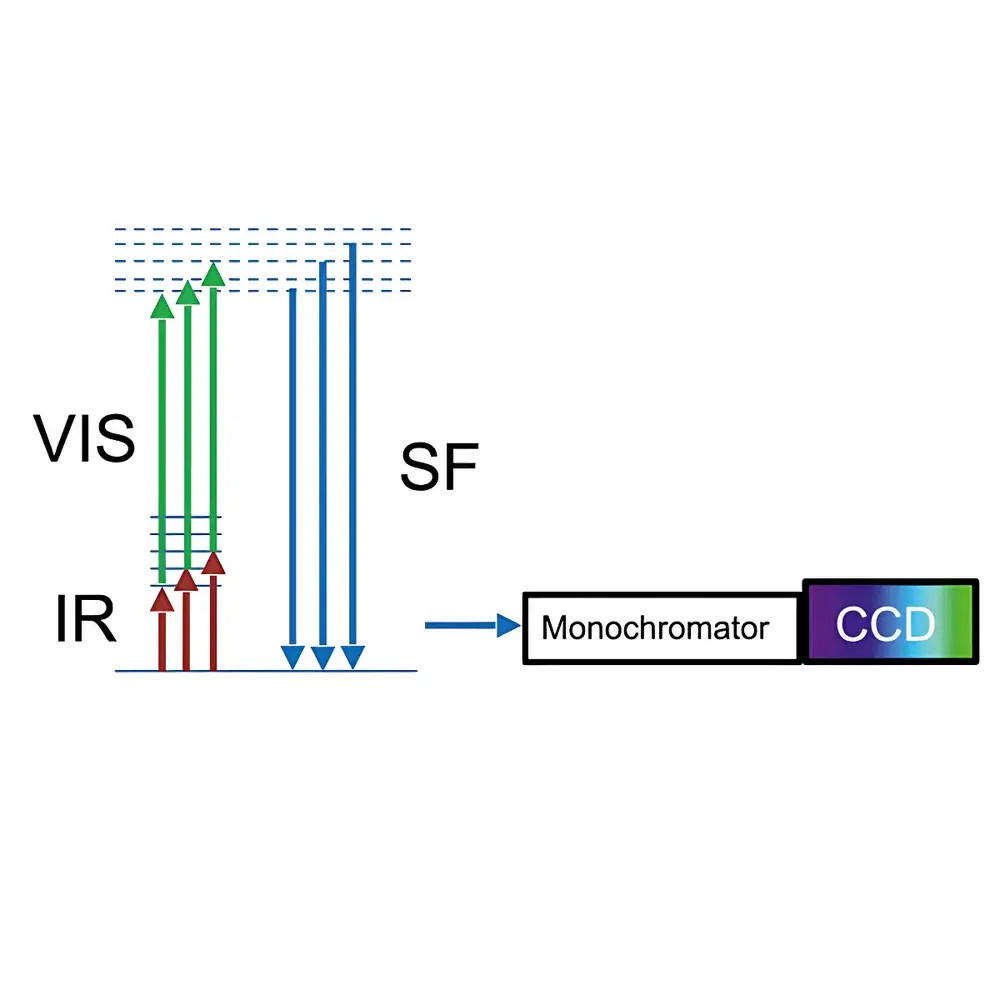
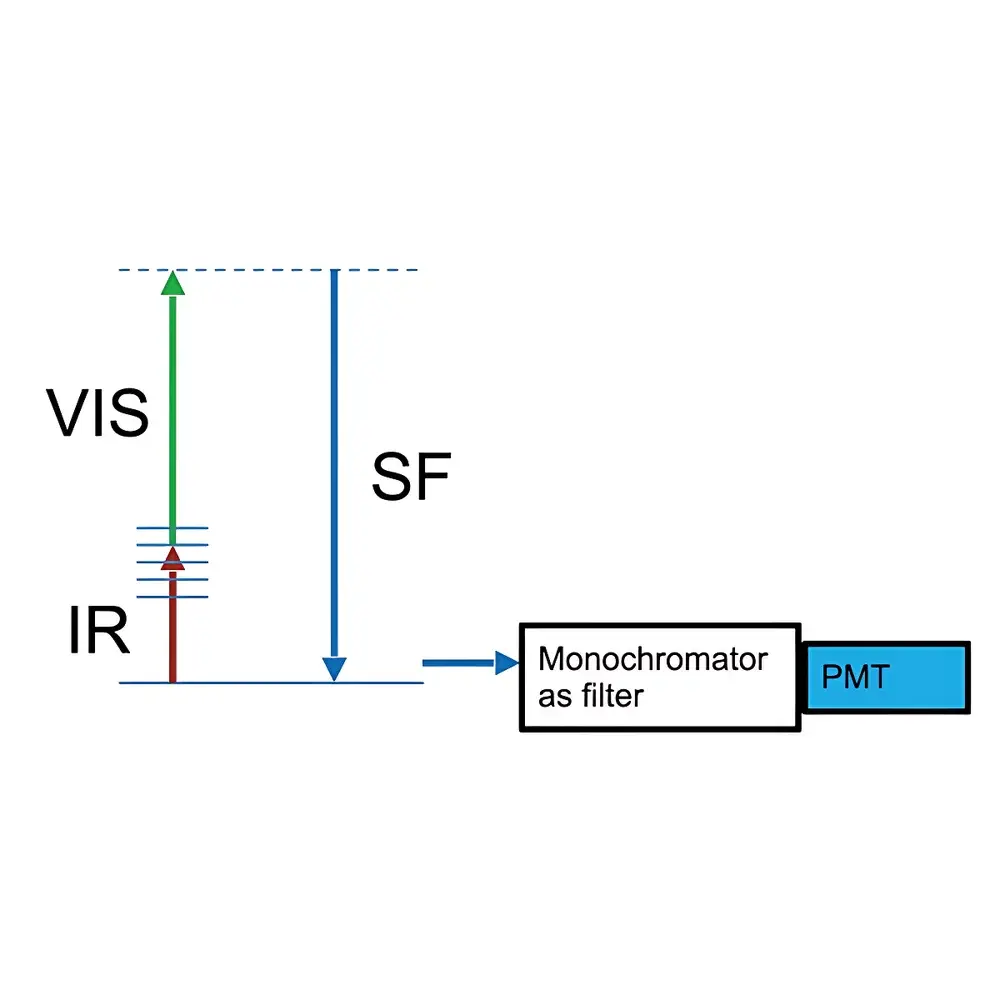
The Ekspla SFG FS Broadband Sum-Frequency Generation Spectroscopy System is a high-precision, surface-specific nonlinear optical instrument engineered for molecular-level characterization of interfaces under ambient, ultra-high vacuum (UHV), or high-pressure environments. Based on second-order nonlinear optical mixing—where a tunable infrared (IR) beam and a fixed-frequency visible (VIS) beam co-propagate and temporally overlap at an interface—the system generates sum-frequency (ωSF = ωIR + ωVIS) radiation exclusively from non-centrosymmetric regions. This intrinsic symmetry selection rule renders SFG inherently surface- and interface-selective, with negligible bulk contribution, enabling quantitative vibrational spectroscopy of monolayer-scale molecular assemblies at solid/gas, solid/liquid, liquid/gas, and buried solid/solid interfaces.
Key Features
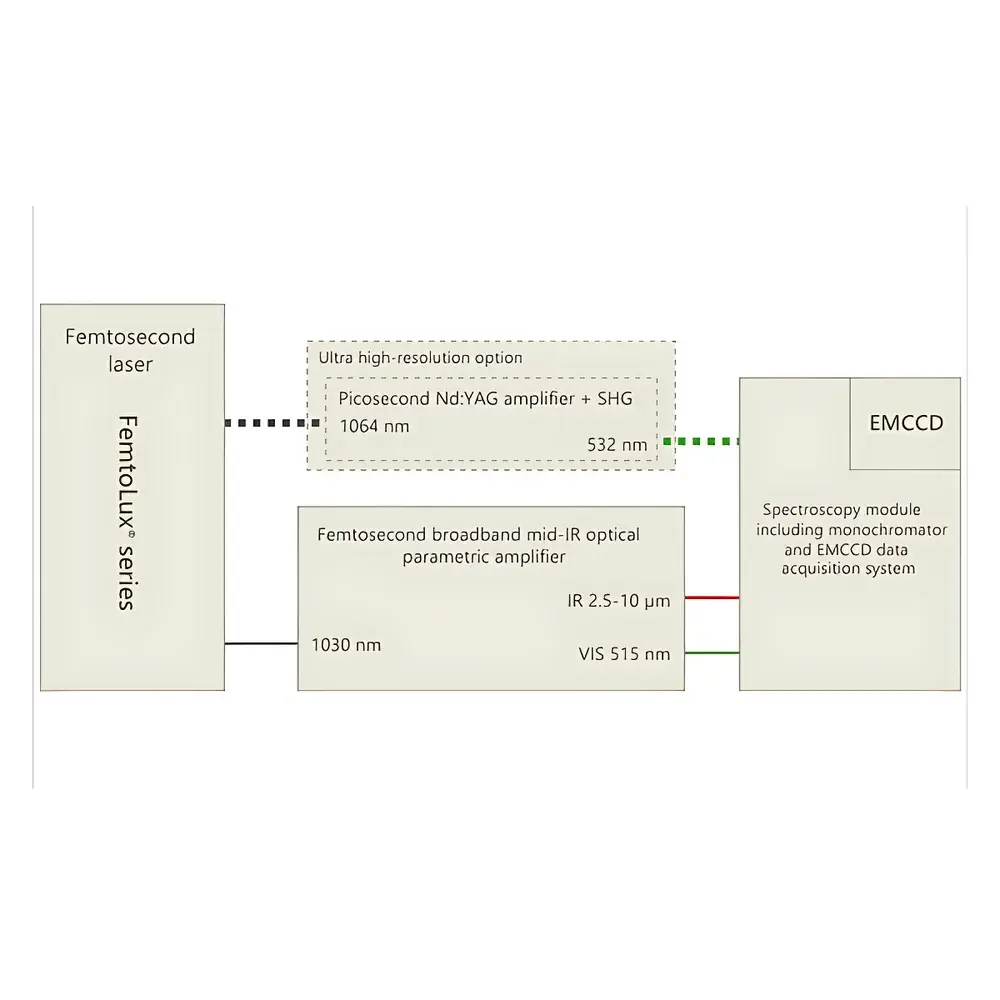
- Integrated dual-beam architecture featuring a high-stability, picosecond Nd:YAG-pumped optical parametric amplifier (OPA) for broadband IR tuning (2.3–10 μm, extendable to 16 μm) and a frequency-doubled Nd:YAG source (532 nm) for the visible beam;
- Sub-6 cm⁻¹ spectral resolution across the full IR tuning range, supported by high-fidelity grating-based dispersion control and real-time laser frequency stabilization;
- Optimized signal-to-noise performance via high-repetition-rate (10 Hz) data acquisition, low-noise lock-in detection, and polarization-resolved measurement capability (s-, p-, and mixed polarization configurations);
- Full PC-based control of wavelength scanning, delay stages, polarization optics, and detector gating—enabling automated spectral acquisition, kinetic profiling, and multi-dimensional mapping;
- Modular design supporting future upgrades including second-harmonic generation (SHG) spectroscopy, time-resolved SFG, and integration with electrochemical cells or environmental reaction chambers;
- Rugged optomechanical platform with kinematic mounts, vibration-isolated breadboard, and sealed beam paths—designed for long-term stability in shared laboratory or industrial QC environments.
Sample Compatibility & Compliance
The SFG FS accommodates a broad range of sample geometries and environmental conditions: flat substrates (metals, oxides, semiconductors, polymers), liquid surfaces (water, ionic liquids, organic solvents), thin-film electrodes, catalytic nanoparticles, and functionalized biomembranes. Measurements are fully non-invasive and require no labeling or vacuum-compatible sample preparation. The system complies with ISO/IEC 17025 guidelines for analytical instrument qualification and supports GLP/GMP-aligned documentation workflows—including audit-trail-enabled software logging, user-access controls, and electronic signature readiness per FDA 21 CFR Part 11 requirements when deployed with validated configuration management protocols.
Software & Data Management
Control and analysis are performed using Ekspla’s proprietary SFG Control Suite—a Windows-based application delivering synchronized hardware orchestration, real-time spectral preview, background subtraction, polarization matrix calibration, and baseline correction algorithms. Raw interferograms and spectra are stored in HDF5 format with embedded metadata (laser energy, delay position, polarization state, environmental parameters). Export options include ASCII, CSV, and MATLAB-compatible binaries. Advanced post-processing modules support peak fitting (Voigt/Lorentzian), orientation angle calculation via ratio analysis (e.g., χ(2)zzz/χ(2)zxx), and time-series correlation for dynamic interfacial processes.
Applications
- Molecular orientation and conformational ordering at polymer/polymer, polymer/metal, and polymer/ceramic interfaces;
- In situ monitoring of electrode/electrolyte interphases in Li-ion and fuel cell systems;
- Catalytic surface reactions on single-crystal catalysts (e.g., CO oxidation on Pt(111), methanol decomposition on Cu(110));
- Hydrogen-bonding networks and ion hydration structures at aqueous interfaces;
- Self-assembled monolayer (SAM) formation kinetics, defect density quantification, and terminal group tilt-angle determination;
- Protein adsorption orientation, lipid bilayer phase transitions, and membrane-protein insertion dynamics.
FAQ
What interfaces can be studied using the SFG FS system?
SFG is sensitive to any interface lacking inversion symmetry—common examples include air/water, metal/vacuum, oxide/electrolyte, polymer/glass, and buried semiconductor heterojunctions.
Is vacuum operation required?
No. While UHV compatibility is standard, measurements are routinely performed under ambient air, controlled gas atmospheres (N₂, Ar, O₂), or submerged in transparent liquids.
Can the system resolve sub-monolayer coverage?
Yes. With detection sensitivity down to ~10 photons per laser shot and optimized surface enhancement strategies (e.g., plasmonic substrates), the system achieves sub-nanomolar surface concentration limits for vibrational modes with strong hyperpolarizability.
How is spectral calibration verified?
Calibration is performed using well-characterized reference interfaces (e.g., CH₃ stretch on ordered alkanethiol SAMs, OH stretch on SiO₂/water) and validated against NIST-traceable gas-phase absorption standards where applicable.
What training and support are provided?
Ekspla offers on-site installation, operator certification (8-hour hands-on workshop), application-specific method development assistance, and remote diagnostics via secure TLS-encrypted connection. Maintenance contracts include annual wavelength accuracy verification and alignment validation reports.





