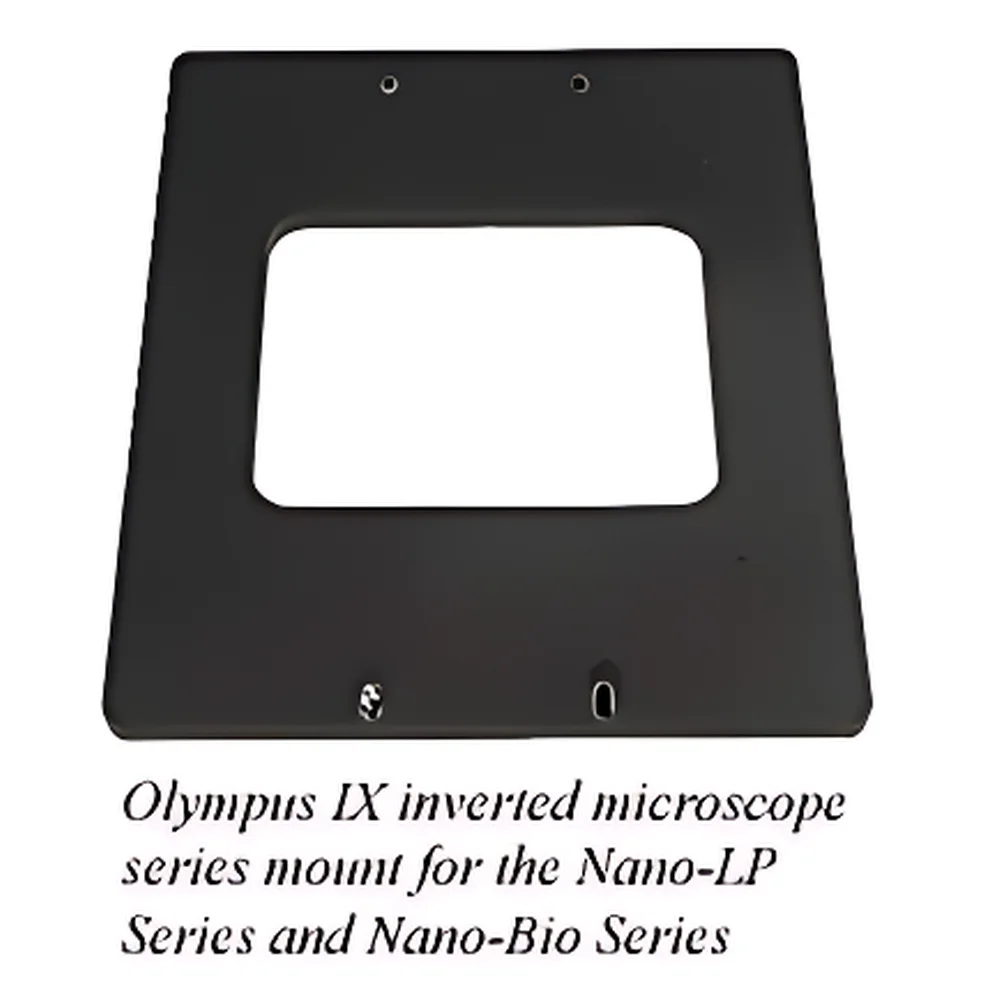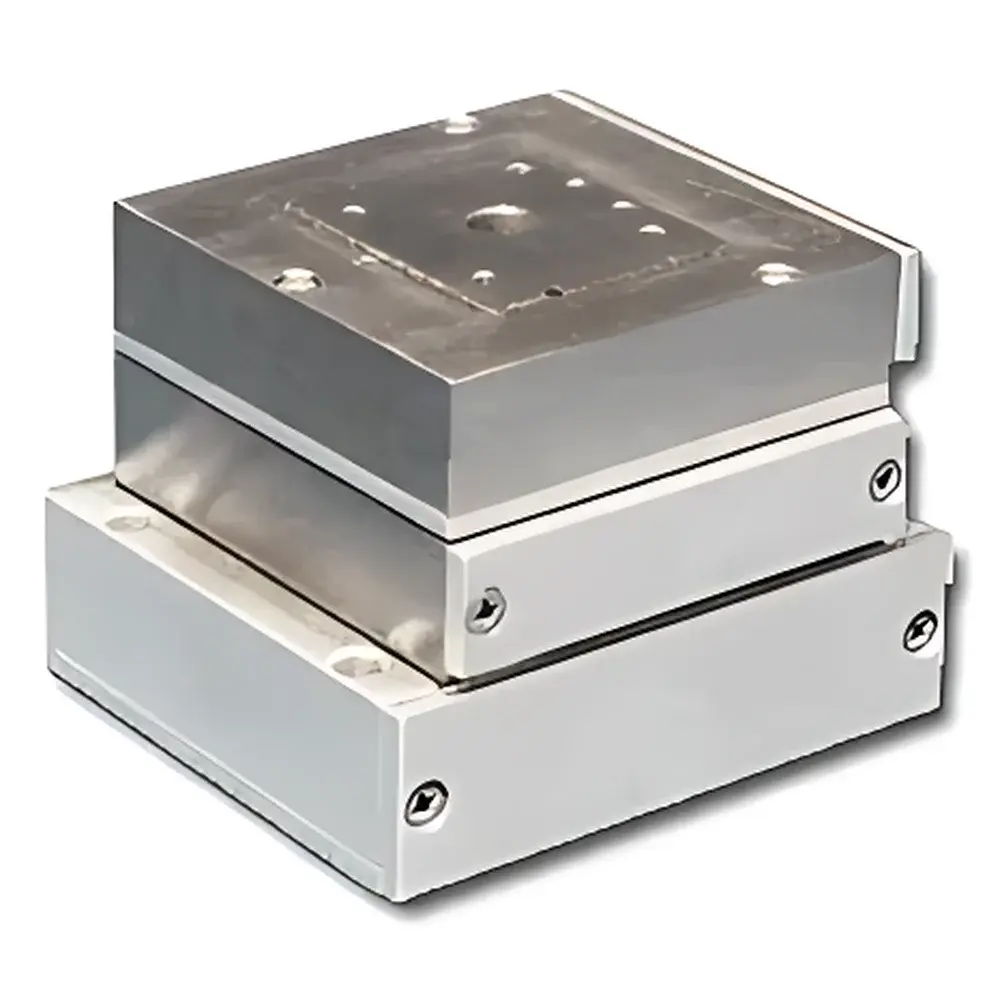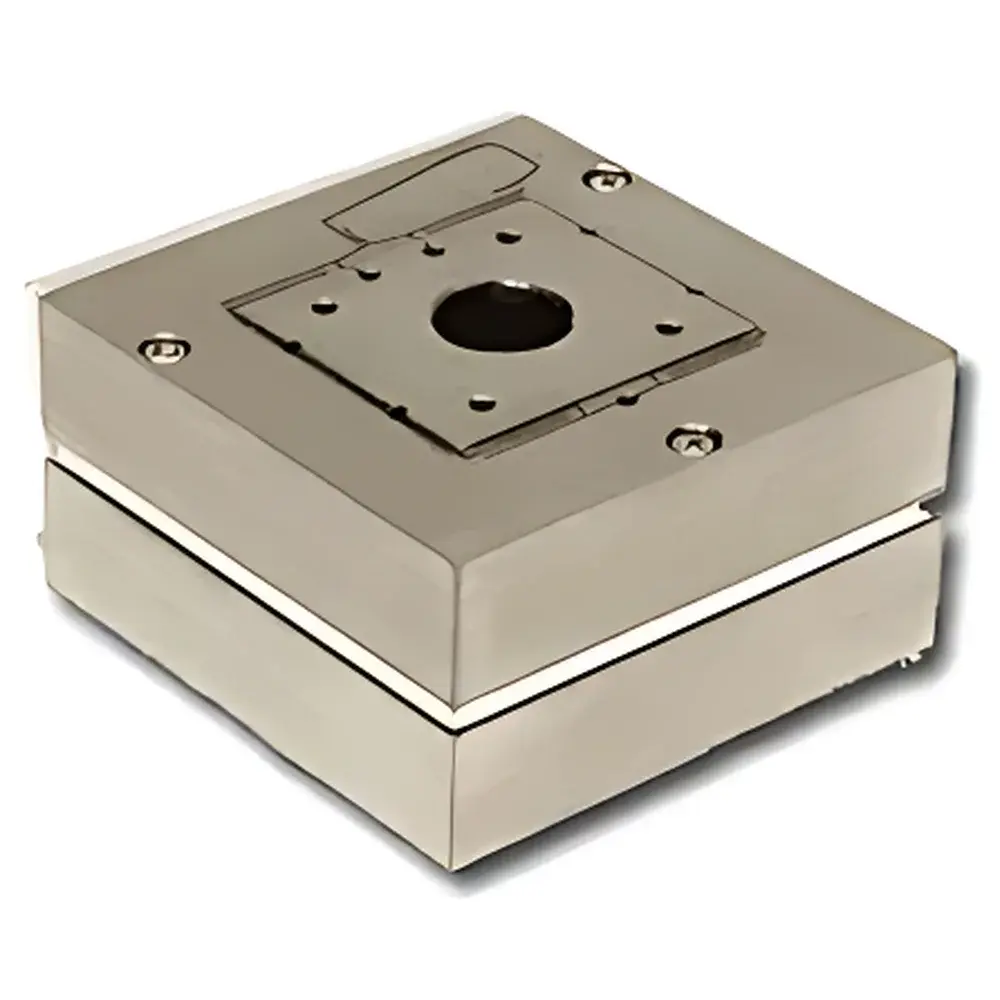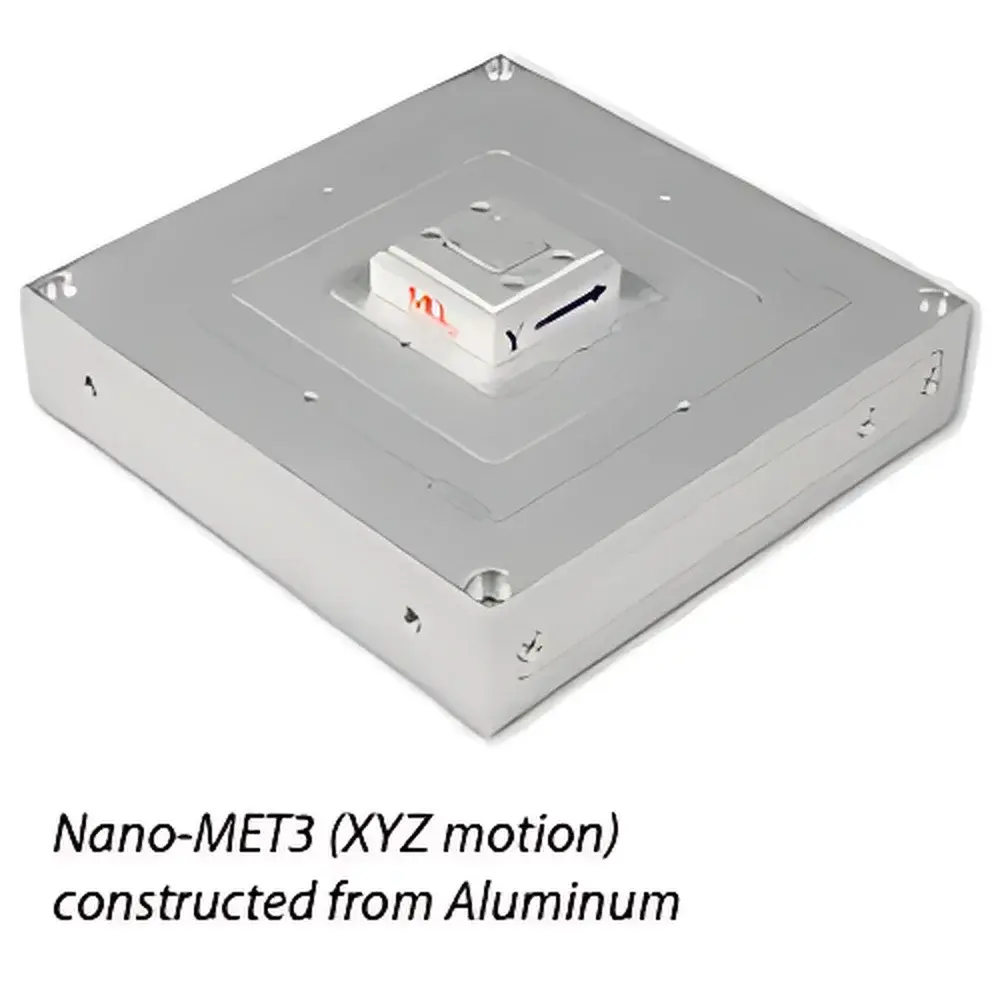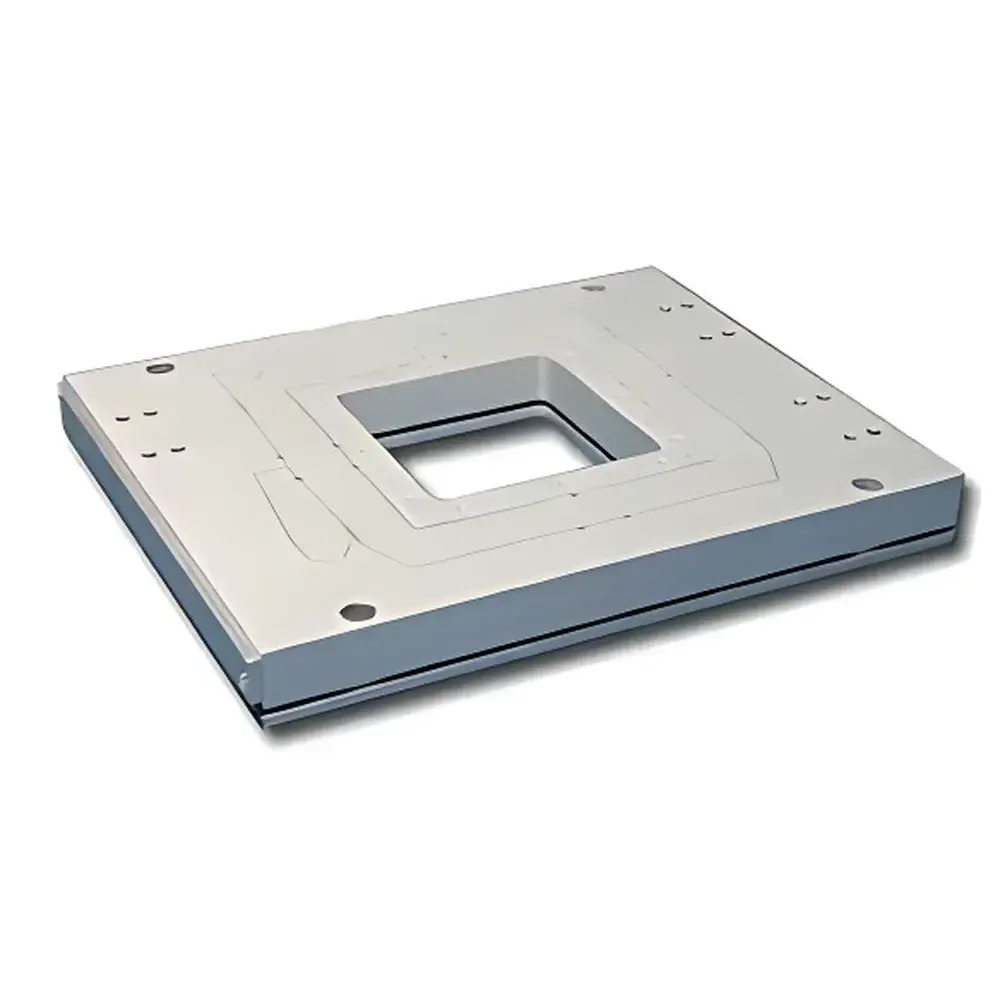
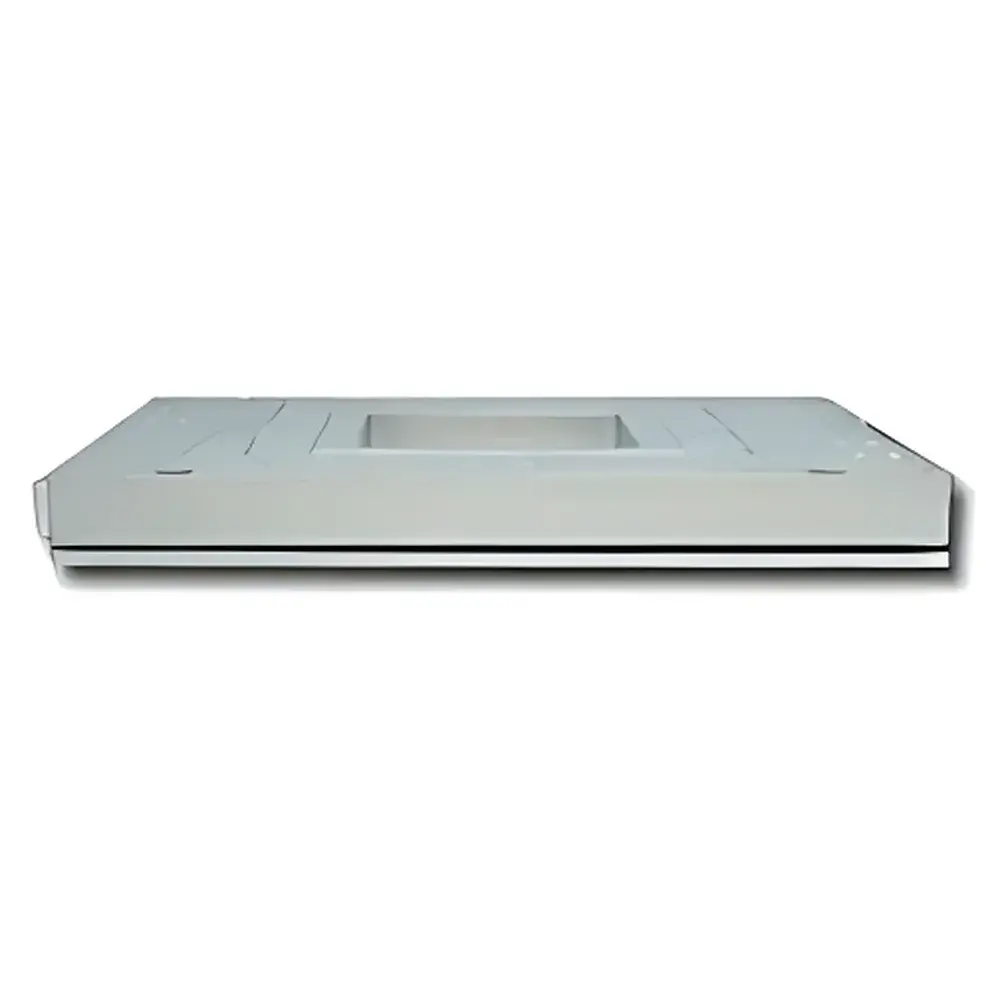
MCL Think Nano Nano-LP Series Ultra-Low-Profile 3-Axis Piezoelectric Nanopositioning Stage

| Brand | MCL Think Nano |
|---|---|
| Origin | USA |
| Model | Nano-LP Series |
| Motion Range (XYZ) | 100/200/300 µm |
| Resolution | 0.2/0.4/0.6 nm |
| Resonant Frequency (X) | 450/400/350 Hz ±20% |
| Resonant Frequency (Y) | 350/300/250 Hz ±20% |
| Resonant Frequency (Z) | 450/350/250 Hz ±20% |
| Stiffness | 1.0 N/µm |
| Angular Deviation (Roll/Pitch) | ≤1 µrad |
| Angular Deviation (Yaw) | ≤3 µrad |
| Max Load (Horizontal) | 0.5 kg |
| Max Load (Vertical) | 0.2 kg |
| Body Material | Aluminum (all), Invar or Titanium (Nano-LP100/Nano-LP200 only) |
| Control | Closed-loop with PicoQ® absolute position sensing |
| Controller | Nano-Drive® |
Ask about pricing, availability and specifications.
Overview
The MCL Think Nano Nano-LP Series represents a class of ultra-low-profile, three-axis piezoelectric nanopositioning stages engineered for high-precision optical and biophysical instrumentation. Designed around a monolithic flexure architecture with integrated capacitive or strain-gauge-based position feedback, the Nano-LP stages operate on the principle of electrostrictive actuation—delivering sub-nanometer resolution and picometer-level repeatability in closed-loop mode. Their exceptionally low structural height (<12 mm for Nano-LP100) enables seamless integration beneath objective turrets or within confined spaces of inverted optical microscopes, confocal systems, and custom optical trapping platforms. Unlike traditional stepper-motor or voice-coil translation stages, the Nano-LP Series eliminates mechanical backlash, hysteresis drift, and gear-induced vibration—making it suitable for time-critical, long-duration experiments requiring positional stability over hours.
Key Features
- Ultra-low profile design: Minimum height of 11.5 mm (Nano-LP100), optimized for retrofitting into inverted microscope configurations without optical path obstruction.
- True three-axis independent motion: Simultaneous XYZ nanoscale positioning with matched travel ranges (100/200/300 µm per axis) and synchronized dynamic response.
- Closed-loop control with PicoQ® sensing technology: Proprietary absolute-position feedback delivers real-time, drift-free measurement with <0.6 nm resolution and <10 pm long-term repeatability.
- High mechanical stiffness: 1.0 N/µm lateral and axial stiffness ensures minimal thermal creep and load-induced deflection during scanning or force-application protocols.
- Sub-microradian angular stability: Roll and pitch deviations ≤1 µrad; yaw ≤3 µrad—critical for maintaining beam collimation and focal plane alignment in super-resolution modalities such as STED or PALM.
- Material flexibility: Standard aluminum construction; optional Invar or titanium bodies available for Nano-LP100 and Nano-LP200 models to reduce thermal expansion coefficient (CTE) in temperature-sensitive environments.
Sample Compatibility & Compliance
The Nano-LP Series is compatible with standard 25 mm and 38 mm optical mounting footprints and accepts M3 and #4-40 threaded holes for direct attachment to microscope stages, objective cages, or custom sample holders. It supports both reflective and transmissive sample geometries—including glass-bottom Petri dishes, microfluidic chips, and cryo-EM grids—without compromising Z-axis clearance. All models comply with RoHS 3 and CE directives. When operated with the Nano-Drive® controller under configured audit trails and user-access controls, the system meets foundational requirements for GLP-compliant instrumentation documentation per ISO/IEC 17025:2017 Annex A.2. While not FDA-cleared as a medical device, its performance traceability and firmware version logging support 21 CFR Part 11 readiness when deployed in regulated R&D labs.
Software & Data Management
Native integration is provided via the Nano-Drive® software suite (Windows/Linux), supporting real-time waveform generation (sine, triangle, arbitrary), multi-dimensional raster scanning, and trigger-synchronized data acquisition. APIs are available for MATLAB, Python (PyVISA, NumPy), LabVIEW, and C/C++ development environments—enabling full automation within custom imaging pipelines. Position logs are timestamped and stored in HDF5 format with embedded metadata (actuator voltage, sensor output, temperature compensation flags). Firmware updates preserve calibration coefficients and retain user-defined macros across versions. Optional Cyto-Lite™ laser synchronization modules enable precise timing alignment between stage motion and pulsed excitation sources—essential for lifetime-resolved fluorescence or pump-probe spectroscopy.
Applications
- Single-molecule fluorescence tracking: Sub-diffraction localization of quantum dots or organic dyes across extended fields-of-view using drift-compensated XYZ scanning.
- Optical tweezers calibration and manipulation: High-bandwidth Z-control for trap stiffness quantification and force-ramp protocols with pN sensitivity.
- Structured illumination microscopy (SIM) and lattice light-sheet alignment: Precise grating positioning and illumination plane registration across multi-hundred-micron volumes.
- Nanoscale surface profiling: Integration with white-light interferometry or confocal reflectance sensors for non-contact topography mapping of MEMS devices or photonic crystals.
- Automated patch-clamp electrophysiology: Coordinated XYZ approach of micropipettes with micron-scale trajectory planning and collision avoidance logic.
FAQ
What distinguishes the Nano-LP Series from conventional motorized translation stages?
Unlike lead-screw or stepper-driven stages, the Nano-LP uses direct piezoelectric actuation with no moving mechanical parts—eliminating backlash, stick-slip, and wear-related degradation. Its closed-loop PicoQ® feedback provides absolute position knowledge without homing routines.
Can the Nano-LP Series be used in vacuum or cleanroom environments?
Yes—aluminum-bodied models are compatible with Class 100 cleanrooms. For UHV applications (<10⁻⁷ mbar), Invar or titanium variants with baked-out cabling and ceramic-insulated actuators are recommended; consult engineering for outgassing certification data.
Is external vibration isolation required for optimal performance?
While the flexure design inherently dampens high-frequency noise, operation at resonant frequencies >250 Hz benefits from passive air-table isolation or active inertial cancellation when mounted on non-rigid optical tables.
How is thermal drift managed during extended acquisitions?
Nano-Drive® firmware implements real-time temperature compensation using onboard thermistors. Additionally, Invar/Titanium body options reduce coefficient of thermal expansion by up to 75% compared to aluminum, minimizing positional drift below 0.5 nm/°C.
What maintenance is required over the instrument’s service life?
No scheduled maintenance is required. The monolithic flexure structure has no lubricants or consumables. Annual verification of closed-loop linearity and hysteresis (per ASTM E2559-18 Annex B) is recommended for GxP-aligned workflows.