
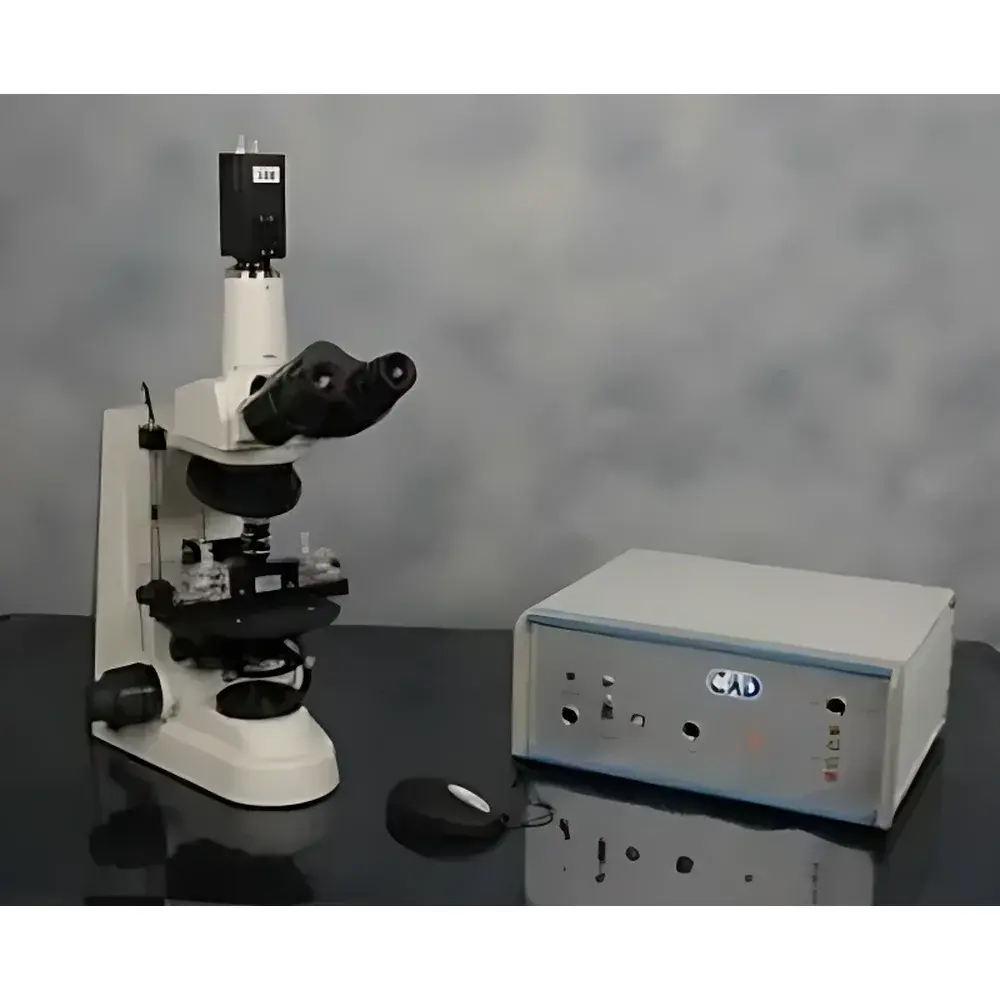
SINTERFACE ZETAPHOREMETER IV Zeta Potential Analyzer
| Brand | SINTERFACE |
|---|---|
| Origin | Germany |
| Model | ZETAPHOREMETER IV |
| Measurement Principle | Laser Doppler Microelectrophoresis |
| Particle Size Range | 50 nm – 50 µm |
| Electrode Configuration | Dual Palladium Electrode Pairs |
| Temperature Control | Integrated Micro-Thermosensor with Active Stabilization |
| Automation Level | Fully Automated Image-Based Particle Tracking |
| Compliance | ISO 13099, ASTM D7826, IUPAC Recommendations for Electrophoretic Mobility Reporting |
Overview
The SINTERFACE ZETAPHOREMETER IV is a high-precision zeta potential analyzer engineered for rigorous colloidal characterization in research laboratories and quality control environments. It operates on the principle of laser Doppler microelectrophoresis: dispersed particles under an applied electric field undergo electrophoretic motion, and their velocity is measured via real-time video microscopy coupled with digital image analysis. This velocity—converted to electrophoretic mobility—is used to calculate zeta potential using the Henry equation (with Smoluchowski or Hückel approximations as appropriate for particle size and medium conductivity). Unlike bulk electrophoretic methods, the ZETAPHOREMETER IV captures individual particle trajectories, enabling robust statistical evaluation of heterogeneous samples and eliminating ensemble averaging artifacts. Its design adheres to internationally recognized metrological frameworks for electrokinetic measurements, supporting traceable, reproducible results required for regulatory submissions and method validation.
Key Features
- Modular optical-electrochemical architecture optimized for flexibility across diverse sample matrices—from low-conductivity aqueous suspensions to organic solvent-based dispersions.
- Dual palladium electrode pairs integrated into the measurement cell ensure stable, non-polarizing current delivery and minimize electrolysis-induced pH gradients near electrode surfaces.
- Integrated laser alignment system with visible red diode (635 nm) enables rapid, operator-independent positioning of the observation window over sub-micron regions of interest.
- Temperature-controlled cuvette stage with embedded micro-thermosensor and PID-regulated feedback loop maintains thermal stability within ±0.1 °C during extended acquisition sequences.
- High-resolution CMOS imaging subsystem (≥1280 × 1024 pixels, 30 fps) synchronized with pulsed LED illumination to suppress motion blur and enhance contrast for particles as small as 50 nm.
- Fully automated trajectory recognition and centroid tracking algorithm, validated against NIST-traceable latex standards, delivers electrophoretic mobility distributions with <2% inter-run CV (n = 6).
Sample Compatibility & Compliance
The ZETAPHOREMETER IV accommodates standard 1–2 mL disposable or reusable quartz/PMMA electrophoresis cells. It supports measurements in aqueous media (pH 2–12), polar organic solvents (e.g., ethanol, DMF), and mixed-phase systems with appropriate dielectric matching. Sample viscosity range extends up to 20 mPa·s without compromising tracking fidelity. All reported zeta potential values comply with ISO 13099-2:2012 (Colloidal systems — Methods for determining zeta-potential — Part 2: Optical methods) and ASTM D7826-17 (Standard Test Method for Zeta Potential of Colloidal Dispersions by Laser Doppler Electrophoresis). Data acquisition and processing meet ALCOA+ principles; audit trails, electronic signatures, and user-access controls are configurable per FDA 21 CFR Part 11 requirements when deployed with optional GxP-compliant software modules.
Software & Data Management
The instrument is operated via ZETAsoft IV—a Windows-based application developed in accordance with IEC 62304 Class B software safety standards. The software provides real-time visualization of particle motion vectors, automatic mobility histogram generation, and batch-wise statistical comparison across multiple samples. Raw video files (.avi) and metadata (field strength, temperature, buffer conductivity, camera settings) are stored in vendor-neutral HDF5 format. Export options include CSV (for LIMS integration), PDF reports with embedded calibration certificates, and XML files compatible with ELN platforms such as LabArchives or Benchling. Version-controlled method templates support SOP-driven workflows and facilitate GLP/GMP audit readiness.
Applications
- Stability assessment of pharmaceutical nanosuspensions and lipid nanoparticles (LNPs) during formulation development.
- Surface charge profiling of functionalized silica, polymer latexes, and metal oxide nanoparticles for catalysis or sensing applications.
- Quality-by-Design (QbD) monitoring of protein aggregation propensity in biopharmaceutical buffers.
- Electrostatic optimization of pigment dispersions in coatings, inks, and ceramic slurries.
- Fundamental studies of double-layer compression in polyelectrolyte-stabilized colloids under varying ionic strength conditions.
FAQ
What is the minimum particle concentration required for reliable measurement?
Typical lower limit is 10⁶ particles/mL for 100 nm particles; optimal range is 10⁷–10⁹ particles/mL depending on refractive index contrast and medium clarity.
Can the system measure zeta potential in non-aqueous media?
Yes—provided the solvent exhibits sufficient electrical conductivity (>10 µS/cm) and optical clarity at 635 nm; optional high-voltage module extends field strength to 300 V/cm for low-conductivity organics.
Is calibration traceable to national standards?
Instrument calibration uses NIST SRM 1980 (polystyrene latex dispersion) and certified conductivity/temperature reference standards; full calibration certificate issued upon installation.
How does the system handle polydisperse or aggregated samples?
The software reports mobility distribution width (polydispersity index) alongside mean zeta potential; bimodal or multimodal histograms are flagged and exportable for advanced deconvolution analysis.
What maintenance is required for long-term operational reliability?
Annual verification of electrode impedance, optical path alignment, and temperature sensor drift is recommended; no consumables beyond standard cleaning protocols for cuvettes and electrodes.



