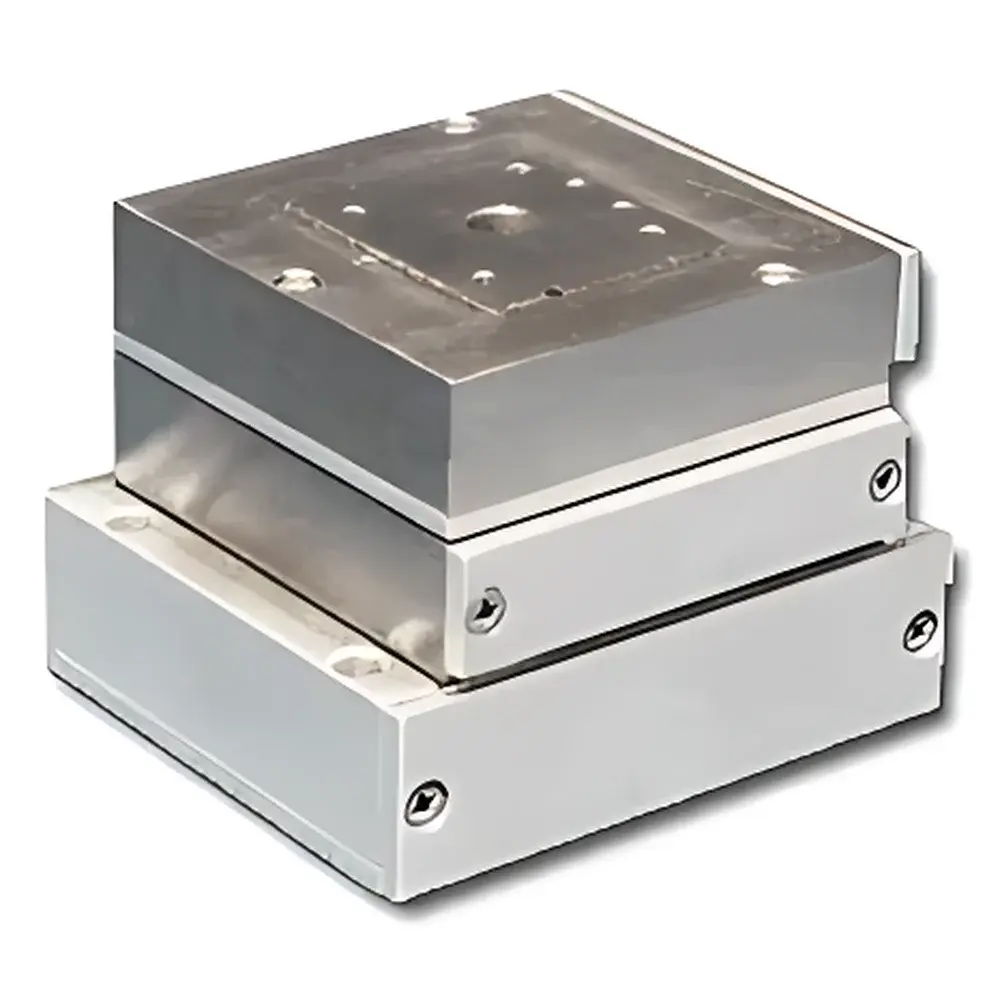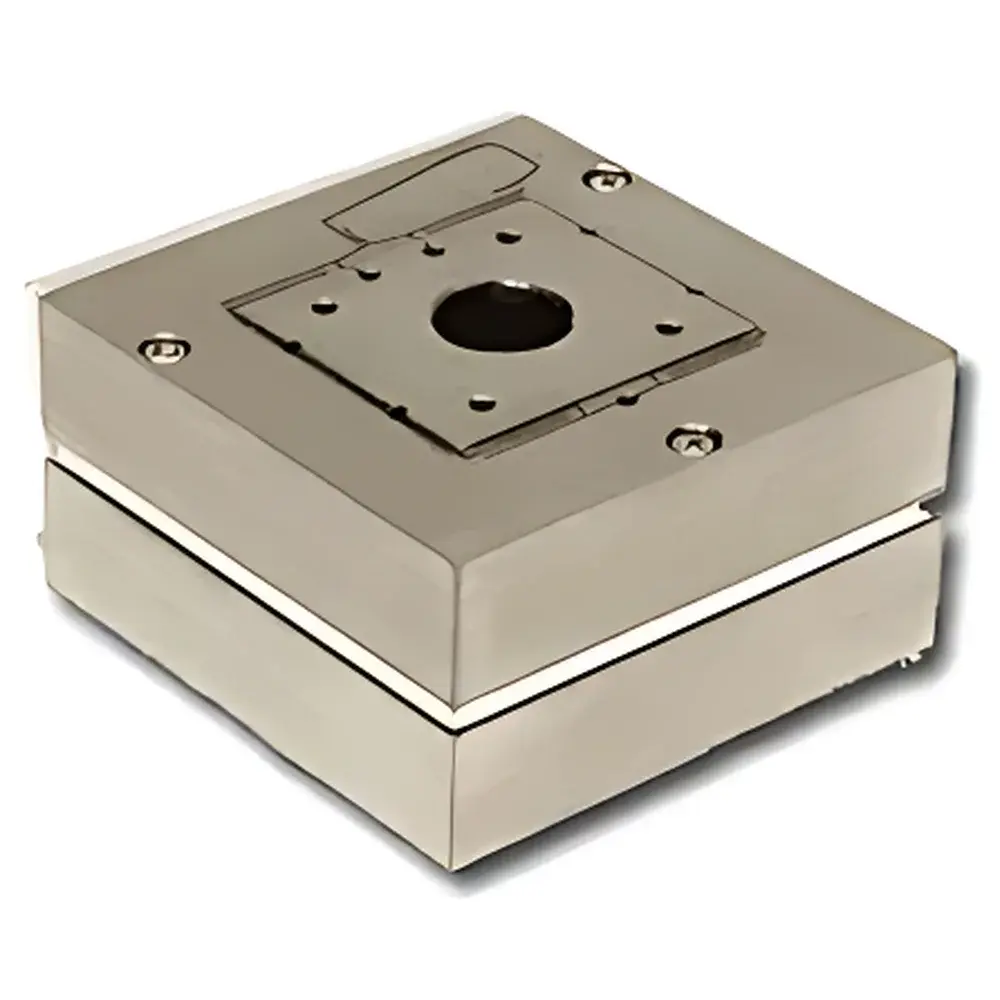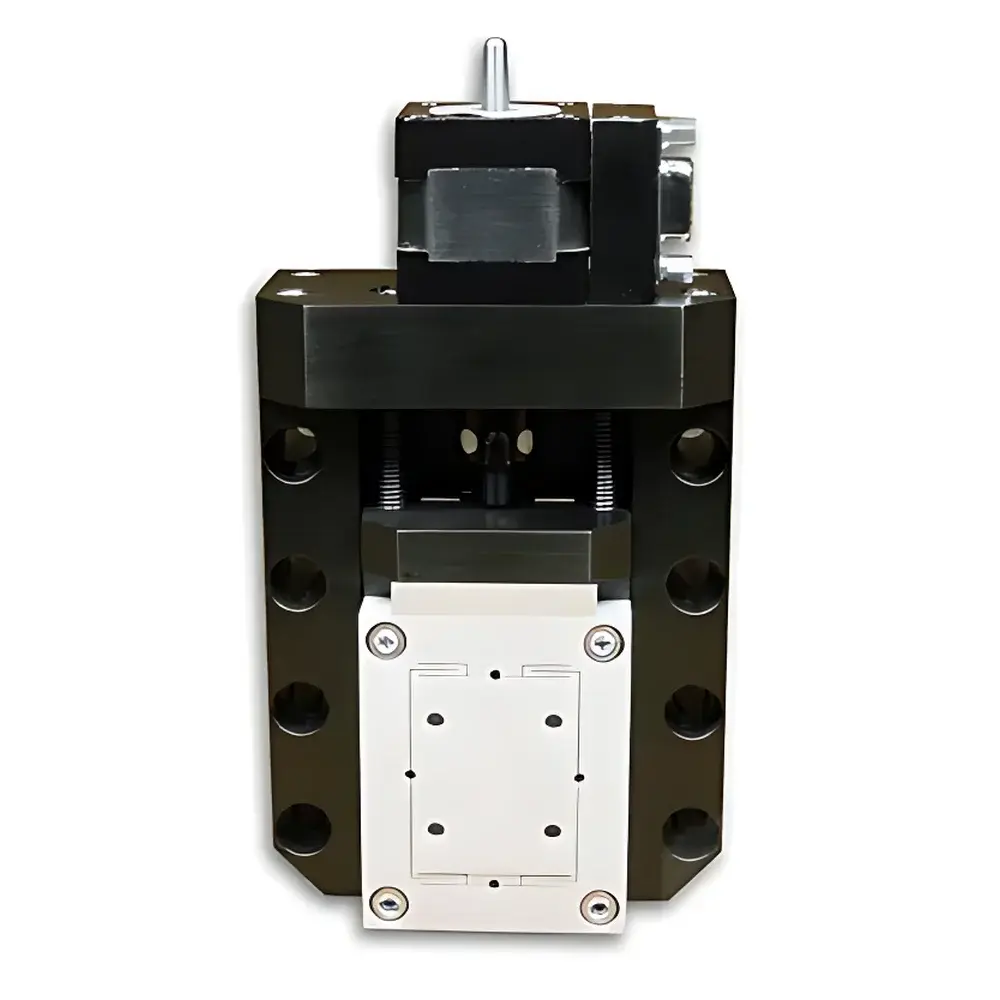
MCL Think Nano Nano-SPMZ Single-Axis Nanopositioning Translation Stage

| Brand | MCL Think Nano |
|---|---|
| Origin | USA |
| Model | Nano-SPMZ |
| Product Type | Motorized Translation Stage |
| Motion Range (Coarse) | 25 mm |
| Coarse Step Size | 95 nm |
| Encoder Resolution (Optional) | 20 nm |
| Nanopositioning Range | 30 µm |
| Nanopositioning Resolution | 0.06 nm |
| Resonant Frequency (Unloaded) | 4 kHz ±20% |
| Resonant Frequency (100 g Load) | 2 kHz ±20% |
| Stiffness | 3.0 N/µm ±20% |
| Max Horizontal Load | 1.0 kg |
| Max Vertical Load | 0.5 kg |
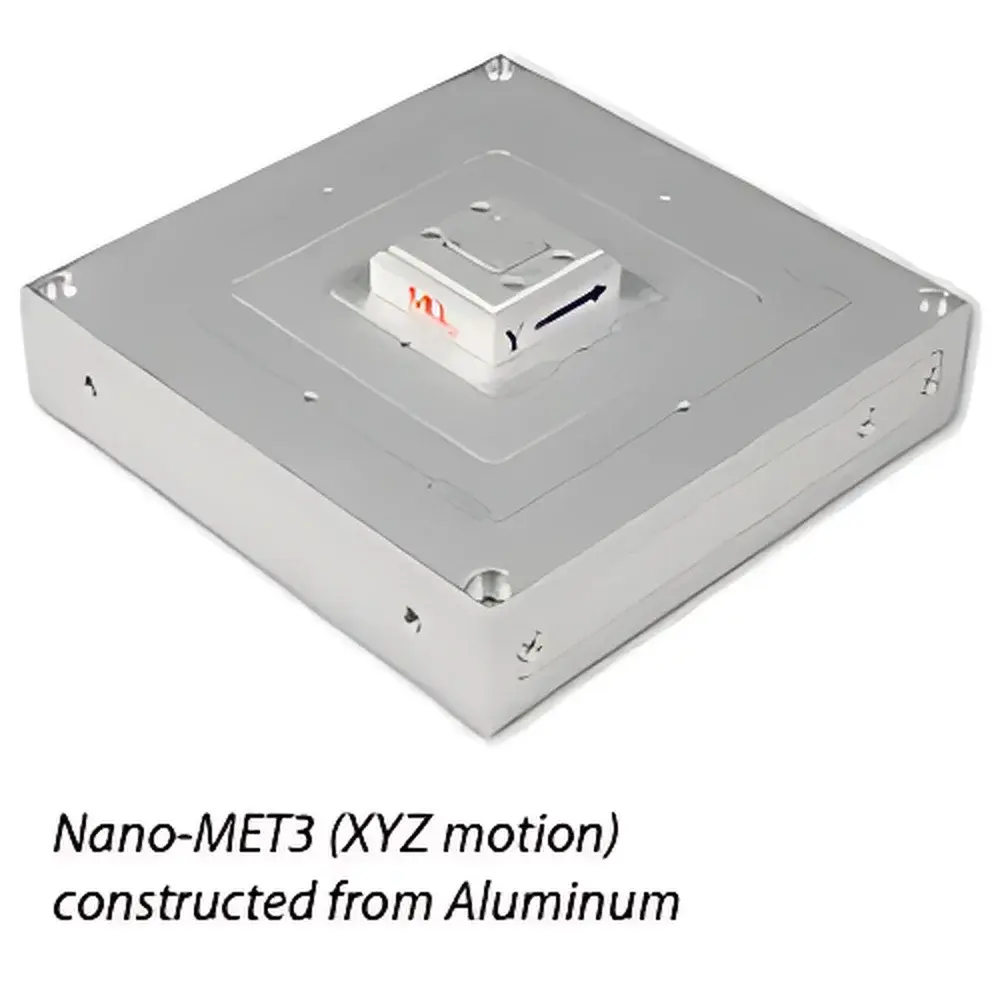
| Body Material | Aluminum |
| Controller | MicroDrive® + Nano-Drive® |
| Interface | Bidirectional USB |
Ask about pricing, availability and specifications.
Overview
The MCL Think Nano Nano-SPMZ is a high-precision, single-axis hybrid translation stage engineered for applications demanding simultaneous coarse travel and sub-nanometer positioning stability. It integrates two distinct motion subsystems within a rigid aluminum monocoque architecture: a stepper motor-driven micropositioner for macro-range adjustment (25 mm), and a piezoelectric nanopositioner (opositioner) for ultra-fine, closed-loop displacement over 30 µm. This dual-stage design leverages Couette-type mechanical coupling and proprietary PicoQ® capacitive position feedback sensors to achieve true 60 pm resolution with long-term thermal and mechanical drift suppression — critical for extended-duration scanning probe microscopy (SPM) experiments. Unlike conventional stacked or serial stages, the Nano-SPMZ maintains optical axis alignment and minimal Abbe error across its full travel range, making it suitable for integration into vacuum-compatible optical tables, confocal platforms, and interferometric setups where positional fidelity directly impacts data reproducibility.
Key Features
- Hybrid actuation architecture: Stepper motor (coarse) + piezoelectric stack (fine), enabling seamless transition between macro and nano domains
- Closed-loop control with real-time position verification via integrated PicoQ® capacitive sensors and optional 20 nm-resolution linear encoder
- Bidirectional USB 2.0 interface supporting deterministic command latency (<1 ms) and full register-level access to both micropositioner and opositioner firmware
- Thermally stable aluminum body with precision-ground kinematic mounts compatible with standard ISO 100 and M6 optical table threading
- Dual-controller architecture: MicroDrive® firmware governs coarse motion profiling (including automatic acceleration/deceleration for moves >500 steps), while Nano-Drive® manages nanopositioner voltage mapping, hysteresis compensation, and resonance damping algorithms
- Configurable load capacity: Rated for 1.0 kg horizontal and 0.5 kg vertical operation; custom load-bearing configurations available upon engineering consultation
Sample Compatibility & Compliance
The Nano-SPMZ is designed for use in Class 100–1000 cleanrooms and ambient laboratory environments. Its non-magnetic aluminum construction and absence of ferromagnetic components ensure compatibility with electron microscopy sample chambers and MRI-adjacent instrumentation. The stage meets mechanical safety requirements per ISO 14121-1 for moving parts and conforms to electromagnetic compatibility standards IEC 61326-1 (industrial environment). For regulated applications—including GLP-compliant AFM-based material characterization or USP analytical instrument qualification—the Nano-SPMZ supports audit-trail-enabled firmware logging when paired with validated host software. All position data streams are timestamped at hardware level and retain traceability to NIST-traceable calibration references used during factory certification.
Software & Data Management
Native control is provided through MCL’s cross-platform NanoControl™ Suite (Windows/macOS/Linux), which exposes low-level API access via Python, MATLAB, and LabVIEW drivers. The USB interface delivers synchronized streaming of encoder counts, sensor voltage outputs, and actuator current draw at up to 10 kHz sampling rate. Data files adhere to HDF5 format with embedded metadata including calibration coefficients, temperature logs, and controller firmware revision IDs. For FDA-regulated workflows, optional 21 CFR Part 11 compliance packages include electronic signature support, role-based access control, and immutable audit trail generation. Firmware updates are digitally signed and verified prior to installation to prevent unauthorized modification.
Applications
- Atomic force microscopy (AFM) Z-axis approach and lateral scanning, particularly in tapping mode and force spectroscopy requiring sub-pm stability
- Near-field scanning optical microscopy (NSOM) probe positioning with active drift correction during spectral acquisition
- Nanoindentation systems requiring precise load-displacement coordination across multiple scales
- In situ TEM/SEM nanomanipulation stages interfaced with external imaging controllers
- Interferometric cavity length tuning in gravitational wave detector prototype systems
- Optical trap calibration where absolute displacement must be traceable to SI units
FAQ
What is the difference between “micropositioning” and “opositioning” in the Nano-SPMZ nomenclature?
“Micropositioning” refers to the stepper motor-driven 25 mm coarse stage; “opositioning” denotes the piezoelectric fine stage (30 µm range), derived from “optimal positioning” — a trademarked term reflecting its purpose-built design for optical metrology-grade stability.
Can the Nano-SPMZ operate under vacuum?
Yes — the standard version is rated for 10⁻⁶ Torr; vacuum-compatible variants with outgassing-certified adhesives and lubricants are available upon request.
Is third-party software integration supported?
Full SDK documentation, DLL/SO libraries, and example code for Python, C++, and National Instruments LabVIEW are publicly available on the MCL Think Nano developer portal.
How is hysteresis compensated in the nanopositioner?
Nano-Drive® firmware implements real-time inverse Preisach modeling updated at 1 kHz, calibrated per unit during final test using laser interferometry against NIST-traceable displacement standards.
What maintenance is required for long-term resolution retention?
No routine maintenance is specified; the PicoQ® sensors and piezo stack are hermetically sealed. Annual recalibration is recommended for ISO/IEC 17025-accredited labs performing quantitative nanomechanical measurements.