
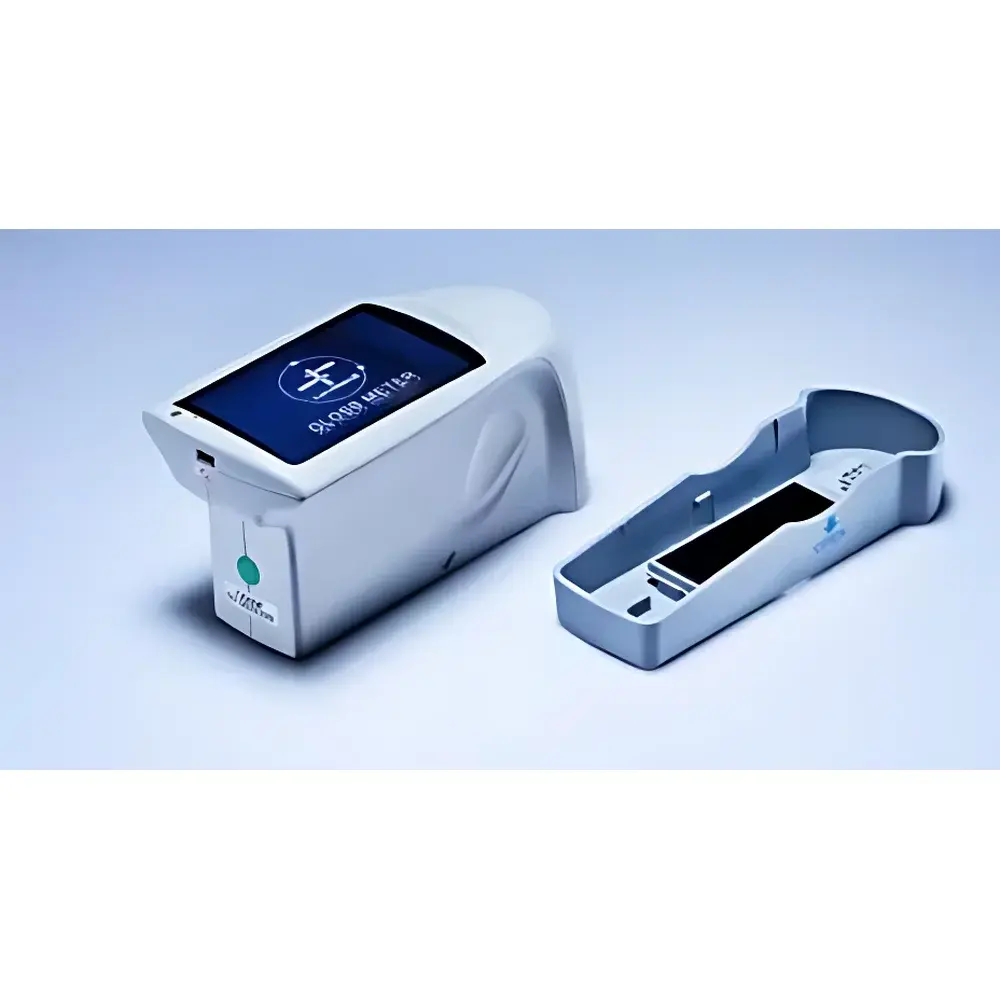
Lovibond TG268/60 Gloss Meter
| Brand | Lovibond (Tintometer) |
|---|---|
| Origin | United Kingdom |
| Model | TG268/60 Gloss Meter |
| Measurement Angles | 20° / 60° / 85° (TG268) |
| Compliance | ISO 2813, ASTM D 523, ASTM D 2457, GB/T 9754 |
| Measurement Area | 20°: 10 × 10 mm |
| 60° | 9 × 15 mm |
| 85° | 5 × 3 mm (TG268) |
| 60° | 9 × 15 mm (TG60) |
| Gloss Range | 20°: 0–2000 GU |
| 60° | 0–1000 GU |
| 85° | 0–160 GU (TG268) |
| Resolution | 0.1 GU |
| Repeatability | ±0.1 GU (0–10 GU), ±0.2 GU (10–100 GU), ±0.2% GU (100–2000 GU) — TG268 |
| Reproducibility | ±0.2 GU / ±0.5 GU / ±0.5% GU across ranges |
| Measurement Time | 1.0 s (TG268), 0.5 s (TG60) |
| Display | 3.5-inch TFT true-color capacitive touchscreen |
| Data Storage | Basic mode: 1,000 readings |
| Statistical & Continuous modes | 5,000 readings each |
| Interface | USB & RS232 |
| Power | 3200 mAh Li-ion battery (≥10,000 measurements per charge, ~8 h runtime) |
| Dimensions | 160 × 75 × 90 mm |
| Weight | 350 g |
| Operating Environment | 0–40 °C, <85% RH (non-condensing) |
| Storage | −20–50 °C |
| Standard Accessories | Calibration tiles (gloss standards), OnShade QC software, AC adapter, USB cable, user manual |
Overview
The Lovibond TG268/60 Gloss Meter is a precision optical instrument engineered for reliable, traceable surface gloss measurement in quality control and R&D environments. Based on the principle of specular reflectance—defined as the ratio of reflected luminous flux to incident luminous flux at a specified geometry—the instrument quantifies surface appearance according to internationally recognized geometric configurations. The TG268 variant supports triple-angle measurement (20°, 60°, and 85°), enabling comprehensive characterization of high-gloss, medium-gloss, and matte surfaces respectively; the TG60 model provides dedicated 60° assessment optimized for general-purpose industrial applications. Both models comply with ISO 2813, ASTM D 523, ASTM D 2457, and GB/T 9754, ensuring metrological consistency across global supply chains and regulatory audits.
Key Features
- Triple-angle capability (TG268): Simultaneous support for 20° (high-gloss), 60° (standard), and 85° (low-gloss/matte) geometries—each with calibrated, fixed-aperture optics and standardized measurement areas (10 × 10 mm, 9 × 15 mm, and 5 × 3 mm respectively).
- High-resolution 3.5-inch TFT capacitive touchscreen with intuitive icon-driven UI, supporting multi-language operation (English default) and real-time graphical feedback during measurement.
- Fast acquisition cycle: 1.0 s per reading (TG268), 0.5 s (TG60), with automatic stabilization detection to minimize operator-induced variability.
- Robust data handling architecture: Internal memory stores up to 1,000 readings in basic mode or 5,000 in statistical/continuous modes—including timestamp, angle, sample ID, and pass/fail flags against user-defined limits.
- Ergonomic handheld design (160 × 75 × 90 mm, 350 g) with balanced weight distribution and non-slip tactile surface, validated for extended use in production-line and field inspection settings.
- Long-life 3200 mAh Li-ion battery certified for ≥10,000 measurements per full charge (~8 hours continuous operation), with low-power sleep mode and USB/RS232 dual-interface connectivity for integration into lab networks or MES systems.
Sample Compatibility & Compliance
The TG268/60 accommodates flat, curved, and textured substrates—including painted metal, coated plastics, lacquered wood, ceramic glazes, and printed packaging—provided the local surface radius exceeds 200 mm for accurate 60° and 85° measurements. Its aperture design minimizes edge effects and scatter interference, particularly critical for low-gloss materials where diffuse reflectance dominates. All factory calibration is performed against NIST-traceable ceramic gloss standards (certified per ISO 2813 Annex B), with optional recalibration services available through Lovibond-accredited service centers. Instrument validation documentation supports GLP/GMP compliance, including audit-ready calibration certificates, uncertainty budgets, and IQ/OQ protocols upon request.
Software & Data Management
OnShade QC Software (included) enables full traceability: users export CSV or PDF reports containing raw data, statistical summaries (mean, SD, CV%, min/max), trend charts, and automated pass/fail evaluation against configurable specification limits. The software supports FDA 21 CFR Part 11-compliant user access control (role-based permissions), electronic signatures, and immutable audit trails for all data modifications. Raw measurement files retain embedded metadata (instrument serial number, firmware version, calibration date, operator ID), facilitating root-cause analysis during non-conformance investigations. Optional integration with LIMS or SAP QM modules is achievable via ASCII/CSV over USB or RS232 using standard protocol templates.
Applications
- Automotive OEMs and Tier-1 suppliers: In-line verification of paint finish uniformity across body panels, bumpers, and interior trims.
- Coatings & inks manufacturers: Batch-to-batch consistency monitoring of solvent-based, waterborne, and UV-curable formulations.
- Plastics processors: Validation of extrusion die settings, mold surface finish, and anti-glare additive dispersion efficacy.
- Packaging converters: Gloss grading of metallized films, laminated cartons, and label stocks to meet retailer visual specifications.
- Academic & government labs: Reference-grade gloss reference material certification and inter-laboratory comparison studies under ISO/IEC 17025 frameworks.
FAQ
What standards does the TG268/60 comply with?
It conforms to ISO 2813, ASTM D 523, ASTM D 2457, and GB/T 9754 for specular gloss measurement at defined geometries.
Can the instrument measure curved surfaces?
Yes—within limits: minimum curvature radius of 200 mm is recommended for reliable 60° and 85° readings; 20° measurements require flatter geometry (<50 mm radius deviation).
Is calibration traceable to national standards?
All factory calibrations use NIST-traceable ceramic standards; certificate of calibration includes measurement uncertainty and traceability statement per ISO/IEC 17025 requirements.
How is data security ensured in regulated environments?
OnShade QC Software implements 21 CFR Part 11 controls—including electronic signatures, audit trail logging, and role-based access—validated for pharmaceutical and medical device quality systems.
What maintenance is required beyond routine calibration?
No optical alignment or internal adjustment is user-serviceable; periodic verification using supplied calibration tiles is recommended before each shift or after instrument impact; full recalibration advised annually or per internal SOP.





