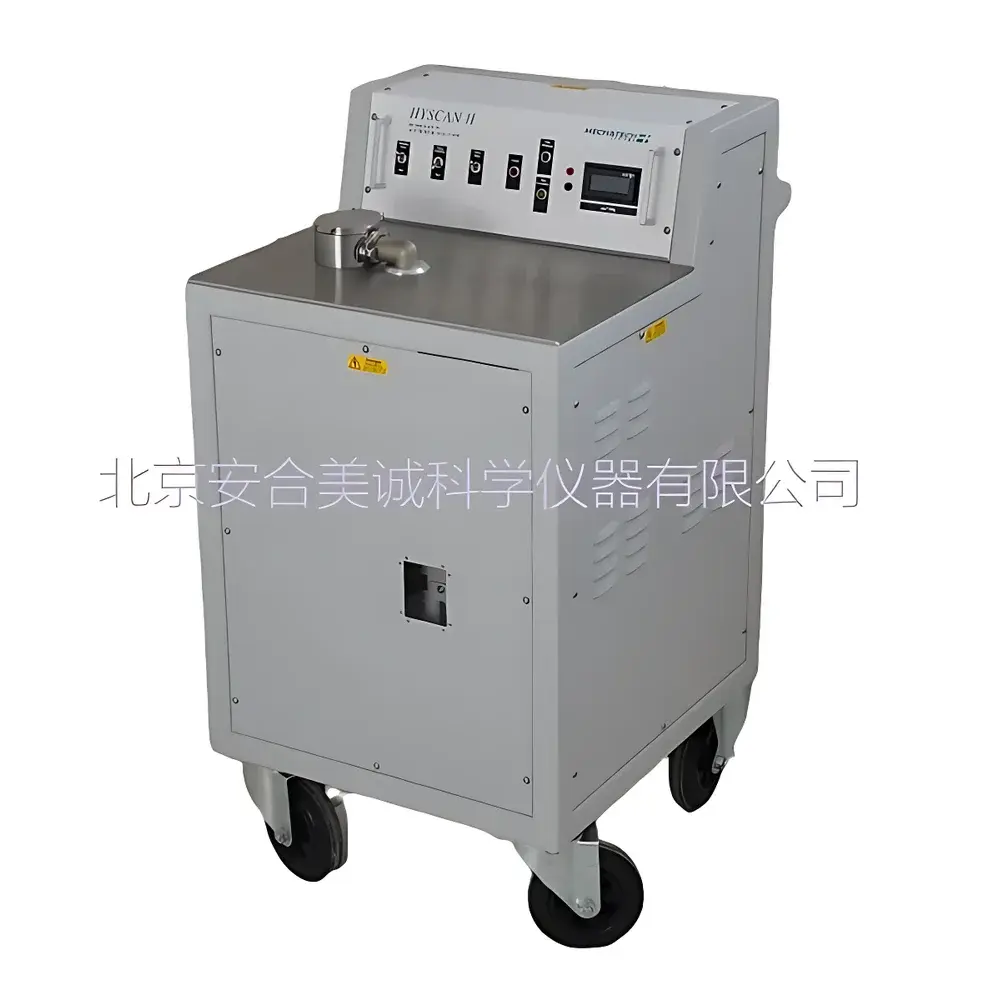
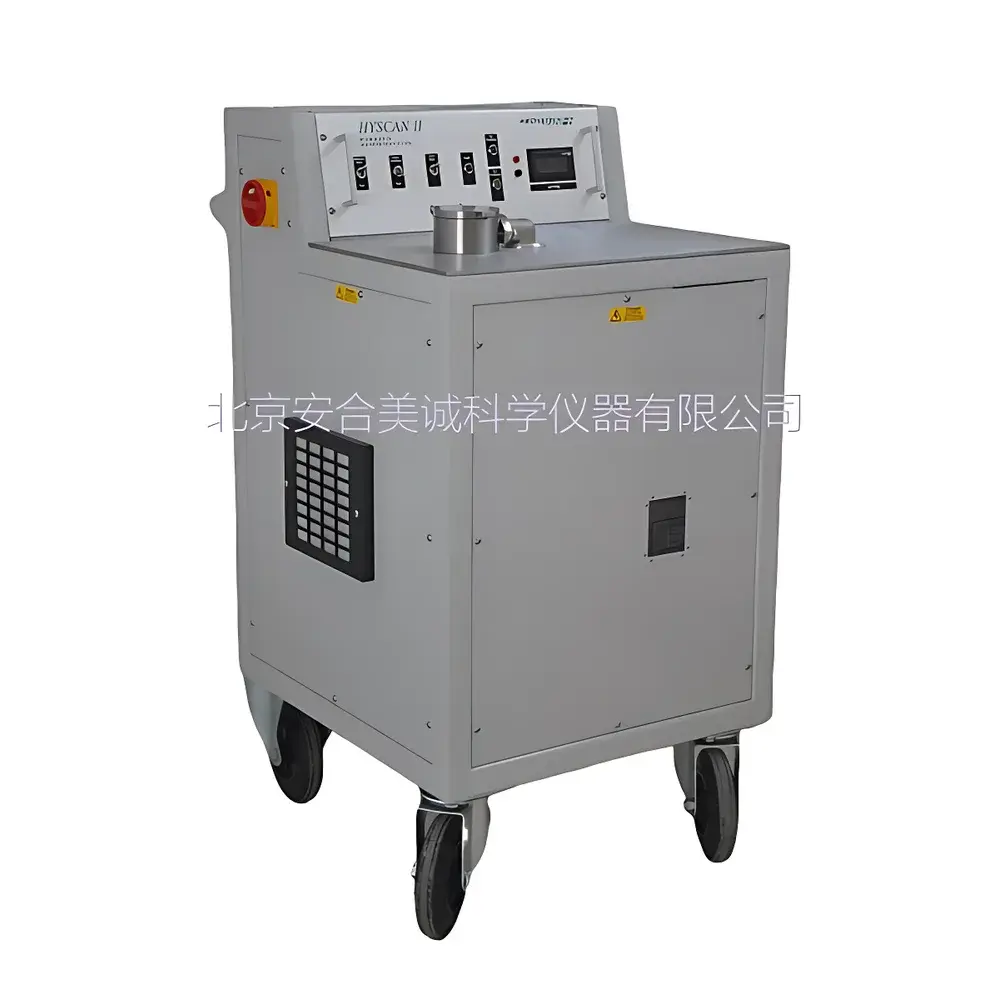
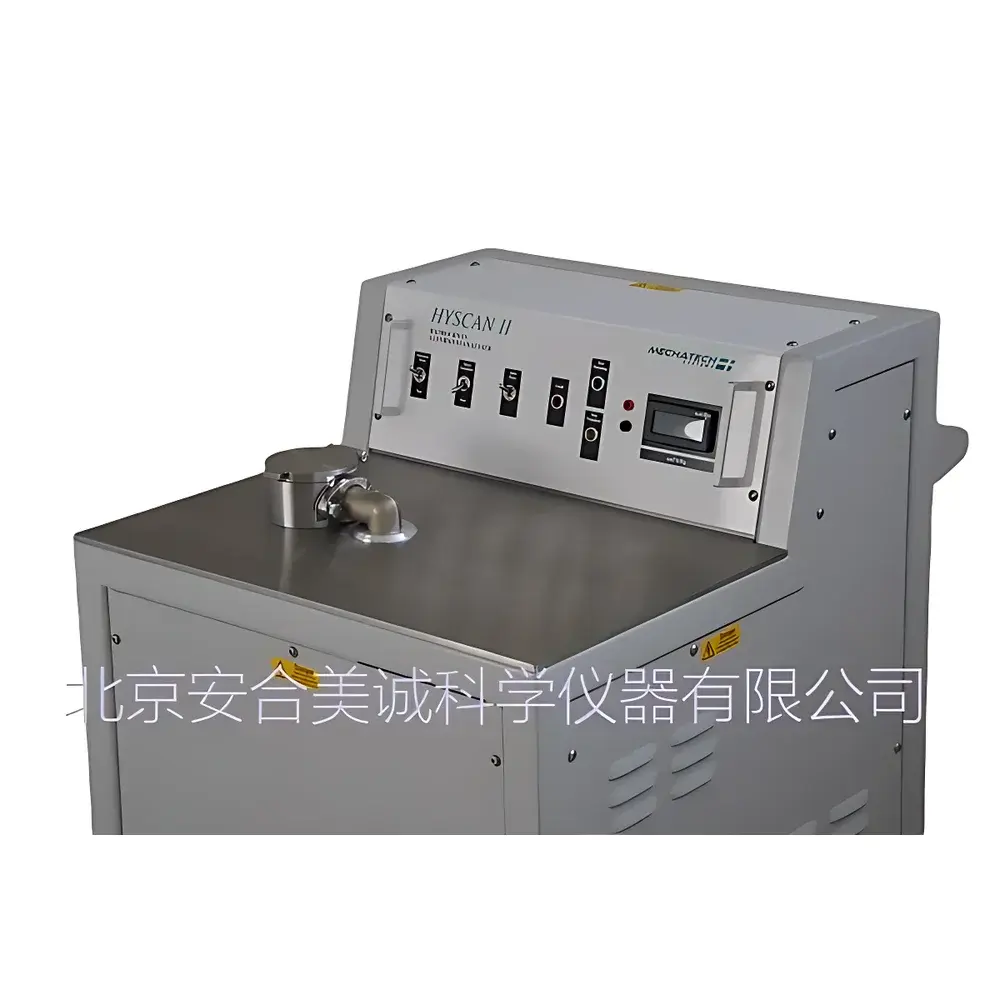
MechaTech Hyscan II Hydrogen Analyzer for Molten Aluminum
| Brand | MechaTech |
|---|---|
| Origin | United Kingdom |
| Model | Hyscan II |
| Dimensions | 600 × 600 × 1000 mm (L×W×H) |
| Weight | 120 kg |
| Power Supply | 220 V / 50 Hz |
| Sample Mass | 100 g |
| Measurement Time | < 5 min |
| Measurement Range | 0–1.99 cm³/100 g |
| Sensitivity | 0.01 cm³/100 g |
| Accuracy | ±5% (vs. vacuum fusion reference method) |
| Vacuum Sensor | Calibrated Pirani gauge |
| Compliance | LMFA Manufacturing License |
Overview
The MechaTech Hyscan II Hydrogen Analyzer is a precision industrial instrument engineered for the quantitative determination of dissolved hydrogen concentration in molten aluminum and aluminum alloys. Hydrogen solubility in liquid aluminum is temperature-dependent, and excessive hydrogen content—typically above 0.15–0.20 cm³/100 g—leads to microporosity, reduced mechanical integrity, and surface defects in castings. The Hyscan II implements the quantitative pressure-decay solidification method: a representative 100 g sample of molten aluminum is extracted under inert atmosphere, transferred into a sealed, thermostatically controlled sample chamber, and subjected to rapid, controlled depressurization. As the metal solidifies under vacuum, trapped hydrogen evolves quantitatively; its partial pressure is measured via a factory-calibrated Pirani vacuum gauge. The instrument computes hydrogen content (cm³/100 g) using first-principles gas law relationships and empirically validated calibration curves traceable to vacuum fusion reference standards.
Key Features
- Measurement completed in under 5 minutes—optimized for furnace-side deployment in high-throughput casting environments
- Sensitivity of 0.01 cm³/100 g enables detection of sub-critical hydrogen levels prior to casting
- Accuracy better than ±5% relative to ASTM E1441-compliant vacuum fusion reference methodology
- Robust mechanical architecture: rigid steel frame, load-rated casters, and IP54-rated enclosure suitable for foundry floor conditions (ambient temperatures up to 50 °C, dust, and thermal radiation)
- Integrated sample chamber with active temperature stabilization prevents premature chilling and ensures reproducible solidification kinetics
- Automated sequence control: programmable valve actuation (V1–V3), vacuum pump timing, and pressure ramping eliminate operator-dependent variability
- LCD interface with intuitive three-button navigation and real-time status feedback; no external PC required for routine operation
- 5-meter armored power cable with retractable stowage system—designed for flexible positioning across multiple holding furnaces or ladles
Sample Compatibility & Compliance
The Hyscan II is validated for use with primary aluminum, secondary alloys (e.g., AA1xxx, AA3xxx, AA6xxx series), and master alloys containing up to 12% silicon. It accommodates samples from ceramic-coated steel crucibles, graphite samplers, and refractory-lined transfer tools. The analyzer conforms to the manufacturing authorization requirements of the International Light Metals Association (LMFA) and supports compliance workflows aligned with ISO 9001:2015 quality management systems. While not intrinsically rated for Zone 1 hazardous areas, its electrical design meets IEC 61000-6-2 (immunity) and IEC 61000-6-4 (emission) standards. Data integrity is maintained through non-volatile memory storage and optional RS232 output compatible with LIMS integration under FDA 21 CFR Part 11 audit-trail configurations when paired with compliant host software.
Software & Data Management
Standalone operation requires no software installation. All measurement data—including date/time stamp, sample ID (manually entered), raw pressure decay curve, final hydrogen value, and pass/fail flag against user-defined thresholds—is retained in internal memory for ≥1,000 tests. Optional RS232 serial interface enables direct export to spreadsheet or MES platforms; ASCII-formatted output includes header metadata and SI-unit consistency (cm³/100 g). An optional thermal printer provides hard-copy reports with instrument ID, calibration due date, and operator signature field. Firmware updates are performed via USB port using signed binary packages verified by onboard cryptographic checksum—ensuring traceability per GLP documentation requirements.
Applications
- Real-time verification of rotary degassing efficiency pre-casting in gravity die, low-pressure, and high-pressure die-casting lines
- Process validation during alloy changeovers and scrap re-melting campaigns
- Root-cause analysis of porosity-related scrap in automotive structural components (e.g., engine blocks, transmission housings)
- Research-grade hydrogen diffusion studies in Al–Mg–Si and Al–Cu–Mn systems under controlled cooling rates
- Qualification of flux formulations and inert gas purging protocols per EN 1706 and ASTM B26/B26M specifications
- Training and certification of metallurgical technicians in foundry process control laboratories
FAQ
What sample preparation is required prior to analysis?
No chemical treatment or fluxing is needed. A clean, dry 100 g sample must be collected directly from the melt using a preheated, inert-coated sampler—standard practice per ISO 11997-1.
Can the Hyscan II be used with alloys containing high magnesium content?
Yes. The sealed sample chamber and rapid solidification protocol minimize Mg oxidation artifacts; validation data exists for alloys with up to 10 wt% Mg (e.g., AA5083, AA5182).
How often does the Pirani gauge require recalibration?
Factory calibration is valid for 12 months under normal operating conditions. Annual recalibration against NIST-traceable vacuum standards is recommended—and supported by MechaTech’s global service network.
Is the instrument suitable for continuous unattended operation?
No. Each test requires manual sample loading and lid sealing. However, sequential analyses (e.g., hourly checks across four furnaces) are routinely performed by a single technician.
Does the system comply with environmental regulations regarding oil vapor emissions?
The integrated dual-stage vacuum pump uses dry scroll technology—zero oil consumption, zero hydrocarbon backstreaming—meeting EU VOC Directive 2004/42/EC and EPA Method 25A emission criteria.
Related Products