
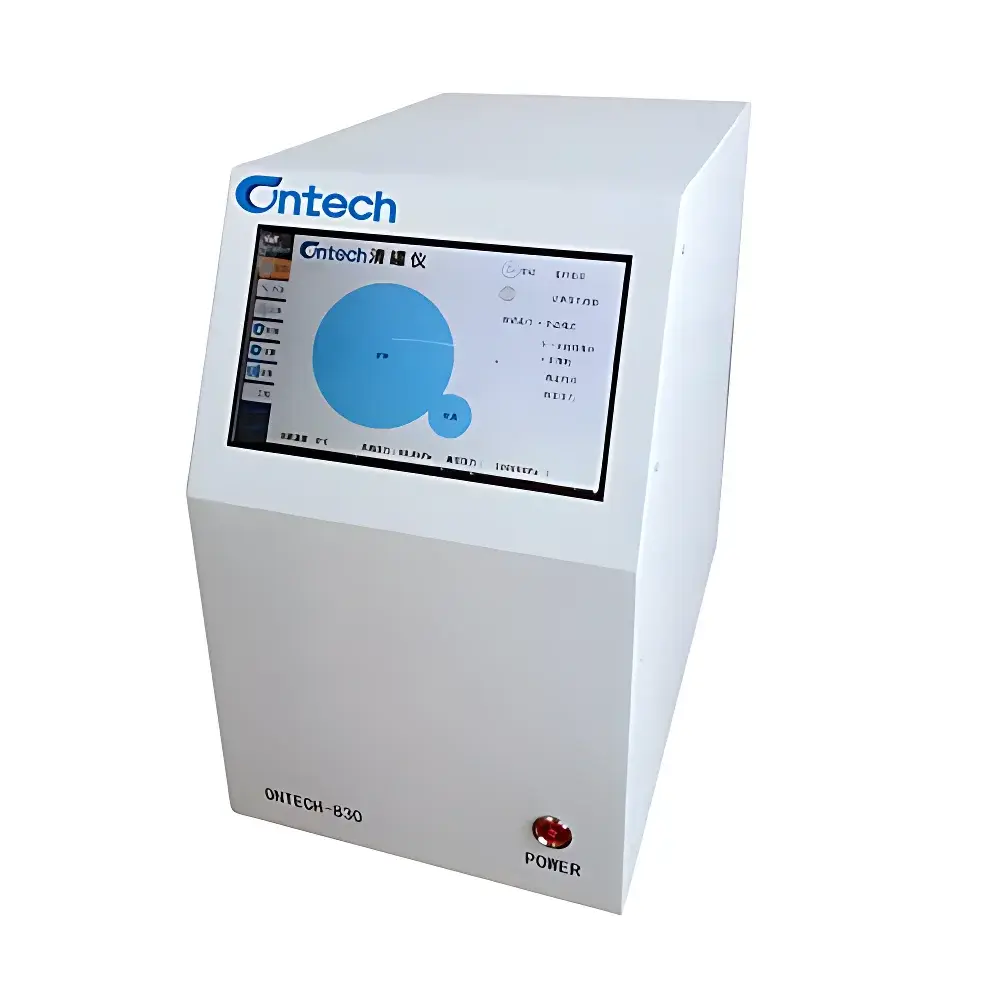
Ontech 830 Automated Canister Cleaning System
| Brand | Ontech |
|---|---|
| Model | Ontech 830 |
| Origin | Guangdong, China |
| Type | Automated Canister and Tedlar® Bag Purge & Humidification System |
| Compliance | HJ 759–2023, HJ 1012–2018, GB/T 14678–1993, HJ 1078–2019, HJ/T 194–2005 |
| Sample Vessels | Summa canisters (1 L, 3 L, 6 L, 15 L), Tedlar® bags |
| Cleaning Stations | 8-position (for 3 L and 6 L canisters) |
| Construction | Electropolished 316 stainless steel with silanized inert surface treatment |
| Pressure Sensing | Dual-sensor system (diffused silicon + vacuum silicon) |
| Control Interface | Touchscreen + PC-based software |
| Humidification | Integrated automated humidification module |
| Power | 220 VAC, 50 Hz |
| Dimensions (W×D×H) | 700 × 650 × 1800 mm |
| Weight | ~120 kg |
Overview
The Ontech 830 Automated Canister Cleaning System is an engineered solution for high-integrity, trace-level preparation of electropolished stainless-steel Summa canisters and Tedlar® sampling bags used in ambient air and emission source monitoring of volatile organic compounds (VOCs). Designed to meet the rigorous requirements of Chinese environmental monitoring protocols—including the 2018–2021 VOC monitoring implementation plans for key regions (e.g., Beijing-Tianjin-Hebei and Fenwei Plain)—the system performs full-cycle automated purging, baking, humidification, and pressure validation. Its operation is grounded in controlled inert-gas flow dynamics and thermal desorption principles, ensuring reproducible removal of residual VOCs down to sub-pptv levels. The system supports compliance-driven workflows for regulatory-grade sampling in fixed-source emissions, fence-line monitoring, ambient air stations (national, regional, urban), and GC-MS laboratory preconcentration pipelines.
Key Features
- Integrated 8-position cleaning station optimized for 3 L and 6 L Summa canisters; compatible with all major commercial canister brands (including Restek, Entech, and Markes) and standard Tedlar® bags.
- Dual-pressure measurement architecture: diffused silicon sensor (0–100 psi) combined with vacuum silicon sensor (1 × 10⁻³–1000 mbar), enabling accurate real-time monitoring across full operational range—from rough vacuum to positive purge pressures.
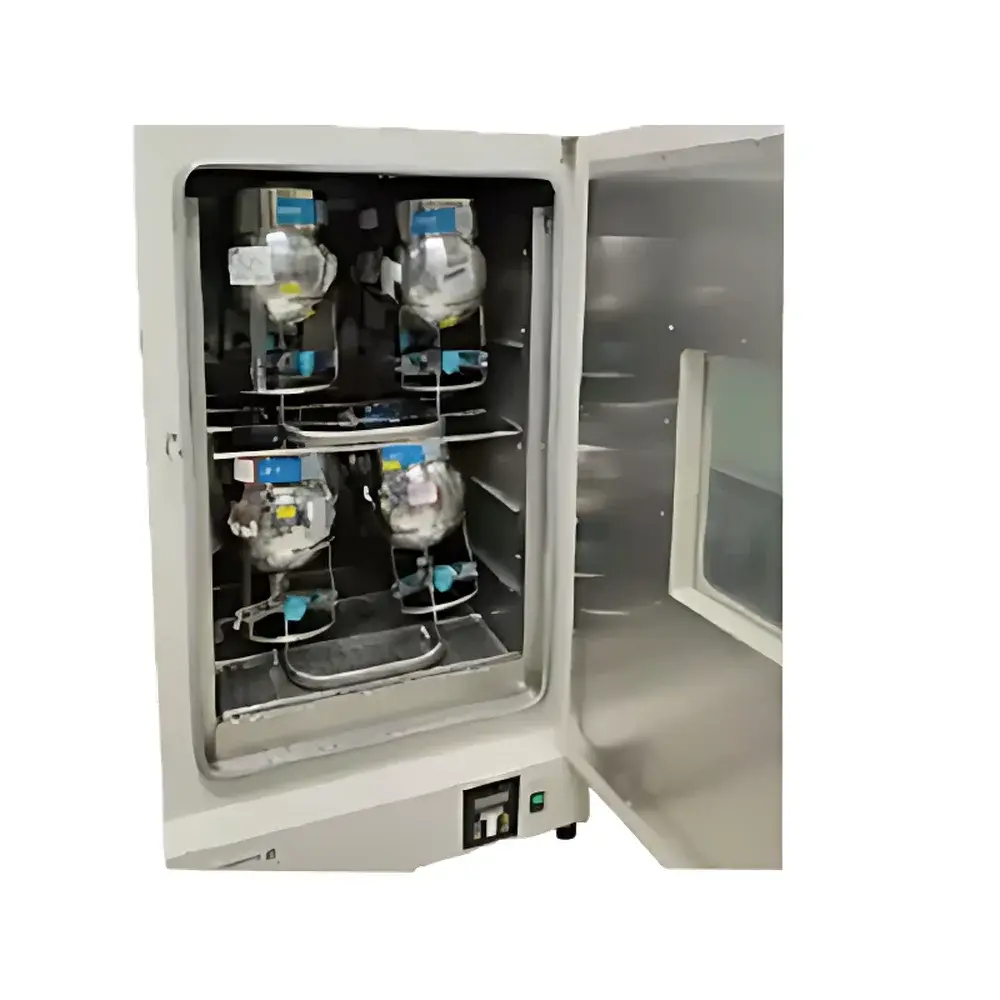
- Heated oven chamber (up to 120 °C, ±1 °C uniformity) with independent PID control per zone, eliminating need for external heating accessories and reducing thermal gradient-induced carryover.
- Modular gas path design: no multi-port valves; each canister station features dedicated, isolated 316 stainless-steel tubing and fittings, minimizing cross-contamination risk and maintaining ultra-low system blank performance.
- Full inertization: all wetted surfaces undergo proprietary silanization treatment post-electropolishing, verified by blank testing per HJ 759–2023 Annex B.
- Embedded touchscreen HMI (10.1″ capacitive) with optional Ethernet/USB PC connectivity; firmware supports audit-trail logging, user-level access control, and timestamped QA/QC report generation (PDF/CSV).
Sample Compatibility & Compliance
The Ontech 830 accommodates standard EPA/ISO-compliant sampling vessels: 1 L, 3 L, 6 L, and 15 L electropolished Summa canisters, as well as 1–10 L Tedlar® bags with integrated septa. It fulfills method-specific conditioning requirements outlined in HJ 759–2023 (canister-based VOC analysis by GC-MS), HJ 1012–2018 (portable NMHC analyzers), and HJ/T 194–2005 (manual ambient air monitoring). All cleaning cycles are programmable to match SOPs for blank verification, triplicate purging, humidity equilibration (30–80% RH), and final pressurization (typically 20–30 psia with zero-air or nitrogen). The system’s hardware and software architecture align with GLP documentation standards and support retrospective data review for regulatory audits.
Software & Data Management
The embedded control software provides sequence-based method editor with customizable parameters: purge gas type (N2, zero-air, synthetic air), flow rate (0.1–5.0 L/min), bake temperature/time, humidification duration, and final stabilization hold. Each run generates a machine-readable log file containing timestamps, sensor readings, valve actuation events, and pass/fail status per canister. Reports include QC metrics—initial and final pressure decay rates, dew point stability, and integrated humidity exposure—and are exportable with digital signature capability. Optional PC software enables centralized fleet management, remote diagnostics, and integration with LIMS via CSV or OPC UA interfaces.
Applications
- Preparation of canisters for ambient VOC monitoring networks (national reference stations, urban air quality sites, regional background stations).
- Conditioning of sampling media prior to fixed-source stack testing and fugitive emission surveys.
- Support for fence-line monitoring programs requiring frequent, low-blank container reuse under HJ 1078–2019 and related sulfur compound methods.
- Lab-based preprocessing for thermal desorption–GC-MS analysis, especially where sensitivity below 0.1 ppbv is required for C2–C12 hydrocarbons, oxygenates, and halogenated VOCs.
- Quality assurance workflows including method blanks, field blanks, and duplicate recovery checks per HJ/T 194–2005 Section 6.4.
FAQ
Does the Ontech 830 support automated humidity control during canister conditioning?
Yes. The system integrates a calibrated humidification module capable of delivering stable relative humidity (30–80% RH, ±3% RH accuracy) directly into the purge stream, meeting HJ 759–2023 requirements for moisture-equilibrated canisters.
Can the system validate cleaning efficacy without manual intervention?
Each cycle records pressure decay profiles and final purge gas composition (when paired with optional inline FID or PID); users may configure pass/fail thresholds based on HJ 759–2023 blank criteria (e.g., <0.05 ppbv total VOCs).
Is the software compliant with data integrity requirements such as FDA 21 CFR Part 11?
While not certified out-of-the-box for Part 11, the audit trail, electronic signatures, and immutable log structure provide foundational elements for lab-specific validation under GLP/GMP frameworks.
What maintenance is required for long-term blank performance?
Quarterly verification of sensor calibration, annual replacement of O-rings and desiccant cartridges, and biannual silanization re-treatment of critical gas paths—documented in the included Maintenance Logbook.
Related Products







