
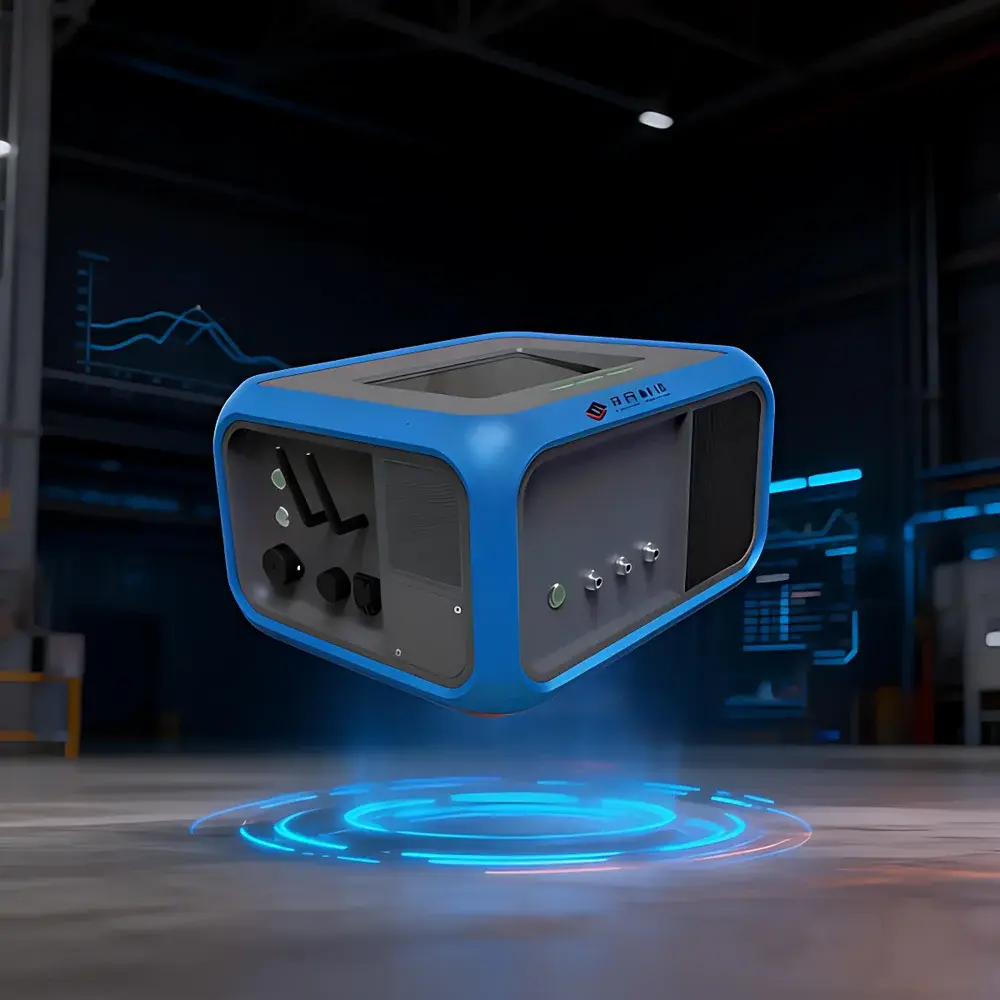
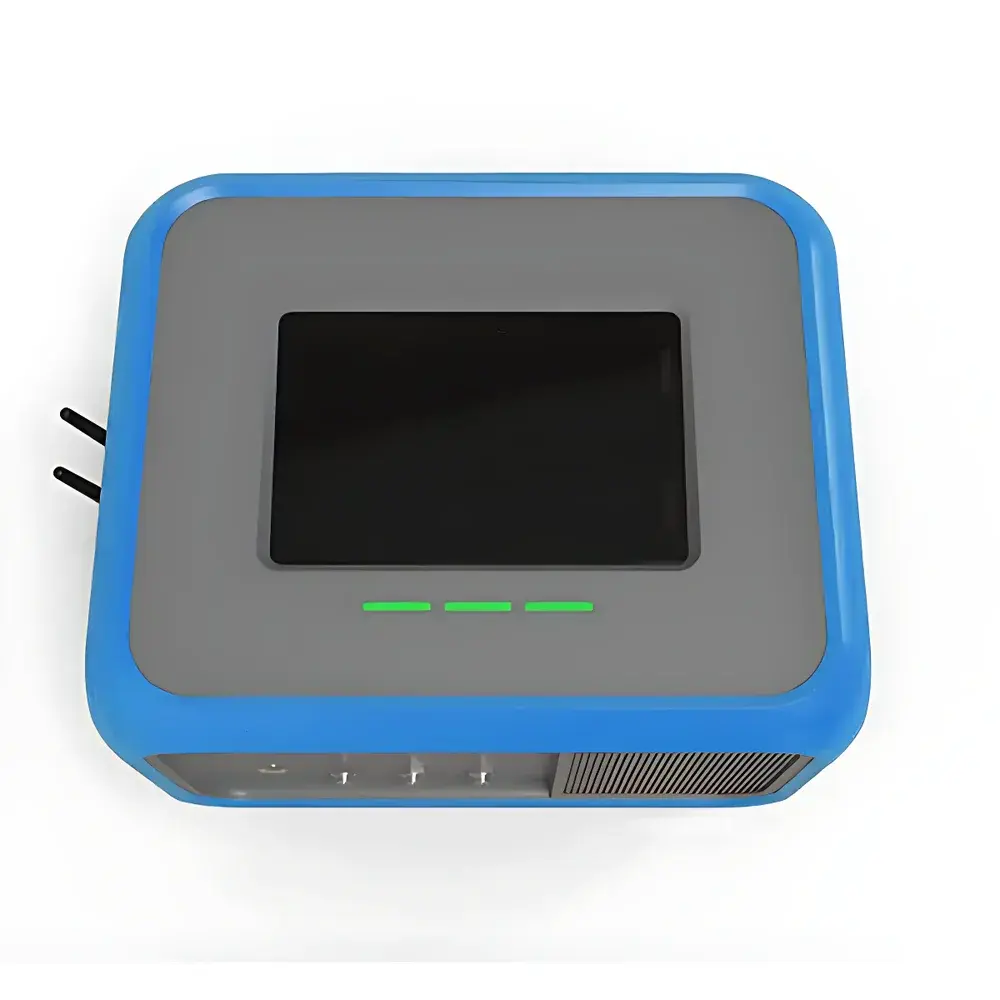
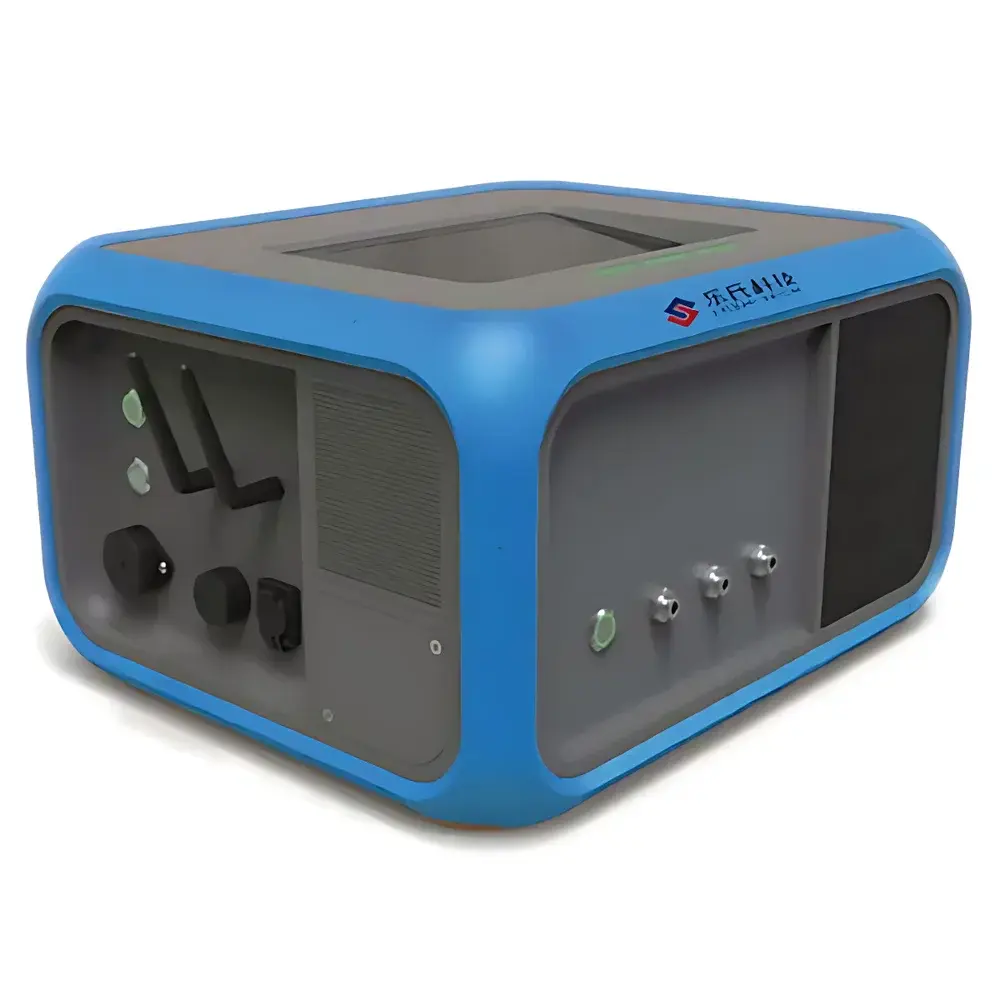
LESHI 9100-ODS High-Precision Ozone-Depleting Substances Analyzer
| Brand | Leshi |
|---|---|
| Origin | Beijing, China |
| Manufacturer Type | Authorized Distributor |
| Country of Origin | China |
| Model | 9100-ODS |
| Price Range | USD 365,000 – 408,000 |
| Measurement Principle | Fourier Transform Infrared Spectroscopy (FTIR) |
| Application Domain | Environmental Compliance & Industrial Emissions Monitoring |
| Detection Principle | FTIR Absorption Spectroscopy |
| Accuracy | ≤ ±2% of Full Scale |
| Target Gases | 30 Primary ODS Compounds (e.g., CFC-11, CFC-12, HCFC-22, HCFC-141b, Halon-1211, Halon-1301, CCl₄, CH₃Br, C₂H₃Cl₃) |
| Response Time | ≤ 120 s |
| Repeatability | < 2% of Full Scale |
Overview
The LESHI 9100-ODS is a field-deployable, high-precision ozone-depleting substances (ODS) analyzer engineered for regulatory-grade quantification and identification of halogenated compounds in ambient air, stack emissions, and confined industrial spaces. Built upon a robust benchtop FTIR spectrometer architecture adapted for portable operation, the instrument leverages high-resolution interferometric detection (0.5 cm⁻¹ nominal resolution) and chemometric spectral deconvolution to resolve overlapping absorption features across the mid-infrared range (600–4,000 cm⁻¹). Unlike single-gas electrochemical or NDIR sensors, the 9100-ODS simultaneously detects and quantifies up to 30 regulated ODS species—including chlorofluorocarbons (CFCs), hydrochlorofluorocarbons (HCFCs), halons, carbon tetrachloride, methyl bromide, and 1,1,1-trichloroethane—without hardware reconfiguration. Its design complies with the analytical requirements outlined in U.S. EPA Method TO-14A, ISO 13867:1998 (for halocarbon analysis), and EU Regulation (EC) No 1005/2009 on ODS, supporting both routine compliance verification and forensic leak investigation.
Key Features
- Simultaneous multi-component quantification of 30 priority ODS compounds using pre-validated, matrix-matched calibration models—no module swaps or sensor replacements required.
- Field-ruggedized FTIR platform with thermoelectrically stabilized interferometer and sealed, purged optical path to maintain spectral fidelity under variable temperature (−10 °C to +50 °C) and relative humidity (10–95% RH non-condensing) conditions.
- Integrated dual-path sampling system: one optimized for low-concentration ambient monitoring (detection limits down to 0.5 ppb for CFC-11), and another for high-concentration point-source sampling (up to 10,000 ppm full scale) without manual range switching.
- Open spectral library architecture compliant with ASTM E1655-22 standards, enabling users to import and validate custom reference spectra for emerging or region-specific ODS analogues (e.g., HCFC-123, HCFC-225ca/cb).
- Battery-operated mobility: 6.5-hour continuous runtime on integrated Li-ion pack; optional external power input (100–240 VAC, 50/60 Hz) for extended stationary deployments.
- IP54-rated enclosure with ergonomic handheld grip and reinforced sampling probe for access to tight spaces—including refrigeration unit interstices, ductwork joints, and recovery cylinder headspaces.
Sample Compatibility & Compliance
The 9100-ODS accepts gas-phase samples directly from ambient air, exhaust stacks, or pressurized recovery cylinders via heated stainless-steel sample lines (standard 1/8″ OD, 0.020″ wall). It supports sampling at flow rates of 0.5–2.0 L/min with integrated mass flow control and real-time pressure/temperature compensation. All quantitative calibrations are traceable to NIST-certified standard gas mixtures (SRM 1840a, SRM 2622), and instrument performance verification follows ISO/IEC 17025:2017 guidelines for testing laboratories. Data output formats comply with EPA CDX submission requirements and support GLP/GMP audit trails per 21 CFR Part 11 when paired with optional secure software licensing.
Software & Data Management
The instrument operates via LESHI Analytical Suite v4.2—a Windows-based application providing real-time spectral visualization, automated peak integration, and multi-component least-squares fitting. All raw interferograms, processed spectra, and quantification reports are stored in HDF5 format with embedded metadata (operator ID, GPS coordinates, ambient T/P, calibration version). The software includes built-in reporting templates aligned with China’s HJ 1012-2018 standard for ODS emission monitoring and facilitates export to CSV, PDF, and XML for integration into enterprise environmental management systems (EMS) or regulatory portals such as China’s National Emission Permit Management Information Platform.
Applications
- Regulatory Compliance Monitoring: Continuous or periodic measurement of CFC-11, HCFC-22, and other listed ODS at production facilities (refrigerant synthesis, foam-blowing plants) to verify adherence to national emission thresholds defined in GB 31571–2015 and Montreal Protocol phase-out schedules.
- Leak Detection & Localization: Mobile screening of HVAC chillers, cold storage units, and fire suppression systems using spatial concentration mapping and time-resolved gradient analysis to isolate micro-leak sources (<1 g/yr equivalent) without system shutdown.
- End-of-Life ODS Recovery Oversight: Verification of residual ODS content in recovered cylinders prior to destruction, ensuring destruction efficiency meets ≥99.99% removal criteria per UNEP Technical Options Committee guidelines.
- Research & Method Development: Reference-grade characterization of ODS speciation in atmospheric sampling campaigns or laboratory-scale abatement process studies.
FAQ
Does the 9100-ODS require annual factory recalibration?
No—field calibration verification using certified span gases is recommended every 90 days; full interferometer alignment and detector response validation are performed biannually per the manufacturer’s maintenance schedule.
Can it detect ODS in the presence of high CO₂ or water vapor?
Yes—the instrument employs dynamic background subtraction and water vapor compensation algorithms validated against humidified test matrices per ISO 12039:2000 Annex B.
Is spectral data export compatible with third-party chemometric tools?
Yes—raw interferograms and absorbance spectra are exportable in JCAMP-DX and ASCII formats for use with Unscrambler®, Pirouette®, or Python-based scikit-learn workflows.
What certifications does the device hold for international deployment?
It carries CE marking (EMC Directive 2014/30/EU, Low Voltage Directive 2014/35/EU), RoHS 2011/65/EU compliance, and has undergone type evaluation per IEC 61000-6-2/6-4 for industrial environments.
How is data integrity ensured during remote monitoring?
All measurements include cryptographic hash signatures, timestamped audit logs, and role-based user authentication—fully configurable to meet 21 CFR Part 11 electronic record requirements when enabled via software license.
Related Products







