
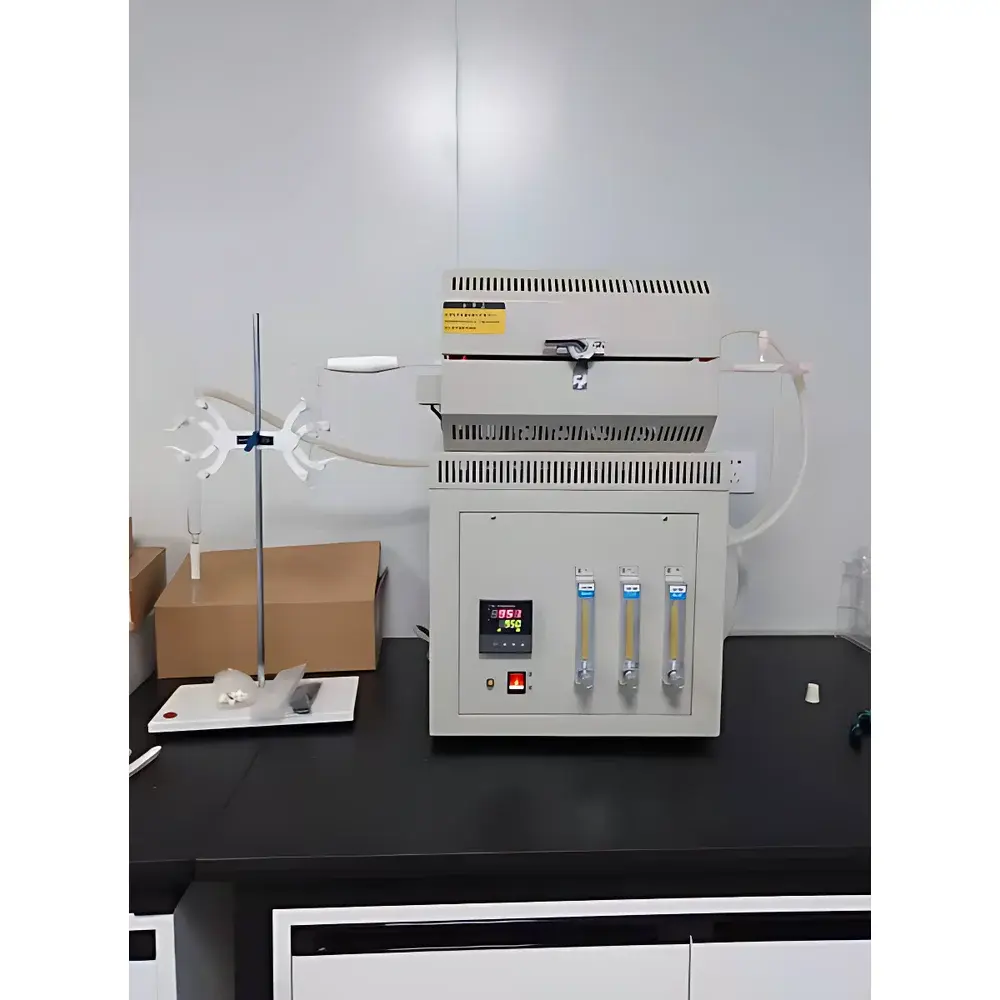
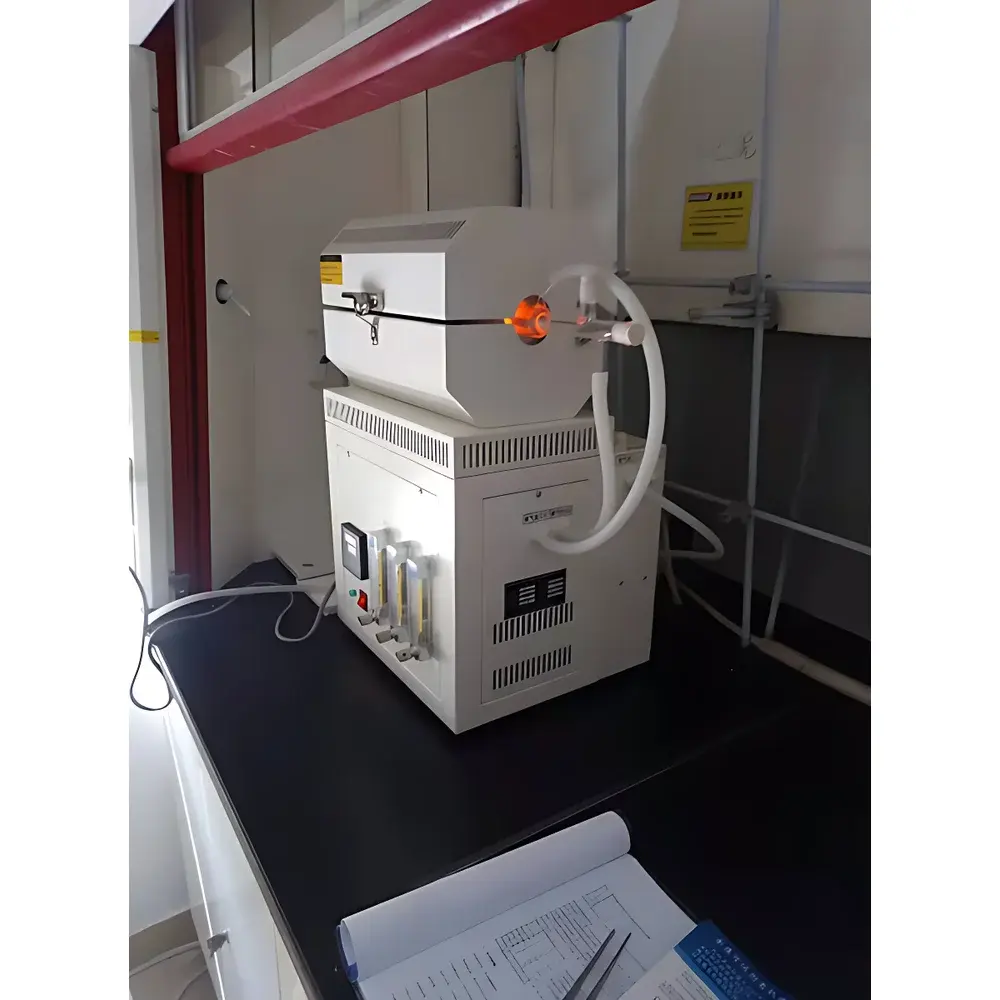
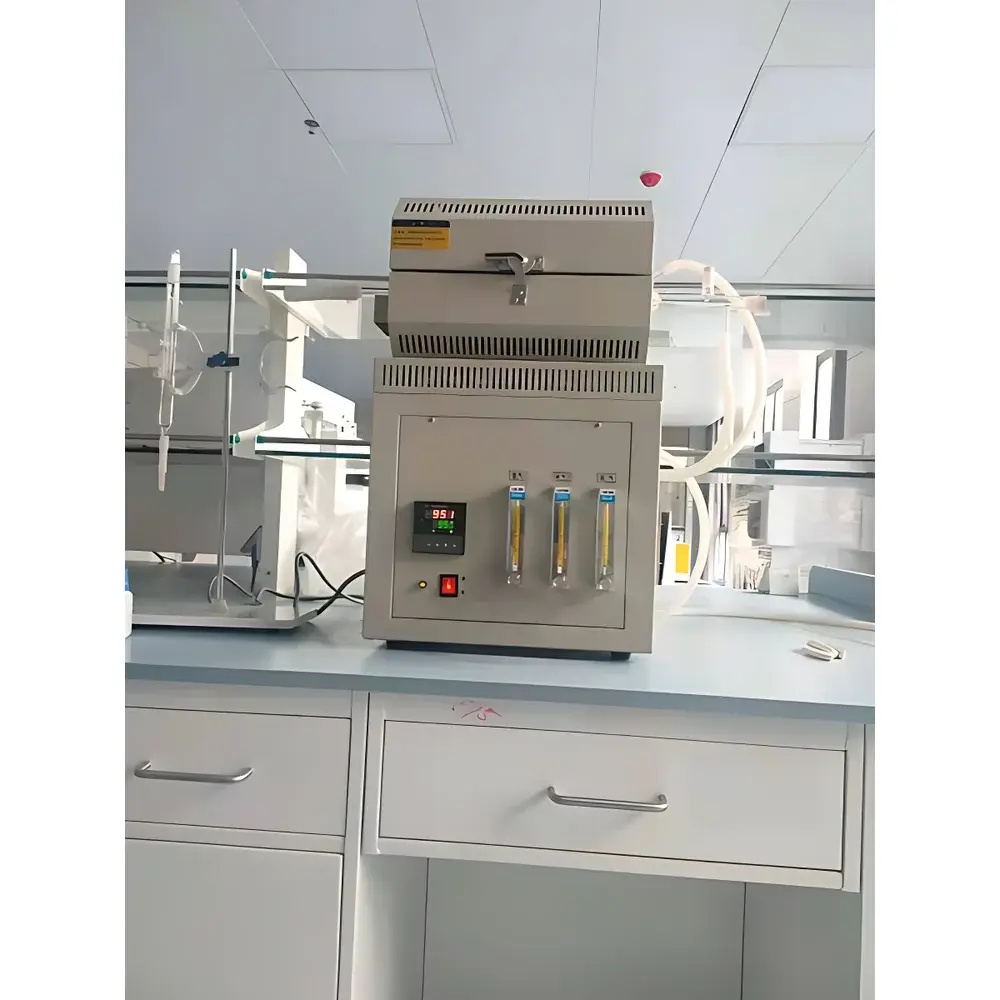
Zhuochi AOX-3 Adsorbable Organic Halogens (AOX) Analyzer
| Brand | Zhuochi |
|---|---|
| Origin | Zhejiang, China |
| Manufacturer Type | Authorized Distributor |
| Country of Manufacture | China |
| Model | AOX-3 |
| Price | USD 4,200 (FOB Zhejiang) |
| Measurement Principle | Combustion–Microcoulometric Titration |
| Measurement Range | 0.8–1000 µg/L as Cl⁻ |
| Accuracy | ±<5% (vs. certified reference materials) |
| Repeatability (RSD) | <5% at ≥10 µg/L |
| Limit of Detection (LOD) | 0.8 µg/L as Cl⁻ |
| Resolution | 0.1 µg/L (digital display) |
Overview
The Zhuochi AOX-3 Adsorbable Organic Halogens (AOX) Analyzer is a dedicated benchtop combustion–microcoulometric system engineered for the quantitative determination of adsorbable organic halogen compounds—including chlorinated, brominated, and iodinated organics—in aqueous environmental matrices. It operates in full compliance with internationally recognized standard methods: ISO 9562:1989 (Water quality — Determination of adsorbable organic halogen (AOX) — Microcoulometric method), GB/T 15959–1995 (identical technical basis to ISO 9562), and HJ/T 83–2001 (Chinese EPA standard for AOX analysis in water by ion chromatography—used here in conjunction with microcoulometric detection post-combustion). The instrument thermally decomposes halogenated organic molecules at 950 °C in an oxygen-rich quartz furnace, converting all covalently bound halogens into hydrogen halides (HX), which are then absorbed in an aqueous sodium hydroxide trap and quantified via microcoulometric titration using silver ions. This principle ensures stoichiometric response across halogen types and eliminates interferences from inorganic halides when proper sample pretreatment (e.g., acidification and adsorption on activated carbon) is applied per standard protocols.
Key Features
- High-temperature quartz combustion furnace (up to 950 °C) with precise PID temperature control and thermal stability ±2 °C over 8-hour continuous operation
- Integrated microcoulometric detector with Ag⁺/Ag redox electrode pair and real-time charge integration circuitry
- Dual-mode sample introduction: accommodates both liquid samples (via ceramic boat or quartz boat) and solid-phase extracts (e.g., activated carbon cartridges post-adsorption)
- Automated gas flow control (O₂ carrier + auxiliary purge) with mass flow meters calibrated to ±1% FS
- Self-diagnostic firmware with error logging, calibration status tracking, and end-of-run confirmation signal
- Modular design enabling seamless coupling with external ion chromatography systems for method cross-validation or speciation workflows
Sample Compatibility & Compliance
The AOX-3 accepts a broad range of environmental water samples—including surface water, wastewater effluent, leachates, and drinking water—following standardized adsorption on activated carbon (per ISO 9562 Section 6). Solid samples (e.g., sediments, sludges) require Soxhlet or ultrasonic extraction prior to carbon adsorption. The system meets essential regulatory data integrity requirements: audit-trail-enabled calibration logs, user-access-level controls (operator/admin), and electronic record retention compatible with GLP-compliant laboratory information management systems (LIMS). While not pre-certified to FDA 21 CFR Part 11, its software architecture supports configuration for electronic signature implementation and secure data export (CSV, PDF reports with embedded metadata). All hardware components comply with IEC 61010-1:2010 safety standards for electrical equipment used in laboratory environments.
Software & Data Management
Control and data acquisition are managed via the standalone AOX-Control v2.1 software suite (Windows 10/11 compatible), featuring intuitive wizard-driven method setup, real-time coulometric current visualization, and automated calculation of AOX concentration (µg/L as Cl⁻) using Faraday’s law and user-defined calibration factors. Raw data files (.axd) store timestamped detector signals, furnace temperature profiles, gas flow rates, and operator annotations. Report generation includes customizable templates aligned with ISO/IEC 17025 documentation requirements—supporting inclusion of uncertainty budgets (k=2), calibration certificate references, and QC sample results. Export formats include CSV (for statistical analysis in R or Python), PDF/A-1b (archival), and XML (LIMS ingestion).
Applications
- Regulatory monitoring of AOX emissions from pulp and paper mills, chlor-alkali plants, and pharmaceutical manufacturing facilities
- Wastewater treatment plant (WWTP) influent/effluent characterization for halogenated micropollutant load assessment
- Environmental impact assessments (EIA) requiring baseline AOX screening in receiving waters
- Research on formation and abatement of disinfection by-products (DBPs) in chlorinated drinking water systems
- Validation of advanced oxidation processes (AOPs) targeting persistent halogenated organics (e.g., PCBs, PBDEs, chlorophenols)
FAQ
What sample volume is required for one AOX analysis?
Typical analysis uses 100–500 mL of water sample, depending on expected AOX concentration and adsorption efficiency; lower volumes may be used with pre-concentration steps.
Can the AOX-3 analyze bromine- or iodine-containing compounds with equal accuracy?
Yes—the microcoulometric detection responds stoichiometrically to Cl⁻, Br⁻, and I⁻; results are reported as µg/L AOX (expressed as Cl⁻ equivalent) unless species-specific correction factors are applied during data reduction.
Is routine maintenance limited to consumables?
Primary consumables include quartz boats, activated carbon cartridges, NaOH absorption solution, and AgNO₃ electrolyte; furnace tube inspection and electrode polishing are recommended every 200 runs.
Does the system support unattended overnight operation?
Yes—batch mode allows up to 24 sequential analyses with auto-start/stop, integrated cooling delay, and alarm-triggered shutdown on O₂ pressure loss or temperature deviation.
How is method validation performed according to ISO 9562?
Validation requires analysis of certified reference materials (e.g., NIST SRM 2974), blank spikes, duplicate recovery tests (target 80–120%), and ongoing QC checks using secondary standards traceable to national metrology institutes.
Related Products







