
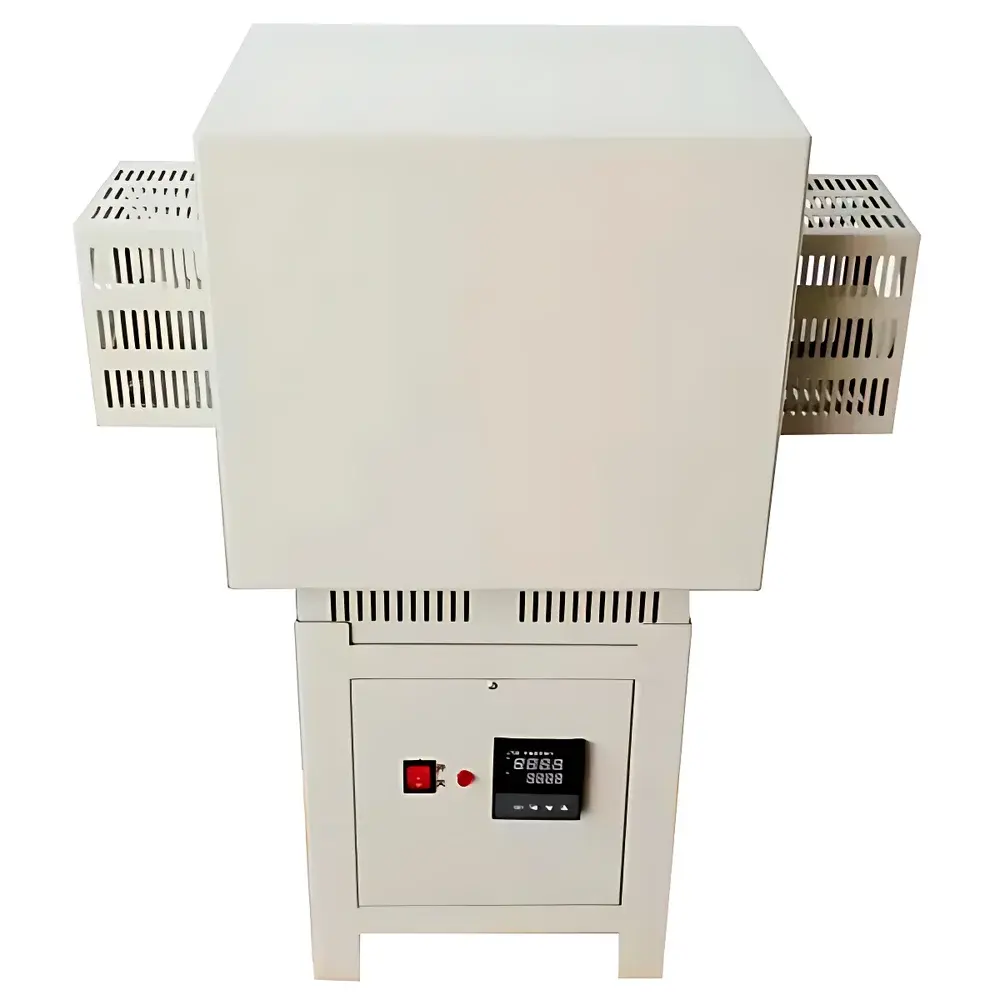
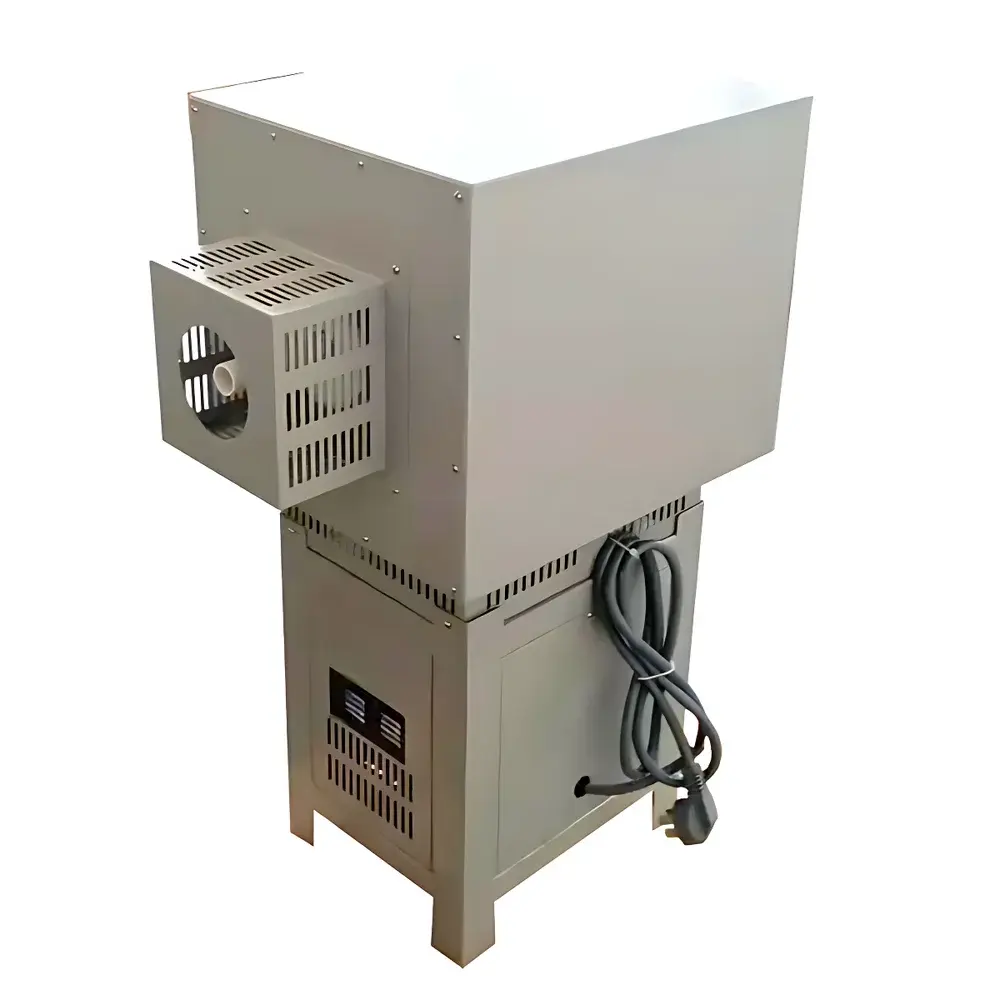
LYT 1255-1999 Compliant Total Sulfur Analyzer for Soil – Zhuochi SK3-2.5-13 Laboratory Tube Furnace System
| Brand | Zhuochi |
|---|---|
| Origin | Zhejiang, China |
| Model | SK3-2.5-13 |
| Type | Laboratory Benchtop Tube Furnace System |
| Temperature Range | 100–1300 °C |
| Temperature Uniformity | ±1 °C |
| Heating Zone Length | 280 mm |
| Tube ID Compatibility | φ22 mm |
| Max Ramp Rate | 50 °C/min (adjustable) |
| Power Rating | 2.5 kW |
| Supply | 220 V, 50 Hz |
| Weight | ~22 kg |
| Compliance | Designed for LYT 1255–1999 (Forestry Industry Standard of the People’s Republic of China: Determination of Total Sulfur in Soils by High-Temperature Combustion–Infrared Absorption Method) |
Overview
The Zhuochi SK3-2.5-13 is a laboratory-grade programmable tube furnace system engineered specifically to support total sulfur quantification in soil samples in strict accordance with the Chinese forestry industry standard LYT 1255–1999. This standard specifies a high-temperature combustion–infrared absorption methodology, wherein soil samples are combusted at controlled temperatures ≥1200 °C in an oxygen-rich atmosphere, converting all sulfur species—including sulfides, sulfates, and organosulfur compounds—into sulfur dioxide (SO₂). The evolved SO₂ gas is then swept through an infrared gas analyzer for selective, quantitative detection. The SK3-2.5-13 provides the thermal platform essential for complete, reproducible oxidation: its 280 mm uniform heating zone, stable ±1 °C temperature control, and rapid, programmable ramping (up to 50 °C/min) ensure consistent sample decomposition across replicate runs. Constructed with high-radiation, low-thermal-mass ceramic fiber insulation and corrosion-resistant heating elements, the furnace delivers energy efficiency—approximately 50% lower power consumption than conventional muffle or resistance furnaces—without compromising thermal stability or longevity.
Key Features
- High-precision programmable temperature control via LTDE digital controller with PID + SSR regulation, enabling multi-step heating profiles (ramp, hold, cool) with 1 °C resolution and ±1 °C uniformity over the 280 mm hot zone.
- Dual-stage overtemperature protection: primary electronic cutoff and secondary independent mechanical thermostat, meeting IEC 61000-4-5 surge immunity and EN 60519-1 safety requirements for laboratory heating equipment.
- Optimized thermal architecture: six-sided ultra-lightweight ceramic fiber board chamber with fiber blanket insulation; external casing finished in phosphate-treated, electrostatically applied gray powder coating for corrosion resistance and mechanical durability.
- Integrated electrical design: pre-wired heater terminals, thermocouple feedthrough (S-type PtRh–Pt), and control electronics housed beneath the furnace base—no field wiring required beyond mains connection.
- Modular compatibility: designed to accept standard quartz or high-purity alumina combustion tubes (OD φ22 mm), paired with ceramic combustion boats (supplied: 20 pcs) and optional quartz combustion tubes (1 pc included).
Sample Compatibility & Compliance
The SK3-2.5-13 is validated for use in soil matrices per LYT 1255–1999, supporting sample masses of 0.5–2.0 g in inert crucibles under continuous O₂ flow (≥1.5 L/min). It accommodates heterogeneous, high-organic, or clay-rich soils without clogging or thermal lag when operated within the specified 100–1300 °C range. While LYT 1255–1999 is a national standard, the furnace’s thermal performance aligns with internationally recognized combustion-based sulfur analysis frameworks, including ASTM D3177 (total sulfur in coal), ISO 10156 (gas analysis safety), and EPA Method 5 (stack gas SO₂). For regulated laboratories, the system supports GLP-compliant operation when paired with audit-trail-capable data loggers and calibrated reference gases (e.g., certified SO₂/N₂ standards).
Software & Data Management
The LTDE programmable controller stores up to 30 user-defined heating programs, each with up to 32 segments (ramp rate, target temperature, dwell time). All setpoints, actual temperatures, and elapsed times are logged internally at 1-second intervals and exportable via RS485/Modbus RTU to third-party SCADA or LIMS platforms. Though the furnace itself lacks embedded Wi-Fi or cloud connectivity, it interfaces seamlessly with PC-based acquisition software (e.g., LabVIEW or custom Python scripts) using standard Modbus registers. For FDA 21 CFR Part 11 compliance, external validation packages—including IQ/OQ documentation templates, calibration certificates for S-type thermocouples, and traceable NIST-traceable temperature mapping reports—are available upon request.
Applications
- Quantitative total sulfur determination in forest, agricultural, and contaminated site soils per LYT 1255–1999.
- Method development and validation for combustion–IR, combustion–IC (ion chromatography), or combustion–UV fluorescence sulfur assays.
- Thermal pretreatment of solid environmental samples prior to elemental analysis (e.g., ICP-OES, AAS) where sulfur interference must be eliminated.
- Controlled pyrolysis studies requiring precise, repeatable heating profiles in inert or oxidative atmospheres.
- Calibration and verification of continuous emission monitoring systems (CEMS) for SO₂ using synthetic soil surrogates.
FAQ
What is the intended application of the SK3-2.5-13 according to LYT 1255–1999?
It serves as the high-temperature combustion source in the standardized method for converting all sulfur forms in soil into SO₂ gas, enabling subsequent infrared absorption measurement.
Can this furnace be used with automated sample introduction systems?
Yes—the furnace features standardized tube dimensions (φ22 mm OD), bottom-mounted thermocouple and power terminals, and Modbus RTU output, making it compatible with commercial auto-samplers and gas-handling manifolds.
Is the furnace suitable for sulfur analysis in non-soil matrices (e.g., sediments or sludge)?
While not explicitly validated in LYT 1255–1999 for those matrices, its thermal profile and gas-tight configuration have been successfully adapted for sediment and digested sludge per modified EPA 3015A protocols.
Does the system include software for data export and report generation?
The LTDE controller provides raw time-series temperature data via RS485; dedicated reporting software is not bundled but interoperates with common industrial data acquisition tools.
What maintenance is required to sustain accuracy over extended operation?
Annual verification of thermocouple calibration against a reference standard and periodic inspection of ceramic fiber integrity and electrical connections are recommended—no consumable parts beyond combustion tubes and boats are required under normal use.
Related Products







