
Zhuochi 658-2013 Soil Organic Carbon Combustion Tube Furnace System
| Brand | Zhuochi |
|---|---|
| Origin | Zhejiang, China |
| Model | 658-2013 |
| Instrument Type | Tube Furnace |
| Max Temperature | 1100 °C |
| Temperature Stability | ±1 °C |
| Display Resolution | 1 °C |
| Heating Power | 2.5 kW |
| Voltage/Frequency | 220 V / 50 Hz |
| Tube Dimensions | Ø20 mm × 600 mm |
| Internal Chamber Diameter | 20 mm |
| Nominal Volume | 20 mL |
| Heating Method | Resistance Wire |
| Control Mode | PID |
| Ramp Rate to Max Temp | 30 min |
| Rated Power | 2500 W |
Overview
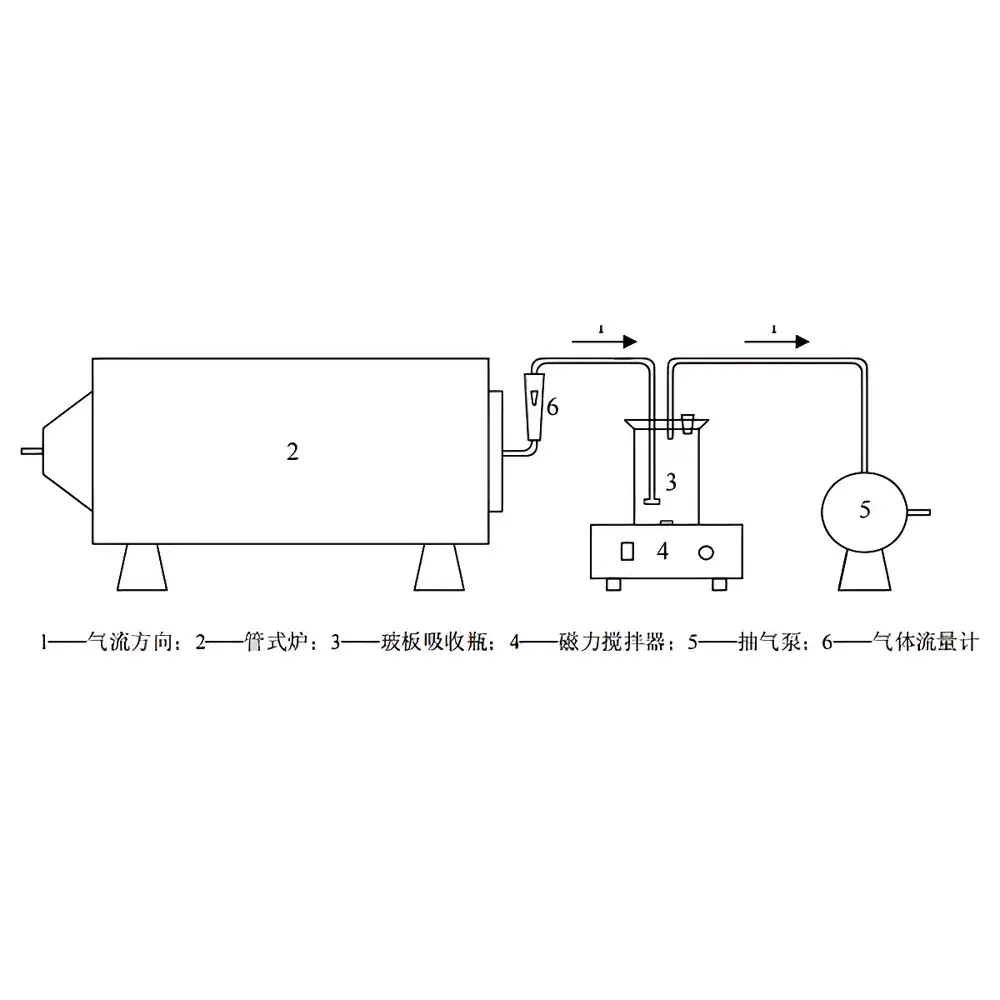
The Zhuochi 658-2013 Soil Organic Carbon Combustion Tube Furnace System is a purpose-built thermal oxidation platform engineered for quantitative determination of soil organic carbon (SOC) in accordance with the Chinese national environmental standard HJ 658–2013: Soil—Determination of Organic Carbon—Combustion Oxidation–Titrimetric Method. This system implements high-temperature catalytic combustion (900–1000 °C operational range) to fully mineralize organic carbon into CO2, which is then quantitatively absorbed and titrated using standardized barium hydroxide or sodium hydroxide solutions. Unlike general-purpose muffle furnaces, the 658-2013 configuration integrates precise gas flow control, sealed reaction tubing, and absorption train compatibility—enabling reproducible, trace-level carbon quantification in heterogeneous soil matrices under controlled oxidative conditions. Its design emphasizes thermal uniformity, inert atmosphere management, and minimal carryover between samples—critical for regulatory compliance in environmental monitoring laboratories.
Key Features
- Optimized tube furnace architecture with Ø20 mm × 600 mm quartz or high-purity alumina combustion tube, ensuring complete sample exposure and consistent thermal profile across the reaction zone
- PID temperature controller with ±1 °C stability at 950 °C and 1 °C digital display resolution—validated for method-defined operating range (900–1000 °C)
- 2.5 kW resistive heating system delivering rapid, repeatable ramp rates (≤30 min to 1100 °C), with overtemperature protection and thermal cut-off safeguards
- Integrated gas handling subsystem including calibrated flowmeter (0–1 L/min range), dual isolation valves, and 2 m chemically resistant silicone/PFA tubing for carrier gas (O2 or air) delivery
- Dedicated absorption train components: custom-designed borosilicate glass absorption bottle with ground-glass joints, magnetic stirrer for homogeneous titrant mixing, and vacuum-compatible抽气 pump (≥25 kPa suction)
- Complete accessory set: six ceramic boats (Al2O3, 25 mm × 10 mm × 8 mm), two inlet/outlet rubber stoppers with pre-drilled glass tube ports, and spare combustion tubes
Sample Compatibility & Compliance
The system accommodates solid soil samples (typically 0.5–2.0 g, dried and homogenized per HJ 658–2013 Section 7.1) placed in ceramic boats and introduced into the central hot zone of the tube furnace. Sample matrix effects—including carbonate interference—are mitigated by prior acid pretreatment (HCl fumigation) as specified in the standard. All wetted components (absorption bottle, tubing, stoppers) are constructed from borosilicate glass or inert elastomers to prevent CO2 adsorption or leaching. The entire workflow aligns with QA/QC requirements outlined in HJ 658–2013, including blank correction, duplicate analysis (RSD ≤5%), and certified reference material (CRM) validation (e.g., GBW07401–GBW07410 series). While not FDA 21 CFR Part 11–certified, its manual data recording protocol supports GLP-compliant documentation when paired with laboratory notebook practices and instrument logbooks.
Software & Data Management
This is a hardware-integrated, manually operated analytical system without embedded firmware or proprietary software. Temperature setpoints, dwell times, and gas flow rates are configured via front-panel controls; all operational parameters are recorded manually in laboratory notebooks or LIMS-compatible spreadsheets. No electronic audit trail or user access control is implemented. Users are advised to maintain contemporaneous records of furnace calibration (per ISO/IEC 17025 Clause 6.4.10), daily temperature verification using NIST-traceable thermocouples, and absorption endpoint titration logs—including burette readings, reagent batch numbers, and CRM recovery data—to satisfy internal quality audits and third-party accreditation requirements (e.g., CNAS-CL01).
Applications
- Regulatory soil testing for environmental impact assessments (EIAs) and contaminated site remediation verification
- Long-term ecological research on carbon sequestration dynamics in agricultural, forest, and wetland soils
- Method validation and inter-laboratory comparison studies under HJ 658–2013 or ISO 10694:1995 (Soil quality—Determination of organic carbon content—Wet oxidation method)
- Quality control of compost amendments and biochar products for carbon content certification
- Teaching laboratories demonstrating redox-based elemental quantification principles in environmental chemistry curricula
FAQ
What is the recommended carrier gas for SOC combustion according to HJ 658–2013?
High-purity oxygen (≥99.99%) or compressed air filtered to remove CO2 and moisture is specified; flow rate must be maintained at 100–200 mL/min during combustion.
Can this system be used for total carbon (TC) or inorganic carbon (IC) analysis?
No—the 658-2013 configuration is optimized exclusively for organic carbon. TC requires separate high-temperature combustion (>1200 °C) with IR detection; IC quantification necessitates acidification and coulometric or conductometric measurement.
Is the furnace tube quartz or ceramic?
Standard configuration uses high-purity fused quartz (SiO2) tube; optional alumina (Al2O3) tubes are available for enhanced resistance to halogen-containing soils.
How often should temperature calibration be performed?
Per ISO/IEC 17025, calibration verification using a secondary reference thermocouple is required before each analytical batch or daily—whichever occurs first.
Does the system include titration reagents or standards?
No—barium hydroxide solution, phenolphthalein indicator, and standardized HCl titrant must be prepared in-house following HJ 658–2013 Sections 6.3–6.5.
Related Products



