
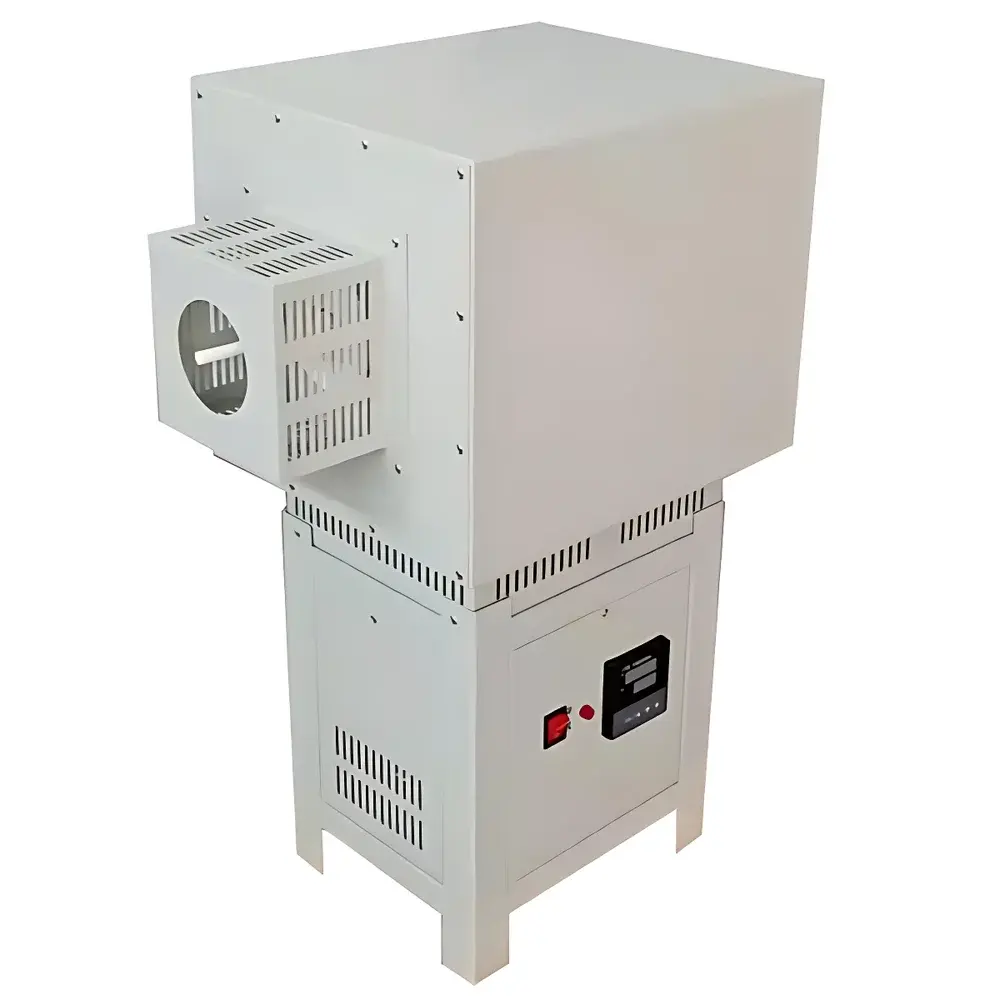
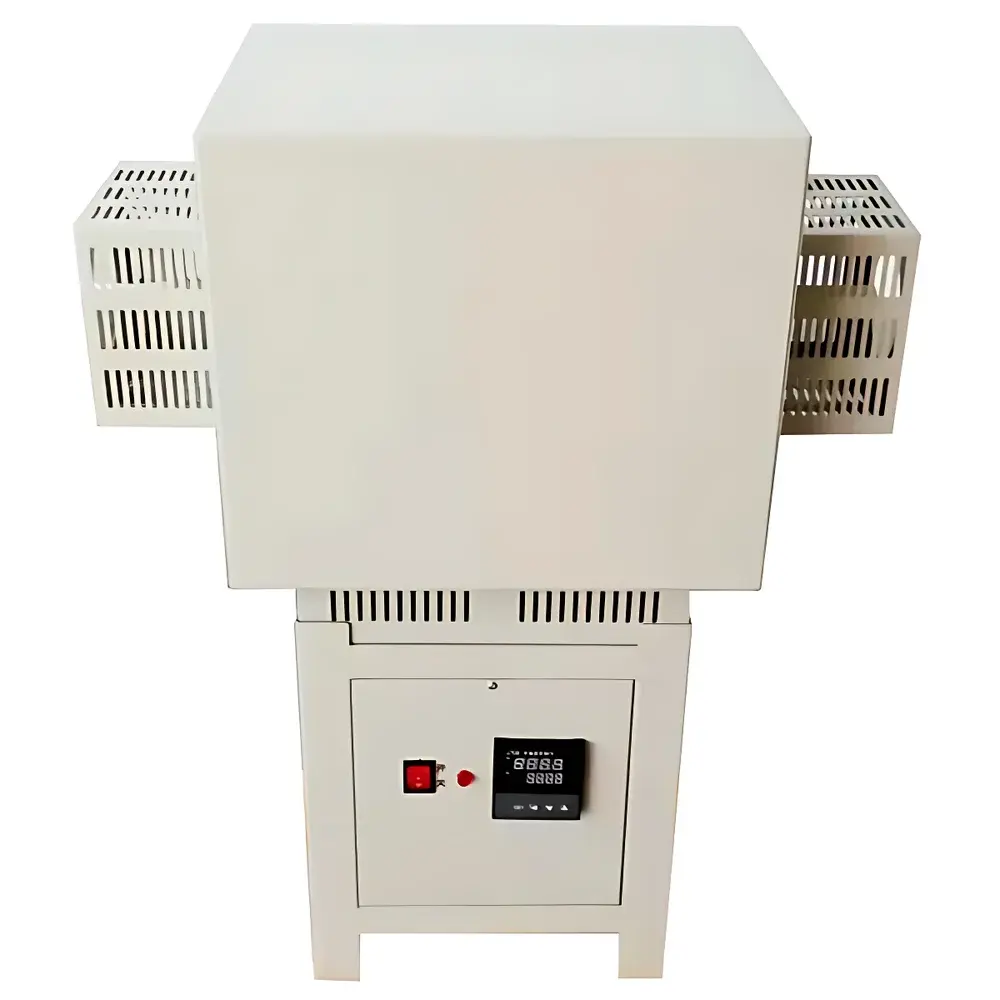
LYT 1255-1999 Compliant Total Sulfur Analyzer for Forest Soils – ZHUOCHI SK3-2.5-13 Programmable Tube Furnace System
| Brand | ZHUOCHI |
|---|---|
| Origin | Zhejiang, China |
| Model | SK3-2.5-13 Complete System |
| Type | Laboratory Benchtop Tube Furnace |
| Temperature Range | 100–1300 °C |
| Temperature Stability | ±1 °C |
| Display Resolution | 1 °C |
| Furnace Chamber Dimensions | φ22 mm × 380 mm |
| Heating Zone Length | 280 mm |
| Max Ramp Rate | ≤50 °C/min (adjustable) |
| Power Rating | 2.5 kW |
| Supply | 220 V, 50 Hz |
| Weight | ~22 kg |
| Control System | LTDE Programmable PID Controller with SSR Output, Dual-Stage Over-Temperature Protection |
| Thermal Insulation | High-Efficiency Ceramic Fiber Blanket |
| Heating Element | Oxidation-Resistant High-Temperature Resistance Wire |
| Thermocouple Type | S-Type (Platinum-Rhodium/Platinum) |
Overview
The ZHUOCHI SK3-2.5-13 Programmable Tube Furnace System is engineered to meet the thermal decomposition requirements specified in LYT 1255–1999, the People’s Republic of China Forestry Industry Standard for Determination of Total Sulfur in Forest Soils. This standard mandates high-temperature combustion (typically 1200–1300 °C) under controlled atmospheric conditions to quantitatively convert organic and inorganic sulfur species—including sulfides, sulfates, and organosulfur compounds—into gaseous SO2, which is subsequently absorbed and titrimetrically or spectrophotometrically quantified. The SK3-2.5-13 serves as the core thermal platform in this analytical workflow, delivering precise, reproducible, and programmable heating profiles essential for complete sulfur liberation while minimizing sample matrix interference. Its design prioritizes thermal uniformity across the 280 mm active heating zone and rapid, stable ramp-hold-cool cycles—critical for method adherence and inter-laboratory comparability.
Key Features
- Energy-efficient ceramic fiber insulation reduces power consumption by up to 50% compared to conventional refractory-lined furnaces, supporting sustainable laboratory operations.
- High-purity S-type platinum-rhodium/platinum thermocouple ensures traceable temperature measurement within ±1 °C stability across the full 100–1300 °C operating range.
- LTDE programmable controller with PID+SSR regulation enables multi-segment heating programs—including customizable ramp rates (0.1–50 °C/min), dwell times, and automatic shutdown—ensuring strict compliance with LYT 1255–1999 procedural steps.
- Dual-stage over-temperature protection (primary electronic cutoff + independent mechanical safety switch) provides fail-safe operation during extended high-temperature runs.
- Compact cylindrical chamber (φ22 mm × 380 mm) accommodates standard quartz or ceramic combustion tubes and boats, facilitating standardized sample introduction and gas effluent collection per method protocol.
- Integrated control unit housed beneath the furnace base eliminates field wiring complexity; pre-assembled electrical connections ensure immediate operational readiness upon AC power connection.
Sample Compatibility & Compliance
The SK3-2.5-13 is validated for use with solid forest soil samples prepared according to LYT 1255–1999, including air-dried, sieved (<2 mm), and homogenized specimens. It supports combustion tube configurations compatible with downstream sulfur capture systems—e.g., absorption flasks containing H2O2/NaOH solutions or iodometric titration setups. While LYT 1255–1999 is a national forestry standard, the furnace’s thermal performance aligns with broader international quality expectations for elemental combustion analysis, including ISO 1171 (ash determination), ASTM D3177 (total sulfur in coal), and USP (sulfated ash). Its programmable architecture allows adaptation to GLP-aligned validation protocols, including temperature mapping, system suitability testing, and routine calibration verification using certified reference materials (CRMs) with known sulfur content.
Software & Data Management
The LTDE controller logs real-time temperature data at user-defined intervals and stores up to 16 independent heating programs. Though the system lacks native PC connectivity, temperature profiles and run timestamps are retained in non-volatile memory and can be manually recorded for audit trails. For laboratories requiring electronic records compliant with FDA 21 CFR Part 11 or ISO/IEC 17025, external data loggers with thermocouple inputs and time-stamped export functionality may be integrated via the furnace’s analog output terminals. All operational parameters—including setpoints, ramp rates, hold durations, and fault events—are accessible through the front-panel interface and documented in the provided calibration certificate and instrument logbook.
Applications
- Determination of total sulfur in forest soils, litter layers, and humus samples per LYT 1255–1999.
- Thermal pretreatment for sulfur speciation studies when coupled with sequential extraction or XRF post-combustion analysis.
- High-temperature ashing of organic-rich environmental matrices prior to ICP-OES or ion chromatography.
- Method development and validation for sulfur-containing contaminants in contaminated land assessments.
- Calibration and performance verification of continuous emission monitoring systems (CEMS) requiring reference SO2 generation.
FAQ
Is the SK3-2.5-13 suitable for applications beyond LYT 1255–1999?
Yes—the furnace’s programmable thermal profile, wide temperature range, and stable control architecture support ASTM D1552, ISO 4297, and other combustion-based sulfur methods for coal, biomass, and sediments.
What consumables are included with the system?
The standard configuration includes three quartz combustion tubes and ten ceramic combustion boats, sufficient for initial method implementation and routine QC checks.
Does the system comply with electrical safety standards for international laboratories?
It conforms to GB/T 5169.10–2017 (equivalent to IEC 60695-2-10) for fire hazard testing and meets CE-marking prerequisites for low-voltage equipment when used with appropriate local grounding and circuit protection.
Can the furnace be integrated into automated sample introduction workflows?
While not natively robotic-ready, its analog temperature output and digital relay triggers allow integration with third-party autosamplers and gas-handling modules via custom interface hardware.
What maintenance is required to sustain long-term accuracy?
Annual verification of thermocouple calibration against NIST-traceable references and periodic inspection of furnace tube integrity and heating element resistance are recommended per ISO/IEC 17025 Clause 6.4.







