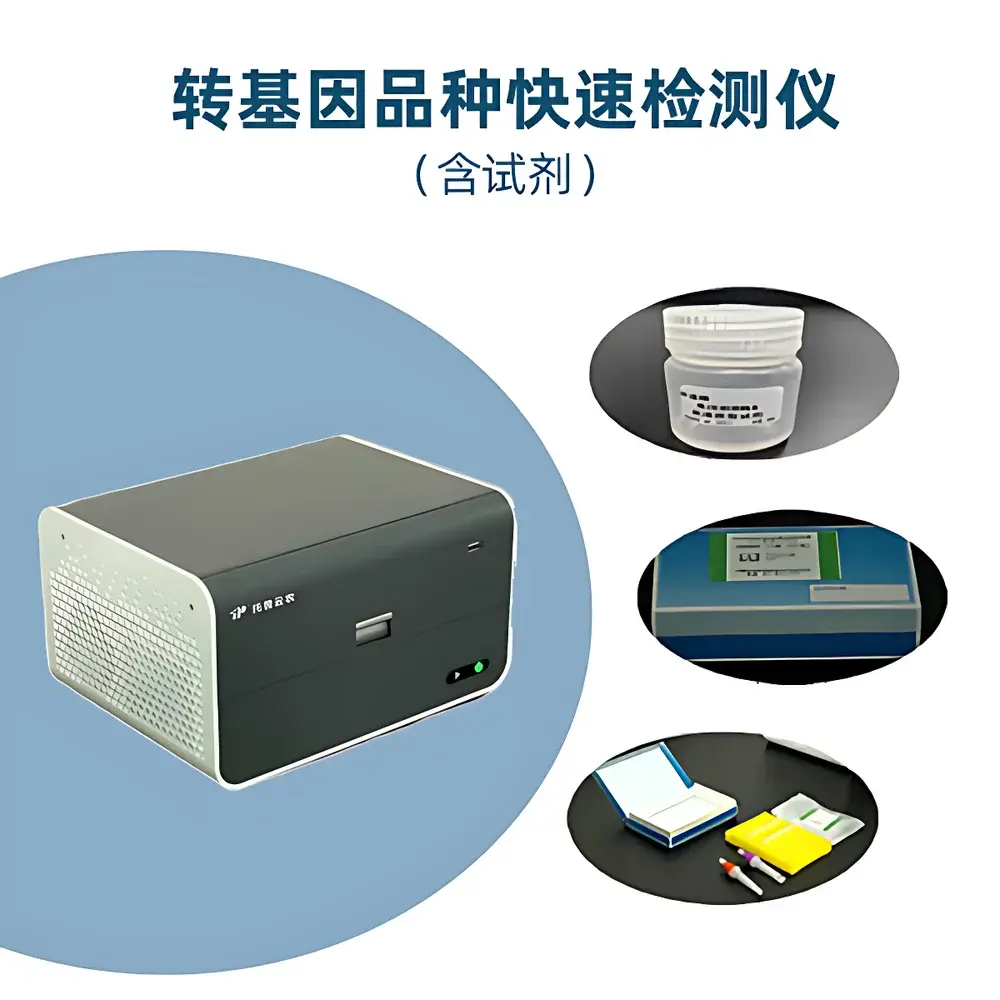
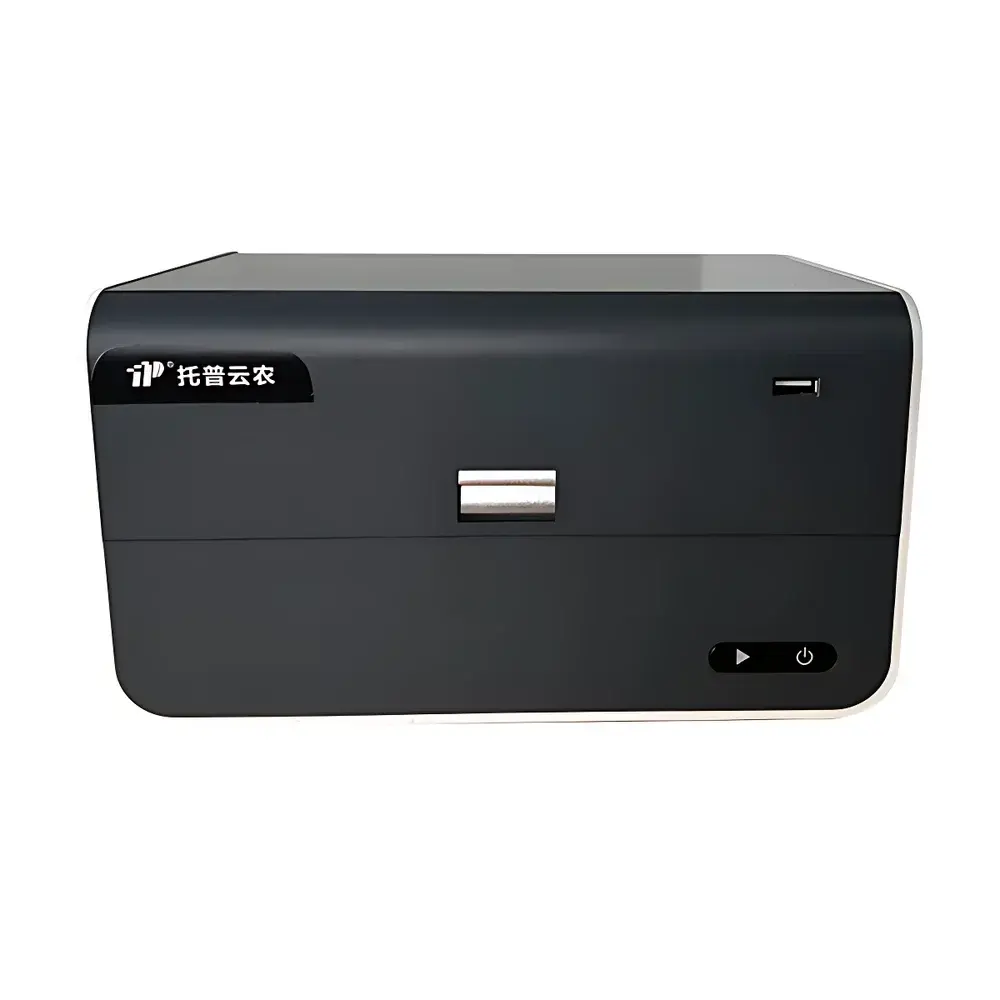
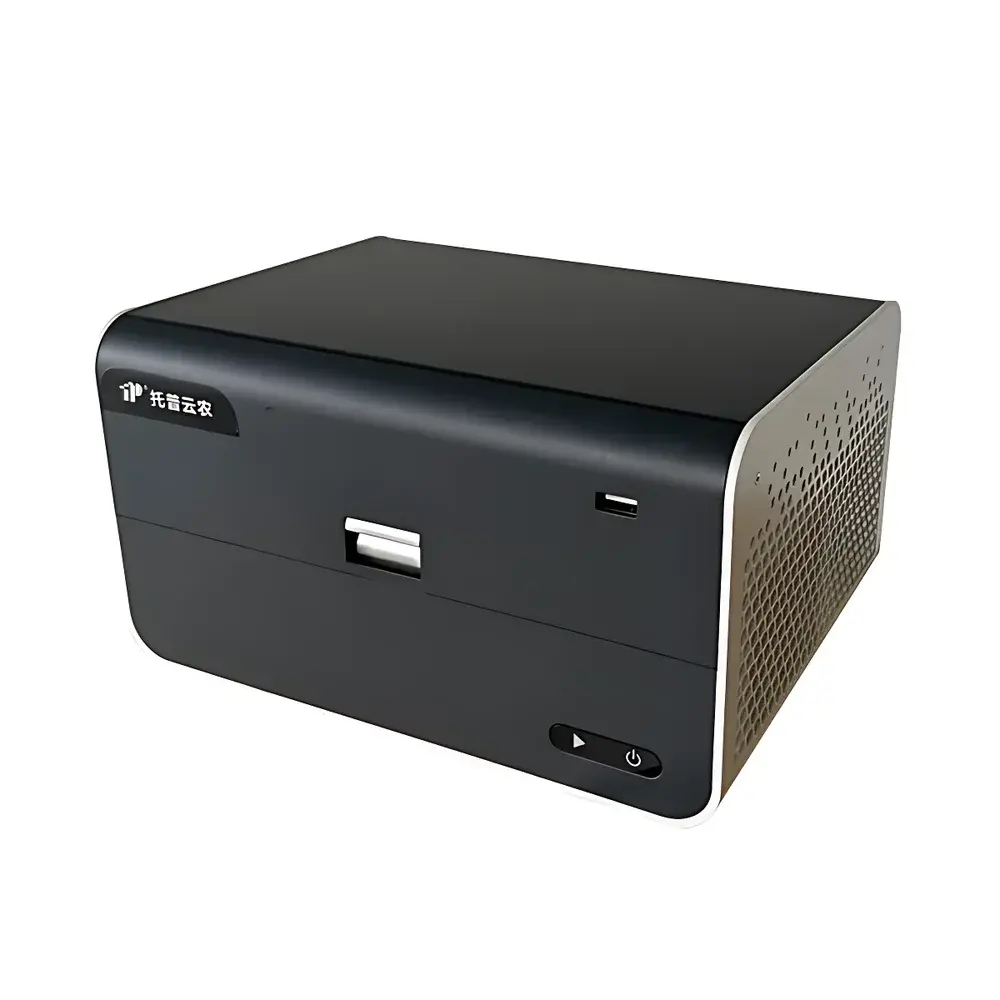
Top Cloud-agri TPJY-1 Portable Dual-Channel Real-Time Fluorescent PCR Analyzer for GMO Screening
| Brand | Top Cloud-agri |
|---|---|
| Origin | Zhejiang, China |
| Manufacturer Type | OEM Manufacturer |
| Product Category | Domestic |
| Model | TPJY-1 |
| Instrument Type | Portable Real-Time PCR System |
| Sample Throughput | 16-well |
| Max Heating Rate | 13°C/s |
| Temperature Accuracy | ≤±0.2°C |
| Well-to-Well Temperature Uniformity | ≤±0.1°C |
| Fluorescence Channels | 2 |
| Detection Sensitivity | Single-Copy Level |
| Cycle Time | 20 min for 40 cycles |
| Reaction Volume | 10–50 µL |
| Excitation Wavelength Range | 430–675 nm |
| Emission Wavelength Range | 480–725 nm |
| Compatible Dyes | Channel 1 — JOE/HEX/VIC/TET |
| Optical Linearity (R²) | ≥0.990 |
| Ct Value Reproducibility (CV) | ≤1% |
| Data Export Formats | PDF, JSON |
| Connectivity | Wi-Fi, USB storage |
| Dimensions | 24 × 18 × 13 cm |
| Weight | 2.5 kg |
| Thermal Cycling Endurance | ≥1,000,000 cycles |
Overview
The Top Cloud-agri TPJY-1 Portable Dual-Channel Real-Time Fluorescent PCR Analyzer is an integrated field-deployable molecular detection platform engineered for rapid, on-site screening and event-specific identification of genetically modified organisms (GMOs) in agricultural commodities. It implements quantitative real-time PCR (qPCR) based on the TaqMan probe hydrolysis principle, delivering laboratory-grade analytical rigor under non-laboratory conditions. Unlike conventional benchtop thermal cyclers, the TPJY-1 integrates thermally optimized semiconductor-based heating/cooling architecture with fixed-optic multi-channel fluorescence detection—eliminating moving parts and reducing calibration dependency. Its design targets compliance with internationally recognized nucleic acid detection frameworks, including ISO 21569:2020 (methods for detection of GMOs in food), EN ISO 24276:2021 (performance criteria for qualitative detection methods), and AOAC Official Method 2007.02 for GMO maize and soybean testing. The system operates across a full 0–100°C thermal range with sub-second fluorescence acquisition and supports dual-target amplification per well—enabling simultaneous detection of exogenous transgenic elements (e.g., CaMV35S, NOS, pat) and endogenous reference genes (e.g., zSSIIb, Lectin)—thereby fulfilling mandatory internal control requirements defined in EU Regulation (EC) No 1829/2003 and Chinese GB/T 38513–2020.
Key Features
- Field-ready portability: Compact footprint (24 × 18 × 13 cm), lightweight chassis (2.5 kg), and battery-compatible power input enable deployment in mobile labs, grain inspection stations, or remote farmland settings.
- High-fidelity thermal control: Advanced PID-regulated semiconductor module with auxiliary heating and dynamic heat-sink management achieves ≤±0.2°C temperature accuracy and ≤±0.1°C inter-well uniformity over 16 wells—validated per ASTM E1530-22 guidelines for thermal performance assessment of PCR instruments.
- Dual-channel optical architecture: Fixed-position LED excitation (430–675 nm) and filter-based emission detection (480–725 nm) eliminate mechanical scanning; each channel employs dedicated photodiode arrays and signal-conditioning ASICs to ensure long-term photometric stability without recalibration.
- Optimized assay kinetics: Capable of completing 40-cycle amplification in ≤20 minutes at maximum ramp rates (13°C/s heating, 10°C/s cooling), supporting rapid turnaround for time-critical regulatory inspections.
- Robust data integrity: Built-in audit trail functionality logs user actions, thermal profiles, fluorescence thresholds, and result calls—aligned with FDA 21 CFR Part 11 requirements for electronic records and signatures when paired with compliant LIMS integration.
Sample Compatibility & Compliance
The TPJY-1 accepts standard 0.2 mL PCR tubes and 8-strip formats, accommodating reaction volumes from 10 to 50 µL. Its thermal and optical design ensures compatibility with all major qPCR chemistries—including hydrolysis probes (TaqMan), intercalating dyes (SYBR Green I), and hybridization probes—without hardware modification. The instrument’s detection sensitivity has been verified against certified reference materials (CRMs) for MON810 maize, GTS 40-3-2 soybean, and Bt Cry1Ab rice, achieving limit-of-detection (LOD) values consistent with ISO 24276 Annex A specifications. All reported performance metrics—including Ct value CV ≤1%, linearity R² ≥0.990, and specificity >99% against non-target genomic backgrounds—were established using validated reference protocols traceable to NIST SRM 2349 (GMO maize DNA mixtures). The system supports full traceability through embedded metadata tagging of sample IDs, operator credentials, instrument serial number, and firmware revision.
Software & Data Management
The TPJY-1 runs embedded Linux-based firmware with a touchscreen GUI supporting intuitive workflow navigation—from assay setup and thermal profile definition to real-time amplification curve visualization and endpoint genotyping. Raw fluorescence data (.fds files) and analysis reports are exportable in PDF (for regulatory submission) and JSON (for automated ingestion into enterprise QA/QC databases). Wi-Fi and USB interfaces allow secure transfer to centralized servers or cloud-hosted platforms compliant with GLP/GMP-aligned data governance policies. Software features include automatic baseline correction, adaptive threshold setting, melt-curve analysis (for HRM-capable assays), and batch processing of up to 100 runs. Audit logs record timestamped entries for every critical action—including parameter changes, file exports, and result overrides—with SHA-256 hashing for tamper-evident integrity verification.
Applications
This analyzer serves as a primary detection tool across multiple regulated environments: border phytosanitary laboratories conducting import screening per IPPC ISPM 27; national seed certification agencies verifying varietal purity under OECD Seed Schemes; contract testing facilities performing third-party GMO quantification for labeling compliance (EU Regulation 1830/2003); and agricultural extension services implementing participatory biosafety monitoring in GM crop adoption zones. Specific use cases include rapid triage of suspect shipments prior to full ISO 21571-compliant analysis, on-farm identity preservation (IP) verification for segregated supply chains, and emergency response to unauthorized GMO releases—where detection-to-decision latency must remain under 40 minutes from sample homogenization to binary positive/negative call.
FAQ
Does the TPJY-1 meet international regulatory requirements for official GMO testing?
Yes—it conforms to ISO 21569, EN ISO 24276, and AOAC validation criteria for qualitative GMO detection, and its performance documentation supports accreditation under ISO/IEC 17025:2017 for testing laboratories.
Can the instrument be used with custom primer/probe sets outside the supplied kits?
Absolutely—the open assay configuration permits loading of user-defined sequences and fluorophore assignments via the software interface, provided they fall within the supported excitation/emission bands.
What is the expected lifetime of the optical components?
The solid-state LED excitation source and interference-filter-based detectors are rated for ≥50,000 hours of continuous operation, with no scheduled replacement intervals required under normal usage conditions.
Is remote firmware update supported?
Yes—over-the-air updates are delivered via encrypted HTTPS channels and require digital signature verification before installation, ensuring version control and cybersecurity compliance.
How does the system handle ambient temperature fluctuations during field operation?
An integrated environmental sensor feeds real-time ambient data to the thermal control algorithm, dynamically adjusting heater/cooler duty cycles to maintain target block temperature stability within specification—even at 5–40°C ambient ranges.