Top Cloud-agri Test Tube Seedling Storage Repository
| Brand | Top Cloud-agri |
|---|---|
| Model | Test Tube Seedling Storage Repository |
| Temperature Range | 4–35°C |
| Humidity Range | 40–80% RH |
| Storage Duration | ≥6 months |
| Construction | Six-sided double-faced color-coated steel/stainless steel with B1-grade polyurethane high-density insulation |
| Refrigeration System | Dual imported compressors (N+1 redundancy) |
| Dehumidification | Independent low-temperature dehumidifier |
| Control System | PLC-based central controller with full-touch HMI, cloud connectivity (Wi-Fi/4G/5G), remote monitoring & alarm via mobile app |
| Air Distribution | Ceiling-mounted cold air blower + uniform airflow baffle + air curtain at entrance |
| Structural Compliance | Mold-resistant, non-toxic floor coating |
Overview
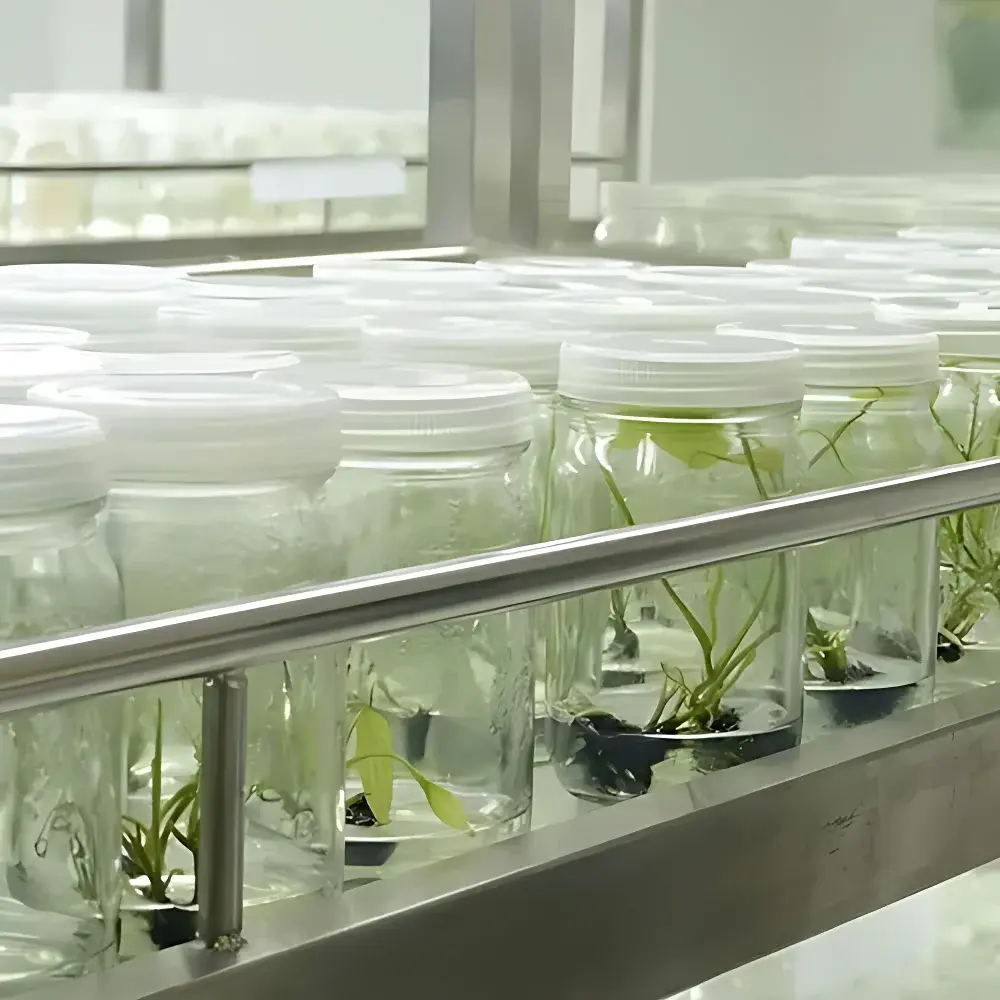
The Top Cloud-agri Test Tube Seedling Storage Repository is a purpose-engineered environmental control system designed for the medium-term conservation of in vitro plant germplasm—particularly species whose genetic resources cannot be preserved via conventional seed banking due to recalcitrance, clonal propagation requirements, or embryonic sensitivity. Operating on the principle of precisely regulated temperature and relative humidity stabilization, the repository maintains physiological dormancy while minimizing metabolic activity and oxidative stress in cultured plant tissues (e.g., shoot tips, nodal segments, callus cultures) housed in sterile test tubes or Magenta boxes. Unlike general-purpose incubators, this system integrates fail-safe thermal redundancy, independent moisture management, and audit-ready data governance—meeting foundational requirements for GLP-aligned germplasm preservation workflows in national gene banks, breeding programs, and biotechnology laboratories.
Key Features
- Dual-redundant refrigeration architecture: Two imported compressors operate in primary/standby mode; automatic switchover ensures uninterrupted operation during compressor maintenance or failure—critical for safeguarding irreplaceable clonal lines.
- Independent low-temperature dehumidification: Engineered to function effectively below 10°C without icing or energy penalty, preventing condensation-induced contamination and maintaining RH stability across the full operational range (40–80% RH).
- B1-grade polyurethane insulation: Six-sided structural envelope with stainless steel or color-coated steel cladding provides thermal resistance ≥0.85 m²·K/W and meets national fire safety standards for laboratory infrastructure.
- PLC-based central control with full HMI: 7-inch capacitive touchscreen displays real-time and historical temperature/humidity curves, device status, fault logs, and alarm history—with configurable setpoints, hysteresis, and ramp-soak profiles.
- Cloud-integrated remote management: Native support for Wi-Fi, 4G, and 5G connectivity enables secure access to live sensor data, alarm notifications (SMS/email/app push), remote reset, emergency shutdown, and firmware updates via encrypted TLS channels.
- Air curtain isolation at entryway: Minimizes external ambient intrusion during door openings, reducing thermal load transients and preserving intra-chamber uniformity (±0.5°C, ±3% RH typical under steady-state conditions).
Sample Compatibility & Compliance
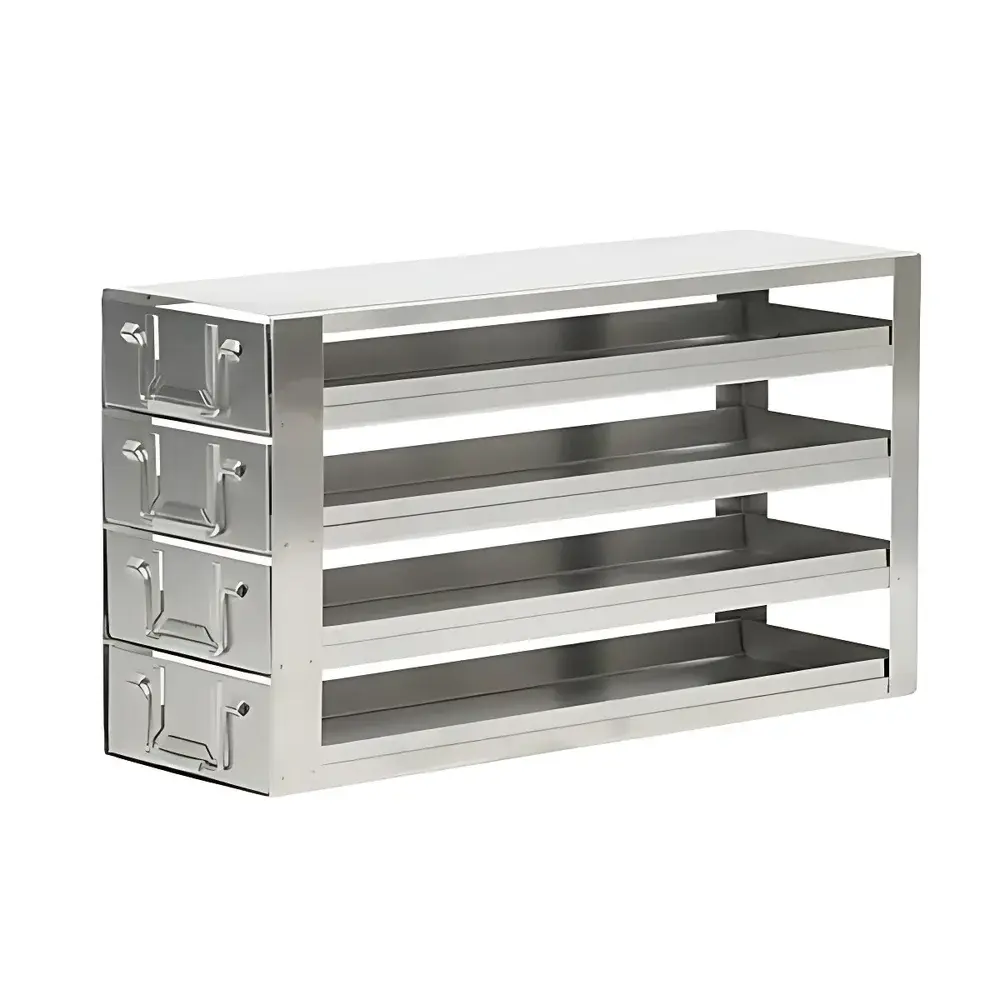
The repository accommodates standard tissue culture vessels—including 25 × 150 mm test tubes, 125 mL Magenta boxes, and multi-well culture plates—mounted on adjustable, mobile storage racks that ensure unobstructed vertical airflow and condensate drainage. Floor surfaces utilize VOC-free, antimicrobial epoxy coatings compliant with GB/T 23444-2009 (Chinese standard for non-toxic interior finishes). All electrical components conform to IEC 61000-6-3 (EMC emission) and IEC 61000-6-2 (immunity). While not certified to ISO 17025 or ISO/IEC 17065, the system’s data logging architecture supports traceability per FAO’s *Genebank Standards* (2021) and aligns with core elements of ISO 20387:2018 (biobanking)—including audit trail generation, user role-based access control, and timestamped parameter change logs.
Software & Data Management
Data acquisition occurs at 10-second intervals from calibrated NTC thermistors and capacitive RH sensors (traceable to NIM China), stored locally on an industrial SD card (≥32 GB) and synchronized hourly to a secure AWS-hosted cloud platform. The embedded software supports CSV export, PDF report generation (with digital signature), and configurable alert thresholds. Remote video surveillance utilizes IP-grade, anti-condensation cameras rated for sub-10°C operation—streaming encrypted H.265 video with motion-triggered recording and 30-day rolling retention. All user actions (login, setpoint modification, alarm acknowledgment) are logged with ISO 8601 timestamps and operator ID—enabling full reconstruction of operational history for internal audits or regulatory review.
Applications
- Medium-term conservation of elite cultivars of banana, potato, sweet potato, cassava, and orchids where orthodox seed banking is infeasible.
- Backup storage for cryopreserved collections—serving as a staging environment for post-thaw recovery and pre-cryopreservation acclimatization.
- Supporting national phytosanitary protocols by maintaining pathogen-free in vitro stocks for rapid distribution during disease outbreaks.
- Facilitating international germplasm exchange under the International Treaty on Plant Genetic Resources for Food and Agriculture (ITPGRFA), where documented environmental stability is required for material transfer agreements.
- Enabling longitudinal studies on somaclonal variation rates under defined abiotic stress regimes (e.g., mild chilling, controlled desiccation).
FAQ
What is the recommended maintenance schedule for the dual-compressor system?
Compressor oil and filter replacement is advised every 18 months; annual calibration of temperature and humidity sensors against NIST-traceable references is strongly recommended.
Can the system operate reliably during extended power outages?
The unit features battery-backed RAM and auto-resume functionality after power restoration; however, sustained outages exceeding 30 minutes may compromise thermal stability—integration with an external UPS or generator is advised for mission-critical deployments.
Is data export compatible with LIMS or ELN platforms?
Yes—CSV and JSON API endpoints are available for integration with third-party laboratory informatics systems; custom field mapping and OAuth2 authentication are supported upon request.
Does the system meet FDA 21 CFR Part 11 requirements?
While not formally validated to Part 11, the audit trail, electronic signature capability, and role-based permissions provide a foundation for site-specific validation under GxP frameworks.
What is the maximum allowable door-open duration without triggering an alarm?
The default threshold is 90 seconds; this value is fully configurable within the HMI interface to match institutional SOPs.