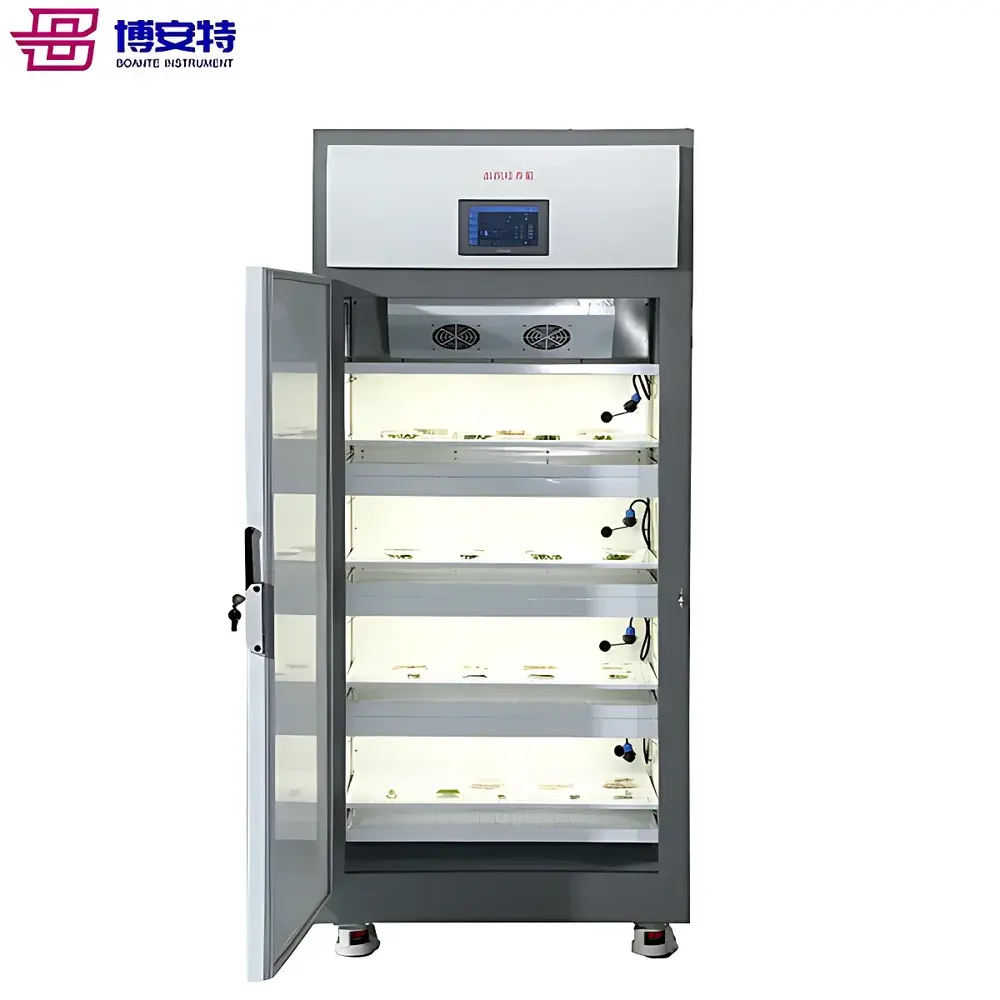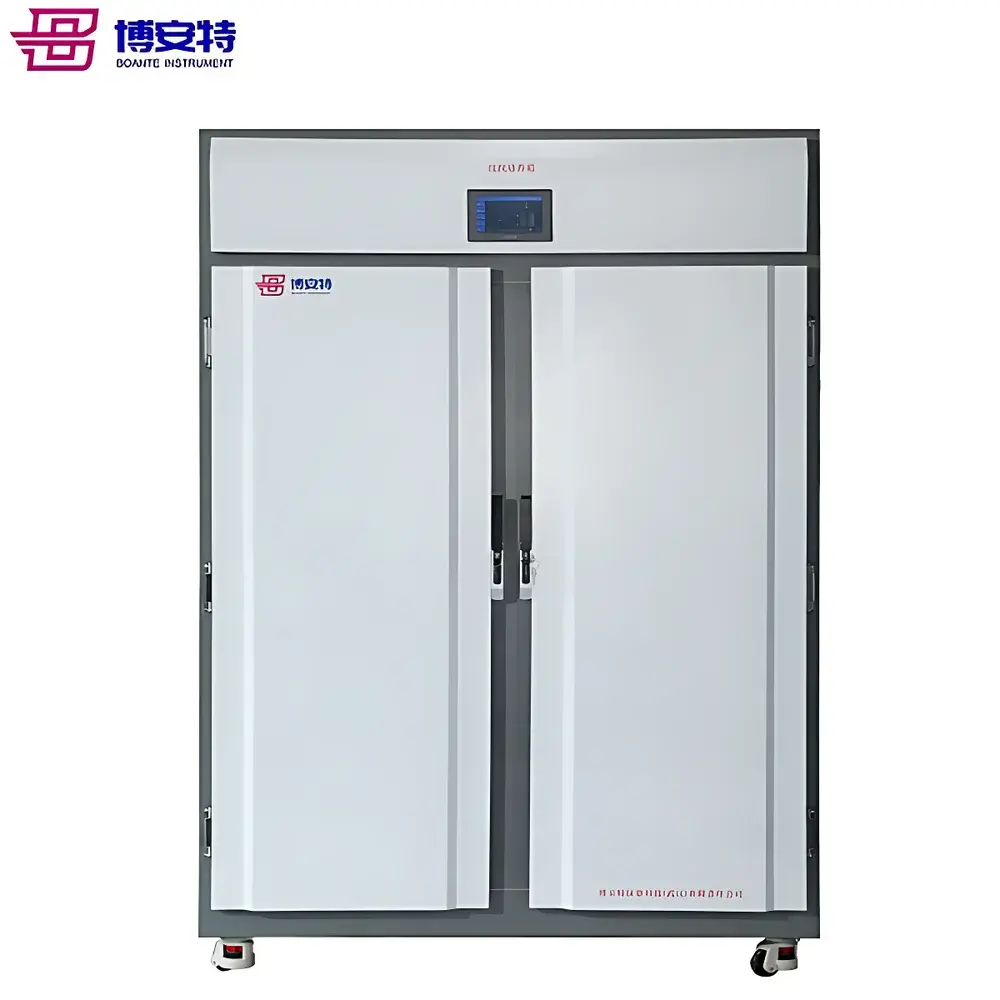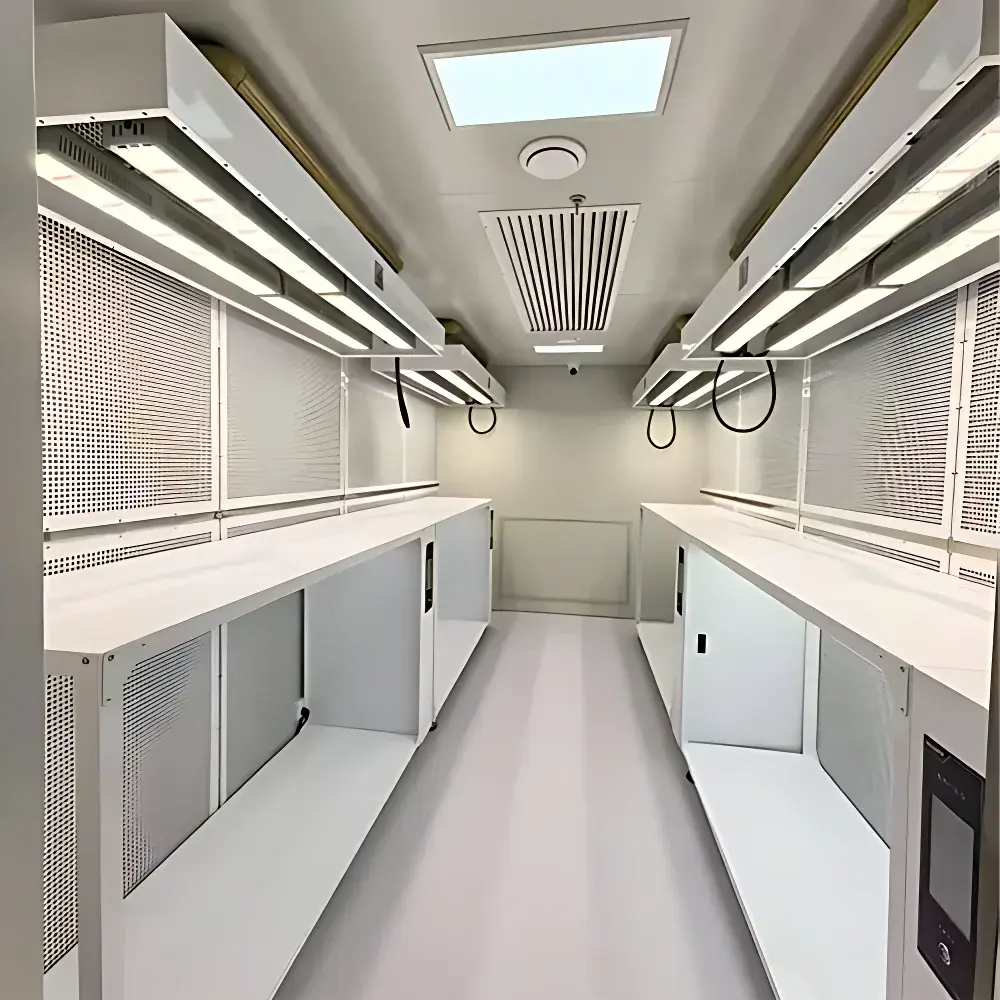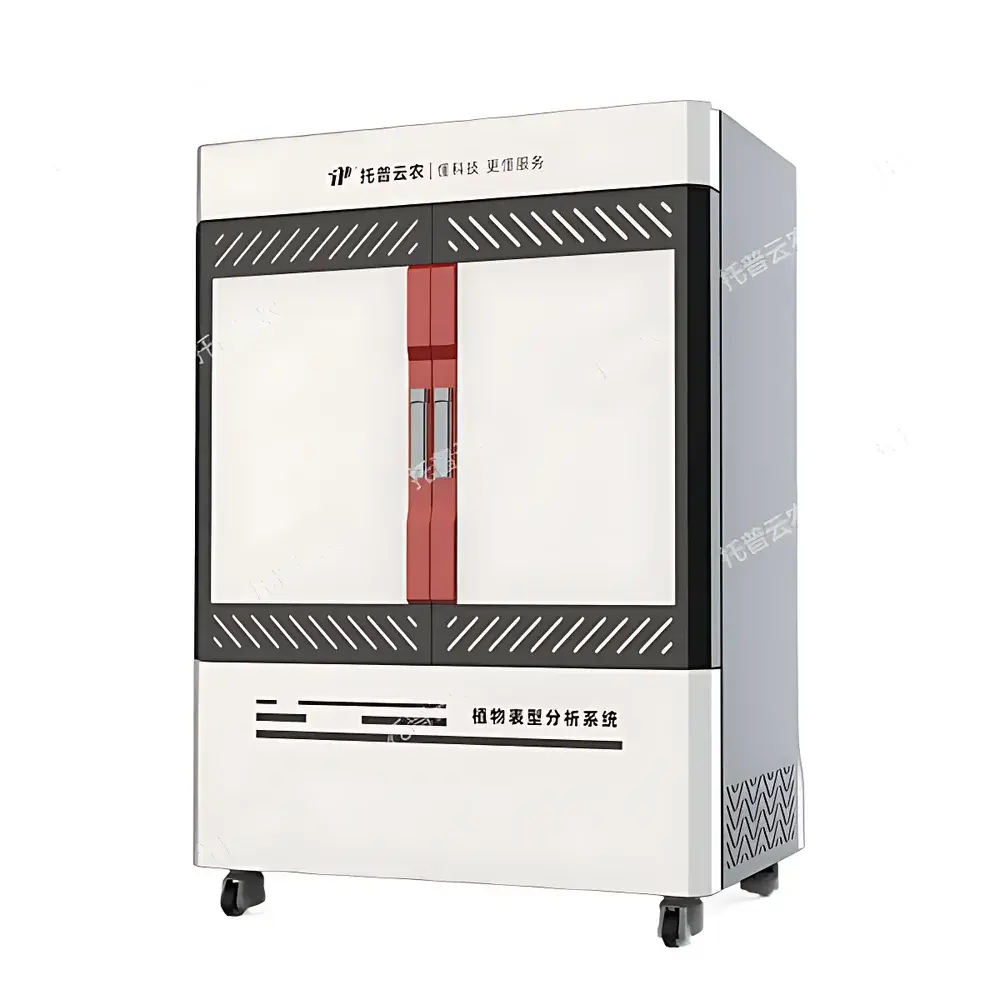
Top Cloud-agri TPN-Plant-2D Proximal Plant Phenotyping Imaging & Analysis System
| Brand | Top Cloud-agri |
|---|---|
| Origin | Zhejiang, China |
| Manufacturer Type | Direct Manufacturer |
| Region of Origin | Domestic (China) |
| Model | TPN-Plant-2D |
| Pricing | Upon Request |
| Camera Resolution | ≥5000 × 3000 pixels |
| Dual-View Configuration | Top + Side-mounted 20 MP industrial cameras |
| Imaging Coverage | 360° multi-angle acquisition |
| Structural Frame | High-strength anodized aluminum alloy |
| Operating Temperature | 0–40 °C |
| Relative Humidity | 10–90% RH (non-condensing) |
| Power Supply | AC 220 V ±10%, 50/60 Hz, ≤500 W |
| Optional Modules | Thermal imaging camera, chlorophyll fluorescence imaging unit |
| Data Export Formats | CSV, Excel (.xlsx), PNG/JPEG image sequences |
| Compliance | Designed for GLP-aligned workflows |
Overview
The Top Cloud-agri TPN-Plant-2D Proximal Plant Phenotyping Imaging & Analysis System is a non-destructive, high-throughput 2D phenotypic imaging platform engineered for quantitative morphological characterization of plants across developmental stages—from seed germination and seedling emergence to vegetative growth, flowering, fruit set, and senescence. Based on calibrated digital photogrammetry and pixel-based morphometric segmentation, the system captures geometric, textural, and intensity-derived features under controlled illumination conditions. It operates within proximal sensing paradigms—distinct from remote or drone-based platforms—enabling sub-millimeter spatial resolution and repeatable acquisition geometry essential for longitudinal trait monitoring in confined environments such as growth chambers, phytotrons, climate-controlled greenhouses, and laboratory benchtop settings.
Key Features
- Dual-perspective imaging architecture: Synchronized top-view and side-view 20-megapixel industrial CMOS cameras with synchronized global shutter capture, enabling orthogonal projection reconstruction and robust silhouette extraction.
- Uniform multi-spectral illumination system: Integrated LED array with adjustable spectral bands (e.g., white, red, blue, NIR)—configurable per experimental protocol to support reflectance-based indices (e.g., NDVI, PRI) or chlorophyll-related contrast enhancement.
- Modular expandability: Pre-engineered mounting interfaces for optional thermal infrared (TIR) and pulse-amplitude-modulated (PAM) chlorophyll fluorescence modules, allowing concurrent physiological and structural phenotyping.
- Automated morphometric quantification engine: Proprietary computer vision pipeline performs real-time segmentation, skeletonization, and feature extraction—including plant height (via side-view scaling), projected shoot area, convex hull area, perimeter, aspect ratio, leaf count estimation, and canopy compactness metrics.
- Mobile benchtop design: Equipped with locking福马 (FOMA) casters and modular cabinetry, enabling rapid repositioning within shared lab spaces without recalibration requirements.
- Scalable cabin dimensions: Standard enclosure footprint customizable (e.g., 60 × 60 × 120 cm H) to accommodate rosette species, tall cereals, or multi-tiered pot arrays—maintaining consistent optical working distance and lighting uniformity.
Sample Compatibility & Compliance
The TPN-Plant-2D accommodates a broad spectrum of botanical specimens, including but not limited to monocot and dicot model systems (e.g., Arabidopsis thaliana, rice, maize), horticultural crops (tomato, pepper, cucumber), fruit trees (apple, citrus, grapevine), ornamental species (roses, chrysanthemums), turfgrasses, and medicinal herbs. All hardware components comply with IEC 61000-6-3 (EMC emission standards) and IEC 61000-6-2 (immunity). Software architecture supports metadata-rich acquisition logs aligned with MIAPPE (Minimum Information About a Plant Phenotyping Experiment) v1.1 guidelines. While not certified for GMP production environments, the system’s deterministic image acquisition, timestamped data provenance, and local storage architecture meet foundational requirements for GLP-compliant research documentation and FDA 21 CFR Part 11–aligned audit trails when deployed with institutional IT-managed authentication and backup protocols.
Software & Data Management
The embedded analysis suite runs on a dedicated Linux-based edge computing module, decoupling image processing from host workstation dependency. Each acquisition session auto-generates FAIR-compliant data packages containing raw TIFF stacks, segmented masks, extracted feature tables (CSV), and annotated preview thumbnails. All datasets are stored locally on encrypted SSD storage with configurable retention policies. Batch processing queues support scheduled overnight phenotyping campaigns across hundreds of samples. Export options include standardized spreadsheet formats (Excel .xlsx, UTF-8 CSV), publication-ready vector graphics (SVG), and time-series animation exports (MP4/H.264) for growth dynamics visualization. API endpoints enable integration with LIMS (e.g., LabVantage, Thermo Fisher SampleManager) and breeding databases (e.g., BreedBase, BrAPI-compliant servers).
Applications
- Quantitative genetics: High-resolution mapping of QTLs associated with architectural traits (e.g., tillering angle, leaf inclination, internode elongation).
- Abiotic stress phenotyping: Time-series monitoring of drought-induced wilting, heat-induced epinasty, or salinity-driven growth inhibition via pixel-intensity variance and projected area decay kinetics.
- Phytochemical screening: Correlation of RGB/NIR reflectance patterns with anthocyanin accumulation, carotenoid degradation, or chlorophyll-a/b ratios under nutrient deficiency treatments.
- Cultivar comparison studies: Objective benchmarking of commercial varieties across yield-related proxies (e.g., canopy closure rate, fruit load estimation via size distribution histograms).
- Educational use: Modular workflow demonstration for undergraduate plant science curricula covering image acquisition fundamentals, thresholding methods, and trait heritability estimation.
FAQ
Does the system require external calibration targets for scale accuracy?
Yes—each imaging session must include a certified reference scale bar placed within the field of view. The software uses this for automatic pixel-to-mm conversion; calibration persists across sessions only if optical configuration remains unchanged.
Can the system operate unattended for multi-day time-lapse experiments?
Yes—scheduled acquisition is supported via internal real-time clock and programmable lighting cycles. Power-loss recovery ensures resumed operation post-interruption without data corruption.
Is cloud-based data synchronization available?
No—data remains on-device by default to ensure compliance with institutional data sovereignty policies. Optional secure SFTP or rsync-based offsite backup can be configured via network settings.
What file formats does the system accept for custom machine learning model integration?
Users may import ONNX-compatible inference models trained externally (e.g., PyTorch, TensorFlow) for domain-specific segmentation tasks, provided they conform to the system’s input tensor specifications (RGB, 5000×3000, uint8).
How frequently is firmware updated, and what is the update mechanism?
Firmware releases occur quarterly and are delivered via signed USB stick or authenticated HTTPS download. Updates preserve user-defined acquisition templates and calibration profiles.