
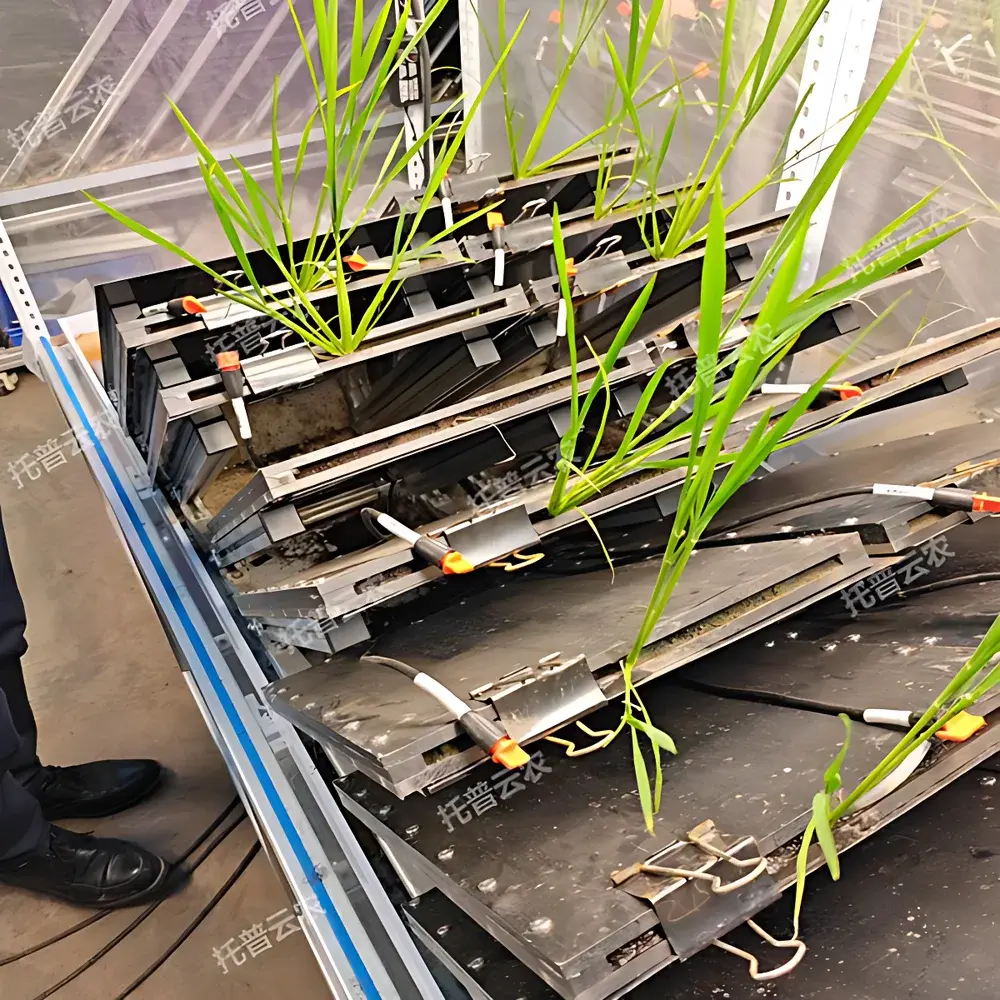
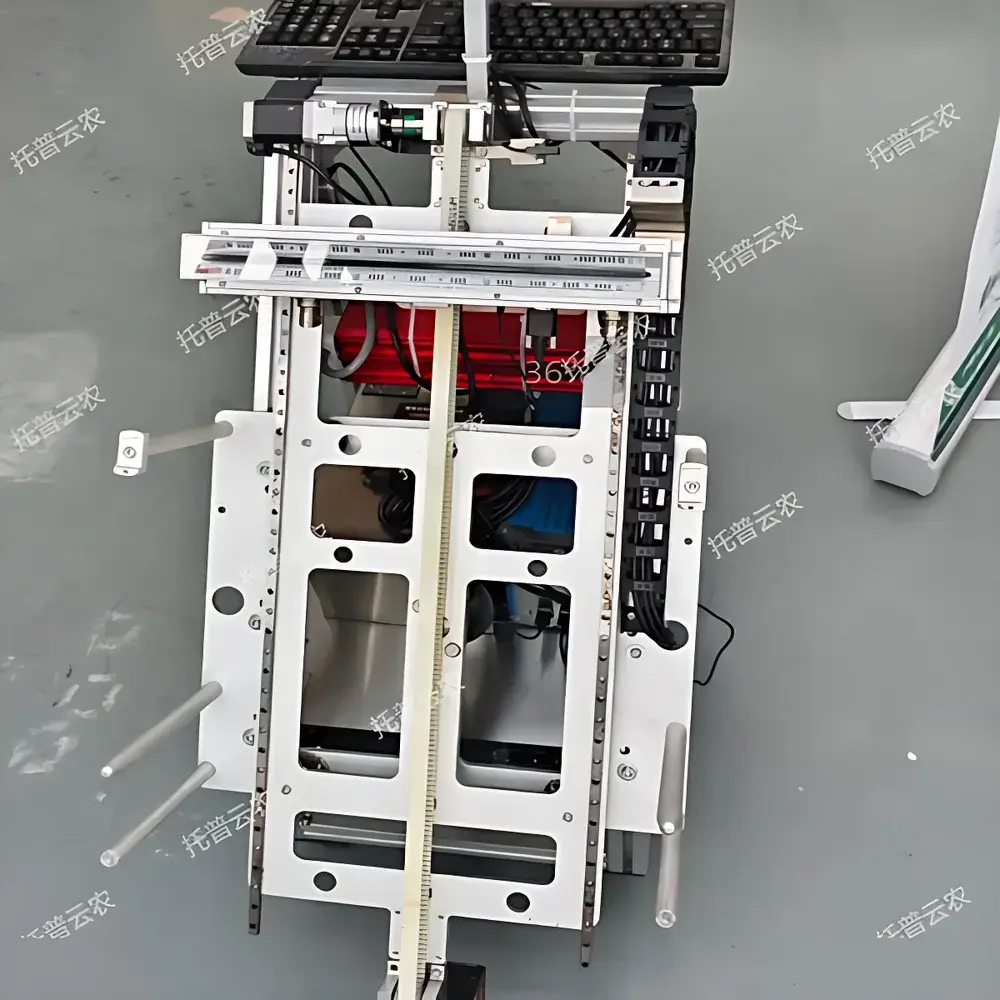
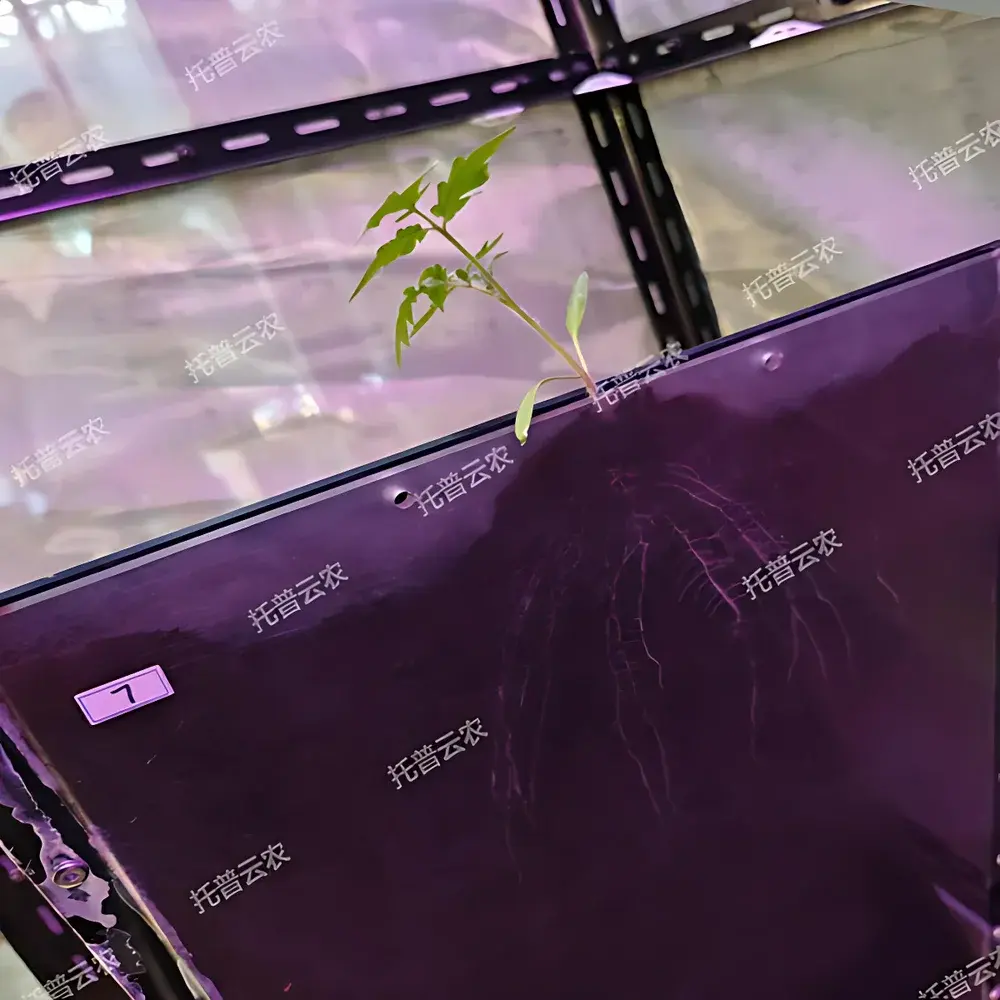
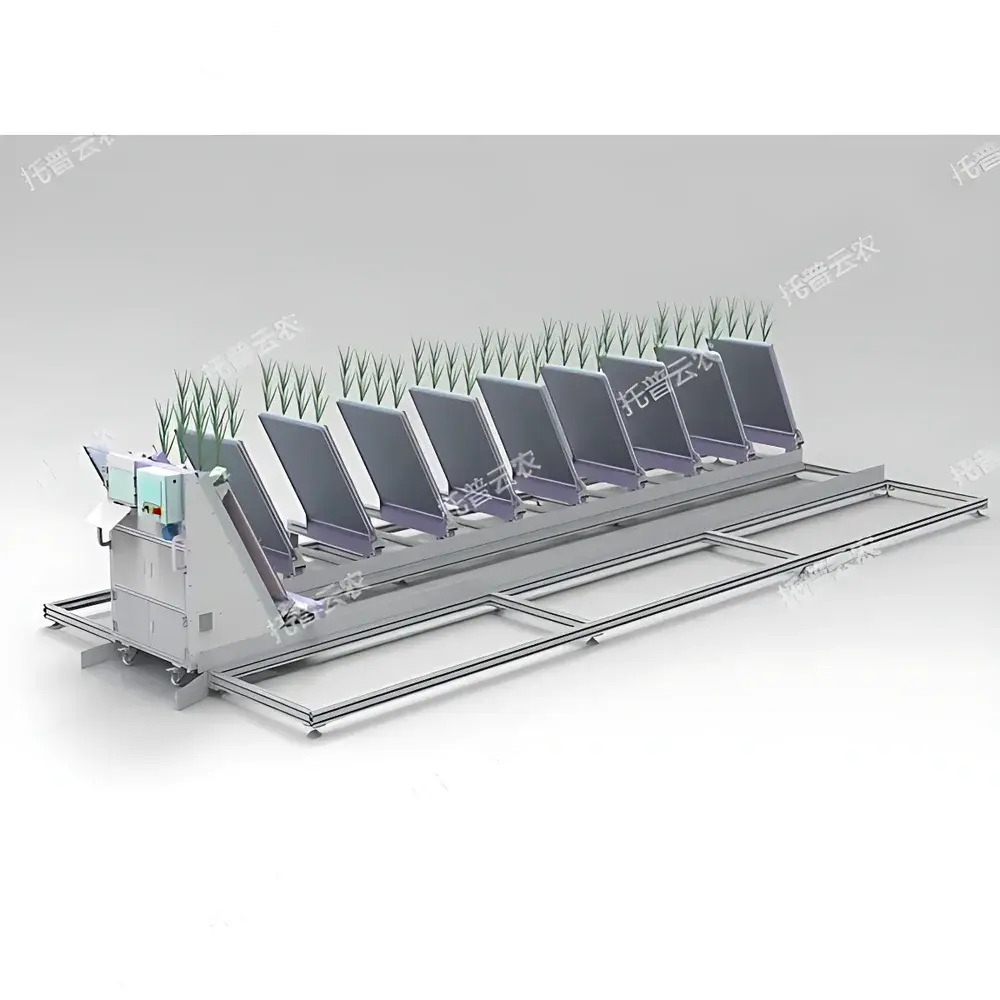
Top Cloud-agri TPN-GXY-GH High-Throughput Root Phenotyping System (Rhizobox-Based)
| Brand | Top Cloud-agri |
|---|---|
| Origin | Zhejiang, China |
| Manufacturer Type | Direct Manufacturer |
| Country of Origin | China |
| Model | TPN-GXY-GH |
| Pricing | Upon Request |
| Imaging Area | 320 mm (W) × 700 mm (L) |
| Resolution | 12,900 px × 1 px (configurable) |
| Rhizobox Capacity | 10 standard flat rhizoboxes per system |
| Acquisition Time | ≤10 s per sample |
| Operating Temperature Range | −10 °C to 60 °C |
| Power Supply | AC 220 V ±10 %, 50/60 Hz, ≤500 W |
| Frame Material | High-strength aluminum alloy + acrylic observation windows |
Overview
The Top Cloud-agri TPN-GXY-GH High-Throughput Root Phenotyping System (Rhizobox-Based) is an engineered solution for non-invasive, quantitative root architecture phenotyping under controlled and semi-field conditions. It employs Contact Image Sensor (CIS) scanning technology—optimized for planar root systems grown in transparent rhizoboxes—to deliver distortion-free, high-spatial-resolution linear imaging at up to 12,900 pixels across the scan width. Unlike conventional camera-based setups, CIS eliminates optical lens distortion and depth-of-field limitations, ensuring pixel-level geometric fidelity critical for morphometric analysis. The system operates on a fixed-stage scanning principle: roots are imaged in situ without excavation or physical disturbance, preserving natural growth orientation and soil-root interface integrity. Designed for longitudinal monitoring, it supports repeated measurements at user-defined intervals—from daily scans during early seedling establishment to weekly profiling across developmental stages—enabling time-series modeling of root elongation dynamics, branching patterns, and spatial distribution shifts in response to abiotic or biotic stimuli.
Key Features
- High-fidelity CIS-based imaging: Linear sensor array with native 12,900 × 1 px resolution ensures sub-millimeter spatial sampling; optimized for root contrast enhancement against translucent rhizobox substrates (e.g., agar, hydroponic gels, or low-density soil analogs).
- Throughput-optimized acquisition: Full-scan image capture completed in ≤10 seconds per rhizobox, enabling batch processing of up to 10 standardized flat rhizoboxes per system cycle—scalable to hundreds of samples per day in multi-system configurations.
- Non-destructive longitudinal tracking: Enables repeated imaging of the same root system over time without mechanical perturbation, supporting growth-rate derivation, root turnover estimation, and phenotypic plasticity quantification.
- Modular hardware integration: Optional AI-guided robotic arm with integrated RGB and multispectral (450–900 nm) imaging modules allows synchronized aboveground canopy and underground root phenotyping within a single experimental workflow.
- Ruggedized environmental design: Aluminum-alloy chassis and chemically resistant acrylic viewing panels ensure structural stability and optical clarity across diverse operational settings—from climate-controlled growth chambers (−10 °C to 40 °C) to greenhouse and field-deployable shelters (up to 60 °C ambient).
Sample Compatibility & Compliance
The TPN-GXY-GH accommodates standardized flat rhizoboxes (320 mm × 700 mm footprint), compatible with widely adopted protocols for cereal (wheat, rice, maize), legume (soybean, cotton), and brassica (oilseed rape) species. Custom rhizobox dimensions and substrate configurations (e.g., layered sand-clay composites, nutrient gradient gels) can be supported upon specification. All hardware components comply with IEC 61000-6-3 (EMI emission) and IEC 61000-6-2 (immunity) standards. Software workflows support audit-trail logging and user-access controls aligned with GLP-compliant data governance frameworks. Raw image exports (JPEG, TIFF) conform to FAIR data principles and integrate natively with open-source root analysis platforms including RootNav, EZ-Rhizo, and SmartRoot via standardized metadata headers.
Software & Data Management
The web-based analytical suite leverages convolutional neural networks trained on manually annotated root image datasets spanning >12 plant species and 5 substrate types. It automatically segments root pixels, reconstructs skeletonized topology, and computes 22 standardized morphometric descriptors—including total root length, average diameter, branching frequency, root angle distribution (relative to gravity vector), projected surface area, convex hull volume approximation, and biomass-equivalent pixel density metrics. All analyses are reproducible via version-controlled inference pipelines. Data export options include CSV (tabular phenotypes), GeoJSON (spatial root coordinates), and DICOM-compatible volumetric stacks for advanced 3D reconstruction. Audit logs record operator ID, timestamp, parameter presets, and software version—fully traceable for regulatory submissions under ISO 17025 or OECD Test Guidelines.
Applications
- Genetic mapping of root architectural QTLs in biparental populations and association panels
- Evaluation of drought tolerance mechanisms through root depth index and lateral root density profiling
- Screening of rhizosphere microbiome interventions on root hair development and exudate zone morphology
- Validation of digital twin models simulating root-soil hydraulic coupling under variable water potentials
- Phenotypic anchoring of CRISPR-edited root architecture alleles in elite breeding lines
- Multi-environment trial (MET) data harmonization across geographically distributed phenotyping platforms
FAQ
What root growth media are validated for use with this system?
Standard validation includes agar-based gels (0.8–1.2 % w/v), hydroponic aeroponic mist systems, and low-density silica sand–vermiculite mixtures (≤1.4 g/cm³ bulk density). Custom substrate calibration services are available.
Is the system compatible with existing LIMS or ELN platforms?
Yes—RESTful API endpoints support bidirectional data exchange with LabVantage, Benchling, and Thermo Fisher SampleManager via OAuth2 authentication and JSON payload schemas.
Can raw scan data be reprocessed with updated algorithms post-acquisition?
All raw CIS line-scan buffers are retained alongside metadata; reprocessing is fully supported using newer model versions without loss of original acquisition fidelity.
Does the system meet requirements for regulatory submission in crop trait registration?
The platform satisfies OECD Guidance Document 195 (Root Phenotyping) and supports generation of ALPAC (Analytical Laboratory Proficiency Assessment Criteria)–compliant reports required by USDA APHIS and EFSA for transgenic root trait dossiers.
Related Products



