
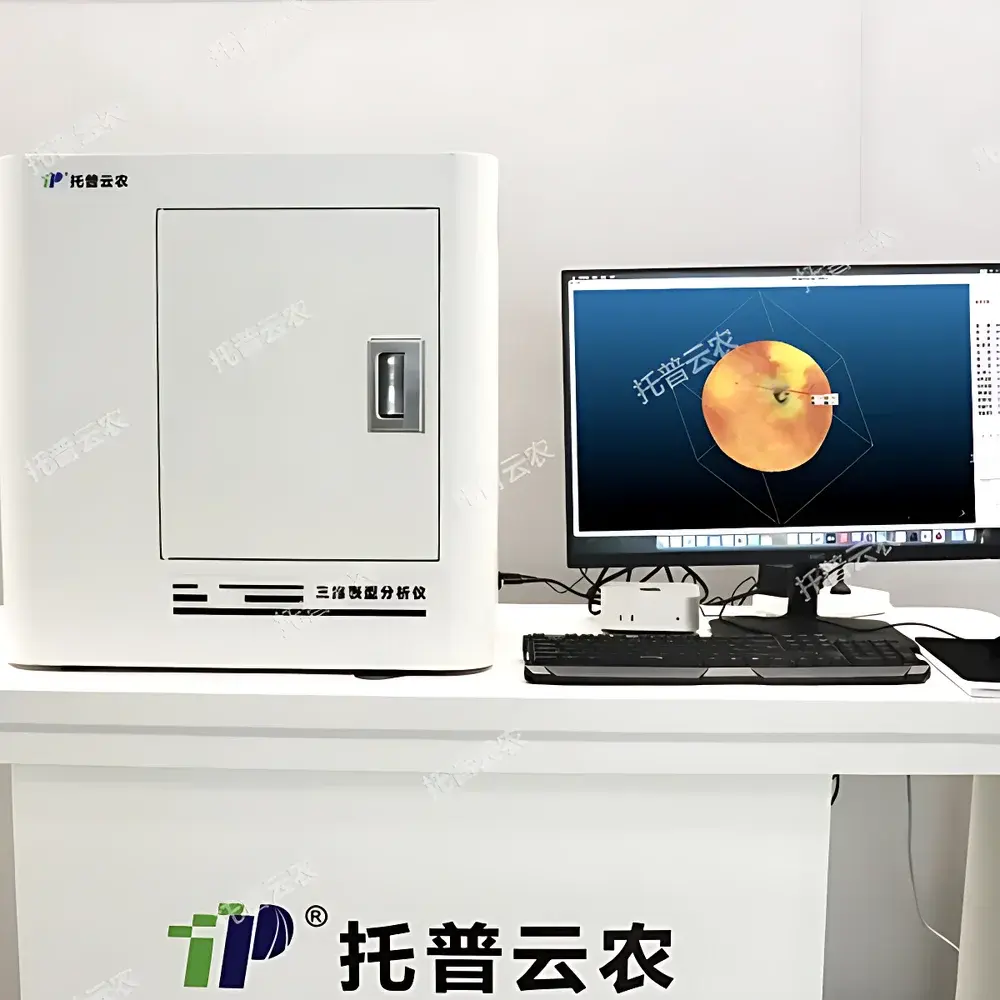
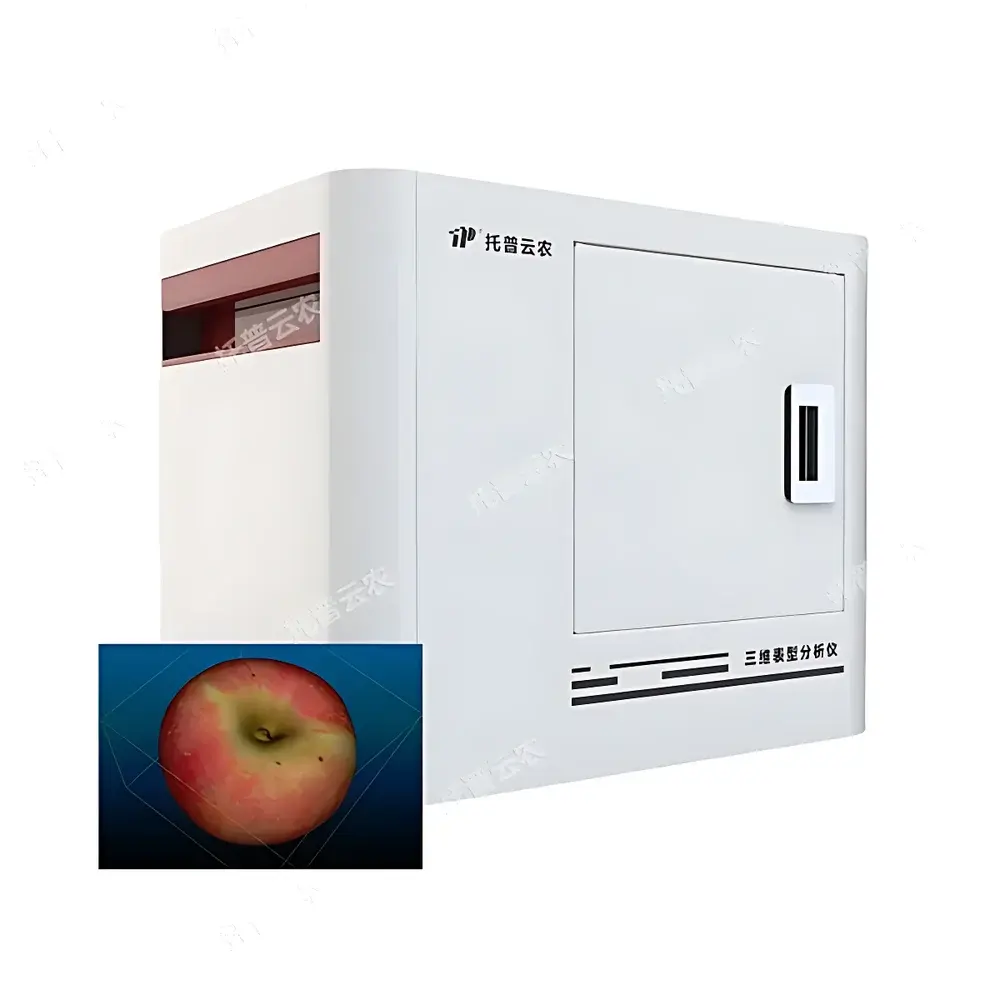
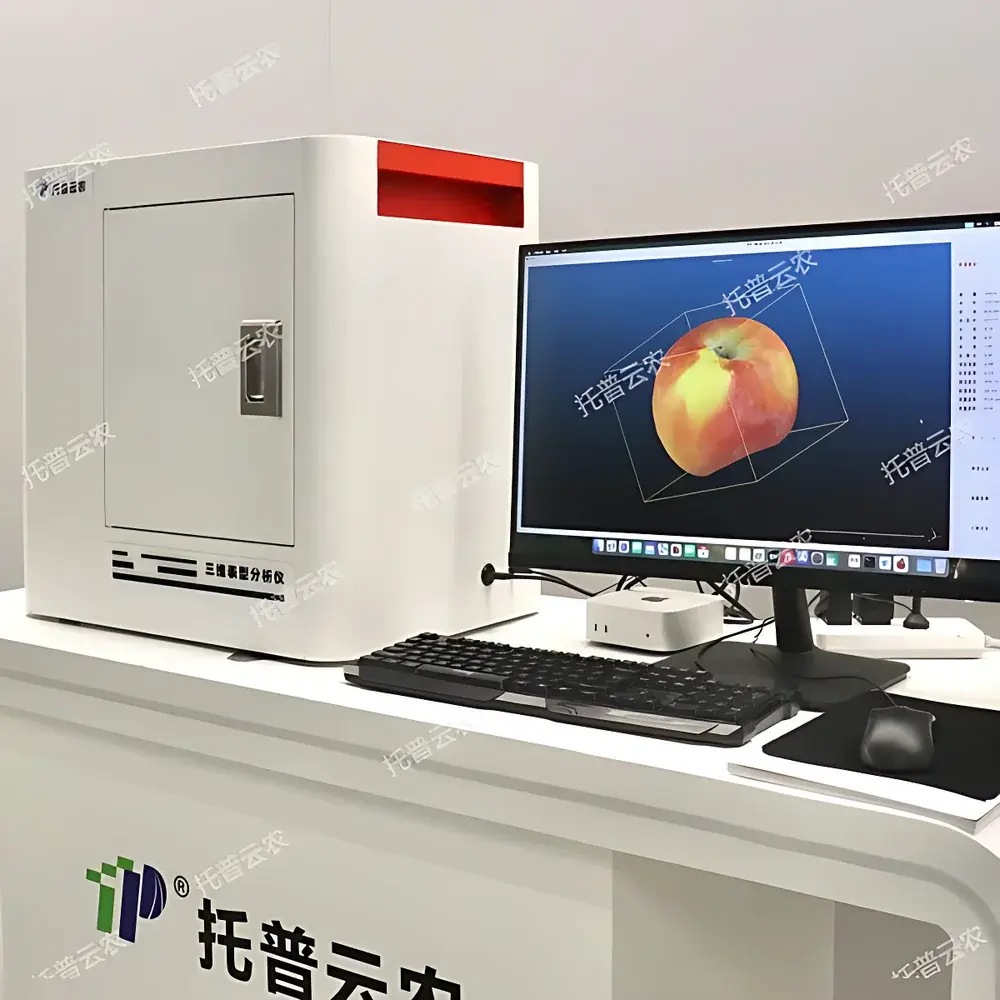
Top Cloud-agri TP-XT3D-G1 Fruit 3D Phenotyping System
| Brand | Top Cloud-agri |
|---|---|
| Origin | Zhejiang, China |
| Manufacturer Type | Direct Manufacturer |
| Country of Origin | China |
| Model | TP-XT3D-G1 |
| Price | Upon Request |
| Max. Sample Diameter | 25–250 mm |
| Dimensional Accuracy | ±0.5 mm or 2% (whichever greater) |
| Resolution | 0.1 mm (distance), 2% (surface area & volume) |
| Lighting | Uniform diffused LED illumination |
| RGB Camera | 11 MP, 3840 × 2880 resolution |
| Integrated Scale | 2000 g capacity, 0.1 g readability |
| Rotation Stage | Motorized 360° continuous positioning |
| Power Consumption | <100 W |
Overview
The Top Cloud-agri TP-XT3D-G1 Fruit 3D Phenotyping System is a dedicated, turnkey imaging platform engineered for non-destructive, high-throughput quantitative phenotypic characterization of intact fruits and tuberous crops. It operates on the principle of multi-view structured-light-assisted photogrammetry combined with calibrated RGB imaging, enabling robust 3D point cloud reconstruction from ≥36 angular views per sample. The system integrates hardware synchronization between a precision motorized rotation stage, an embedded high-resolution RGB camera, and a controlled optical environment—ensuring geometric consistency, color fidelity, and measurement traceability across repeated acquisitions. Designed for plant breeding programs, postharvest quality laboratories, and horticultural research facilities, it delivers standardized, operator-independent morphometric and chromatic data compliant with FAO/WHO fruit grading guidelines and ISO 8587:2021 (Sensory analysis — General guidance for the selection, training and monitoring of assessors).
Key Features
- Integrated Weighing Module: Built-in high-precision load cell (2000 g full scale, 0.1 g readability) synchronized with image capture; weight metadata is automatically appended to each 3D dataset.
- Automated Multi-Angle Imaging: Programmable 360° rotation stage with sub-degree angular repeatability ensures uniform coverage without manual repositioning.
- Optimized Optical Chamber: Sealed dark enclosure with spectrally stable, diffuse LED ring lighting eliminates specular reflection and shadow artifacts—critical for accurate colorimetric analysis (CIE L*a*b*, HSV, and RGB space quantification).
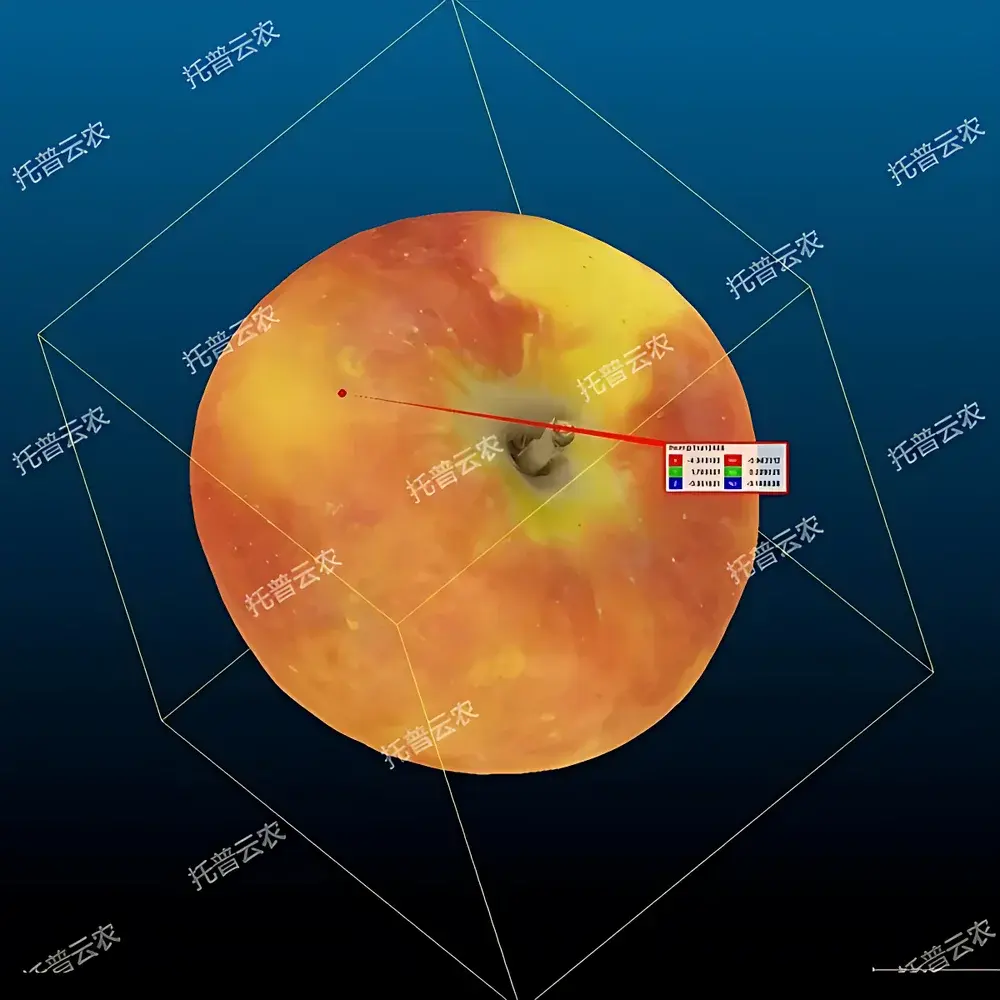
- AI-Powered Phenotype Extraction Engine: Proprietary deep learning pipeline reconstructs dense 3D surface meshes from raw image stacks and computes ≥28 standardized phenotypic descriptors without user-defined thresholds.
- Hardware-Level Calibration Traceability: Factory-calibrated spatial reference frame with certified dimensional standards (NIST-traceable gauge blocks) enables inter-system reproducibility and longitudinal study alignment.
Sample Compatibility & Compliance
The TP-XT3D-G1 accommodates a broad spectrum of fleshy and starchy horticultural produce—including pome fruits (apple, pear), drupes (peach, cherry), berries (strawberry, lychee), tropical fruits (banana, pineapple), cucurbits (pumpkin, squash), and root/tuber crops (potato, sweet potato, onion). All samples must be rigid enough to maintain structural integrity during rotation and fit within the 250 mm diameter envelope. The system adheres to GLP-compliant data handling protocols: audit trails record operator ID, timestamp, instrument firmware version, calibration status, and raw image hash values. Exported datasets conform to MIAPPE 1.1 (Minimum Information About a Plant Phenotyping Experiment) metadata schema and support direct ingestion into BreedBase and BrAPI-compatible platforms.
Software & Data Management
The proprietary TopPheno™ v3.2 software suite provides a validated, FDA 21 CFR Part 11-ready environment for acquisition, processing, visualization, and export. Users navigate reconstructed 3D models via intuitive mouse-driven interaction (pan, zoom, rotate) and toggle among predefined orthogonal, isometric, and oblique views. Batch processing supports automated trait extraction across hundreds of samples with configurable QC flags (e.g., occlusion detection, reflectance saturation). All outputs—including annotated 3D meshes (.OBJ/.PLY), trait tables (.CSV/.XLSX), and 360° video exports (MP4/H.264, customizable duration/resolution)—are stored with immutable timestamps and SHA-256 checksums. Raw image archives are retained in lossless TIFF format with embedded EXIF metadata (exposure, white balance, lens distortion profile).
Applications
- Quantitative evaluation of fruit shape evolution in apple rootstock breeding trials
- Non-invasive monitoring of ripening-related changes in tomato color uniformity and surface texture
- High-throughput screening of mango cultivars for resistance to sunscald (via surface reflectance heterogeneity metrics)
- Correlation analysis between 3D volume estimates and destructive dry-matter content measurements in sweet potato germplasm collections
- Validation of UAV-based canopy-level yield prediction models using ground-truthed fruit size distributions
- Postharvest quality assurance in packinghouse environments—automated sorting threshold definition based on multivariate trait clusters
FAQ
Does the system require external calibration before each use?
No. The TP-XT3D-G1 performs automatic internal calibration at startup using embedded fiducial markers and thermal-stable reference geometry. Full recalibration is recommended every 6 months or after physical relocation.
Can the software interface with LIMS or enterprise databases?
Yes. TopPheno™ supports ODBC/JDBC connectivity and RESTful API endpoints for bidirectional data exchange with LabWare LIMS, Thermo Fisher SampleManager, and custom SQL-based repositories.
Is color data traceable to international standards?
Yes. The LED illumination spectrum is NIST-certified for CIE D65 daylight simulation, and all color outputs are reported in CIELAB space with ΔE*ab ≤ 1.5 against BCR-810 color standards.
What is the minimum sample throughput per hour?
Under standard configuration (36-view acquisition + reconstruction + trait export), average throughput is 45–55 samples/hour depending on fruit size and network storage I/O latency.
Are software updates included in the warranty period?
Yes. Two years of complimentary software maintenance includes feature enhancements, regulatory compliance patches (e.g., updated 21 CFR Part 11 audit trail logic), and security updates.
Related Products





