
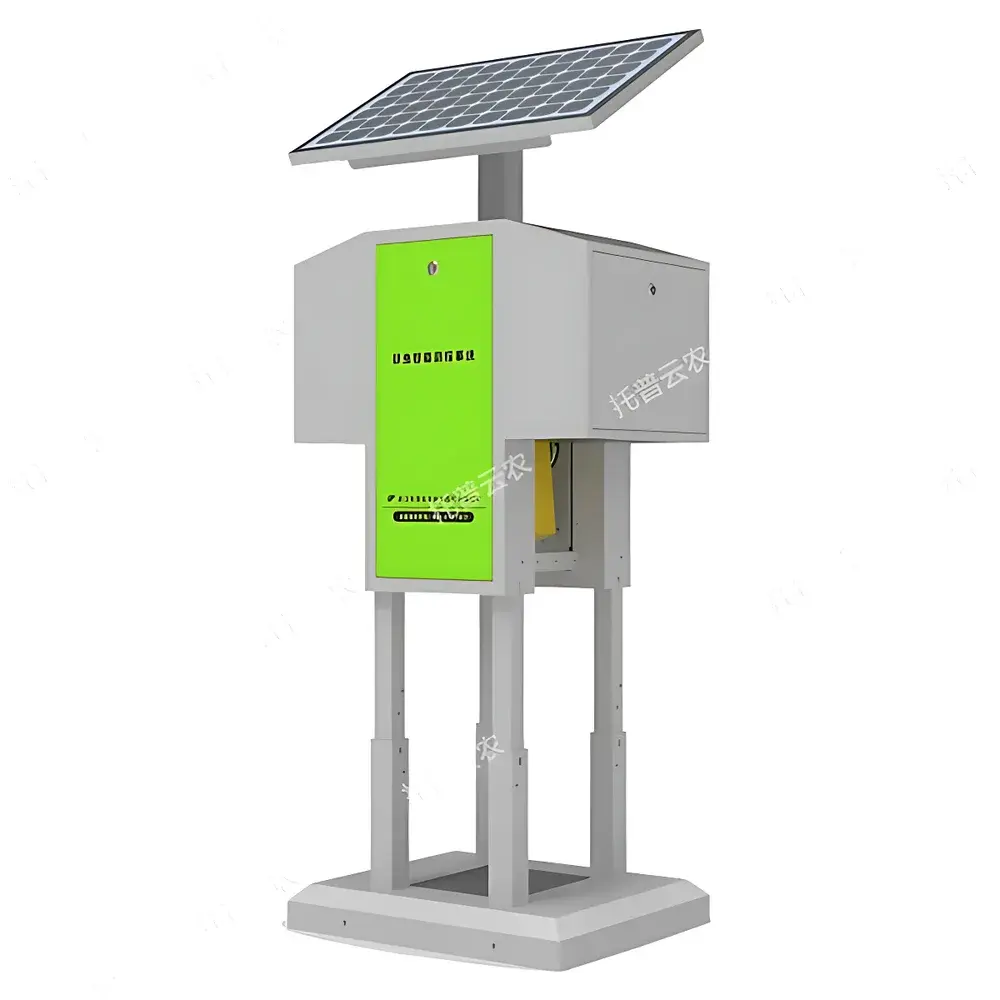
Top Cloud-agri TPCB-YC1.0 Smart Aphid Monitoring and Forecasting System
| Brand | Top Cloud-agri |
|---|---|
| Origin | Zhejiang, China |
| Manufacturer Type | Manufacturer |
| Country of Origin | China |
| Model | TPCB-YC1.0 |
| Pricing | Available Upon Request |
Overview
The Top Cloud-agri TPCB-YC1.0 Smart Aphid Monitoring and Forecasting System is an automated, image-based entomological surveillance instrument engineered for precision detection and temporal trend analysis of aphid populations in open-field and protected agriculture environments. It operates on the well-documented phototactic response of aphids to yellow wavelengths (550–580 nm), deploying standardized yellow sticky roller traps as passive collection surfaces. Integrated with a 20-megapixel industrial-grade CMOS camera and embedded edge-processing firmware, the system captures high-resolution images at user-defined intervals, transmits them securely to a cloud-hosted IoT platform, and applies convolutional neural network (CNN)-trained models to classify aphid morphotypes (e.g., Rhopalosiphum padi, Sitobion avenae) and quantify specimen density per frame. Unlike manual scouting or generic insect traps, this system delivers time-stamped, geo-referenced, audit-ready digital records—enabling quantitative pest pressure mapping and early-warning forecasting aligned with integrated pest management (IPM) protocols.
Key Features
- Optimized Yellow-Sticky Trap Architecture: Dual-sided, vertically exposed sticky roller with adjustable height range (0.3–2.0 m), enabling alignment with canopy height across wheat growth stages (tillering to heading), cotton vegetative phases, orchard understory, and greenhouse vegetable canopies.
- Edge-Based Image Acquisition & Processing: On-device image capture at configurable intervals (1–24 hr), automatic illumination compensation under variable ambient light, and real-time JPEG compression prior to encrypted MQTT transmission to the cloud platform.
- Automated Roller Replacement Mechanism: Motor-driven roller advance triggered by pixel-based coverage threshold detection (>85% surface occlusion), ensuring uninterrupted monitoring continuity without field technician intervention.
- Robust Environmental Enclosure: IP65-rated stainless-steel housing with powder-coated finish; designed for resistance to UV degradation, dust ingress, rain exposure, and temperature fluctuations from −20 °C to +60 °C.
- Autonomous Power Management: Integrated monocrystalline solar panel (18 V / 20 W) paired with a lithium-iron-phosphate (LiFePO₄) battery (12 V / 12 Ah), supporting >15 days of operation under full cloud-sync mode during low-irradiance periods.
- Remote Operational Control: Web-based dashboard and native iOS/Android application for real-time status monitoring, trap height adjustment commands, image review, algorithm confidence threshold tuning, and firmware over-the-air (OTA) updates.
Sample Compatibility & Compliance
The TPCB-YC1.0 is validated for use with aphid species commonly associated with cereal, horticultural, and fiber crops—including but not limited to Metopolophium dirhodum, Myzus persicae, and Aphis gossypii. Its non-destructive, non-invasive sampling method preserves specimen integrity for optional morphological verification. Data output conforms to FAO’s Pest Information Platform for Extension and Education (PIPE) metadata schema and supports export in CSV/GeoJSON formats compatible with GIS-based decision support systems. The system architecture complies with ISO/IEC 27001 information security standards for data in transit and at rest, and its audit log functionality meets GLP-aligned traceability requirements for agricultural research trials.
Software & Data Management
The cloud platform provides role-based access control (RBAC), time-series visualization of daily catch counts, cumulative seasonal abundance curves, and geospatial heatmaps overlaid on satellite-derived NDVI layers. All image annotations, classification confidence scores, and timestamped device telemetry are retained with immutable SHA-256 hashing. The system supports integration with third-party farm management software (FMS) via RESTful API, including compatibility with ISO 11783 (ISOBUS) ag-data exchange frameworks. Audit trails record every user action, algorithm update, and hardware event—ensuring compliance with national phytosanitary reporting mandates and facilitating FDA/EMA-aligned data integrity assessments in regulated crop protection studies.
Applications
- Real-time aphid population dynamics monitoring in winter wheat monocultures during critical tillering and stem elongation phases.
- Early detection of winged aphid migration events in cotton-wheat intercropping systems to inform timely border trap deployment.
- Quantitative evaluation of neonicotinoid-free IPM interventions (e.g., parasitoid release timing) in organic apple orchards.
- Long-term phenological correlation studies linking aphid flight activity with degree-day accumulation models and microclimate sensor arrays.
- Multi-site validation of resistant cultivar performance under natural infestation pressure across regional agroecological zones.
FAQ
What aphid species does the TPCB-YC1.0 reliably identify?
The system’s trained model covers 12 economically significant aphid taxa endemic to East Asian agricultural systems, with ≥92% precision for Sitobion avenae and Rhopalosiphum padi under field lighting conditions.
Can the system operate without cellular connectivity?
Yes—onboard storage retains up to 30 days of image data and metadata locally; synchronization resumes automatically upon network restoration.
Is calibration required before deployment?
No routine optical or algorithmic recalibration is needed; however, users may upload reference images for model fine-tuning via the admin portal.
How is data privacy ensured for multi-farm deployments?
Each device operates within an isolated tenant environment; cross-client data sharing requires explicit, audited consent governed by GDPR-compliant data processing agreements.
Does the system support integration with weather station networks?
Yes—via Modbus RTU or LoRaWAN gateways, enabling synchronized analysis of aphid activity relative to humidity, temperature, and wind speed thresholds.




