
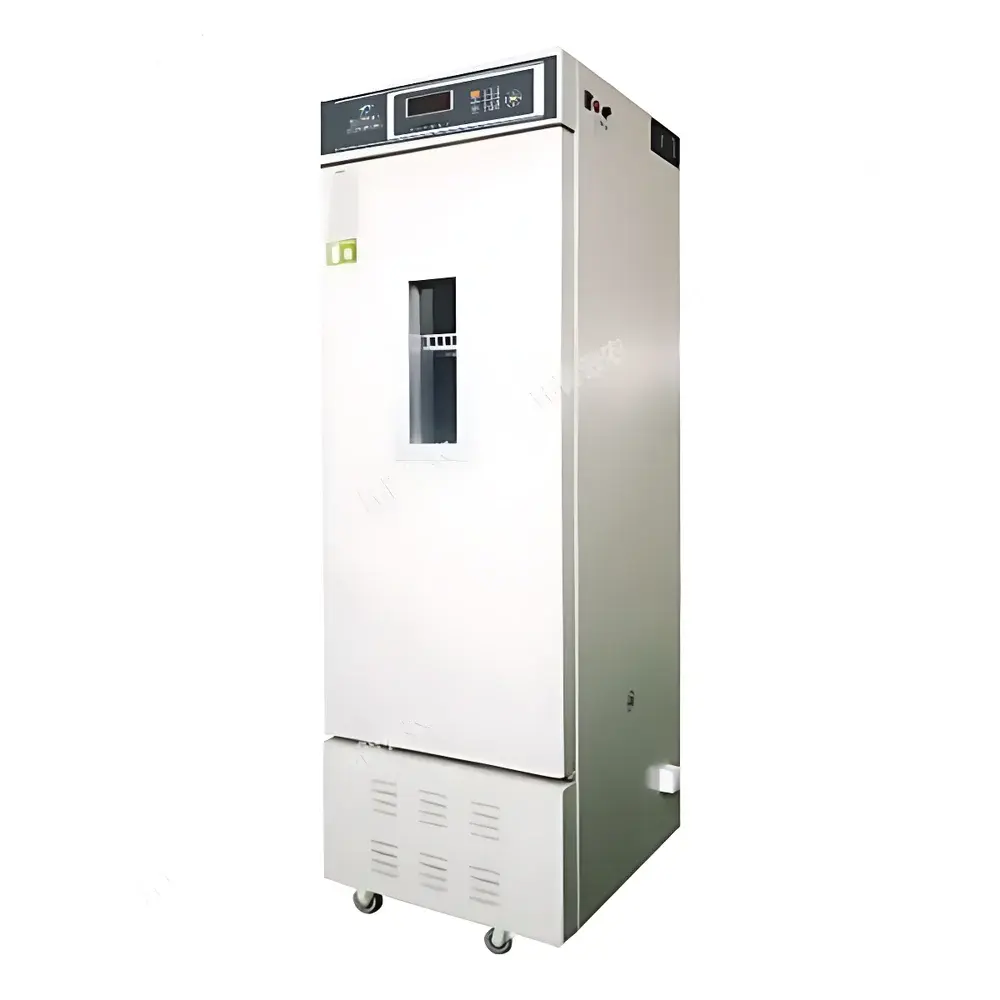
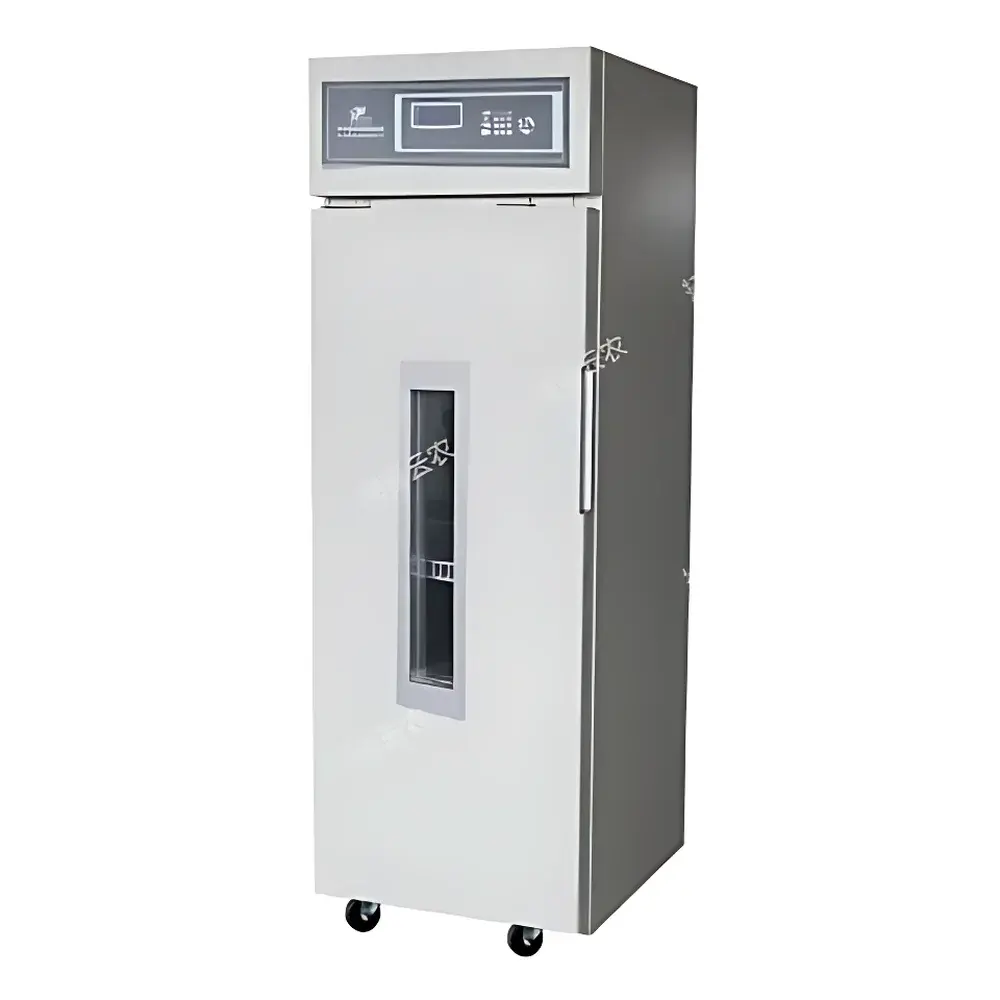
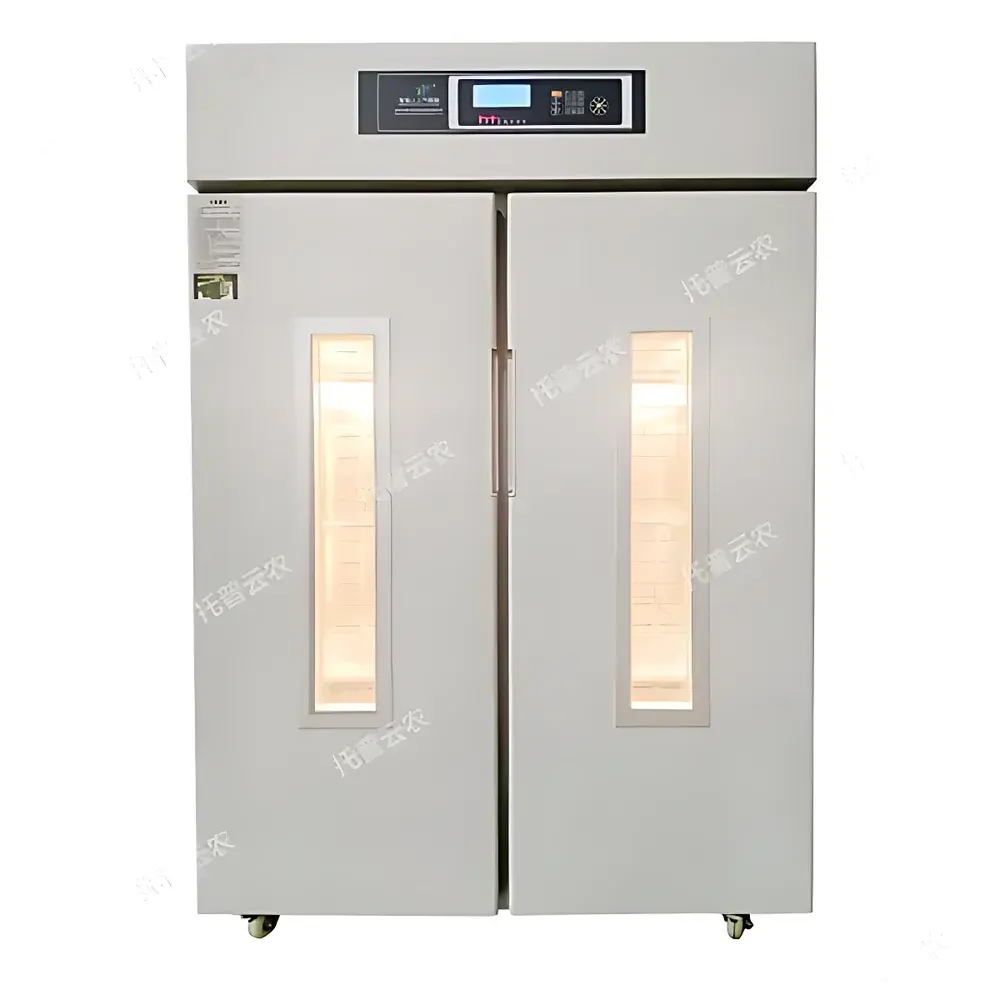
Top Cloud-agri GTOP-Y Series Intelligent Artificial Climate Incubator
| Brand | Top Cloud-agri |
|---|---|
| Origin | Zhejiang, China |
| Manufacturer Type | Direct Manufacturer |
| Model | GTOP-Y Series |
| Temperature Control Range | 0–50 °C (GTOP-158Y) to 0–50 °C (GTOP-1000Y) |
| Illuminance Range | 0–12,000 Lux |
| Illuminance Adjustment | 3–10 Levels (Programmable) |
| Temperature Uniformity | ±1 °C |
| Temperature Stability | ±0.5 °C |
| Programmable Segments | Up to 99 Time-Temperature-Illuminance Stages (Each Stage: 1–99 h) |
| Interior Material | Mirror-Finish Stainless Steel |
| Data Connectivity | RJ45 Ethernet Standard |
| Remote Monitoring | Web & Mobile App (Android/iOS), Cloud Platform with Audit-Trail Logging, Data Export (CSV/Excel), Curve & Tabular Reporting |
Overview
The Top Cloud-agri GTOP-Y Series Intelligent Artificial Climate Incubator is a precision-engineered environmental simulation system designed for controlled plant physiology, seed germination, photobiology, and long-term growth studies in academic, agricultural, pharmaceutical, and regulatory research laboratories. It operates on a dual-axis control architecture—simultaneously regulating air temperature (via Peltier-assisted forced-air circulation and PID-controlled heating/cooling modules) and spectral irradiance (via tunable LED arrays)—to replicate diurnal cycles, seasonal light gradients, and climate-stress conditions with high reproducibility. Unlike basic thermal incubators, the GTOP-Y series integrates real-time environmental feedback loops, ensuring stable setpoint adherence across variable load conditions and extended operational durations (>30 days continuous). Its design complies with foundational requirements for GLP-compliant experimental environments, supporting traceable parameter logging and protocol-driven operation essential for ISO 17025-accredited labs and preclinical botanical studies.
Key Features
- Multi-Stage Environmental Programming: Supports up to 99 independent time-temperature-illumination segments per cycle; each segment configurable for duration (1–99 hours), target temperature (0–50 °C), and relative illuminance level (0–100% of max output).
- High-Uniformity LED Lighting System: Full-spectrum white LEDs (400–700 nm PAR range) with uniform irradiance distribution (±5% spatial deviation across working volume); three preset intensity tiers plus fine-grained digital adjustment (0–12,000 Lux at 10 cm from source).
- Intelligent Thermal Management: Mirror-finish stainless steel chamber with optimized airflow ducting ensures ±1 °C temperature uniformity and ±0.5 °C stability; redundant NTC sensors enable cross-validated thermal monitoring and fail-safe cutoff at user-defined overtemperature thresholds.
- Resilient Operational Architecture: Built-in power-loss recovery logic retains all active program states and timestamps; automatically compensates elapsed downtime upon restoration, preserving experimental continuity without manual reconfiguration.
- Integrated Sanitation Protocol: UV-C sterilization mode (254 nm, optional activation timer) complements routine cleaning; removable interior shelves and seamless chamber corners facilitate ISO-standard decontamination procedures.
- Human-Centric Interface: Backlit monochrome LCD display with intuitive Chinese/English bilingual navigation; real-time visualization of chamber temperature, ambient temperature, remaining segment duration, and system status flags.
Sample Compatibility & Compliance
The GTOP-Y series accommodates standard tissue culture vessels (e.g., Petri dishes, Magenta boxes, multi-well plates), hydroponic trays, and potted seedlings up to 30 cm height (GTOP-1000Y model). Chamber dimensions scale proportionally with volume (150–1000 L), maintaining consistent air exchange rates (~6–8 air changes/hour) and minimizing boundary-layer thermal gradients. The system meets mechanical safety standards per GB/T 20987–2007 (Chinese national standard for environmental chambers) and incorporates electrical isolation compliant with IEC 61010-1 for laboratory equipment. While not certified to UL/CSA or CE for direct EU/US market placement, its architecture supports validation documentation packages aligned with FDA 21 CFR Part 11 data integrity requirements when deployed with the optional cloud platform—enabling electronic signatures, audit trails, and role-based access control for regulated botanical assays.
Software & Data Management
The optional GTOP Cloud Platform provides a secure, browser-accessible C/S architecture supporting concurrent web and native mobile clients (iOS/Android). All environmental parameters—including timestamped temperature, illuminance, door-open events, alarm triggers, and sterilization logs—are encrypted and stored redundantly on ISO 27001-certified cloud infrastructure. Users may define custom alert thresholds (e.g., >5 min deviation from setpoint), generate compliance-ready reports (PDF/CSV), and export time-series datasets for statistical analysis in R, Python, or JMP. Firmware updates are delivered over-the-air with version rollback capability. Platform-level features include multi-device dashboard aggregation, comparative cohort analysis across incubators, and automated certificate-of-operation generation for internal QA audits.
Applications
- Photoperiod-controlled seed germination trials under standardized ISTA protocols
- Phytochemical profiling of medicinal plants across developmental stages
- Stress-response phenotyping (drought, heat, low-light acclimation)
- Microbial co-culture experiments requiring synchronized light/dark cycling
- Regulatory stability testing of botanical extracts per USP environmental controls
- Teaching laboratories conducting inquiry-based plant physiology curricula
FAQ
Is the GTOP-Y series suitable for GMP-regulated botanical manufacturing?
Yes—when configured with the cloud platform and operated under documented SOPs, it satisfies core Annex 11 and WHO TRS 961 data integrity expectations for environmental monitoring in herbal API production.
Can illuminance be calibrated traceably to NIST standards?
The system accepts third-party spectroradiometer validation; factory calibration certificates (traceable to CNAS-accredited labs) are available upon request.
What is the maximum allowable ambient operating temperature?
35 °C continuous; derating recommended above this threshold to maintain specified uniformity and stability.
Does the incubator support CO₂ enrichment?
No—CO₂ control is outside the standard configuration; however, external gas mixing manifolds can be integrated via optional chamber port kits.
How frequently does the cloud platform synchronize data?
Default interval is 30 seconds; adjustable down to 10 seconds for high-resolution kinetics studies.
Related Products





