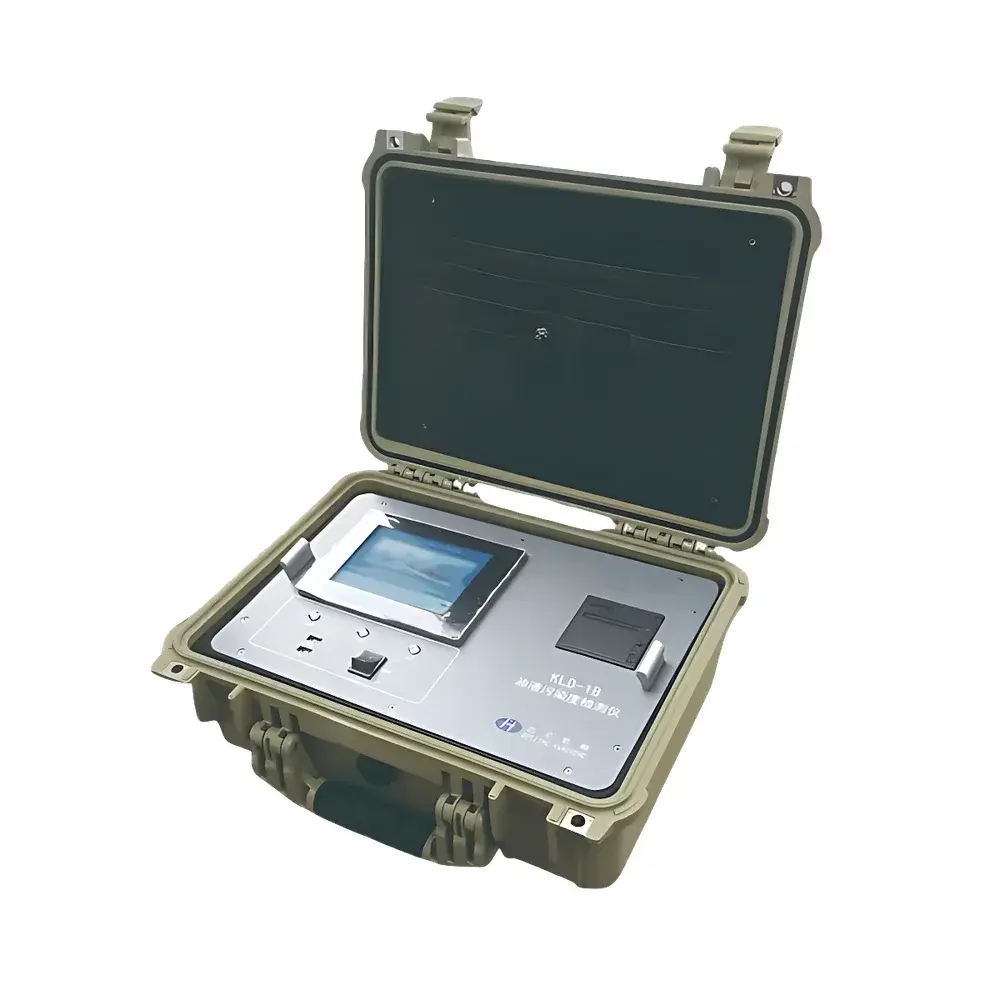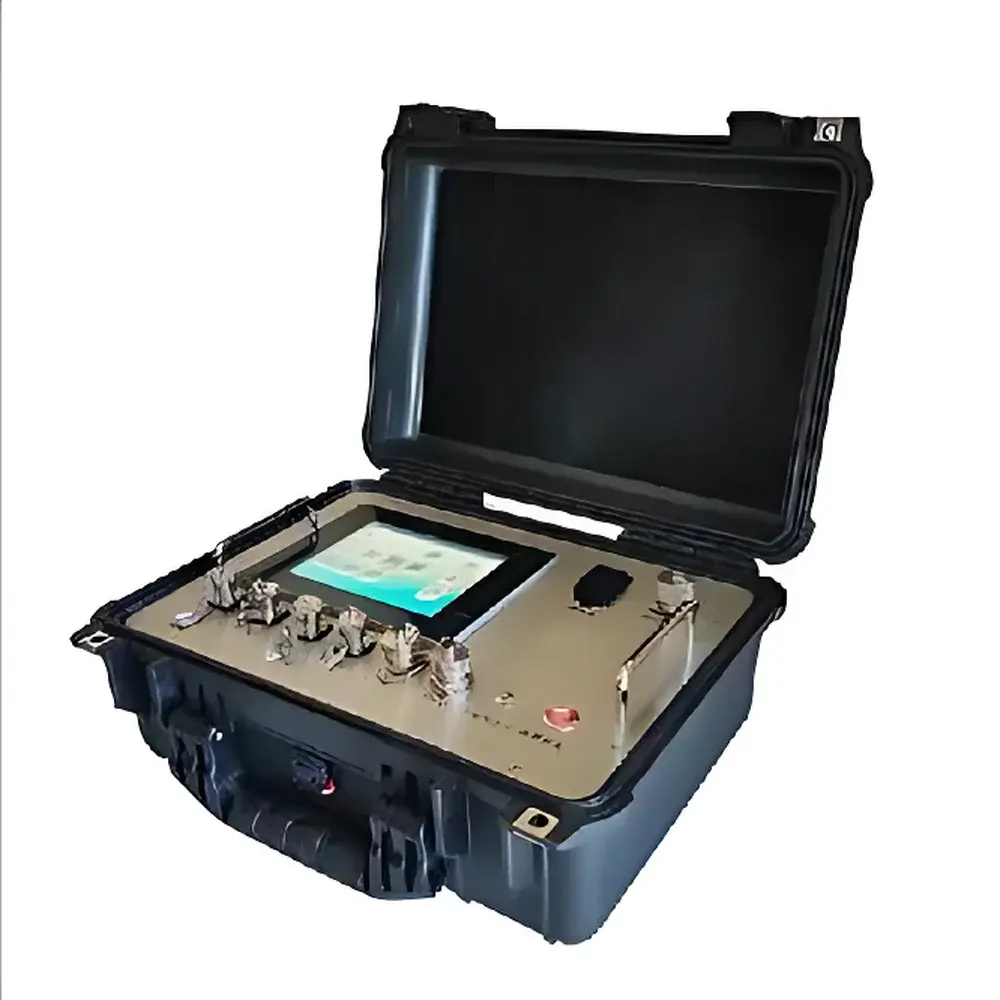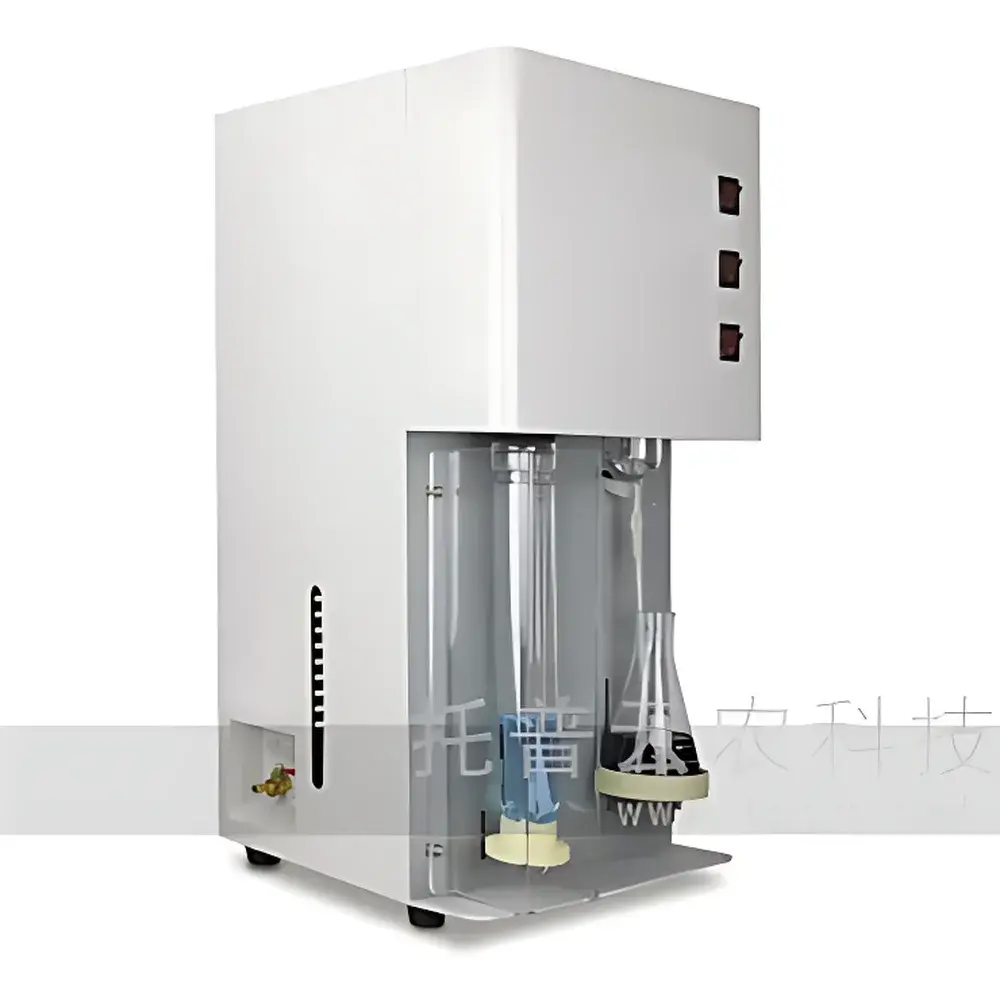
Top Cloud-agri KDN-08C Automated Kjeldahl Nitrogen Analyzer
| Brand | Top Cloud-agri |
|---|---|
| Origin | Zhejiang, China |
| Manufacturer Type | Direct Manufacturer |
| Country of Origin | China |
| Model | KDN-08C |
| Product Category | Protein Determinator |
| Measurement Principle | Kjeldahl Method |
Overview
The Top Cloud-agri KDN-08C Automated Kjeldahl Nitrogen Analyzer is a fully integrated laboratory instrument engineered for precise, reproducible quantification of total nitrogen content in organic samples—enabling accurate protein concentration calculation via the classical Kjeldahl method. This principle relies on acid digestion of organic matter to convert bound nitrogen into ammonium sulfate, followed by alkaline distillation to liberate ammonia, which is then captured in boric acid and quantified by titration. Designed for routine analysis in food quality control, agricultural research, feed formulation, and environmental testing laboratories, the KDN-08C delivers traceable, standardized results aligned with internationally recognized methodologies including ISO 8968-1 (milk), ISO 20483 (cereals), AOAC 984.13 (general foods), and ASTM D5142 (coal and coke). Its dual-mode operation—fully automated sequence control or stepwise manual intervention—ensures flexibility across workflow demands while maintaining analytical integrity.
Key Features
- Microprocessor-based process control system with programmable digestion and distillation parameters, supporting up to 8 simultaneous sample runs per batch.
- Automated reagent addition: precise dosing of concentrated NaOH for distillation and boric acid solution for ammonia absorption, minimizing operator variability.
- Integrated safety architecture: digestion chamber interlock door sensor, steam generator low-water level detection with audible/visual alarm, real-time water-level monitoring with automatic power cutoff upon critical fault.
- Corrosion-resistant construction: powder-coated steel chassis with ABS polymer front panel, chemically inert to strong acids (H₂SO₄), alkalis (NaOH), and oxidizing agents used in digestion protocols.
- Adaptive water management: supports both municipal tap water and distilled water supply; automatic fill, level regulation, and overflow prevention; compatible with inlet pressure ≥1.5 MPa and inlet temperature ≤20 °C.
- Energy-efficient design: 1000 W rated power consumption with thermal insulation on digestion block and condenser housing to reduce ambient heat load.
Sample Compatibility & Compliance
The KDN-08C accommodates a broad spectrum of solid and liquid matrices without modification: cereals, legumes, dairy powders, meat products, animal feed, soil extracts, wastewater sludge, pharmaceutical excipients, and botanical preparations. Sample mass ranges from 0.20–2.00 g (solid), 2.00–5.00 g (semi-solid), or 10.00–25.00 mL (liquid), covering typical nitrogen loads of 0.1–200 mg N per run. The system meets essential regulatory expectations for method validation under GLP and GMP environments, including documented audit trails for reagent addition timing, distillation duration, and cooling water flow confirmation. While not inherently 21 CFR Part 11 compliant out-of-the-box, its deterministic operational logic and hardware-based event logging support integration into validated LIMS ecosystems requiring electronic record retention.
Software & Data Management
The embedded controller provides non-volatile memory storage for ≥100 method profiles, each configurable for digestion time (0–99 min), digestion temperature ramping, distillation duration (5–15 min), and post-distillation rinse cycles. All operational events—including start/stop timestamps, water level status, safety interlock triggers, and error codes—are logged with UTC synchronization. Data export is supported via RS-232 serial interface to external PCs running custom or third-party lab data management software. No proprietary cloud platform or vendor-hosted analytics are required; raw titration endpoint values (mL HCl consumed) and calculated nitrogen/protein concentrations (g/100 g) are directly accessible for statistical process control (SPC) charting and uncertainty budgeting per ISO/IEC 17025.
Applications
- Food & Beverage QA/QC: Routine verification of declared protein content in flour, soy isolates, infant formula, and plant-based alternatives per Codex Alimentarius standards.
- Agricultural Testing: Soil total nitrogen assessment for fertilizer recommendation models and crop residue nutrient balance studies.
- Feed Mill Laboratories: Compliance testing against AAFCO-defined crude protein specifications for poultry, swine, and aquaculture feeds.
- Environmental Monitoring: Quantification of organic nitrogen in wastewater influent/effluent and sediment cores for eutrophication modeling.
- Pharmaceutical R&D: Excipient nitrogen screening and purity verification of amino acid derivatives during API synthesis.
FAQ
What nitrogen recovery rate does the KDN-08C achieve under standard operating conditions?
The instrument consistently achieves ≥99% nitrogen recovery across certified reference materials (e.g., BCR-65, NIST SRM 1577c), inclusive of digestion efficiency, distillation completeness, and titration accuracy.
Is external cooling water circulation required?
No—the system uses ambient tap water at ≥3 L/min flow rate and ≤20 °C inlet temperature; no chiller or recirculation pump is necessary.
Can the KDN-08C be validated for ISO/IEC 17025 accreditation?
Yes—its deterministic control architecture, traceable calibration procedures for burette delivery, and comprehensive event logging enable full compliance with ISO/IEC 17025 clause 7.7 (Ensuring validity of results) when paired with documented IQ/OQ/PQ protocols.
What maintenance intervals are recommended for long-term reliability?
Daily: Condenser tube inspection and descaling if hard water is used; weekly: Steam trap cleaning and gasket integrity check; annually: Pressure relief valve certification and digestion block thermocouple calibration.
Does the instrument support alternative digestion catalysts such as selenium or copper sulfate?
Yes—compatible with standard Kjeldahl catalyst mixtures (e.g., K₂SO₄/CuSO₄ or K₂SO₄/Se), provided digestion temperature profiles are adjusted per AOAC guidelines to prevent catalyst decomposition or volatilization loss.