TOP Cloud-agri TOP-1300 Canopy Analyzer for Leaf Area Index (LAI) and Structural Parameters
| Brand | TOP Cloud-agri |
|---|---|
| Origin | Zhejiang, China |
| Manufacturer Type | Direct Manufacturer |
| Country of Origin | China |
| Model | TOP-1300 |
| Pricing | Available Upon Request |
| Lens Field of View | 150° (optional 180° fisheye) |
| Image Resolution | 768 × 494 pixels |
| Zenith Angle Range | 0°–75° (divisible into 10 sectors) |
| Azimuth Angle Range | 0°–360° (divisible into 10 sectors) |
| PAR Spectral Sensitivity | 400–700 nm |
| PAR Irradiance Measurement Range | 0–2000 µmol·m⁻²·s⁻¹ |
| Power Supply | 7.4 V rechargeable Li-ion battery pack |
| Interface | USB 2.0 |
| Operating Temperature | 0–55 °C |
Overview
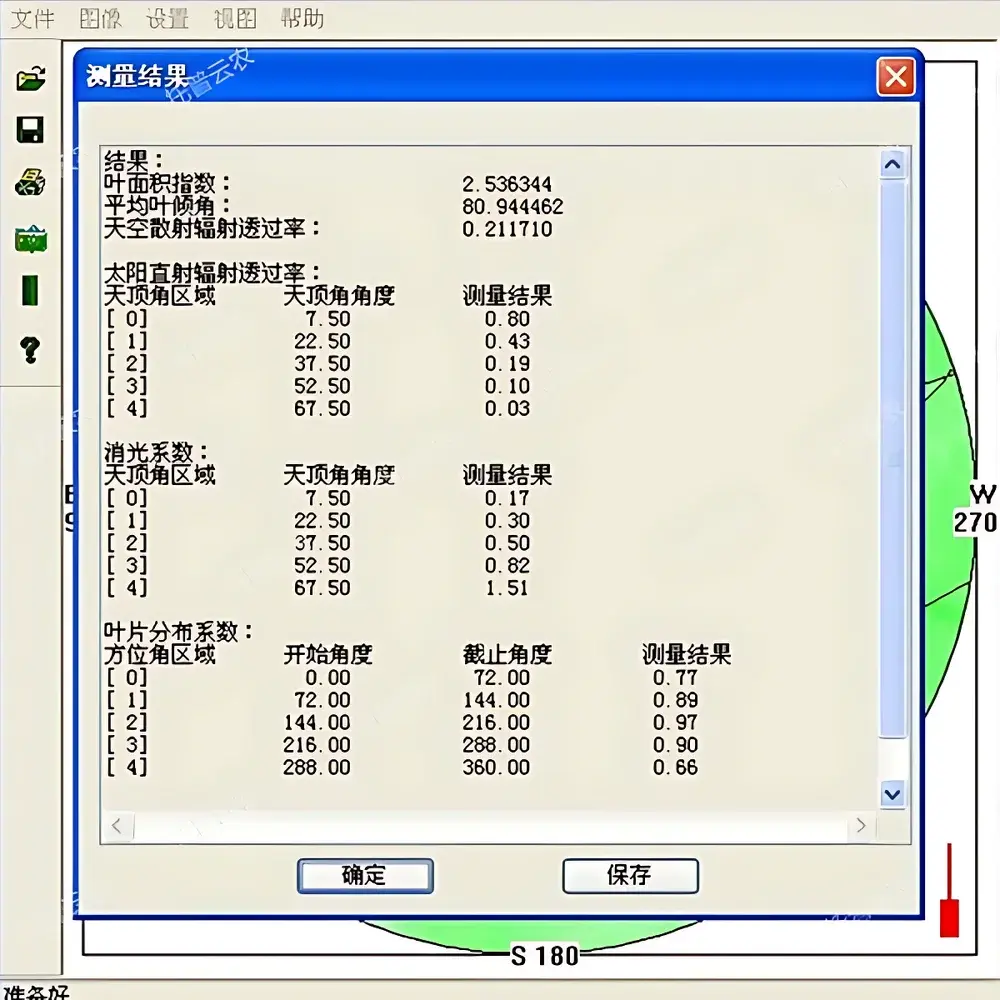
The TOP Cloud-agri TOP-1300 Canopy Analyzer is a field-deployable, fisheye-based optical instrument engineered for non-destructive quantification of canopy structural parameters in plant physiology and agroecological research. It operates on the principle of hemispherical photography combined with gap fraction analysis—capturing downward-looking fisheye images of the canopy from beneath, then applying radiometric and geometric algorithms to derive leaf area index (LAI), mean leaf inclination angle (MLA), direct beam transmittance at multiple solar zenith angles, diffuse transmittance, extinction coefficient (k), and canopy openness. Unlike destructive harvest-based LAI estimation or indirect proxy methods (e.g., NDVI from satellite imagery), the TOP-1300 delivers spatially resolved, in situ measurements with traceable geometry and calibrated PAR response—making it suitable for longitudinal studies of canopy development, light interception dynamics, and radiation use efficiency (RUE) across crop species, orchard systems, and natural vegetation stands.
Key Features
- Non-invasive, real-time LAI and structural parameter acquisition without leaf removal or canopy disturbance—ensuring measurement repeatability across growth stages.
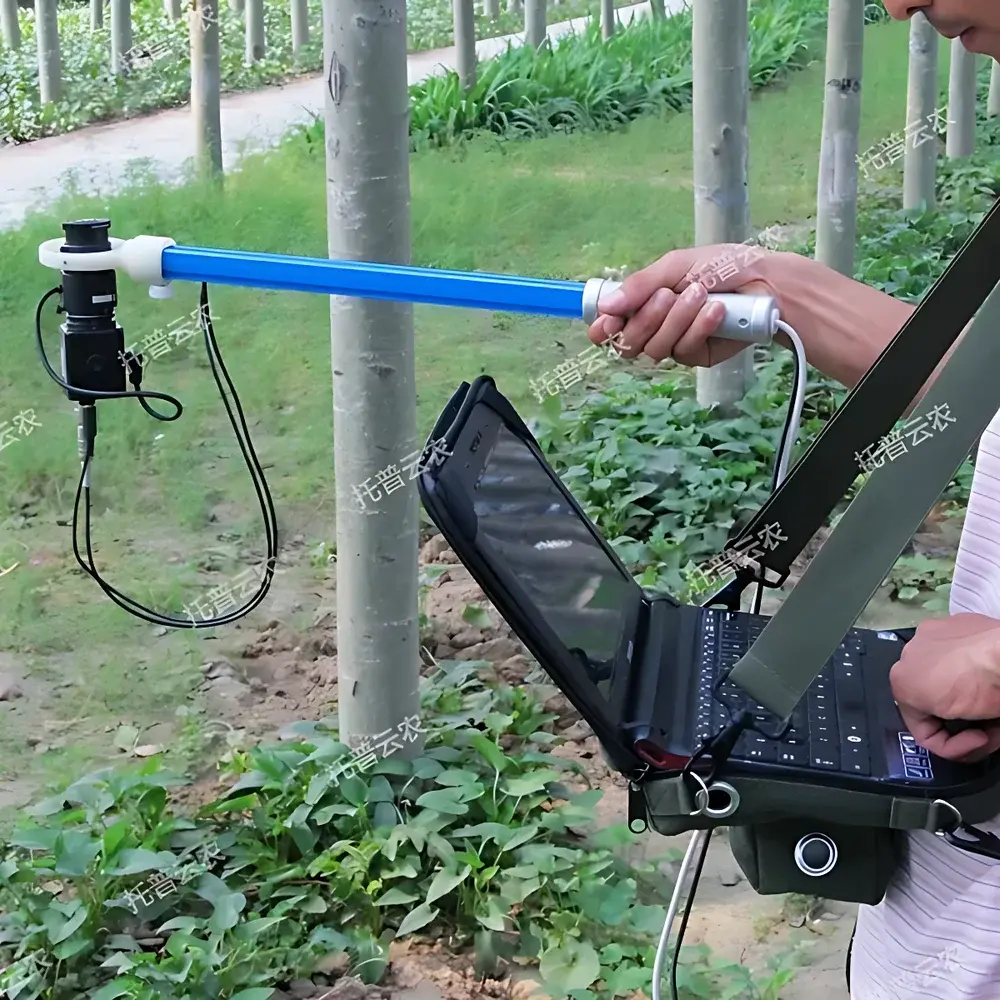
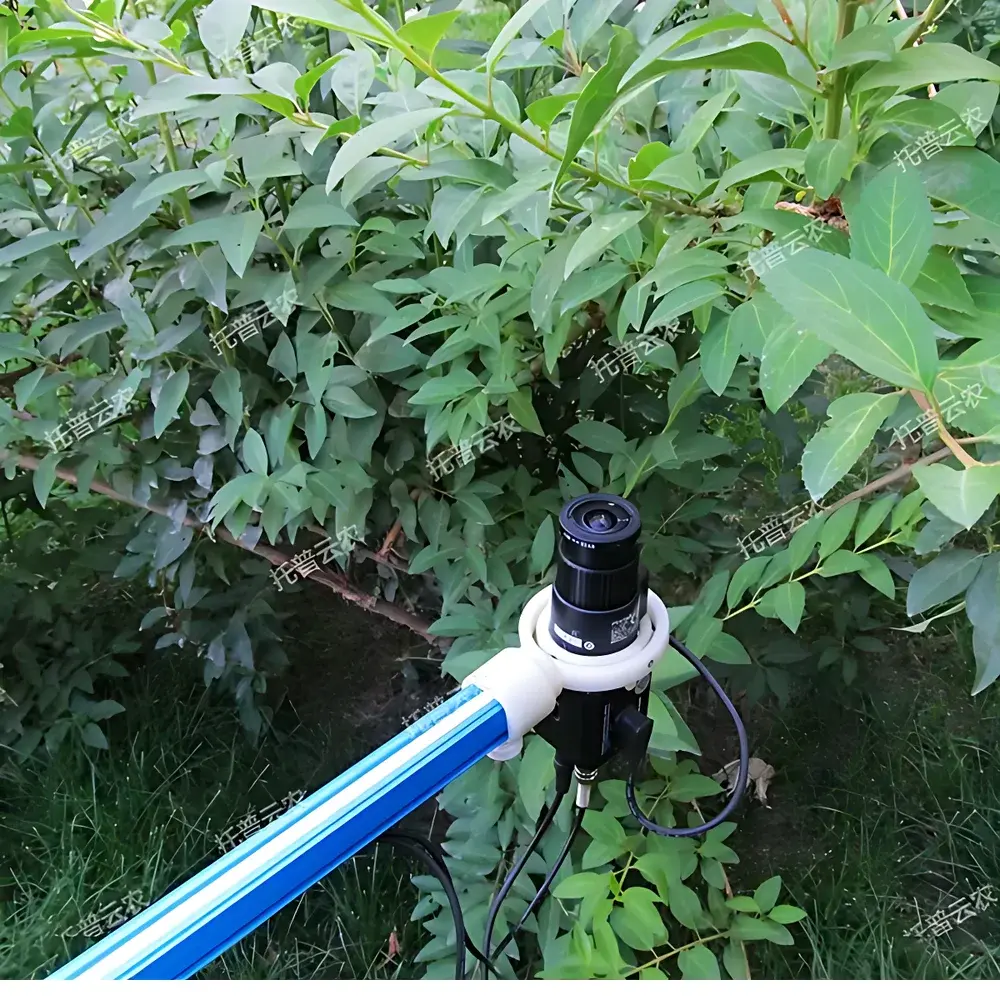
- Compact, lightweight fisheye probe (150° standard FOV; optional 180° ultra-wide lens) mounted on an adjustable survey pole for rapid deployment at multiple heights within the canopy profile.
- Integrated electronic leveling system ensures consistent image plane orientation—critical for accurate zenith/azimuth sectorization and gap fraction modeling.
- USB 2.0 interface enables live video streaming to Windows-based host computers, allowing immediate frame selection, timestamped capture, and lossless storage of raw .bmp or .jpg image files.
- Dedicated rechargeable 7.4 V Li-ion battery pack supports ≥8 hours of continuous operation under typical field conditions—eliminating dependency on external power sources during extended monitoring campaigns.
- Vertical profiling capability: sequential measurements at defined height intervals generate stratified LAI and light transmittance profiles—enabling vertical canopy architecture characterization per ISO 11727:2021 (Plant Biometeorology — Measurement of Canopy Structure).
Sample Compatibility & Compliance
The TOP-1300 is compatible with herbaceous and woody perennial canopies—including row crops (maize, soybean, wheat), horticultural systems (tomato, strawberry tunnels), orchards (apple, citrus), and native grassland or forest understory vegetation. Its PAR-sensitive CMOS sensor (400–700 nm) conforms to the spectral definition of photosynthetically active radiation per CIE S 026/E:2018 and ASTM E2915-22. Data processing adheres to the Beer–Lambert–Lacaze formalism for gap fraction inversion and follows the standardized zenith-angle binning protocol (10 sectors from 0° to 75°) recommended in the FAO CropWat manual and referenced in USDA ARS technical bulletins. While not certified to GLP or ISO/IEC 17025, the instrument’s calibration traceability, documented measurement uncertainty (based on lens distortion mapping and PAR sensor linearity verification), and audit-ready metadata export support compliance with internal QA/QC protocols in academic and governmental agricultural research institutions.
Software & Data Management
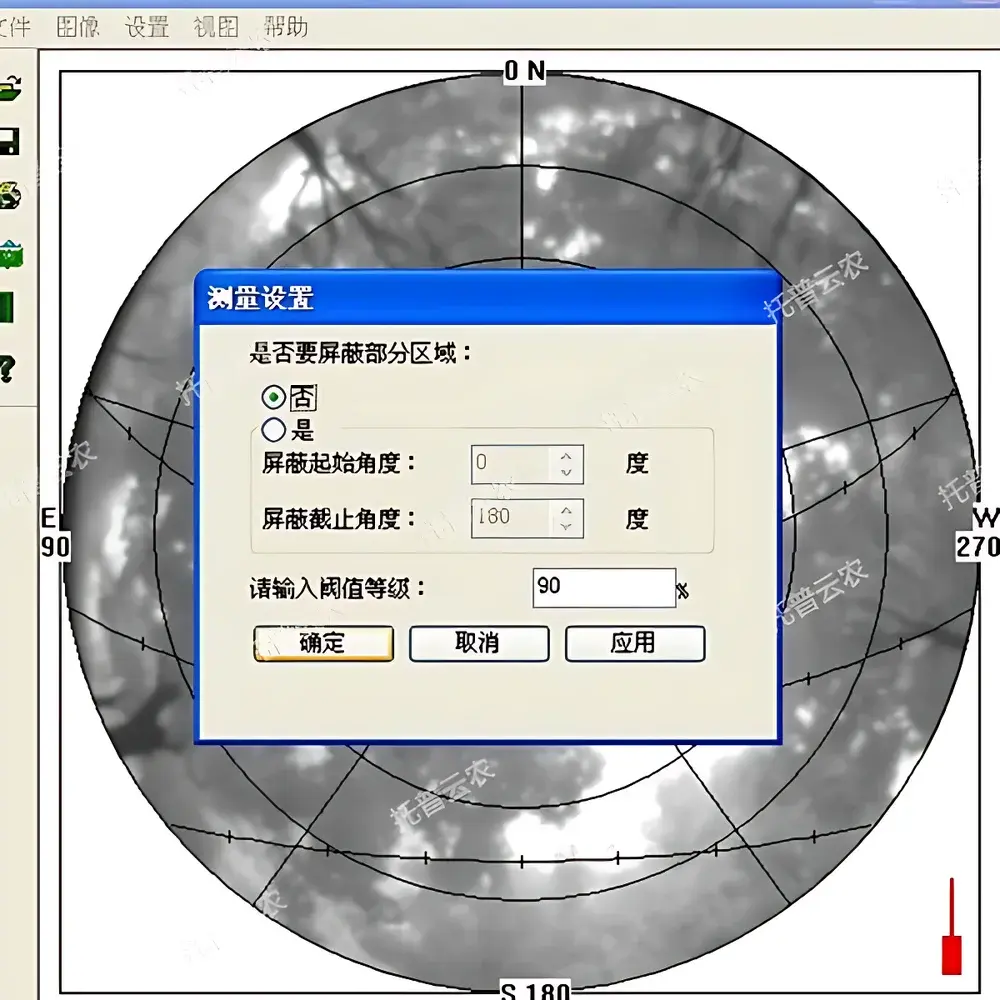
The proprietary TOP-1300 Analysis Suite (v3.2+, Windows 10/11 compatible) provides full control over image segmentation, masking, and quantitative extraction. Users define region-of-interest (ROI) masks by combining up to 10 zenith-angle bands and 10 azimuth-angle sectors—effectively excluding non-canopy elements (e.g., sky gaps due to wind-induced movement, adjacent structures, or sensor tilt artifacts). The software computes LAI using both the inversion of gap fraction (G(θ)) and the modified spherical-crown model (Ross–Nilson approach), outputs tabular results in CSV format, and generates publication-ready plots: LAI vs. height, transmittance vs. solar zenith angle, and MLA-derived clumping index (Ω). All image files retain EXIF metadata (GPS coordinates if enabled via external module, time stamp, battery level, lens ID), supporting FAIR data principles (Findable, Accessible, Interoperable, Reusable). Exported datasets are compatible with R (‘plantecophys’, ‘lidR’), Python (‘scikit-image’, ‘xarray’), and MATLAB workflows.
Applications
- Long-term phenotyping of field-grown genotypes for high-radiation-use-efficiency (RUE) breeding programs—tracking LAI trajectories from emergence to senescence.
- Calibration and validation of radiative transfer models (e.g., SAIL, 4SAIL, PROSAIL) used in remote sensing downscaling and UAV-based multispectral analytics.
- Assessment of canopy light environment in protected cultivation—optimizing supplemental lighting placement and intensity in greenhouse tomato or lettuce production.
- Quantifying shade tolerance gradients in agroforestry systems—measuring vertical LAI distribution beneath timber canopies to inform understory crop selection.
- Monitoring canopy closure dynamics in conservation tillage or cover cropping trials—correlating LAI development with soil moisture retention and weed suppression efficacy.
FAQ
Does the TOP-1300 require absolute calibration against a reference LAI standard?
No—its optical geometry and PAR response are factory-characterized using NIST-traceable light sources and distortion-mapped lens profiles. However, users may perform field validation using destructively sampled LAI from representative subplots per ISO 13833:2022 guidelines.
Can the device operate under variable cloud conditions?
Yes—the instrument measures instantaneous gap fraction and PAR transmittance, independent of absolute irradiance level. Cloud-induced fluctuations are mitigated through ensemble averaging of ≥3 replicate images per location.
Is the software compliant with FDA 21 CFR Part 11 for regulated agricultural trials?
The current version does not include electronic signature, audit trail, or role-based access controls required for Part 11 compliance. For GxP-aligned deployments, raw image archives and CSV exports may be integrated into validated LIMS environments.
What is the minimum recommended distance between sensor and canopy for reliable MLA estimation?
For uniform canopies ≥30 cm tall, maintain ≥1.5× canopy height clearance to minimize edge effects; for sparse or heterogeneous stands, ground-level placement with full-sky visibility is advised.
Are firmware updates and software patches provided post-purchase?
Yes—registered users receive biannual feature updates and critical bug fixes via secure download portal, with version-controlled release notes and backward-compatible file format support.