
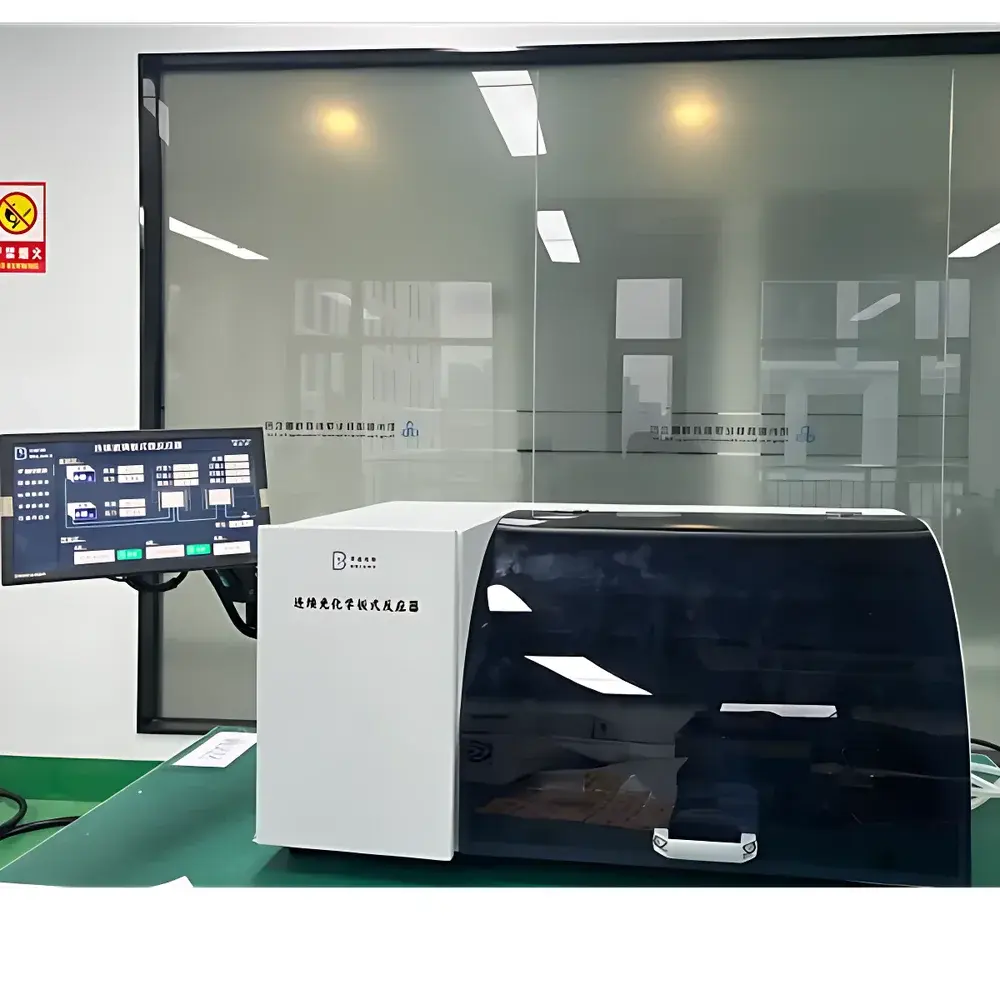
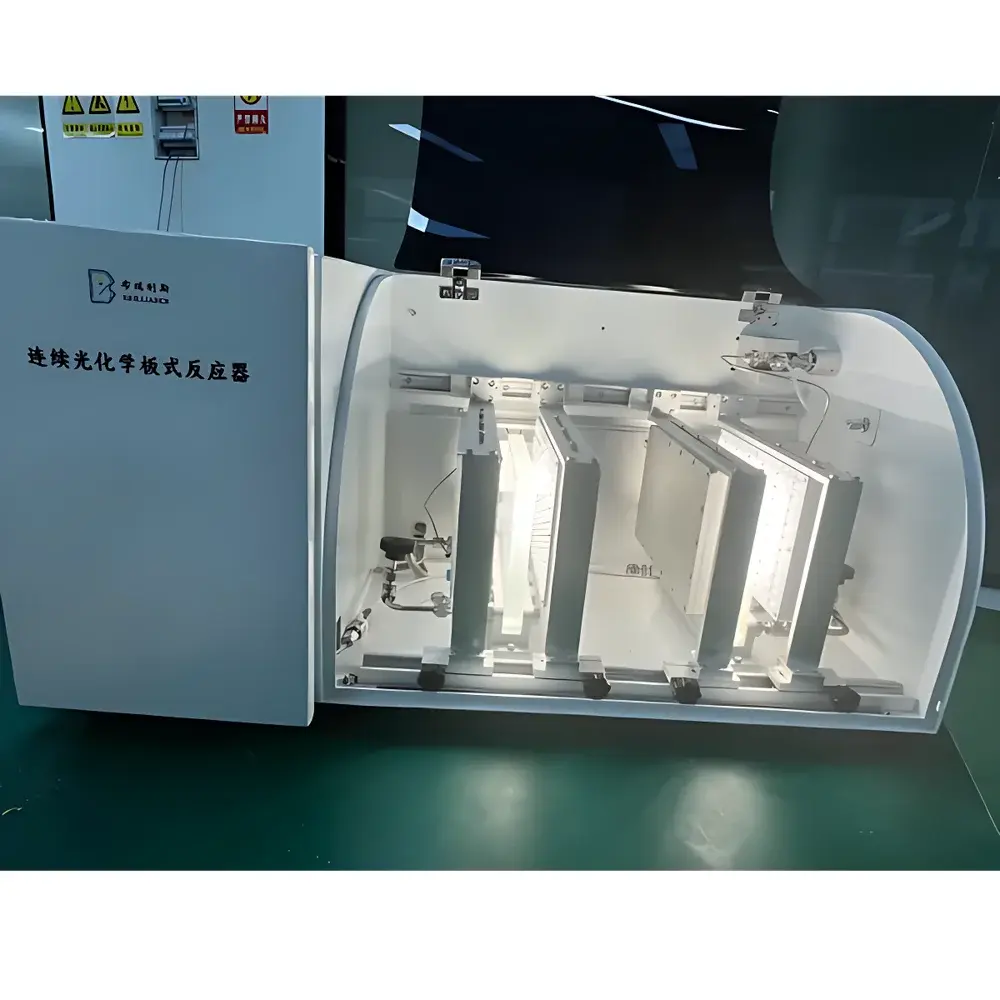
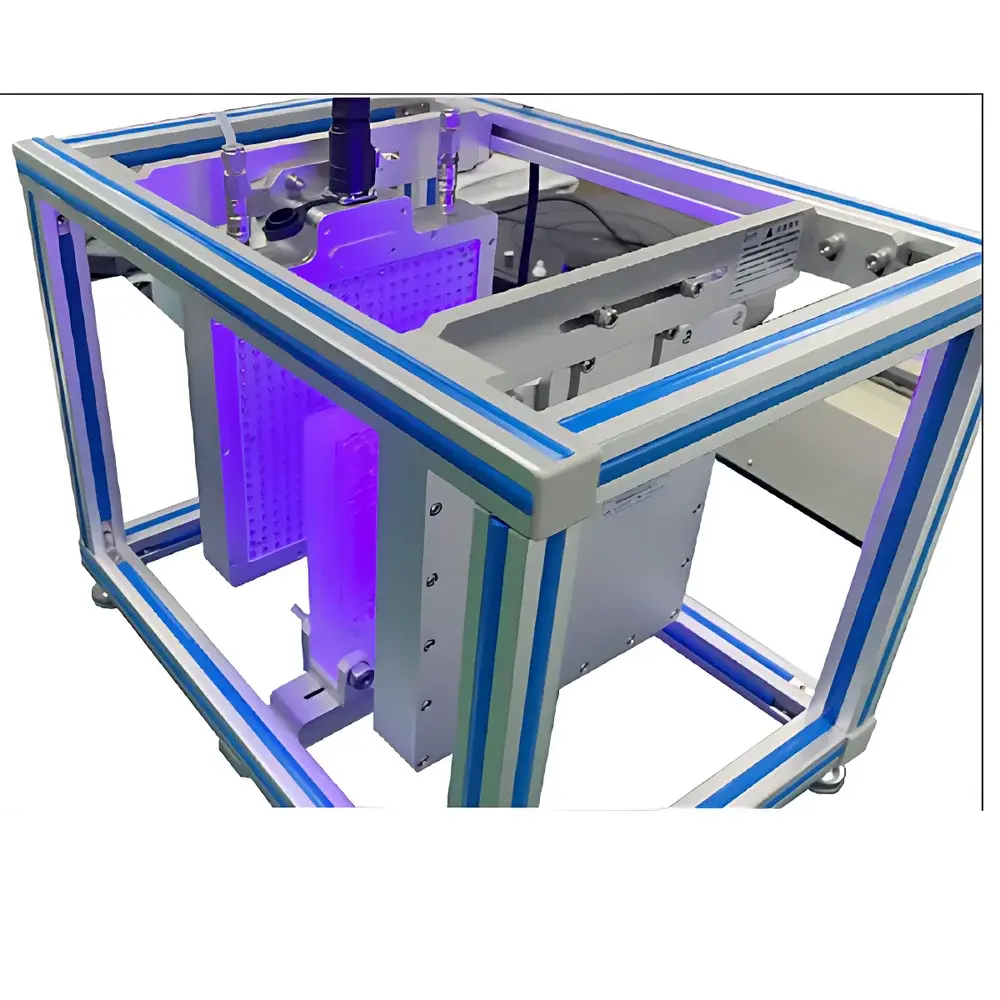
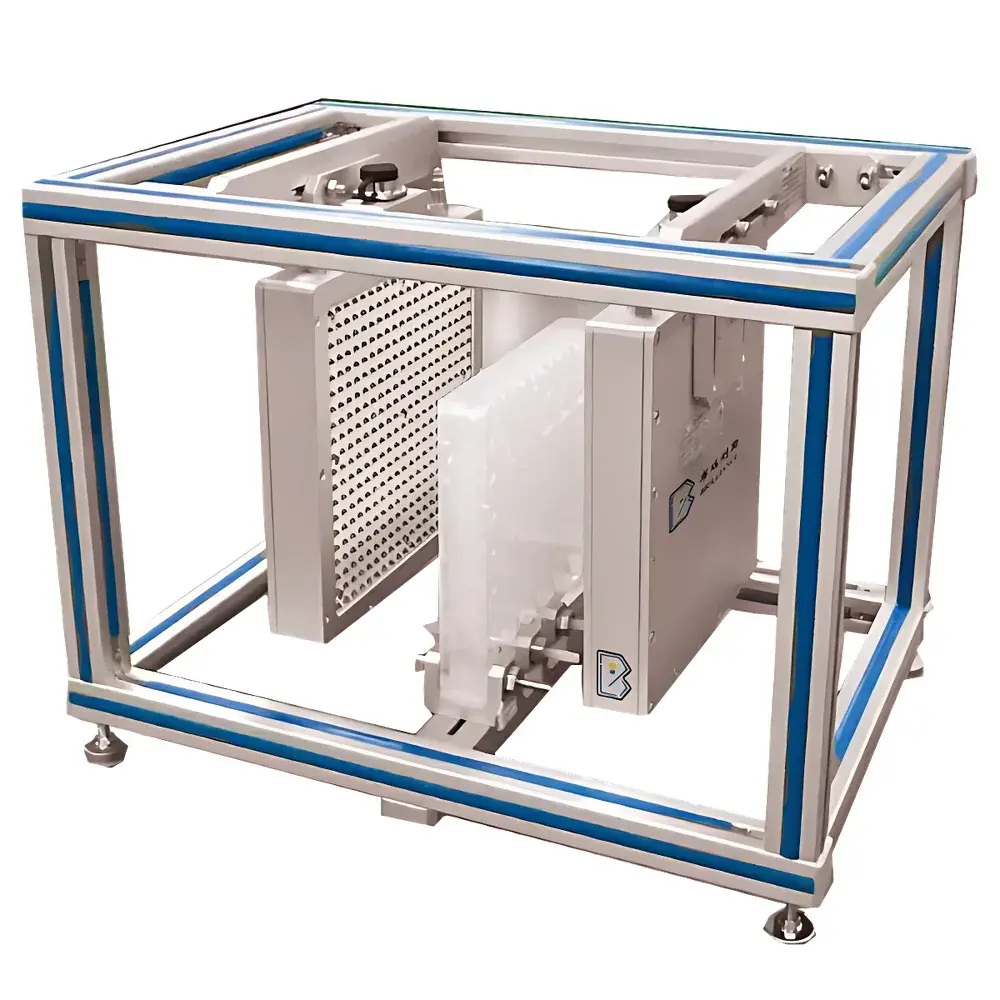
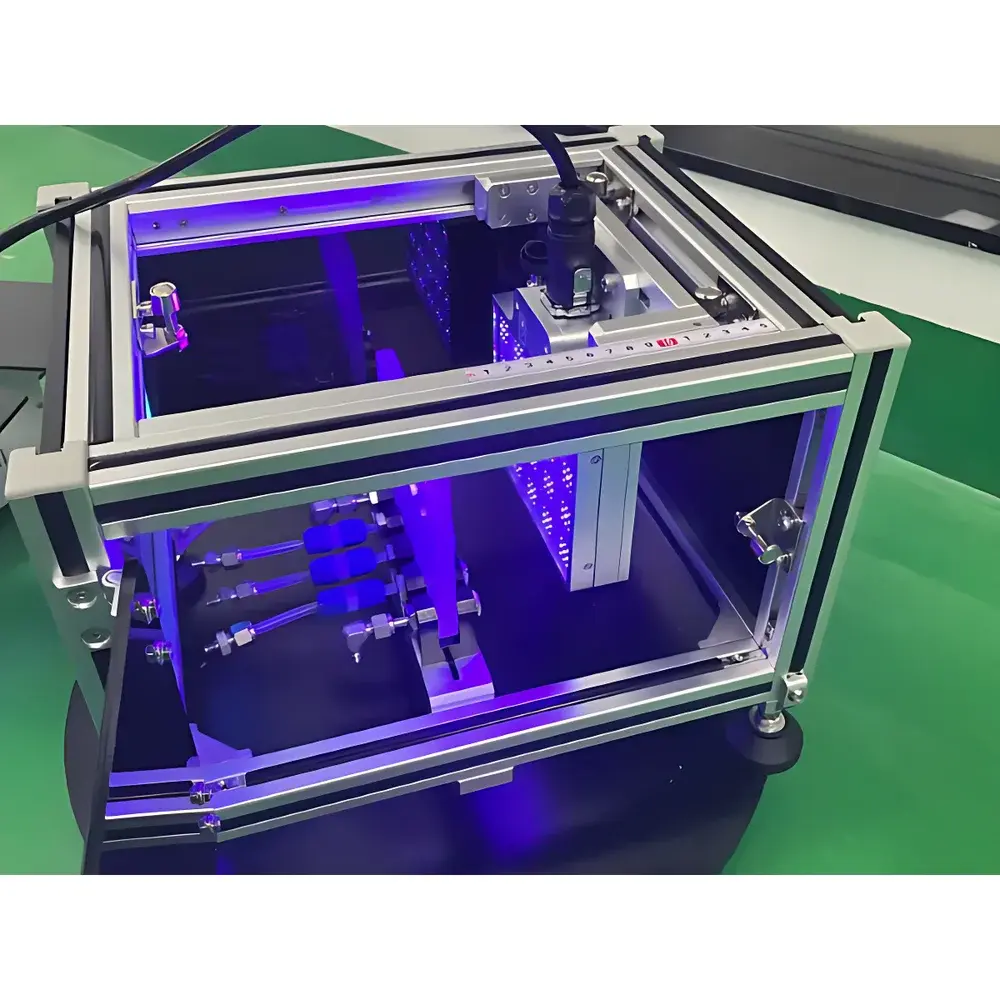
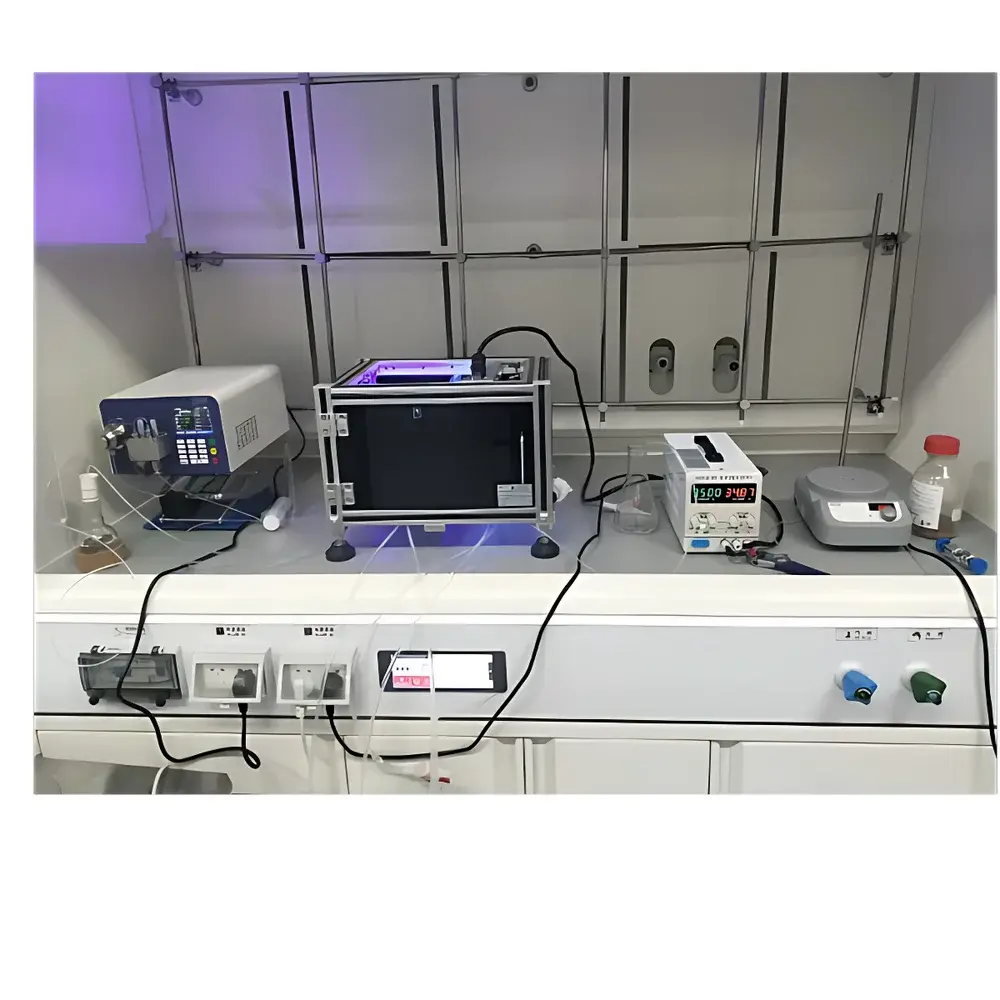
Continuous Photochemical Plate Reactor Bri-PC-P Series by Brilliance
| Brand | Brilliance |
|---|---|
| Model | Bri-PC-P |
| Type | Continuous-flow Photochemical Plate Reactor |
| Construction | Borosilicate Glass / Quartz Glass Plates |
| Channel Geometry | Planar Microchannel |
| Active Volume | 5–50 mL (configurable per module) |
| Light Source Range | 254–950 nm (quartz-compatible down to 254 nm |
| Max Irradiance | ≤700 mW/cm² (measured at channel surface) |
| Light Stability | <5% intensity decay/year |
| Light Power Control | Stepless electronic dimming per illumination panel |
| Thermal Management | External recirculating chiller interface (not included) |
| Pump Configuration | Integrated dual syringe pumps (standard), wetted parts: 316L stainless steel |
| Electrical Input | 100–240 VAC, 50/60 Hz |
| Compliance | Designed for GLP-compliant photochemical process development and scale-up |
Overview
The Brilliance Bri-PC-P Series is a continuous-flow photochemical plate reactor engineered for high-precision, reproducible photoreactions under controlled irradiation conditions. Based on a planar microchannel architecture formed between parallel glass or quartz plates, the system enables uniform photon delivery across the entire reaction cross-section via front- and/or back-side illumination. Unlike traditional batch photochemical reactors, this design eliminates photon gradient effects and ensures consistent residence time distribution—critical for kinetic studies, quantum yield determination, and scalable synthesis of light-sensitive intermediates (e.g., aryl diazoniums, singlet oxygen adducts, or photocatalytic C–H functionalizations). The reactor operates in true continuous mode with integrated fluidic control, making it suitable for both discovery-phase screening and pre-pilot process validation in pharmaceutical, agrochemical, and fine chemical R&D laboratories.
Key Features
- Modular plate-based design: Interchangeable reaction plates (5 mL, 10 mL, 30 mL, and 50 mL active volume) allow rapid adaptation to throughput requirements without hardware redesign.
- Multi-wavelength irradiation capability: Standard configuration supports 365–950 nm LED or broadband lamp sources; optional quartz-glass plates extend spectral range to 254 nm for UV-C–driven chemistry (e.g., deprotection, nitro reduction).
- Precise irradiance control: Each illumination panel features independent, stepless dimming (0–100%) with real-time optical feedback calibration, ensuring repeatable photon flux across experiments.
- Integrated dual-syringe pumping: Two 316L stainless steel–wetted syringe pumps provide pulseless, low-shear flow with programmable flow rates (0.01–20 mL/min per channel); compatible with organic solvents, aqueous media, and slurries up to 50 µm particle size.
- Thermal coupling interface: Reaction plates mount directly onto temperature-controlled aluminum blocks with ports for external recirculating chillers (−20 °C to +80 °C operational range with appropriate bath).
- Full-system digital integration: All actuators (pumps, lights, temperature setpoints) are coordinated via embedded controller with Ethernet connectivity and OPC UA support for LIMS/SCADA integration.
Sample Compatibility & Compliance
The Bri-PC-P accommodates a broad range of photochemically active substrates—including metal complexes (e.g., Ir(ppy)₃, Ru(bpy)₃²⁺), organic dyes (eosin Y, methylene blue), and heterogeneous photocatalysts (TiO₂, g-C₃N₄)—without risk of catalyst leaching or channel fouling due to its smooth, non-porous glass/quartz flow path. All wetted surfaces comply with USP Class VI and ISO 10993-5 biocompatibility standards. The system supports audit-ready operation under GLP and GMP frameworks: full electronic logbook with timestamped event records (start/stop, parameter changes, alarms), user access levels (admin/operator), and 21 CFR Part 11–compliant data integrity features (electronic signatures, immutable audit trail, data export in CSV/PDF formats).
Software & Data Management
The proprietary Brilliance PhotoControl Suite provides a browser-based graphical interface accessible from any lab workstation. Real-time visualization includes dynamic plots of irradiance (mW/cm²), flow rate (mL/min), and plate temperature (°C), overlaid with historical trend traces. Users define multi-step protocols (e.g., ramp irradiance while holding constant residence time), trigger automated sampling events, and schedule unattended overnight runs. Raw sensor data and metadata are stored locally in SQLite format with automatic daily backup to network drives. Export modules support direct import into MATLAB, OriginLab, and ChemDraw for kinetic modeling and reaction optimization.
Applications
- Photocatalytic C–N, C–O, and C–C bond formation under visible light
- Photoinduced electron transfer (PET) reactions for heterocycle synthesis
- Singlet oxygen generation and ene reactions (e.g., rose bengal–mediated allylic oxidation)
- UV-driven decarboxylative couplings and [2+2] cycloadditions
- Process intensification studies comparing residence time vs. quantum efficiency
- Scale-down modeling for industrial photoreactor design (correlating Damköhler number, optical depth, and photon efficiency)
FAQ
What materials are available for the reaction plates?
Standard plates are fabricated from borosilicate glass (Schott D263 or equivalent); quartz plates (fused silica, UV-grade) are available for deep-UV applications (<280 nm). Custom coatings (e.g., TiO₂ sputtering) can be applied upon request.
Can multiple reaction plates operate independently in one system?
Yes—the Bri-PC-P platform supports up to four parallel plates, each with dedicated pump, light source, and thermal control, managed through synchronized or asynchronous protocols.
Is the system compatible with corrosive reagents such as HF or hot concentrated acids?
Borosilicate glass plates resist most organic solvents and dilute mineral acids; for HF or >6 M H₂SO₄, quartz plates with Hastelloy C-276 pump manifolds are recommended (custom configuration required).
Does the software support automated DOE (Design of Experiments) workflows?
Yes—integrated scripting engine allows definition of factorial, central composite, or space-filling designs; parameters (flow rate, irradiance, wavelength, temperature) are varied automatically with real-time yield monitoring via optional inline UV-Vis detector.
What documentation is provided for regulatory submissions?
Factory acceptance test (FAT) reports, IQ/OQ protocols, calibration certificates (NIST-traceable irradiance meter), and 21 CFR Part 11 validation packages are supplied as optional deliverables.



