
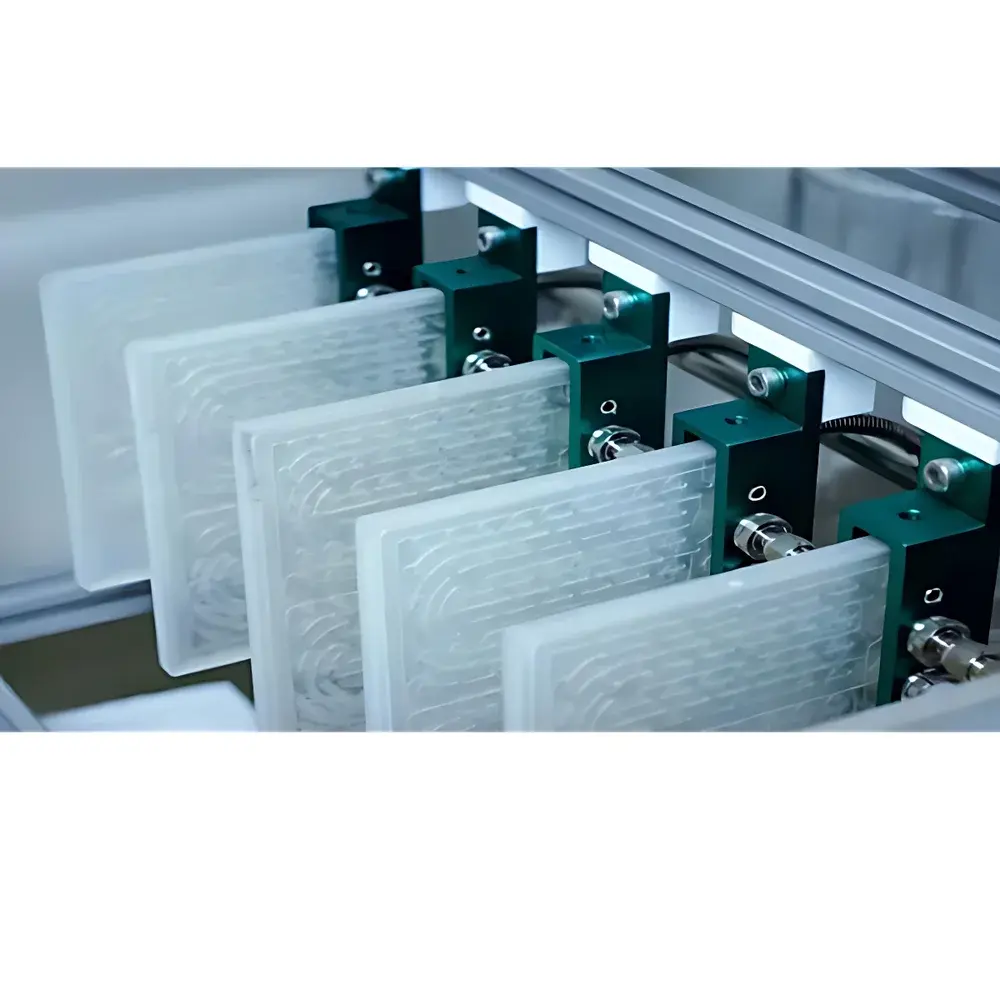
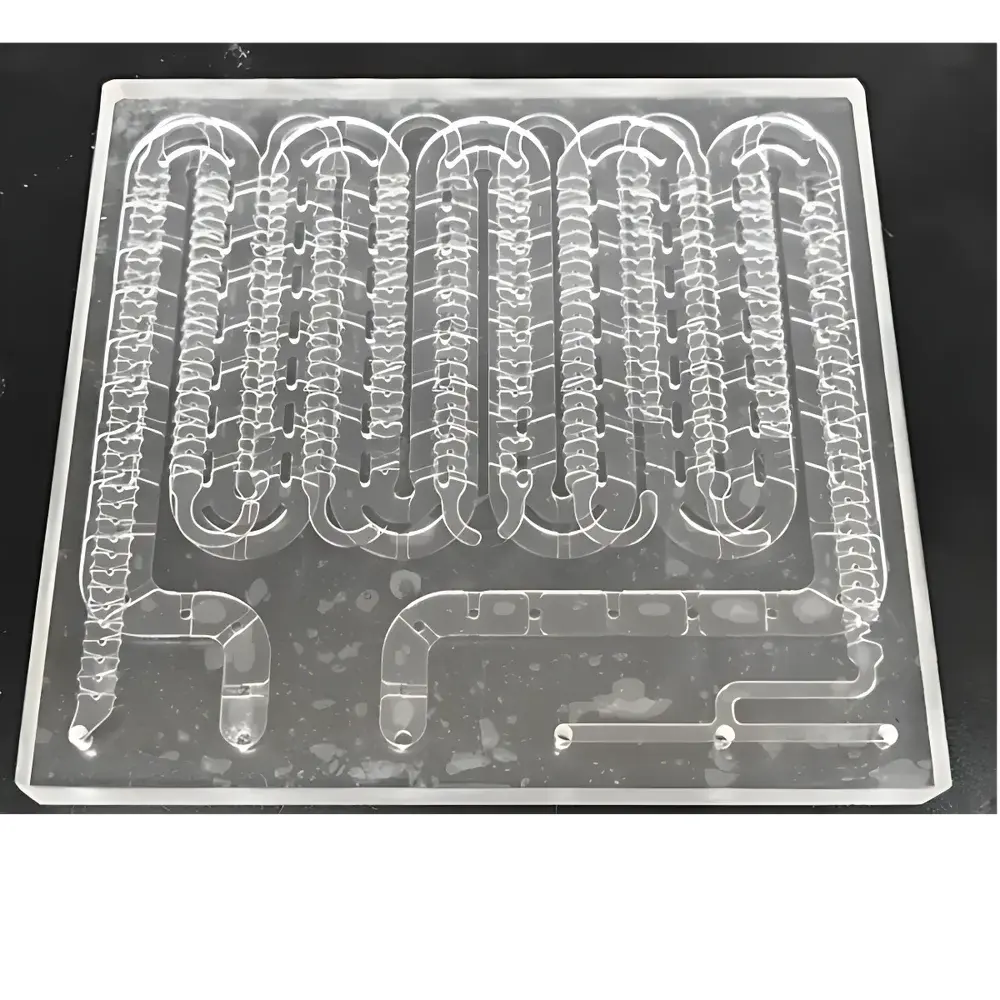
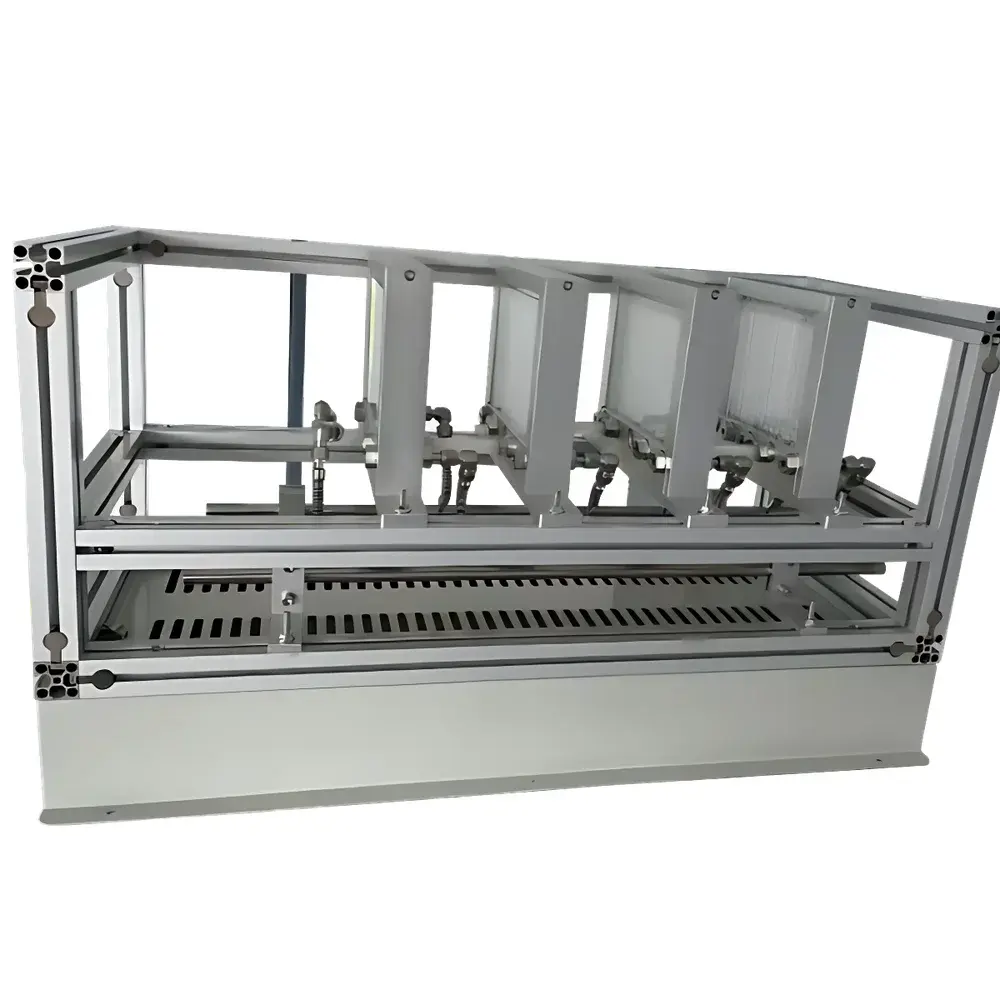
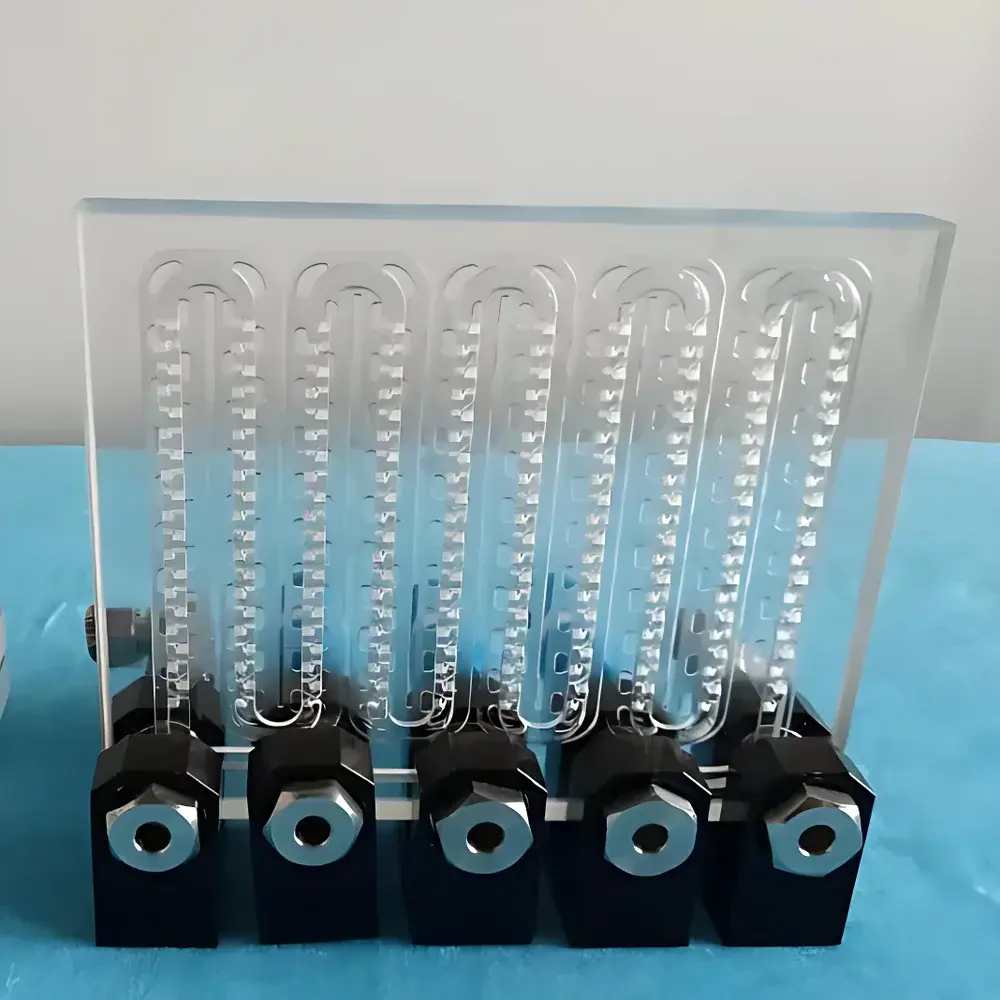
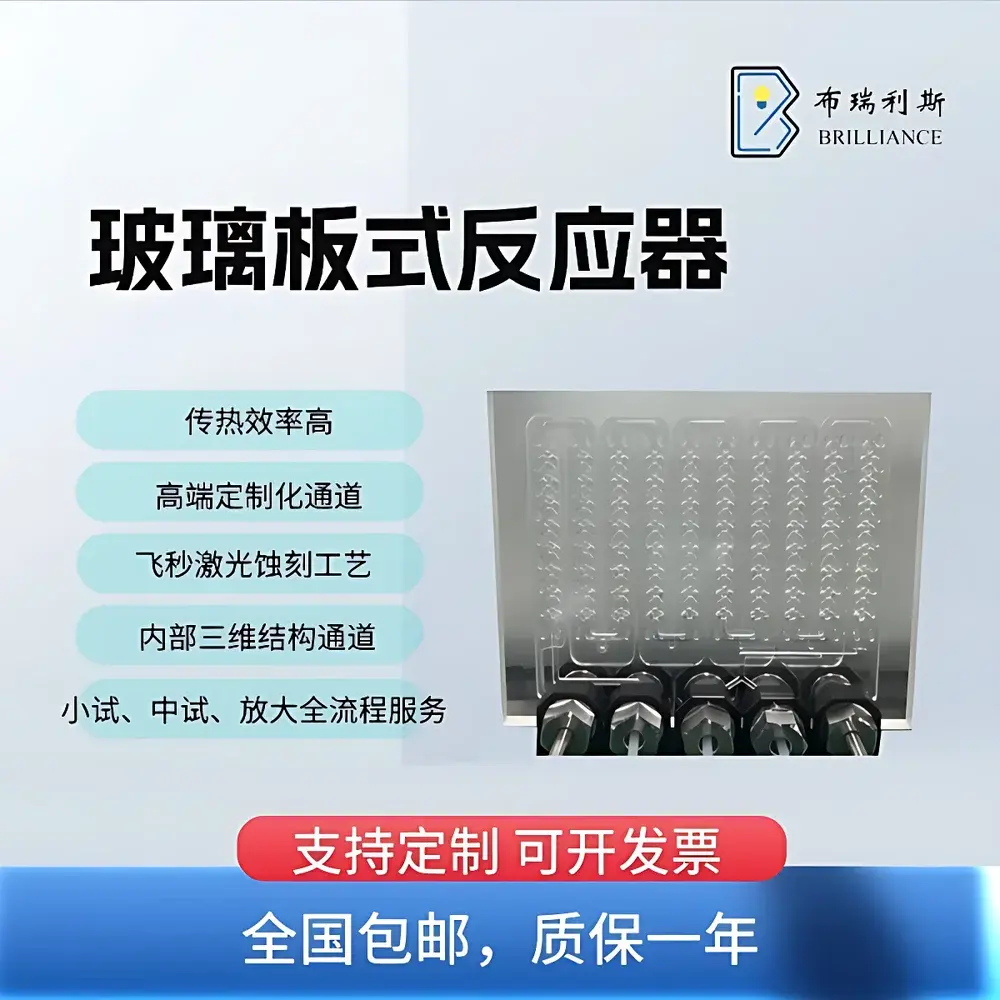
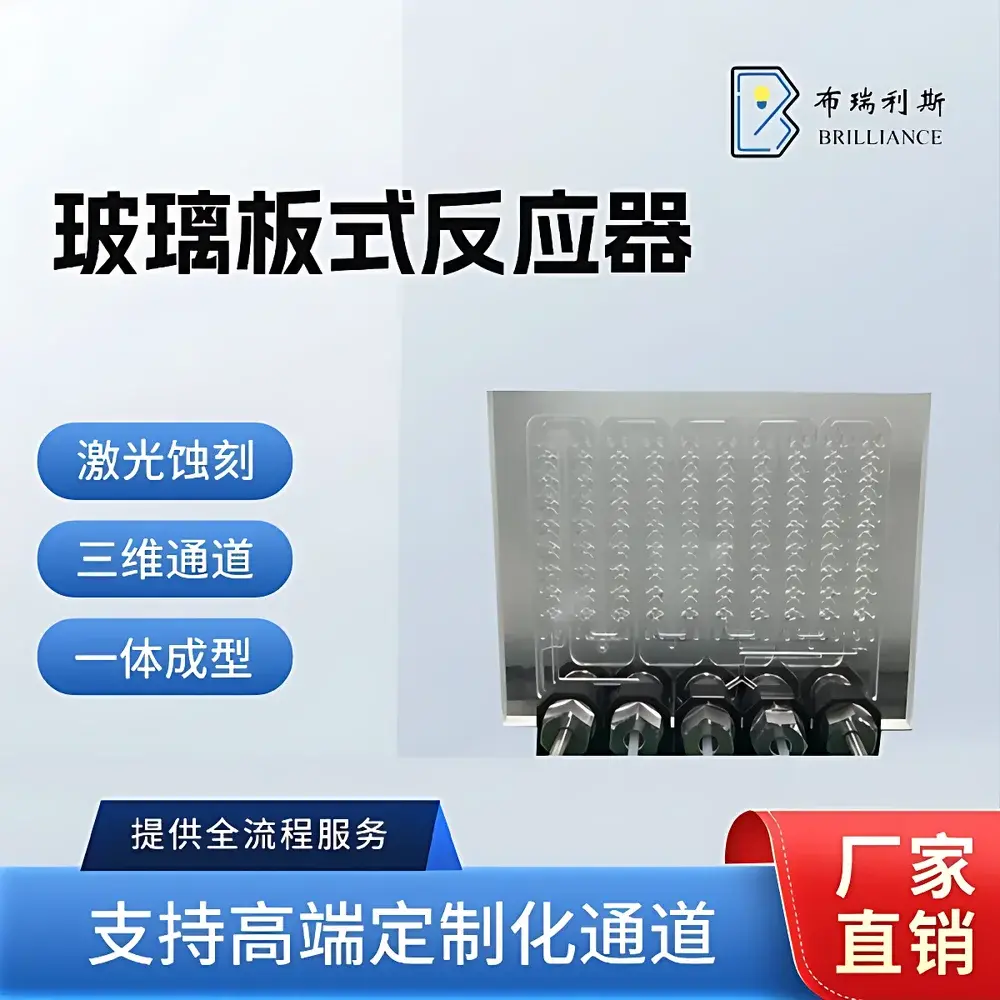
Brilliance Bri-CF-PD Glass Plate Microchannel Reactor
| Brand | Brilliance |
|---|---|
| Origin | Zhejiang, China |
| Manufacturer Type | Direct Manufacturer |
| Country of Origin | China |
| Model | Bri-CF-PD |
| Instrument Category | Microchannel Reactor |
| Construction Material | Borosilicate Glass or Fused Quartz |
| Maximum Operating Pressure | 2.4 MPa |
| Minimum Channel Width | 10 µm |
| Maximum Hold-up Volume | 500 mL (borosilicate), 100 mL (quartz) |
| Operating Temperature Range | −70 °C to 220 °C |
| Heat Exchange Configuration | Integrated single- or double-layer heat exchange structure (bonded-free, monolithic) |
| Channel Architecture | 3D立体 microfluidic network (monolithically fabricated via femtosecond laser internal engraving) |
| Compliance | Designed for GLP-compliant synthesis workflows and scalable process intensification |
Overview
The Brilliance Bri-CF-PD Glass Plate Microchannel Reactor is a precision-engineered continuous-flow chemical reactor designed for high-fidelity process development, kinetic studies, and safe handling of exothermic or hazardous reactions. Built on monolithic glass architecture—fabricated exclusively through femtosecond laser internal engraving—the reactor eliminates interfacial adhesives, seals, or gasketed joints between fluidic and thermal layers. This additive-free, bulk-material fabrication ensures structural integrity under elevated pressure and thermal cycling while preserving optical clarity for in situ visualization and inline spectroscopic monitoring (e.g., UV-Vis, Raman). Its core operating principle relies on laminar flow dynamics within precisely defined 3D microchannel networks, enabling exceptional control over residence time distribution (RTD), mass transfer coefficients (kLa), and heat flux density (>10 kW/m² achievable with dual-layer thermal integration). The reactor supports both isothermal and gradient-based thermal operation across −70 °C to 220 °C, making it suitable for cryogenic organometallic catalysis, supercritical fluid chemistry, and high-temperature hydrothermal synthesis.
Key Features
- Femtosecond laser direct-write fabrication: Channels and integrated heat exchange layers are engraved volumetrically inside bulk glass substrates—no bonding, no delamination risk, no organic leachables.
- Monolithic 3D channel topology: Interconnected vertical and horizontal microchannels enhance radial mixing and reduce axial dispersion, improving reaction selectivity in consecutive or parallel pathways.
- High-pressure capability: Validated for continuous operation up to 2.4 MPa (350 psi), compatible with pressurized gas–liquid reactions (e.g., hydrogenations, oxidations) without mechanical reinforcement.
- Sub-20 µm minimum feature resolution: Enables nanoscale interfacial area generation (up to 20,000 m²/m³), critical for fast heterogeneous catalysis and photochemical activation.
- Dual-material platform: Fused quartz variants (CF-PD-Si series) offer UV transparency (≥190 nm) and superior thermal shock resistance; borosilicate variants (CF-PD-G series) provide cost-optimized scalability up to 500 mL total hold-up volume.
- Modular thermal interface: Standard configurations include zero-, one-, or two-integrated cooling/heating layers—each thermally coupled via direct conduction, not interstitial fluids or clamps.
Sample Compatibility & Compliance
The Bri-CF-PD is chemically inert toward strong acids (HF excluded), bases, halogenated solvents, and supercritical CO₂. It complies with ASTM E2500-13 (good practice for verification of laboratory equipment) and supports IQ/OQ documentation packages per ISO/IEC 17025 requirements. Its all-glass wetted path meets USP <661.1> extractables criteria for pharmaceutical process validation. When operated with traceable temperature/pressure sensors and calibrated mass flow controllers, the system satisfies data integrity prerequisites for FDA 21 CFR Part 11 compliance—including electronic audit trails, user access controls, and non-erasable raw data logging.
Software & Data Management
While hardware-native, the Bri-CF-PD integrates seamlessly with third-party process control platforms (e.g., LabVIEW, MATLAB, DeltaV, or custom Python-based SCADA). Real-time pressure, temperature, and flow rate signals can be synchronized at ≥10 Hz sampling for residence time distribution modeling and kinetic parameter estimation (e.g., using PFR or dispersion models). Export formats include CSV, HDF5, and ASAM MDF4—ensuring compatibility with DOE tools (JMP, Design-Expert) and digital twin frameworks. All configuration metadata (laser parameters, channel geometry, thermal layer thickness) is stored in machine-readable JSON descriptors for full traceability from design to operation.
Applications
- Pharmaceutical continuous manufacturing: API crystallization, nitration, diazotization, and Grignard additions under tightly controlled thermal and stoichiometric conditions.
- Electrochemical flow synthesis: Paired with graphite or Pt-coated electrodes for redox-mediated C–N coupling or asymmetric electrosynthesis.
- Photocatalytic transformations: TiO₂- or Ir-complex-functionalized channel walls enable spatially resolved light-driven C–H activation under 365 nm LED irradiation.
- Materials science: Nanoparticle synthesis (e.g., Au, Ag, quantum dots) with narrow polydispersity (PDI < 0.08) via rapid mixing-limited nucleation.
- Green chemistry: Solvent-free esterifications, enzymatic transesterifications (lipase immobilized on silanized channel surfaces), and CO₂ mineralization in aqueous amine systems.
FAQ
Can the Bri-CF-PD be used with hydrofluoric acid (HF)?
No. HF etches silica-based glass and compromises structural integrity. Alternative reactor materials (e.g., Hastelloy or PFA-lined systems) are recommended for HF service.
Is cleaning validation supported for GMP environments?
Yes. The monolithic design enables full CIP/SIP compatibility. Residue recovery studies using HPLC-UV and TOC analysis confirm ≤1 ppm carryover after standardized NaOH/EtOH rinse protocols.
What is the maximum recommended flow rate for the 10 µm channel variant?
For laminar flow stability and avoidance of particle clogging, the upper limit is 0.8 mL/min at 25 °C with water-equivalent viscosity. Higher rates require pre-filtration ≤0.2 µm and Reynolds number monitoring.
Does Brilliance provide engineering support for scale-up to pilot plant?
Yes. Parallel numbering (e.g., CF-PD20G → CF-PD200G) reflects geometric similarity scaling. We supply dimensionless correlation packages (e.g., Nu = f(Re, Pr), Sh = f(Re, Sc)) derived from tracer experiments for predictive reactor network design.
Are custom channel geometries available beyond standard Y- and serpentine layouts?
Yes. CAD-based topology optimization (e.g., topology-optimized mixing manifolds, staggered bifurcations) is offered under NDA, with lead times starting at 6 weeks post-design freeze.



