
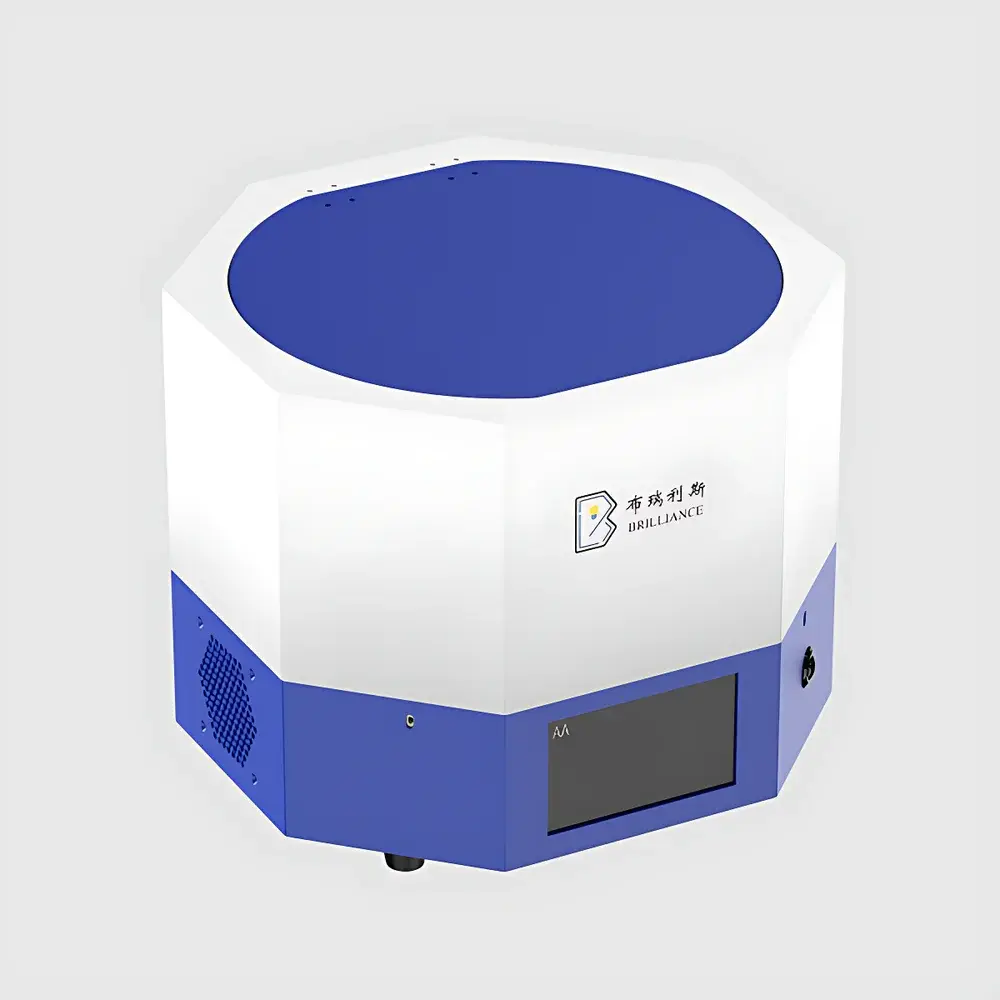
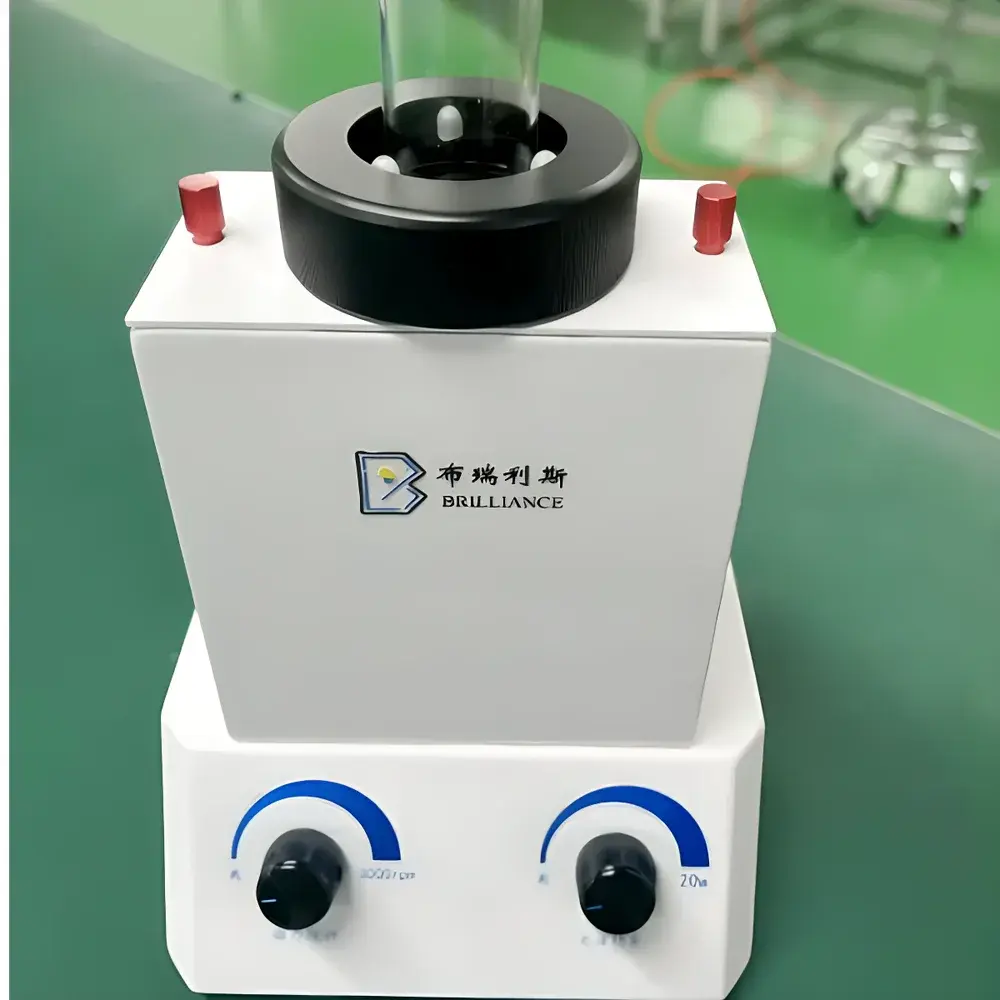
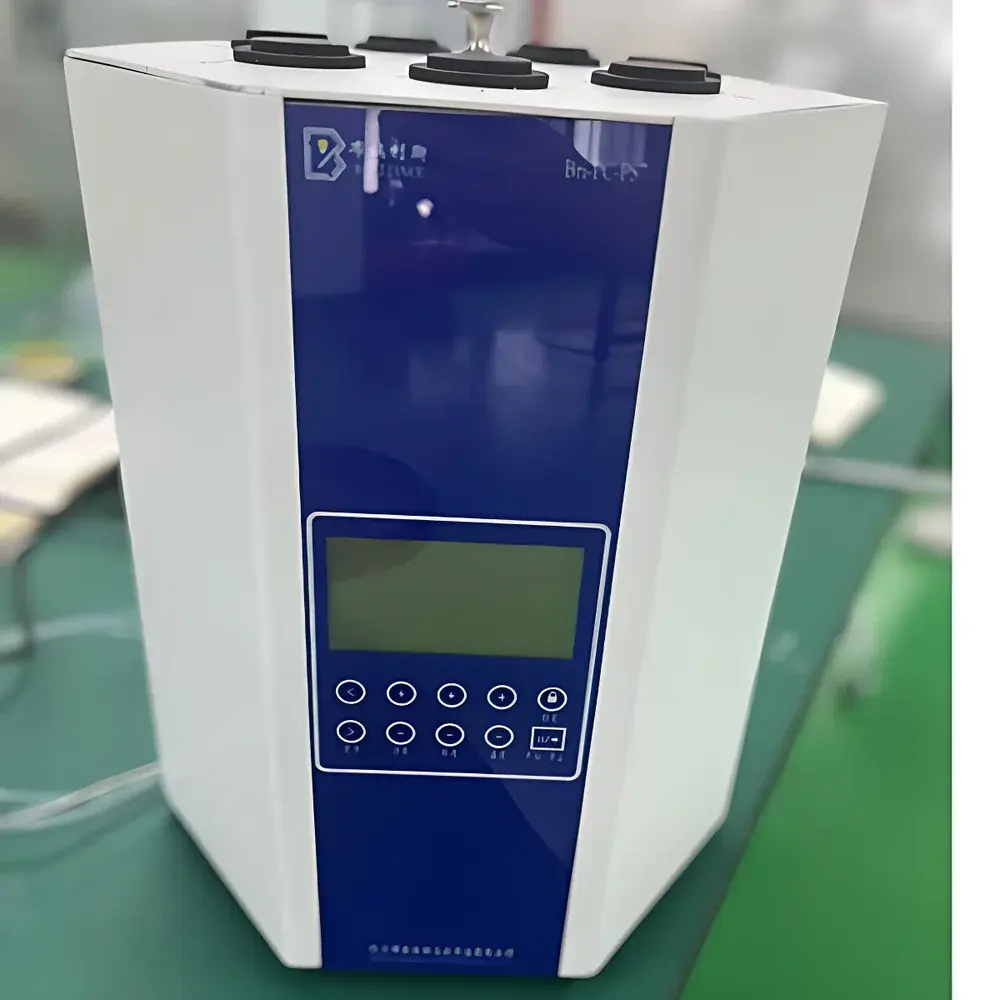
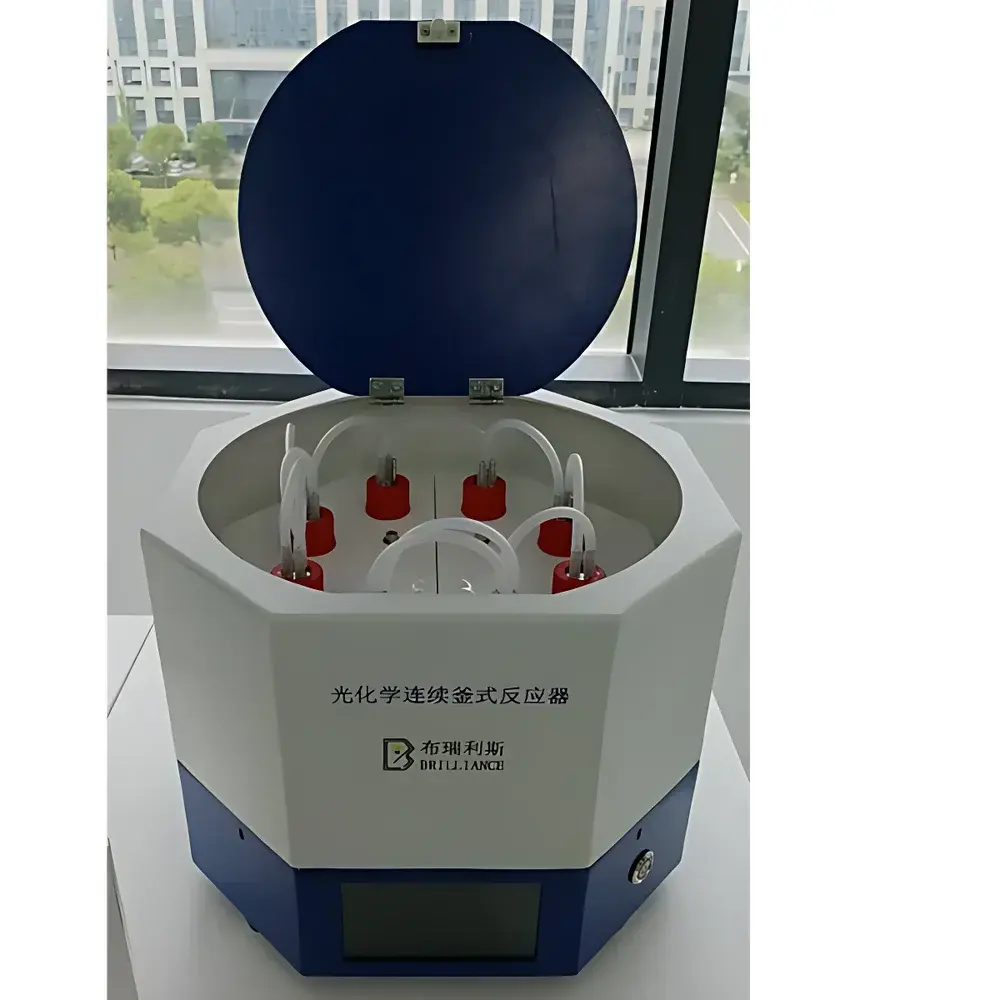


Photoreactor System Bri-PC-R Series by Brilliance
| Brand | Brilliance |
|---|---|
| Model | Bri-PC-R7 / Bri-PC-R8L / Bri-PC-SR1 |
| Reactor Type | Parallel Photochemical Reactor |
| Number of Reaction Stations | 7 / 8 / 1 (Single-Tube) |
| Light Source Range | 254–950 nm (254–365 nm optional upon customization) |
| Individual Channel Power Output | 0–12 W or 0–20 W |
| Light Intensity Control | Independent + Global Dimming |
| Cooling Method | Semiconductor-based Active Cooling / Integrated Chiller Unit / Fan-assisted Heat Dissipation |
| Stirring Mechanism | Magnetic Stirring, 500–2000 rpm (adjustable, non-visible shaft) |
| Reaction Tube OD Compatibility | 10–40 mm (Bri-PC-R7 & Bri-PC-SR1), 22 mm (Bri-PC-R8L) |
| Operating Temperature Range | Ambient +5 °C |
| Input Power | 100–240 VAC, 50/60 Hz |
| Dimensions (W×D×H) | 264×251×340 mm (R7), 160×145×216 mm (R8L), 100×100×100 mm (SR1) |
| Weight | 13 kg (R7), 18 kg (R8L), 1 kg (SR1) |
Overview
The Brilliance Bri-PC-R Series is a modular, benchtop parallel photochemical reactor system engineered for reproducible, scalable photoreaction screening under controlled irradiation conditions. It operates on the principle of uniform photon delivery to multiple reaction vessels simultaneously, leveraging tunable UV–Vis light sources (254–950 nm) to drive photoinduced transformations—including C–C bond formation, photocatalytic oxidation/reduction, and energy-transfer-mediated cyclizations. Unlike conventional batch photoreactors with single-point illumination, the Bri-PC-R architecture enables comparative kinetic studies across eight independent channels—each with individually addressable irradiance, thermal management, and stirring parameters—thereby supporting DOE (Design of Experiments) workflows essential for catalyst optimization, wavelength-dependent quantum yield assessment, and reaction condition mapping in synthetic organic chemistry, materials science, and pharmaceutical process development.
Key Features
- Modular parallel configuration: Available in 7-position (Bri-PC-R7), 8-position linear (Bri-PC-R8L), and single-tube (Bri-PC-SR1) variants—optimized for high-throughput screening or focused mechanistic investigation.
- Full-spectrum tunable irradiation: Standard broadband LED or mercury/xenon lamp options covering 254–950 nm; narrowband 254–365 nm modules available per customer specification for deep-UV applications (e.g., deprotection, nitro reduction).
- Independent photonic control per channel: Each station supports discrete dimming (0–100% intensity) via analog or digital interface, enabling precise photon flux calibration (mW/cm²) without cross-talk.
- Thermally stable operation: Semiconductor-based Peltier cooling (R7/R8L) or integrated chiller coupling maintains ΔT ≤ ±0.5 °C across all positions at ambient +5 °C setpoint—critical for exothermic photoreactions and Arrhenius analysis.
- Magnetic stirring with concealed drive: Brushless DC motor delivers 500–2000 rpm torque (non-contact coupling) with no internal shafts—ensuring compatibility with sealed tubes, Schlenk lines, and air/moisture-sensitive substrates.
- Intuitive HMI: 7-inch capacitive touchscreen interface with preloaded method templates, real-time parameter logging, and USB export for CSV-formatted irradiance/stirring/temperature datasets.
Sample Compatibility & Compliance
The Bri-PC-R series accommodates standard borosilicate or quartz reaction tubes (OD 10–40 mm), including custom-fitted septa, gas-inlet adapters, and reflux condensers. Its open-tube design permits direct integration with inert gas manifolds or vacuum lines. All electrical components conform to IEC 61010-1:2010 safety standards for laboratory equipment. The system supports GLP-compliant data integrity through optional audit-trail-enabled firmware (meeting FDA 21 CFR Part 11 requirements when paired with validated LIMS). No hazardous coolants or ozone-generating lamps are employed—aligning with ISO 14001 environmental management principles and institutional EHS protocols.
Software & Data Management
Brilliance PhotoControl Suite (v3.2+) provides local PC-based control, real-time multi-channel monitoring (light intensity, temperature, RPM), and automated method sequencing. Raw sensor data is timestamped and stored in HDF5 format for traceability. Export functions include Excel-compatible .csv, PDF report generation with embedded calibration certificates, and API access for integration into ELN platforms (e.g., LabArchives, Benchling) via RESTful endpoints. Firmware updates are delivered over secure HTTPS with SHA-256 signature verification.
Applications
- Synthetic methodology development: Screening photocatalysts (e.g., Ir(ppy)₃, Ru(bpy)₃²⁺, organic dyes) across wavelength and intensity gradients.
- Pharmaceutical intermediate synthesis: Scalable photoredox C–H functionalization under GMP-aligned small-scale conditions.
- Polymer photochemistry: Controlled radical polymerization (PET-RAFT, ATRP) kinetics and dispersity profiling.
- Environmental catalysis: Degradation kinetics of micropollutants (e.g., pharmaceuticals, pesticides) under simulated solar irradiation.
- Materials science: Photo-induced sol-gel transitions, MOF crystallization, and quantum dot surface ligand exchange.
FAQ
Can the Bri-PC-R system be used under inert atmosphere?
Yes—reaction tubes can be sealed with PTFE-lined caps or connected to Schlenk lines via standard ground-glass joints.
Is spectral output data provided for each lamp module?
Each lamp head ships with a NIST-traceable spectral irradiance certificate (±2 nm resolution, 200–1100 nm range) measured using a calibrated CCD spectroradiometer.
Does the system support external triggering or synchronization with analytical instruments?
Digital I/O ports (TTL-compatible) allow hardware-triggered start/stop and pulse-width modulation sync with GC-MS, HPLC, or in-situ IR systems.
What maintenance is required for long-term stability?
Annual recalibration of optical sensors and thermal probes is recommended; no consumables or lamp replacements are needed for LED-based configurations.
Is remote monitoring supported?
Via optional Ethernet/Wi-Fi module and secure web interface—enabling real-time status checks and method upload from off-site locations.



