
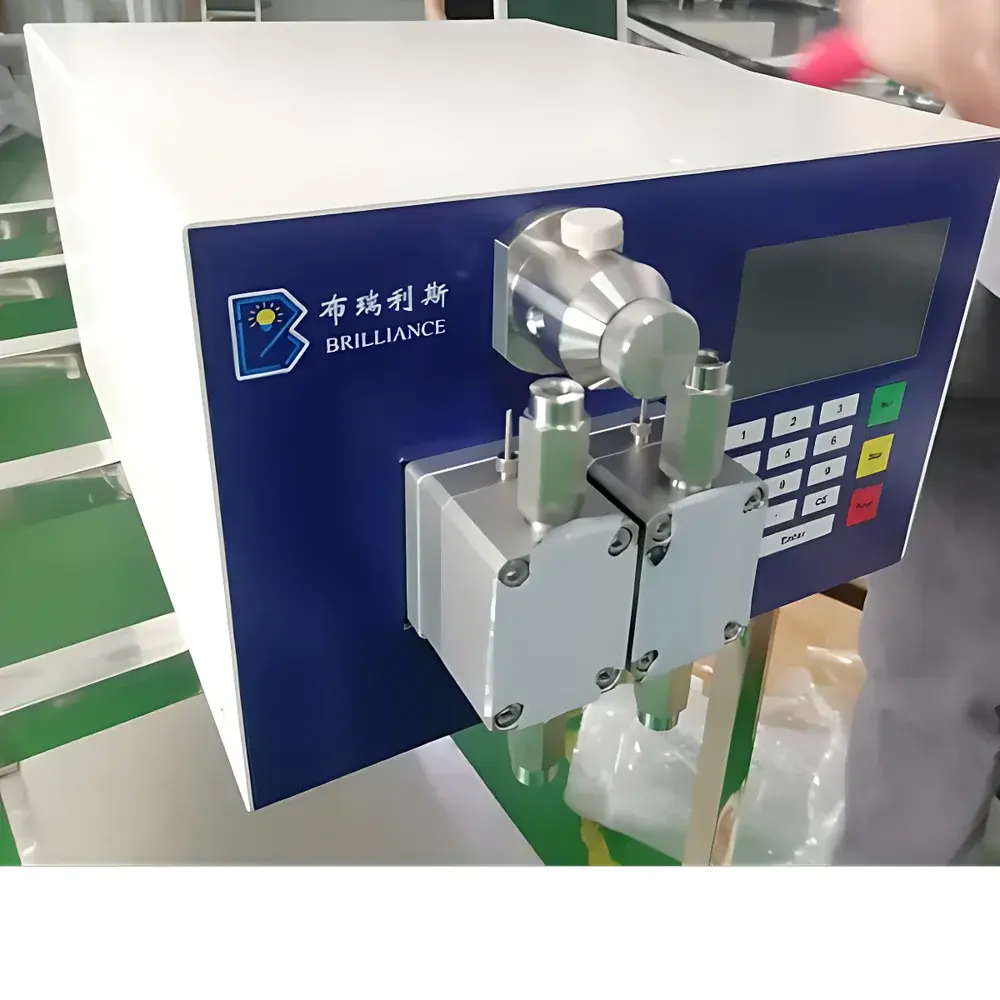
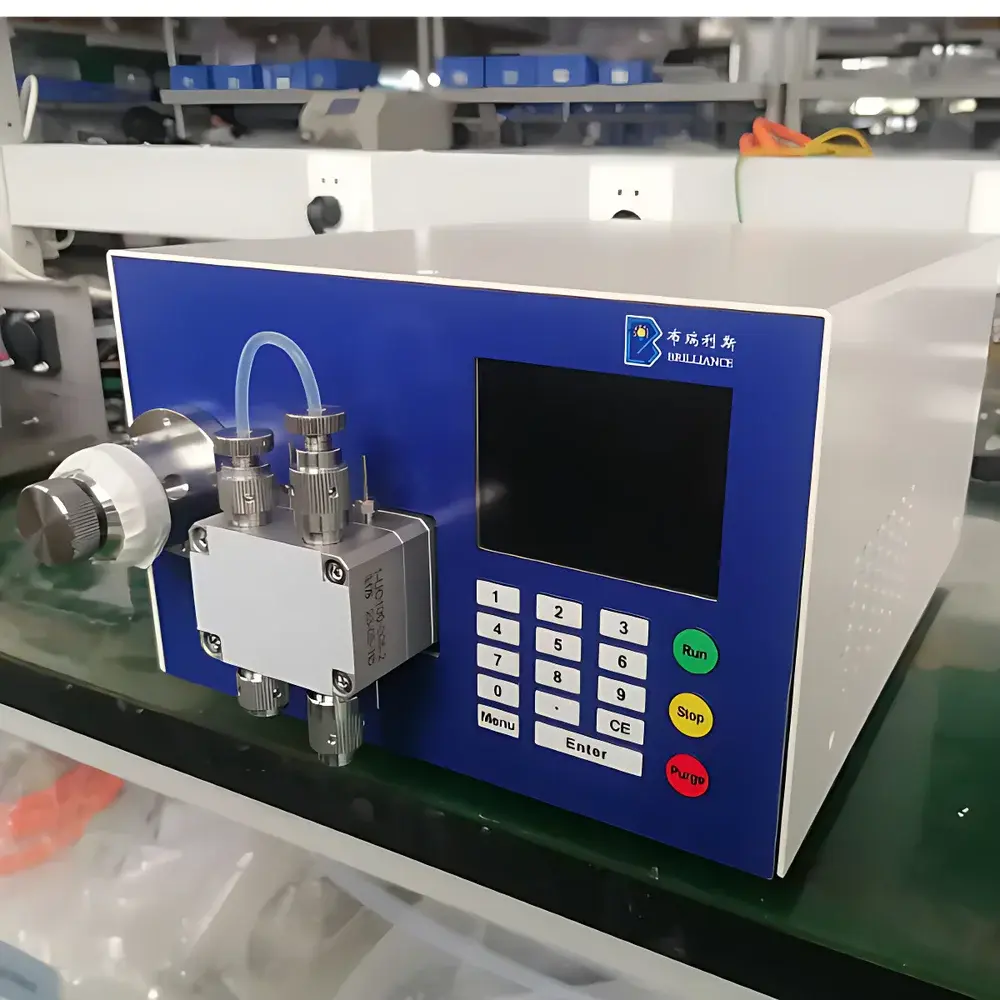
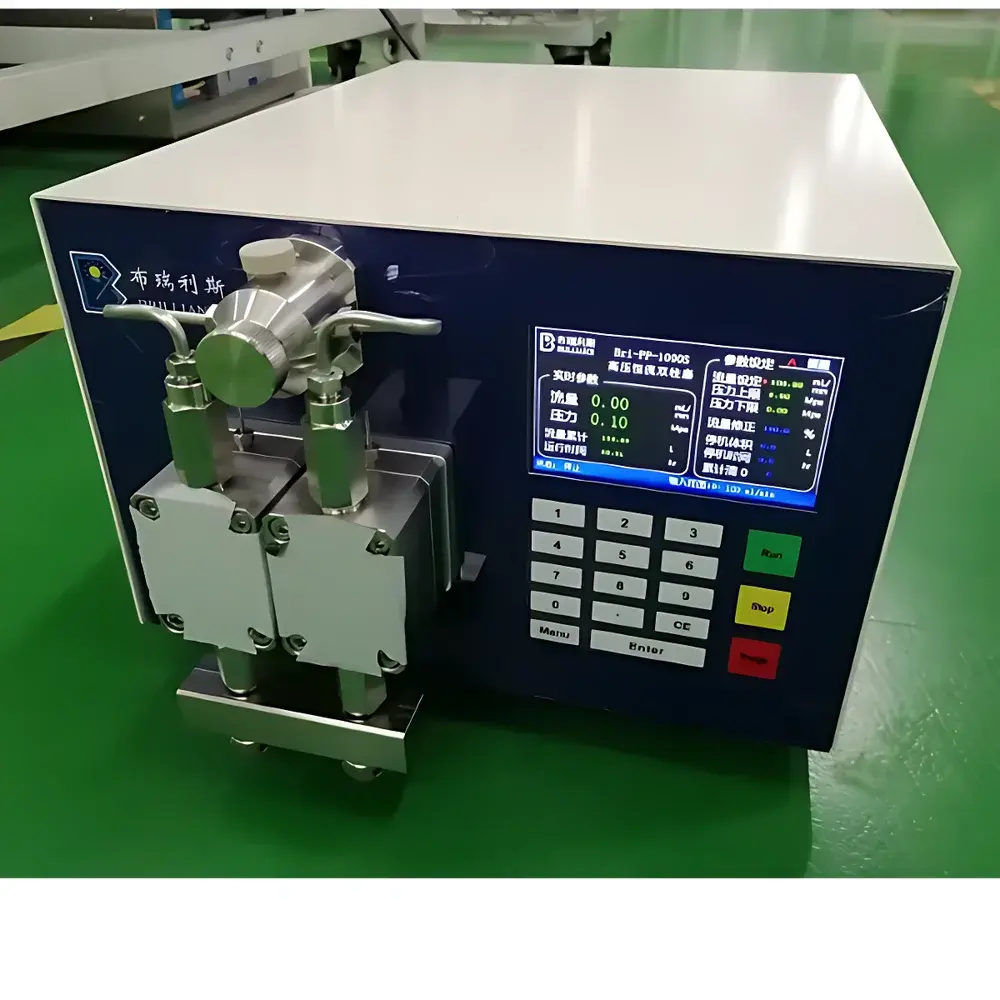
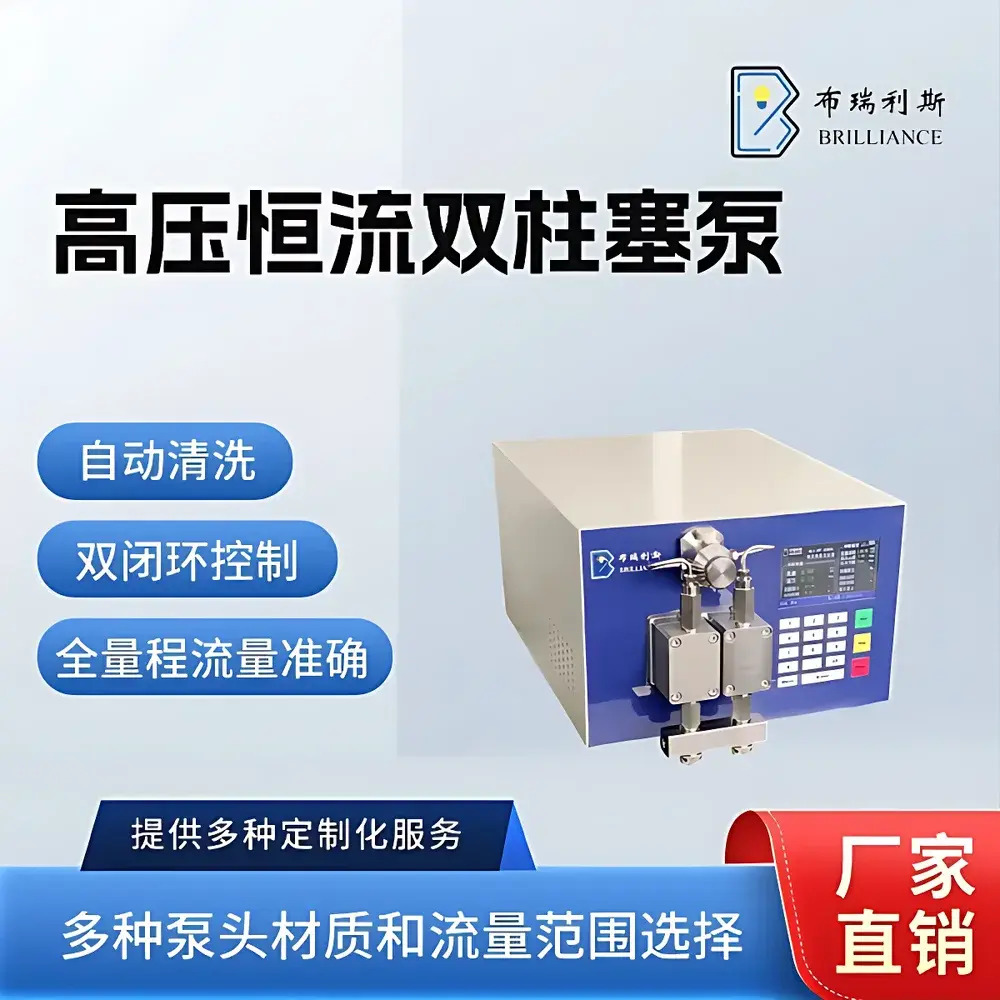
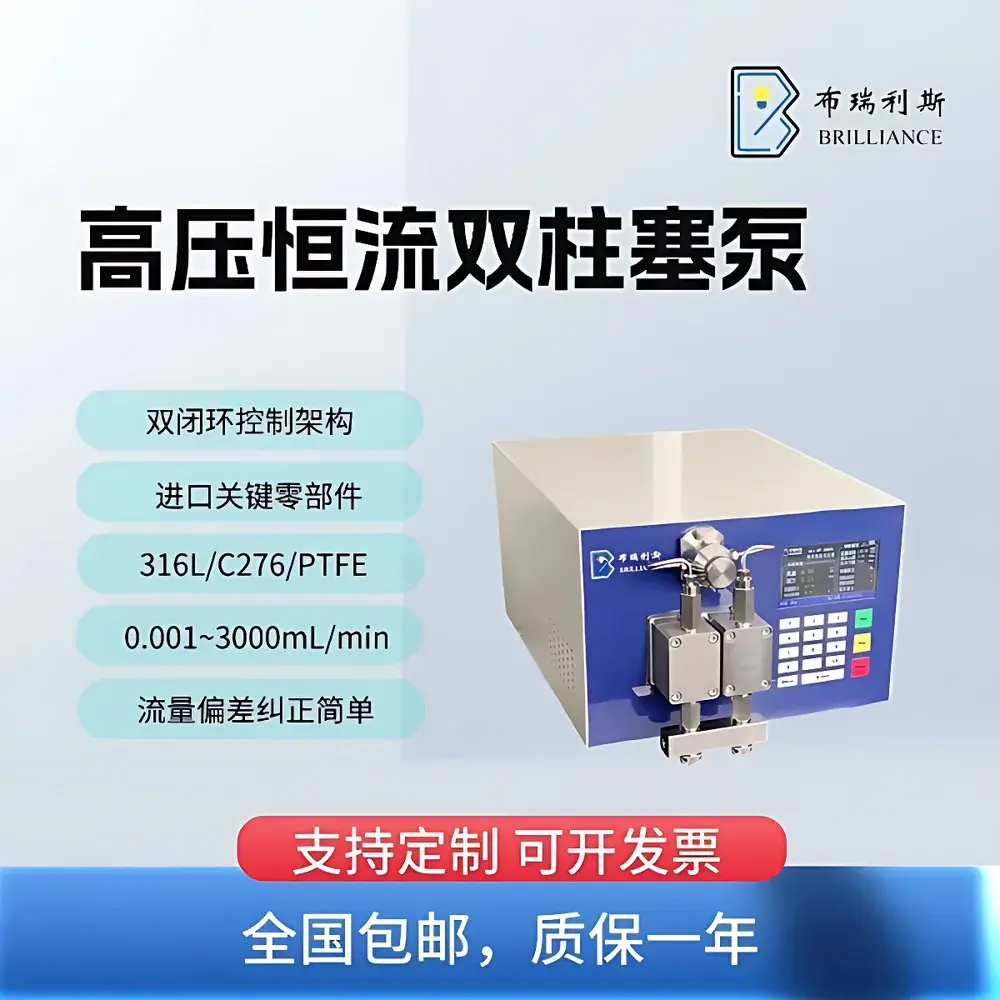
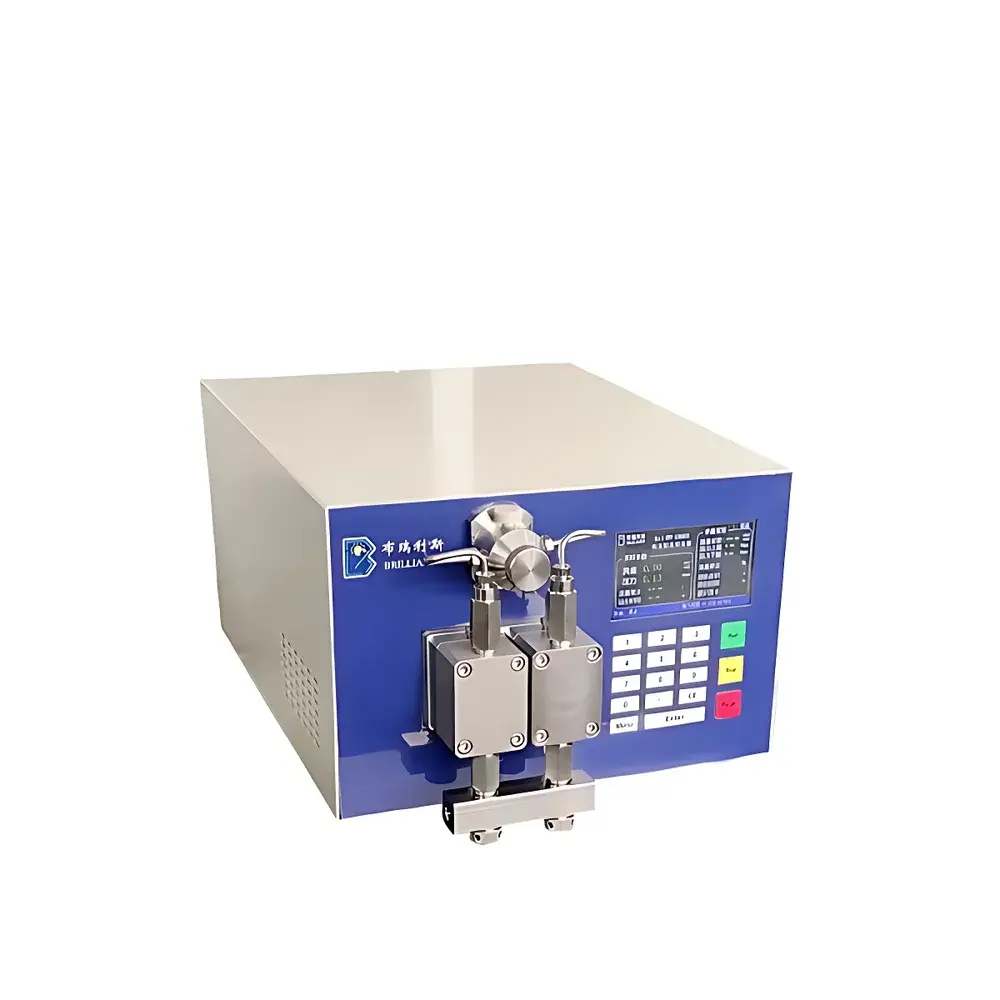
Brilliance Bri-PP High-Pressure Dual-Piston Constant-Flow Pump
| Brand | Brilliance |
|---|---|
| Origin | Zhejiang, China |
| Manufacturer Type | Direct Manufacturer |
| Model | Bri-PP |
| Flow Rate | 0.001–3000 mL/min |
| Maximum Pressure | 42 MPa |
| Pump Head Materials | 316L SS / Hastelloy C-276 / PTFE / PEEK |
| Accuracy | ±0.25% |
| Flow Repeatability | RSD ≤ 0.25% |
| Communication Interfaces | RS-485 (standard), RS-232 / USB (optional) |
| Dimensions | 340 × 233 × 160 mm to 425 × 300 × 200 mm (model-dependent) |
Overview
The Brilliance Bri-PP High-Pressure Dual-Piston Constant-Flow Pump is an engineered precision fluid delivery system designed for demanding laboratory and pilot-scale applications requiring stable, pulse-free flow under elevated backpressure. Based on dual-cam-driven dual-piston architecture, it operates on the principle of positive displacement with phase-shifted piston actuation—minimizing flow pulsation through multi-phase cam timing and high-tolerance coaxial column assembly (<0.01 mm concentricity). This design ensures consistent volumetric displacement per stroke, enabling reliable operation across a broad dynamic range—from ultra-low-flow micro-analytical workflows (0.001 mL/min) to high-throughput process feeding (3000 mL/min) at pressures up to 42 MPa. The pump is not a generic peristaltic or syringe-based solution; rather, it is purpose-built for applications where flow integrity, pressure stability, chemical compatibility, and long-term reproducibility are non-negotiable—such as preparative HPLC, supercritical fluid processing, catalyst testing rigs, and high-pressure reaction monitoring systems.
Key Features
- Dual-piston architecture with multi-phase cam drive reduces flow ripple to <0.5% peak-to-peak deviation under rated load, ensuring minimal disturbance in sensitive detection or reaction environments.
- Selectively configurable pump heads in 316L stainless steel, Hastelloy C-276, PTFE, or PEEK—certified for compatibility with aggressive solvents (e.g., concentrated acids, halogenated organics, supercritical CO₂), high-purity reagents, and abrasive slurries.
- Operational flexibility: switchable between constant-flow mode (volumetric control) and constant-pressure mode (pressure-regulated delivery) via front-panel interface or remote command—enabling seamless integration into feedback-controlled reactor systems.
- Open communication architecture supporting Modbus RTU over RS-485 (standard), with optional RS-232 and USB interfaces compliant with industry-standard SCPI and ASCII command sets for LabVIEW, Python, and PLC integration.
- Integrated rinse function initiates automated solvent flush cycles to prevent crystallization, salt deposition, or polymer buildup in check valves and seal interfaces—extending maintenance intervals and preserving calibration integrity.
- Configurable time-based dosing and volume-triggered dispensing functions support unattended batch operations, including sequential injection, gradient elution priming, and periodic calibration fluid delivery.
- Optional heated inlet module (up to 150°C) maintains fluid temperature stability upstream of the pump head—critical for viscosity-sensitive media or low-volatility feedstocks in continuous-flow synthesis.
- Explosion-proof variants available (BT4 and CT4 certified) with separated drive electronics and intrinsically safe motor enclosures—suitable for Zone 1/21 hazardous environments per IEC 60079-0 and GB 3836 standards.
Sample Compatibility & Compliance
The Bri-PP series accommodates a wide spectrum of liquid-phase samples—including aqueous buffers, organic solvents, ionic liquids, nanoparticle suspensions, and viscous polymer melts—without compromising flow linearity or seal longevity. All wetted materials comply with USP Class VI and FDA 21 CFR 177.2400 for food-contact and pharmaceutical use. Pressure-rated configurations meet ISO 5171:2021 for high-pressure pump performance verification. For regulated environments, firmware supports audit-trail logging (timestamped event records), user-access level management, and electronic signature capability—aligning with ALCOA+ principles and supporting GLP/GMP documentation requirements. Optional validation packages include IQ/OQ protocols traceable to NIST-certified flow meters and dead-weight testers.
Software & Data Management
The pump operates natively with Brilliance’s PumpControl Suite—a cross-platform application (Windows/macOS/Linux) offering real-time flow/pressure trending, programmable method sequences, and CSV export of timestamped operational logs. Remote control is supported via TCP/IP gateway (with RS-485-to-Ethernet bridge) for centralized fleet monitoring in multi-pump installations. All configuration changes, mode switches, and alarm events are recorded with immutable timestamps and operator IDs—ensuring full traceability for FDA 21 CFR Part 11 compliance when paired with validated digital signature modules. API access (RESTful JSON endpoints) enables integration into LIMS, MES, and digital twin platforms for predictive maintenance modeling based on cumulative stroke count and thermal history.
Applications
- Preparative and analytical HPLC/UHPLC mobile phase delivery with gradient accuracy <0.1% RSD over 24 h.
- Supercritical fluid chromatography (SFC) and extraction systems requiring precise CO₂ co-solvent blending at 10–30 MPa.
- Catalytic reaction screening in continuous-flow microreactors with residence time control down to milliseconds.
- High-pressure fuel injection simulation for combustion research and alternative fuel formulation.
- Geological core flooding experiments simulating reservoir conditions up to 40 MPa and 120°C.
- Pharmaceutical lyophilization cycle development, where controlled cryoprotectant infusion rate directly impacts cake morphology.
FAQ
What is the minimum programmable flow resolution?
The Bri-PP achieves 0.001 mL/min resolution in low-range models (e.g., PP-10S), enabled by sub-micron stepper motor positioning and real-time PID-corrected cam-angle feedback.
Can the pump be integrated into a PLC-controlled skid system?
Yes—RS-485 Modbus RTU is standard; discrete I/O terminals (start/stop, fault reset, mode select) are provided on terminal blocks for hardwired industrial control integration.
Is calibration traceable to national standards?
Factory calibration uses NIST-traceable Coriolis mass flow meters and dead-weight pressure calibrators; certificate of conformance includes uncertainty budgets per ISO/IEC 17025.
How often does the pump require preventive maintenance?
Under typical lab use (8 h/day, aqueous/organic solvents), seal replacement is recommended every 6–12 months; piston rod inspection interval is 24 months—documented in the included PM logbook template.
Does the system support automatic viscosity compensation?
No—viscosity compensation is not implemented; however, the pump’s pressure-compensated flow control loop maintains setpoint accuracy within ±0.3% across viscosity changes from 0.3 to 50 cP at constant pressure.
Related Products



