
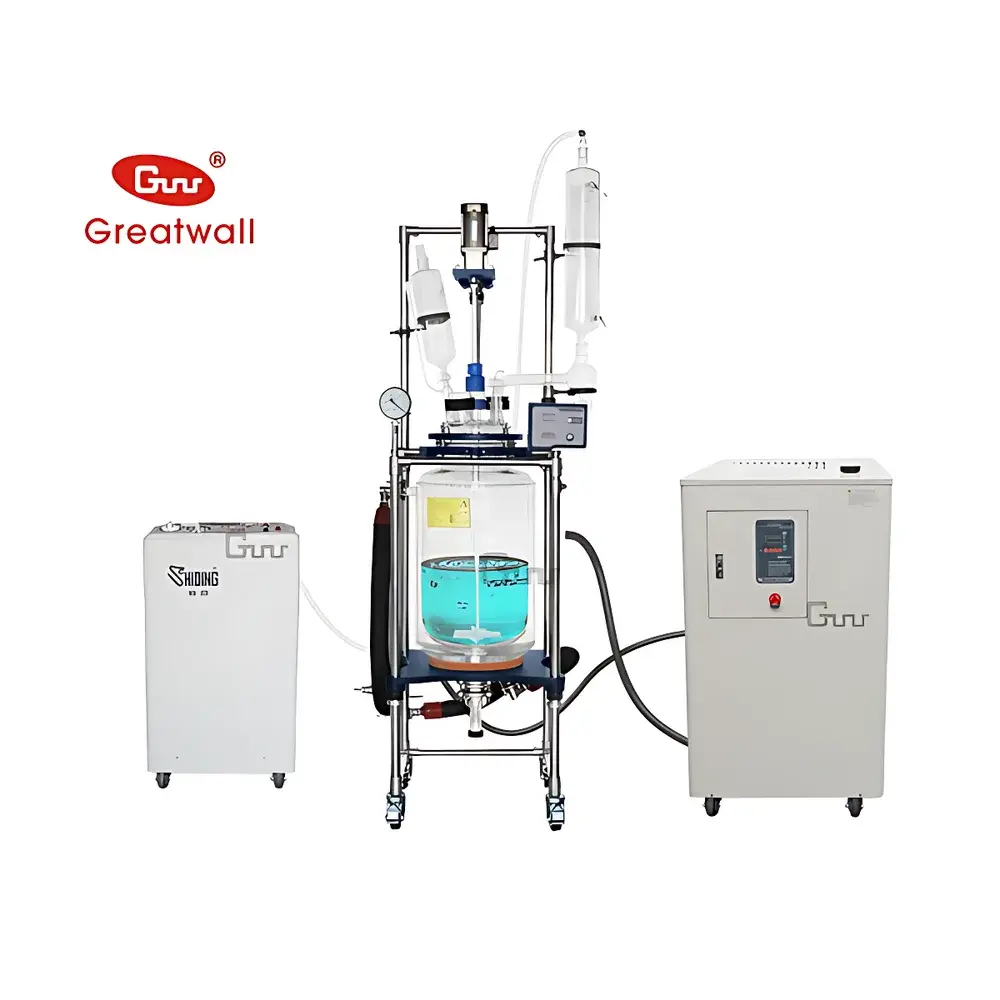
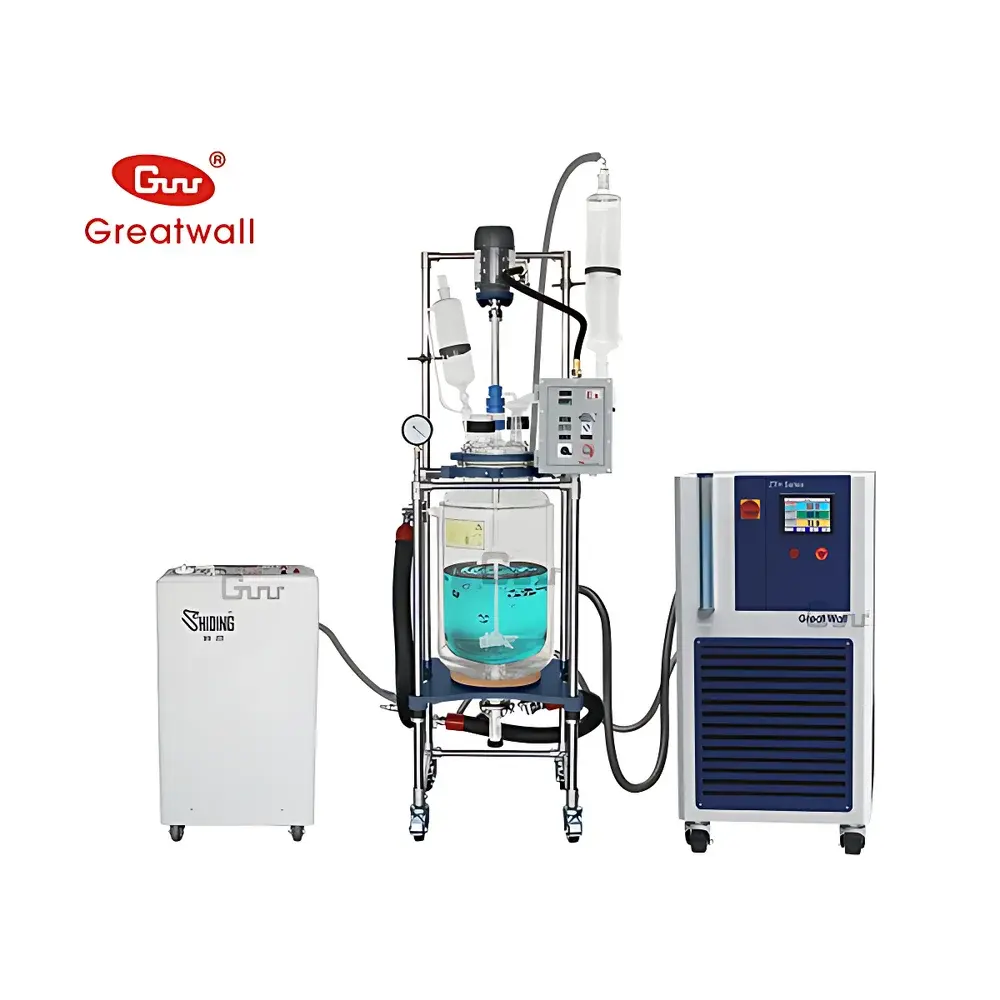
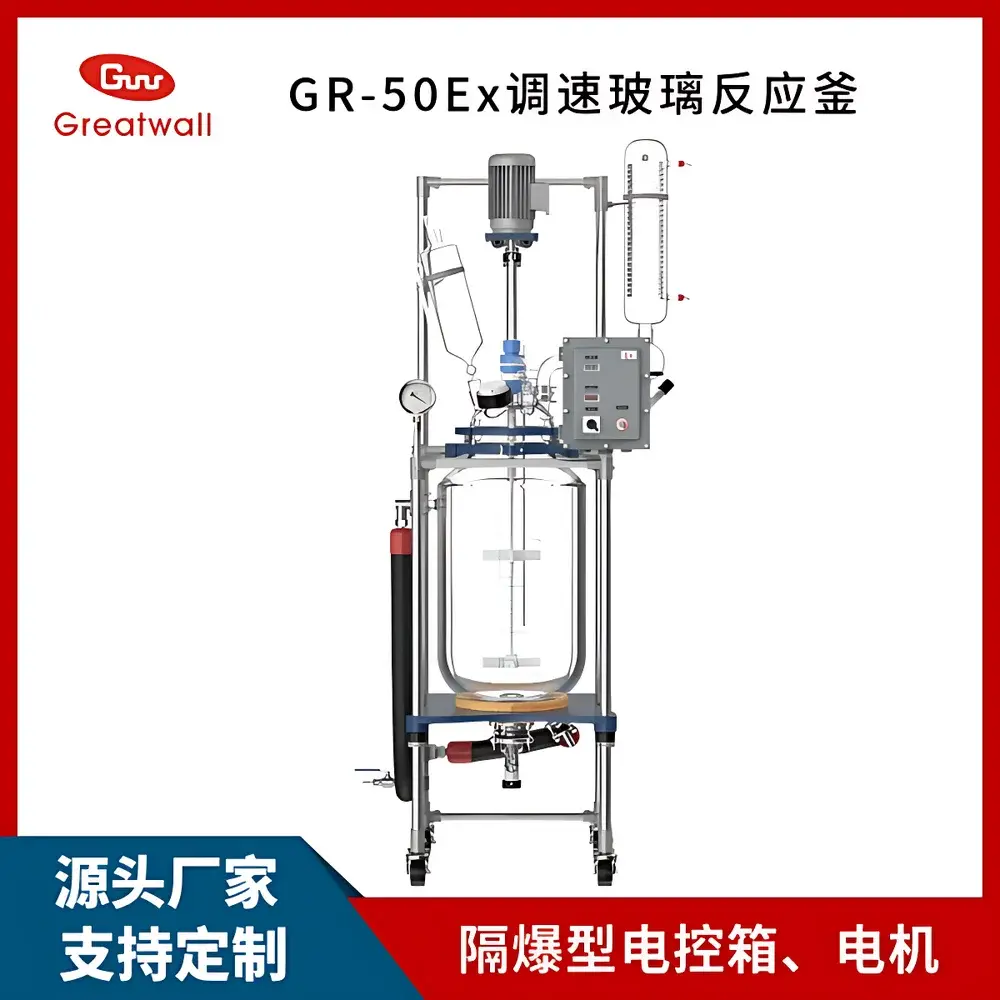
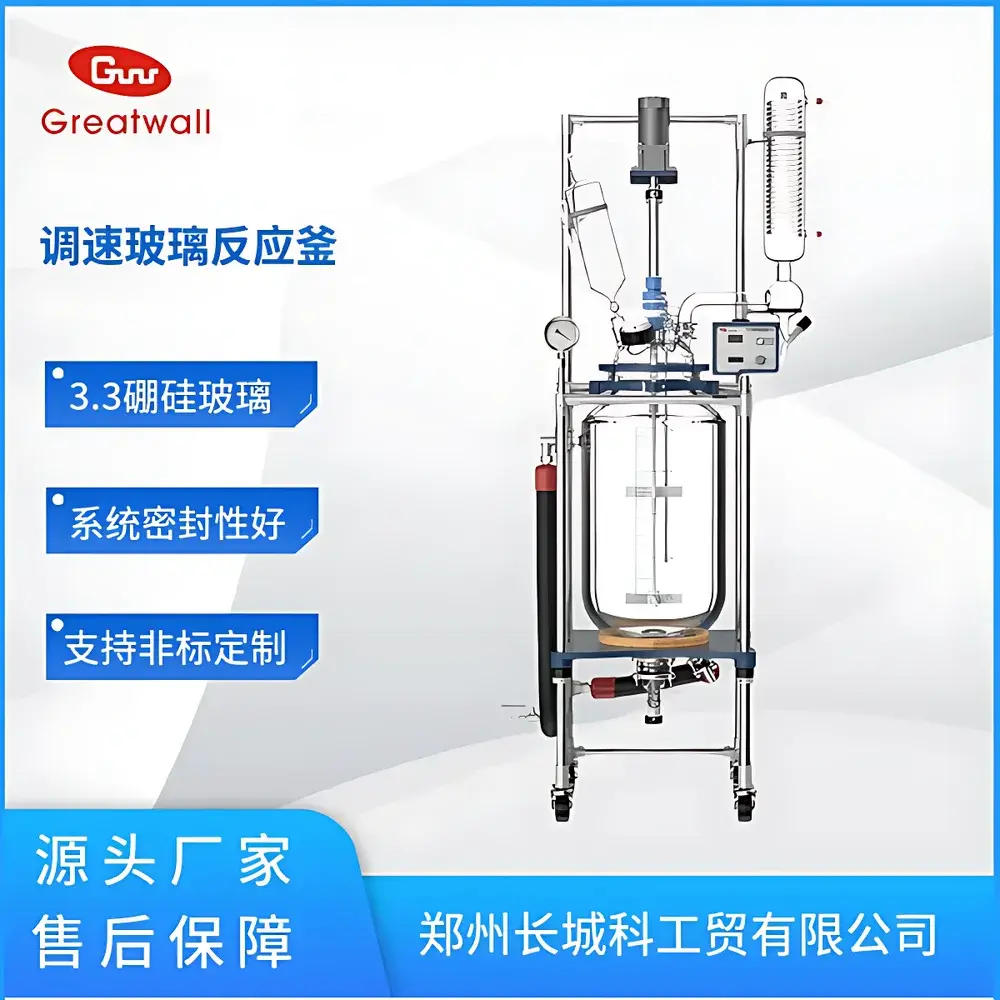
The Great Wall GR-50L Variable-Frequency Speed-Controlled Double-Jacketed Glass Reactor
| Brand | The Great Wall |
|---|---|
| Origin | Henan, China |
| Manufacturer Type | Direct Manufacturer |
| Origin Category | Domestic |
| Model | GR-50 |
| Price Range | USD 2,800 – 7,000 (est.) |
| Instrument Classification | Jacketed Glass Reactor |
| Volume Class | Medium-Scale |
| Construction Material | Borosilicate Glass 3.3 |
| Operating Pressure | Low-Pressure (Vacuum to Atmospheric) |
| Capacity | 50 L |
| Ultimate Vacuum | −0.098 MPa (i.e., ≤ 2 mbar absolute) |
| Temperature Range | −80 °C to +200 °C |
| Jacket Inlet/Outlet | Stainless Steel Insulated Flexible Hoses |
| Discharge Configuration | Top-Mounted Tilt Drain |
| Frame Material | 06Cr19Ni10 (AISI 304) + Powder-Coated Aluminum Alloy |
| Mobility | Locking Casters with Brakes |
| Stirring System | Patented Sealed Bearing Assembly |
| Impeller Material | PTFE-Coated Blades |
| Stirring Shaft | AISI 304 Core with Full PTFE Cladding |
| Drive | Integrated Variable-Frequency AC Motor |
Overview
The Great Wall GR-50L is a medium-capacity, double-jacketed glass reactor engineered for controlled chemical synthesis, process development, and pilot-scale reaction studies under vacuum, inert atmosphere, or regulated thermal conditions. Its core design follows the classical jacketed vessel principle: an inner reaction chamber (constructed from ASTM E438 Type I, Class A borosilicate glass 3.3) is surrounded by a sealed outer jacket enabling precise thermal management via external circulation of heating/cooling media—such as silicone oil, glycol-water mixtures, or cryogenic fluids. The reactor operates within a pressure range of −0.098 MPa (equivalent to ~2 mbar abs) to ambient, supporting solvent reflux, vacuum distillation, low-temperature lithiation, and exothermic reaction quenching. Unlike single-wall vessels, its dual-glass architecture ensures mechanical stability during thermal cycling while maintaining optical clarity for real-time visual monitoring of phase separation, crystallization, or emulsion formation.
Key Features
- Borosilicate glass 3.3 construction (DIN ISO 3585 compliant) — offering ≤ 3.3 × 10⁻⁶ K⁻¹ coefficient of thermal expansion, high hydrolytic resistance (Class 1 per ISO 719), and compatibility with aggressive reagents including concentrated acids, alkalis, and halogenated solvents.
- Integrated variable-frequency AC drive delivering continuous speed control from 0–280 rpm with ±2 rpm repeatability; torque output optimized for viscous media up to 10,000 mPa·s without stalling.
- Hermetically sealed top-plate assembly featuring a patented multi-lip PTFE–ceramic composite bearing system, rated for >5,000 hours of continuous operation under vacuum and inert gas blanket (N₂, Ar).
- PTFE-clad impeller and AISI 304 shaft — eliminating metallic contamination risk while sustaining mechanical integrity across −80 °C to +200 °C operational extremes.
- Stainless steel (06Cr19Ni10) jacket ports fitted with insulated flexible hoses to decouple thermal expansion stress from connecting circulators or chillers — critical for long-term seal reliability in cyclic temperature applications.
- Modular frame with powder-coated aluminum alloy and 304 stainless steel structural elements — corrosion-resistant, non-magnetic, and compatible with cleanroom-grade wiping protocols (ISO 14644-1 Class 7).
Sample Compatibility & Compliance
The GR-50L accommodates heterogeneous reaction mixtures including slurries, suspensions, catalytic systems (e.g., Pd/C, Raney Ni), and moisture-sensitive organometallics when used under nitrogen or argon purge. Its glass-wetted path complies with USP for extractables profiling and meets material compatibility requirements outlined in ASTM D1250 (liquid density calibration) and ISO 17025 Clause 5.5.1 (equipment suitability verification). Vacuum performance conforms to ISO 2859-1 sampling plans for leak-rate validation (<5 × 10⁻³ mbar·L/s He). The unit supports GLP-compliant workflows when paired with validated data loggers (e.g., ELPRO LIBERO® series) for temperature, pressure, and agitation traceability.
Software & Data Management
While the GR-50L operates as a standalone analog-controlled reactor, it integrates natively with third-party digital control platforms via 0–10 V DC analog input/output interfaces. Users may connect it to LabVIEW™-based SCADA systems or DeltaV™ DCS environments for centralized setpoint scheduling, alarm logging (e.g., overpressure, motor overload), and audit-trail generation per FDA 21 CFR Part 11 Annex 11 requirements. Optional RS-485 Modbus RTU firmware upgrade enables remote parameter adjustment and real-time acquisition of stirrer RPM, jacket inlet/outlet temperatures, and vacuum transducer outputs into LIMS or electronic lab notebooks (ELN).
Applications
- Pharmaceutical process R&D: API crystallization optimization, hydrogenation under controlled H₂ partial pressure, and solvent swap sequences requiring simultaneous cooling and agitation.
- Fine chemical synthesis: Grignard additions at −40 °C, Friedel–Crafts acylations with AlCl₃ slurries, and photochemical reactions using UV-transparent glass configuration.
- Materials science: Sol-gel polymerization of silica nanoparticles, graphene oxide reduction under N₂, and polymerization kinetics studies using inline FTIR probes (via standard 24/40 ground-glass ports).
- Biotechnology: Enzymatic transesterification of triglycerides, immobilized enzyme batch reactors, and lyophilization pre-freezing trials.
FAQ
What is the maximum allowable working temperature for the glass vessel under vacuum?
The inner vessel maintains structural integrity up to +200 °C at atmospheric pressure; however, under −0.098 MPa vacuum, the practical upper limit is +150 °C to prevent thermal stress-induced microfracturing.
Can the GR-50L be configured for inert gas purging and pressure testing?
Yes — all standard configurations include a 1/4″ Swagelok®-compatible gas inlet port and calibrated pressure relief valve (set point: +0.05 MPa); optional explosion-proof motor variants are available for Class I, Div 1 hazardous locations.
Is the stirring system suitable for abrasive solid suspensions?
The PTFE-coated impeller resists erosion from micronized catalysts and inorganic salts; for extended service life with >20 wt% solids loading, we recommend the optional diamond-polished stirrer shaft upgrade.
How is calibration traceability maintained for temperature and vacuum measurements?
The reactor accepts industry-standard Pt100 RTD sensors (IEC 60751 Class A) and capacitance manometers (e.g., MKS Baratron® 626B); calibration certificates per ISO/IEC 17025 are provided with each sensor module.
Does the unit comply with CE marking requirements for laboratory equipment?
Yes — certified to EN 61010-1:2019 (Safety Requirements for Electrical Equipment for Measurement, Control, and Laboratory Use) and EN 61326-1:2013 (EMC Emission/Immunity). Declaration of Conformity is supplied with shipment.



