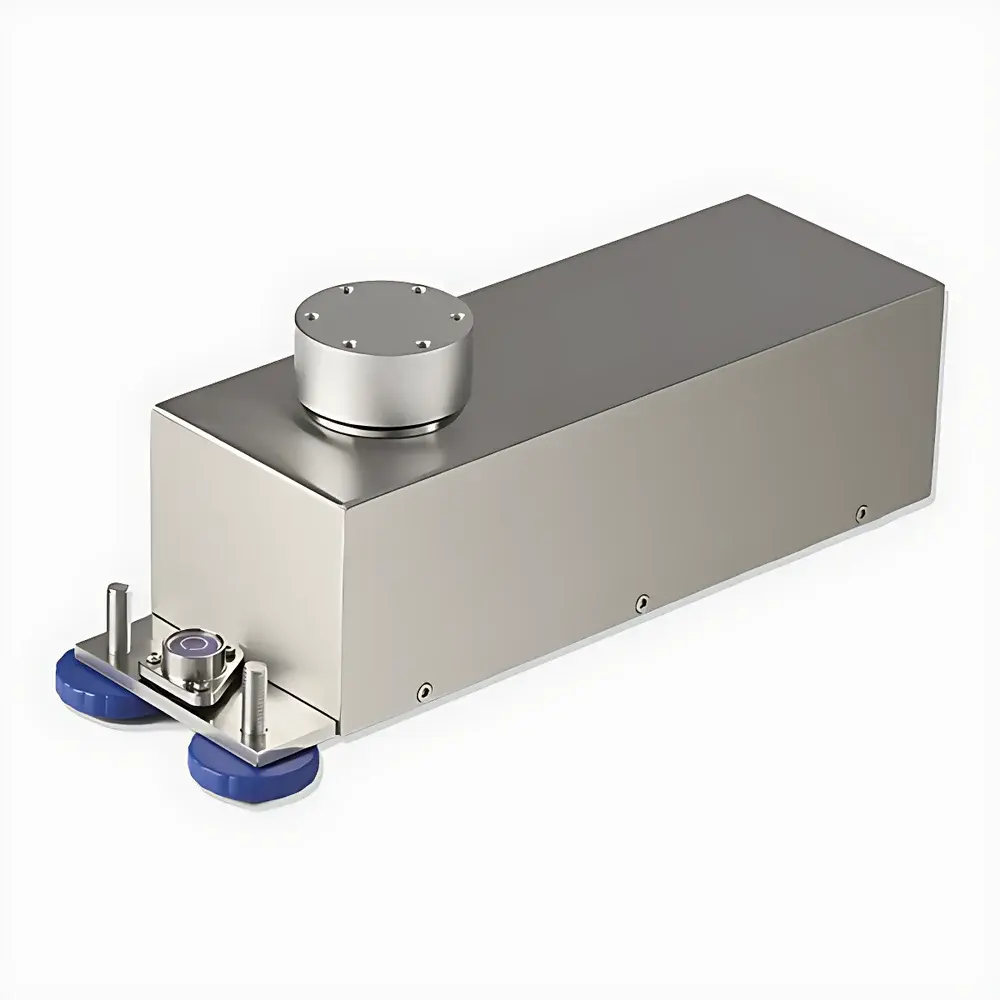
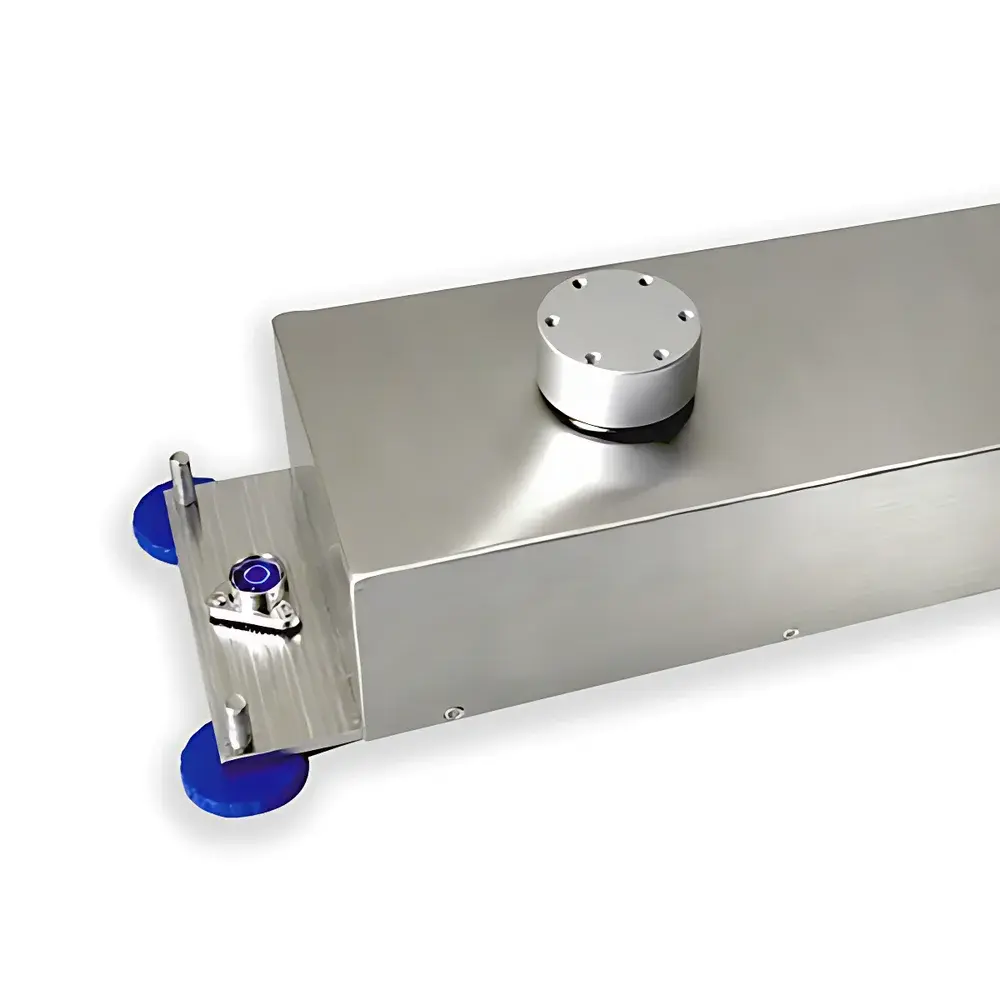
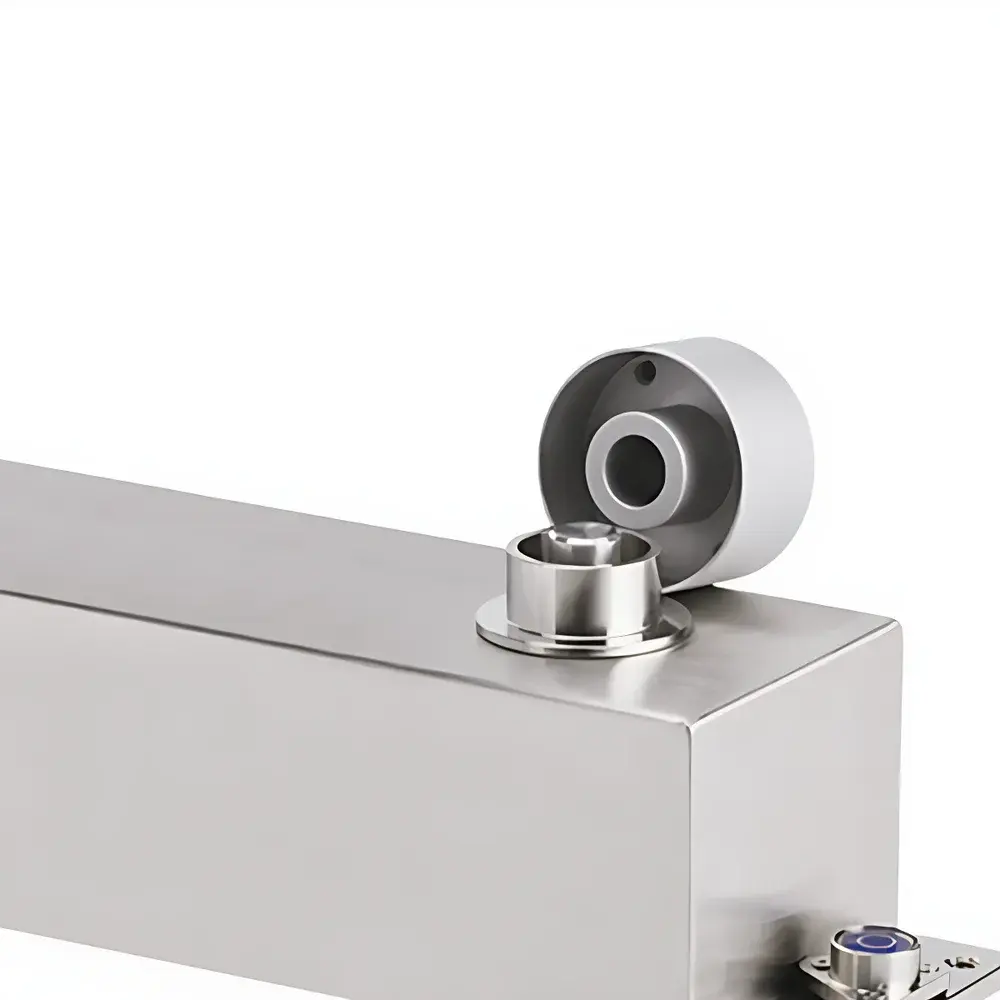
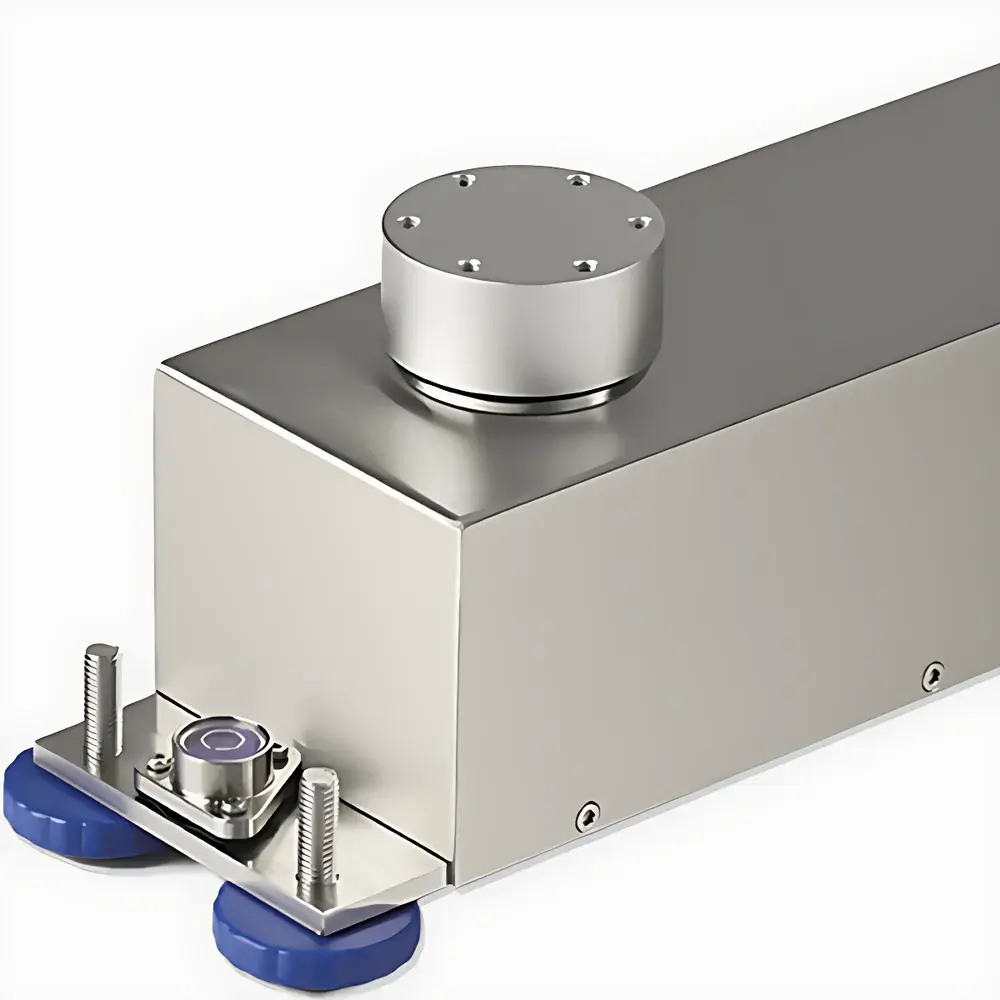
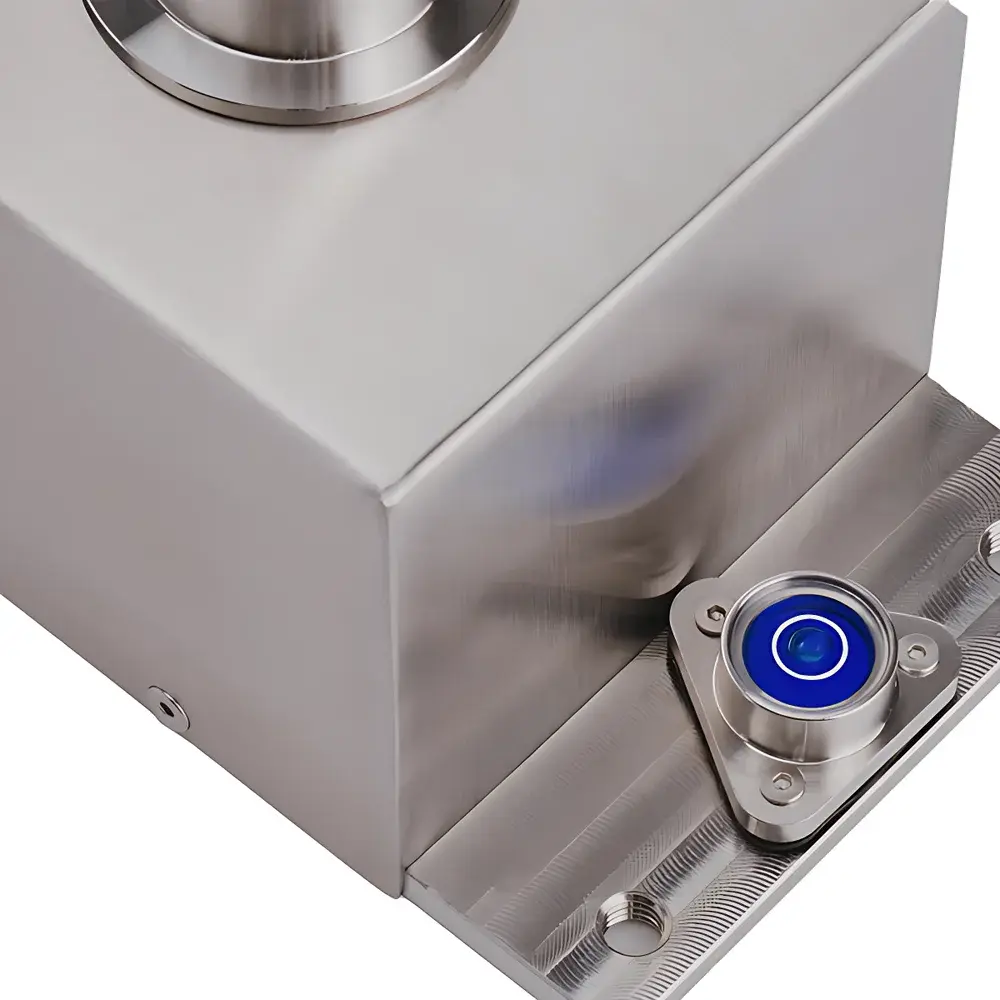
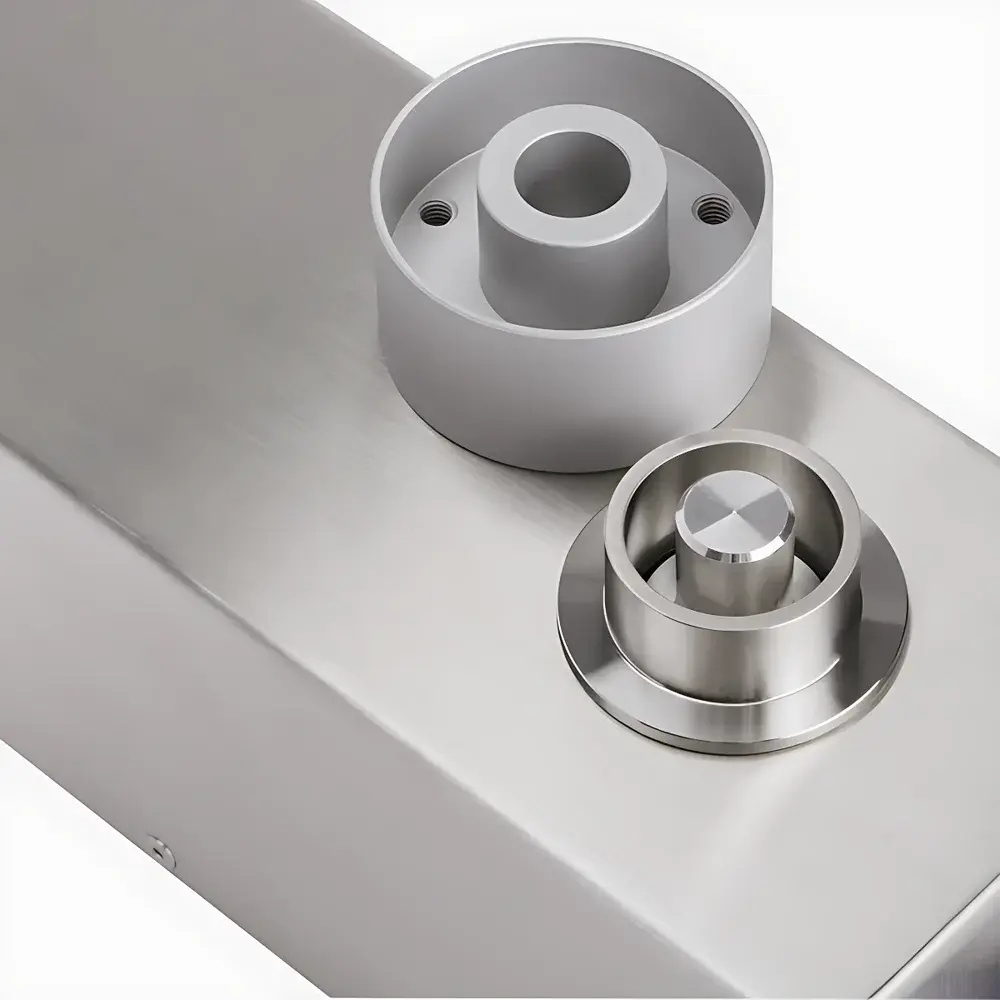
Unicise UWM223/UWM323/UWM423/UWM523/UWM623 Electromagnetic Force Compensation Weighing Module
| Brand | Unicise Precision Measurement |
|---|---|
| Origin | Jiangsu, China |
| Model Series | UWM223, UWM323, UWM423, UWM523, UWM623 |
| Capacity | 220 g to 620 g |
| Readability | 1 mg |
| Preload Range | 0–200 g (model-dependent) |
| Lower-Loading Interface | M3 threaded mounting holes |
| Calibration | External (standard) or Internal (‘-I’ variants) |
| Data Interfaces | DB9 (RS-232/485), Type-C, USB-A |
| Communication Protocols | SBI, SICS, RS-232, RS-485 |
| Housing | Full stainless steel |
| Overload Protection | Integrated mechanical stop |
| Status Indication | Dual-color LED status indicator |
Overview
The Unicise UWM223–UWM623 series is a high-precision electromagnetic force compensation (EMFC) weighing module engineered for integration into automated industrial systems requiring sub-milligram resolution and robust long-term stability. Unlike strain-gauge-based load cells, EMFC technology operates on the principle of null-balance measurement: when a sample is placed on the load receptor, the displacement of the weighing pan is detected by an optical sensor; a precisely controlled electromagnetic current is then applied to restore equilibrium, and the magnitude of that current—linearly proportional to mass—is converted into a digital weight value. This architecture delivers inherent linearity, exceptional repeatability (< ±0.002% of full scale), and immunity to thermal drift and mechanical hysteresis—critical attributes for continuous operation in dynamic process environments such as gravimetric feeding, inline quality verification, and closed-loop formulation control.
Key Features
- Uni-block EMFC sensor core: Proprietary monolithic electromagnetic transducer with integrated optical position detection, delivering 1 mg readability across all models (UWM223 to UWM623) and ensuring < 0.001% nonlinearity over full capacity.
- Integrated electronics architecture: All signal conditioning, analog-to-digital conversion, real-time filtering, and communication controllers are embedded within the module housing—eliminating external junction boxes and reducing EMI susceptibility.
- Stainless steel hermetic enclosure (IP65-rated): Fully sealed 304 stainless steel body with internal overload stops rated to 500% of nominal capacity, enabling reliable deployment in humid, dusty, or mildly corrosive production areas.
- Dual-interface connectivity: Standard DB9 connector supporting RS-232/RS-485 with configurable baud rates (1200–115200 bps), plus USB-C port for direct PC connection and firmware updates; USB-A host port available for optional Unicise WDS-100 display unit.
- Lower-loading configuration: M3 threaded mounting points on the underside allow inverted or bottom-mounted installation—ideal for hopper discharge monitoring, conveyor-integrated checkweighing, or space-constrained OEM machinery.
- Real-time operational feedback: Bi-color LED indicator provides immediate visual status: green = ready/idle, flashing green = stable reading, red = overload or error condition.
Sample Compatibility & Compliance
The UWM series supports a wide range of sample types—from dry powders and granules to viscous pastes and small packaged units—when used with appropriate load receptors (e.g., standard 42 mm stainless steel pan included). No moving parts or friction interfaces ensure compatibility with abrasive or electrostatic-sensitive materials. The modules comply with IEC 61326-1 (EMC for industrial environments) and meet mechanical safety requirements per ISO 12100. While not certified for hazardous locations, their low-power design (≤2.5 W typical) and galvanically isolated serial interfaces support safe integration into Class I, Division 2 control architectures. For regulated industries, the ‘-I’ internal calibration variants support GLP/GMP traceability workflows when paired with documented calibration standards and audit-log-enabled host software.
Software & Data Management
Unicise provides the UniLink Configuration Suite (Windows/Linux/macOS), a vendor-neutral utility enabling full parameterization—including filter settings (digital damping: 0.1–5.0 s), auto-zero tracking, tare memory management, and protocol selection (SBI v2.0 or SICS v1.3). All data streams support ASCII-formatted output with configurable delimiters and timestamping. When deployed in FDA-regulated facilities, the suite can be configured to generate ALF (Audit Log File) records compliant with 21 CFR Part 11 requirements—including user authentication, electronic signatures, and immutable change history—provided the host system implements appropriate access controls and backup policies.
Applications
- Gravimetric dosing systems in pharmaceutical tablet press feeders and powder blending lines.
- In-line mass verification for packaging lines handling medical devices, diagnostics kits, or precision components.
- OEM integration into automated dispensing robots, additive manufacturing powder recirculation units, and battery electrode coating stations.
- Process analytical technology (PAT) applications requiring real-time mass trend analysis during drying, granulation, or lyophilization.
- Calibration laboratories performing intermediate checks of analytical balances using reference weights traceable to NIM (China) or BIPM-equivalent standards.
FAQ
What is the difference between external and internal calibration variants?
External calibration models (e.g., UWM223) require periodic manual calibration using certified test weights. Internal calibration models (e.g., UWM223-I) include a built-in motorized weight actuator and perform automatic self-calibration triggered by time schedule, temperature shift (>1.5 °C), or operator command.
Can the module operate continuously at elevated ambient temperatures?
Yes—the sensor and electronics are thermally compensated from 10 °C to 40 °C. Extended operation above 40 °C requires forced-air cooling or derating per manufacturer’s thermal derating curve.
Is RS-485 multidrop communication supported?
Yes, up to 32 modules can share a single RS-485 bus using Modbus RTU addressing; each unit is assigned a unique node ID via DIP switch or software configuration.
Does the USB-C interface support HID mode for plug-and-play use with Windows applications?
No—it operates exclusively in CDC ACM (virtual COM port) mode to maintain protocol consistency with industrial SCADA and PLC drivers.
How is mechanical overload protection implemented?
A precision-ground stainless steel stop mechanism engages at 500% of rated capacity, preventing permanent deformation of the EMFC coil suspension while allowing rapid recovery without recalibration.