
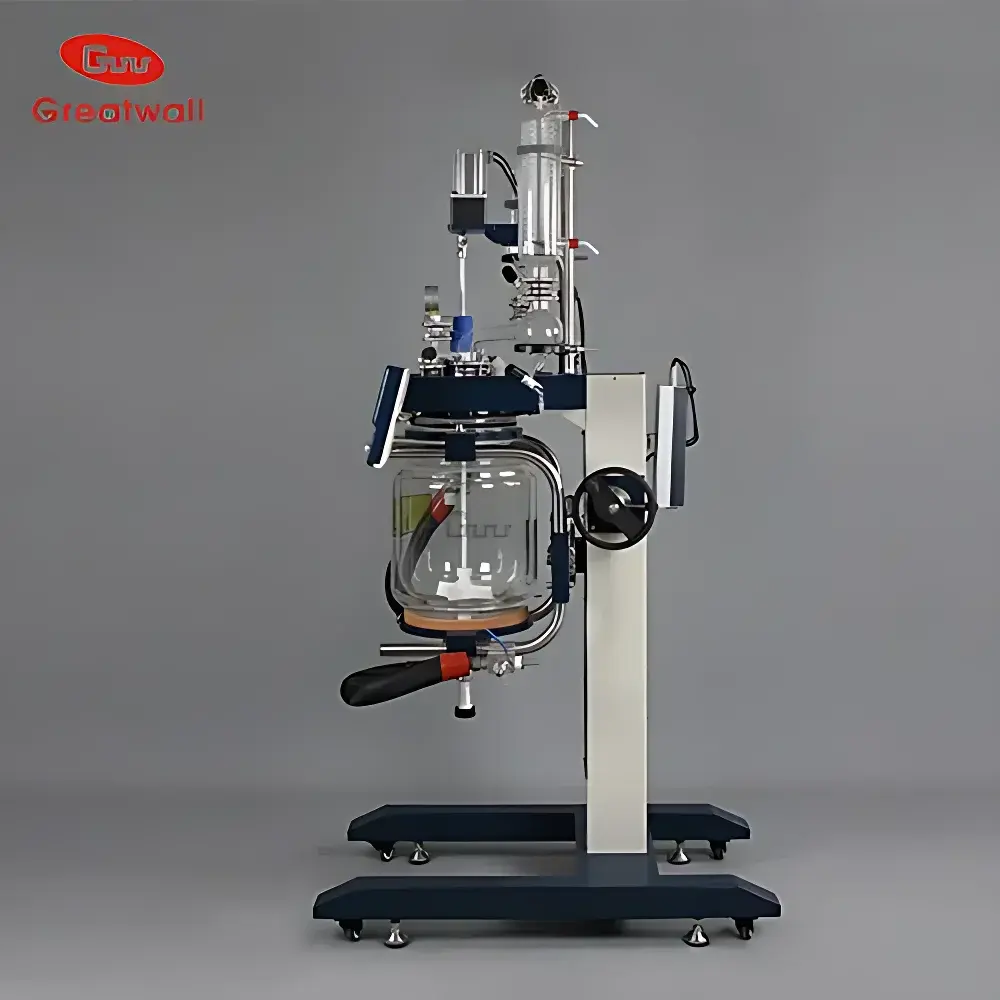
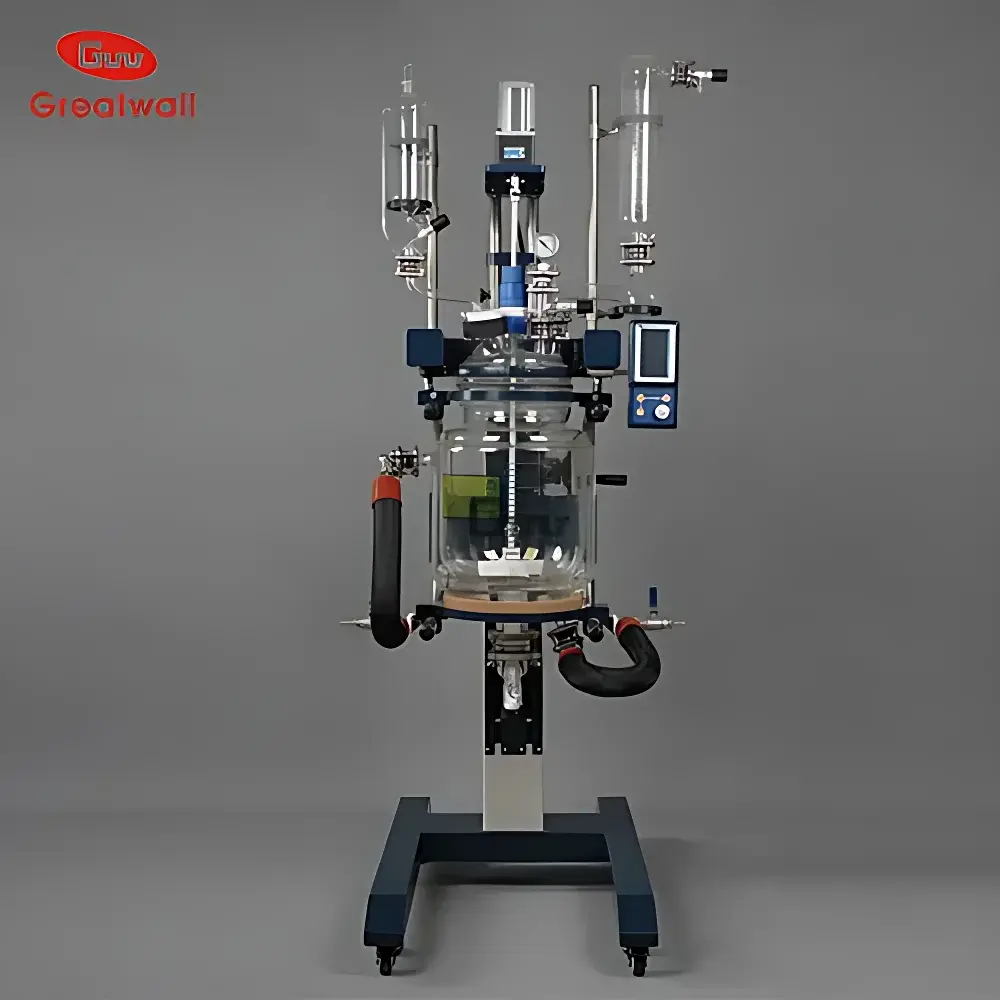
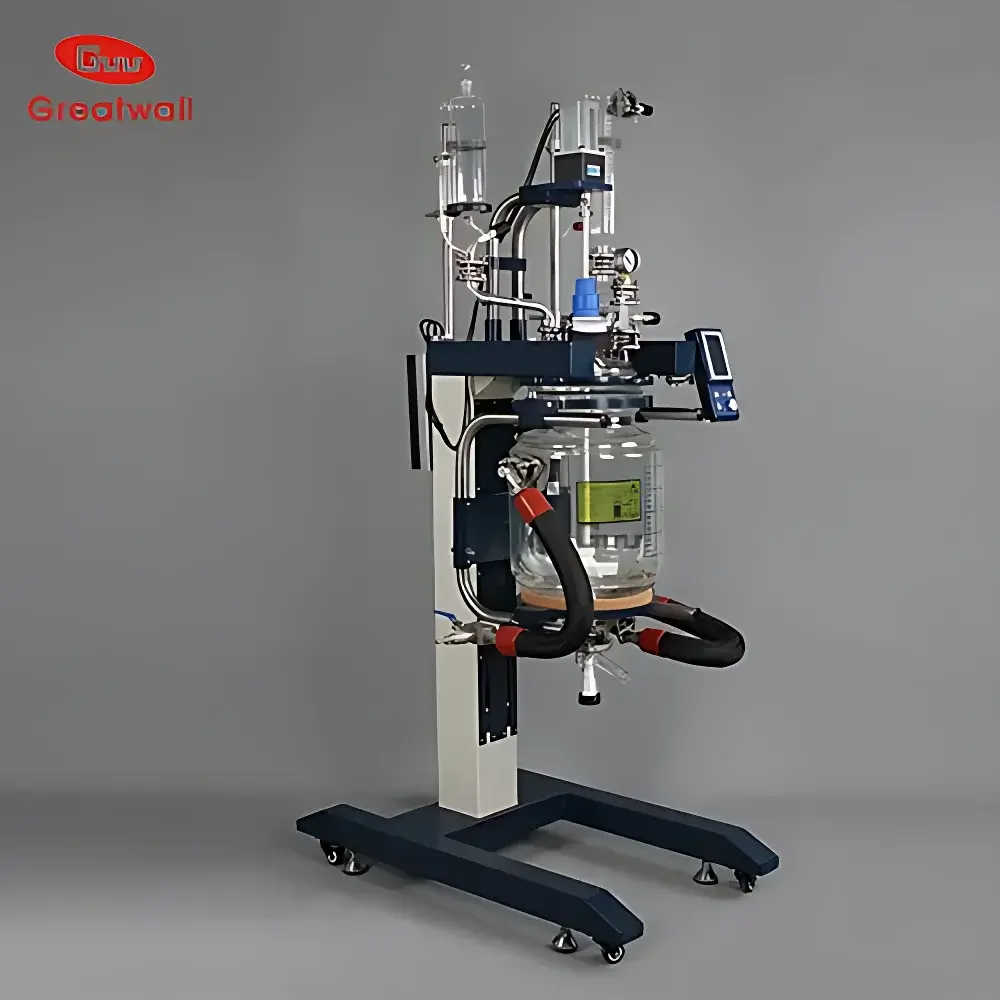
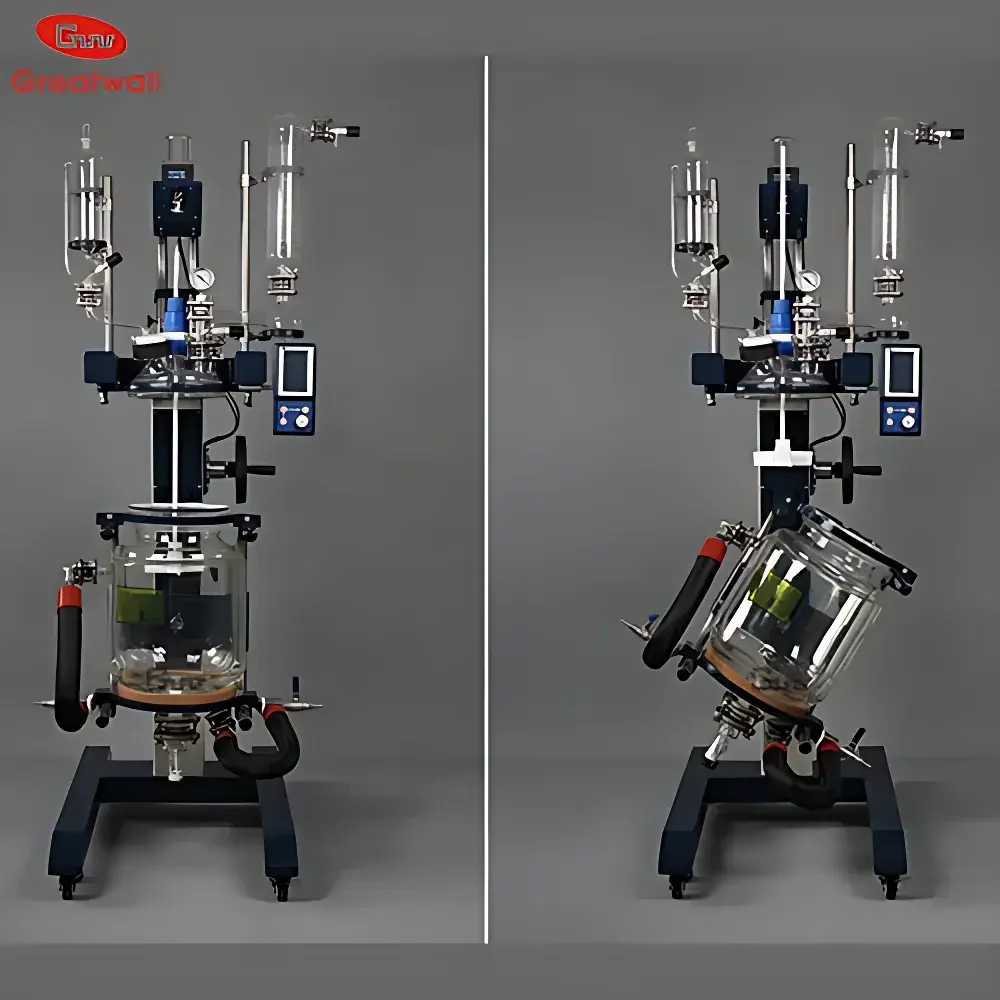
The Great Wall GRL-20 Lifting Dual-Jacketed Variable-Speed Glass Reactor
| Brand | The Great Wall |
|---|---|
| Origin | Henan, China |
| Manufacturer Type | Direct Manufacturer |
| Product Category | Domestic |
| Model | GRL-20 |
| Instrument Classification | Glass Reactor |
| Capacity | 20 L |
| Working Pressure Range | -0.1 to 0 MPa (Vacuum to Atmospheric) |
| Vacuum Degree | 0.098 MPa |
| Jacket Volume | 9 L |
| Temperature Range | -80 °C to +200 °C |
| Thermal Shock Resistance | 80 °C |
| Stirring Speed Range | 50–500 rpm |
| Speed Accuracy | ±1 rpm |
| Motor Power | 90 W |
| Heating/Cooling Jacket Inlet/Outlet | 35# Standard |
| Bottom Valve Inner Diameter | φ21 mm |
| Discharge Port Diameter | φ33 mm |
| Condenser Heat Transfer Area | 0.245 m² |
| Condenser Interface | 50# |
| Optional Accessories | 1000 mL Constant-Pressure Dropping Funnel (35#), 80# Solid Feed Port, PT100 Temperature Sensor (±0.1 °C accuracy), Manual Lifting Mechanism (400 mm stroke), 120° Tilt Capability |
| Frame Material | 06Cr19Ni10 Stainless Steel + Powder-Coated Carbon Structural Steel + Powder-Coated Aluminum Alloy |
| Sealing Type | Vacuum-Compatible Mechanical Seal with PTFE Components |
| Impeller Material | 06Cr19Ni10 Stainless Steel Core with PTFE Cladding |
| Shaft & Bearing Assembly | Proprietary PTFE-Sealed Stirring Bearing System |
| Electrical Supply | 220–240 V~, 50/60 Hz |
Overview
The Great Wall GRL-20 Lifting Dual-Jacketed Variable-Speed Glass Reactor is an engineered platform for controlled chemical synthesis, process development, and laboratory-scale reaction optimization under vacuum, inert, or ambient conditions. Designed around the principles of thermal management, mechanical stability, and operator ergonomics, the system integrates a borosilicate glass 3.3 vessel (DIN ISO 3585 compliant) with a dual-jacket configuration enabling simultaneous heating and cooling via external circulators. Its operational envelope spans –80 °C to +200 °C, supported by a jacket pressure rating of ≤0.03 MPa and verified thermal shock resistance of 80 °C—ensuring structural integrity during rapid temperature transitions. The reactor operates within a pressure range of –0.1 MPa (i.e., 98 kPa absolute vacuum) to atmospheric pressure, making it suitable for distillation, reflux, hydrogenation, polymerization, and crystallization workflows requiring precise environmental control.
Key Features
- Borosilicate glass 3.3 construction (ASTM E438 Type I, Class A) for high chemical resistance, low thermal expansion (3.3 × 10⁻⁶/K), and optical clarity across UV–VIS spectrum.
- Manually actuated vertical lifting mechanism (≈400 mm stroke) and 120° tilting capability for unobstructed access to interior surfaces, facilitating thorough cleaning and safe solid charging or product discharge.
- Dual-jacket design with standardized 35# inlet/outlet ports connected via stainless steel–reinforced insulated flexible tubing to eliminate thermal stress and vibration transmission from external fluid loops.
- Vacuum-rated mechanical seal assembly incorporating PTFE-faced stationary and rotating elements, validated for continuous operation at ≤0.098 MPa vacuum without lubricant contamination or leakage.
- PTFE-clad stainless steel (06Cr19Ni10) stirring shaft and single-layer four-blade inclined turbine impeller—optimized for radial flow generation and uniform suspension in low-to-medium viscosity media (typical η < 5000 mPa·s).
- Integrated digital speed controller with frequency conversion drive; 50–500 rpm range, ±1 rpm resolution, LED-based RPM display, and overload protection circuitry.
- Modular top plate with six standardized ground-glass joints (50#, 35# ×2, 24/29, 80#) supporting condensers, thermometers, dropping funnels, gas inlets, and inert atmosphere adapters per ISO 8573-1 purity class requirements.
- Corrosion-resistant frame combining austenitic stainless steel (06Cr19Ni10), powder-coated carbon structural steel, and powder-coated aluminum alloy—designed for GLP-compliant lab environments with non-porous, wipe-clean surfaces.
Sample Compatibility & Compliance
The GRL-20 accommodates aqueous, organic, and halogenated solvent systems—including aggressive reagents such as concentrated acids (HNO3, H2SO4), alkalis (NaOH, KOH), and anhydrous reagents (LiAlH4, n-BuLi)—without degradation of glass or sealing components. All wetted parts comply with USP Class VI biocompatibility standards for PTFE and ISO 10993-5 cytotoxicity testing protocols. The reactor meets CE machinery directive 2006/42/EC requirements when operated within specified thermal and pressure limits. While not intrinsically rated for explosive atmospheres (ATEX), it may be deployed in Zone 2 environments when coupled with certified external ignition-source controls and inert gas purging (N2, Ar) per IEC 60079-10-1.
Software & Data Management
The GRL-20 is a stand-alone analog/digital hybrid instrument with no embedded microprocessor or network interface. Temperature monitoring (via PT100 sensor, ±0.1 °C accuracy) and rotational speed are displayed locally on dual-digit LED modules. For regulatory traceability in GMP/GLP settings, external data loggers (e.g., Omega OM-DAQPRO-5300 or Testo 176-T4) may be interfaced via 4–20 mA or 0–10 V analog outputs (optional retrofit). All parameter records—including batch ID, start/stop timestamps, setpoints, and observed deviations—must be manually entered into laboratory notebooks or electronic lab notebooks (ELNs) compliant with FDA 21 CFR Part 11 requirements for audit trails and electronic signatures.
Applications
- Batch synthesis of fine chemicals and pharmaceutical intermediates under reflux or reduced pressure.
- Solvent recovery and concentration via vacuum distillation with integrated condenser (0.245 m² surface area, 50# interface).
- Catalytic hydrogenation using palladium-on-carbon or Raney nickel under controlled H2 headspace (requires optional gas regulation module).
- Polymerization reactions (e.g., polyacrylates, polyesters) requiring precise temperature ramping and shear-sensitive monomer addition.
- Crystallization studies with real-time slurry observation through transparent walls and adjustable agitation intensity.
- Extraction and phase-transfer catalysis with immiscible solvent systems (e.g., water/CH2Cl2) enabled by stable emulsion formation at optimized Reynolds numbers.
FAQ
What is the maximum allowable jacket fluid temperature?
The jacket is rated for ≤0.03 MPa pressure and compatible with thermal oils up to 200 °C; however, sustained operation above 150 °C requires verification of fluid thermal stability and flash point per ASTM D92.
Can the reactor be used for exothermic reactions requiring active cooling?
Yes—when paired with a recirculating chiller capable of sub-zero outlet temperatures (e.g., –40 °C), the dual jacket enables rapid heat extraction; minimum coolant flow rate: 3 L/min at ΔT = 10 °C.
Is the mechanical seal maintenance-free?
No—PTFE contact surfaces require periodic inspection every 500 operating hours; replacement kits include spring-loaded stationary seat, rotating ring, and secondary O-rings (FKM or EPDM options available).
Does the system support automated pH or conductivity probes?
Not natively—the 80# solid feed port and 24/29 side port may accommodate standard probe housings, but signal conditioning and data acquisition must be handled externally.
What certifications accompany shipment?
Each unit ships with Factory Acceptance Test (FAT) report, material certificates for stainless steel (EN 10204 3.1), borosilicate glass compliance statement (DIN ISO 3585), and electrical safety test record (IEC 61010-1).



