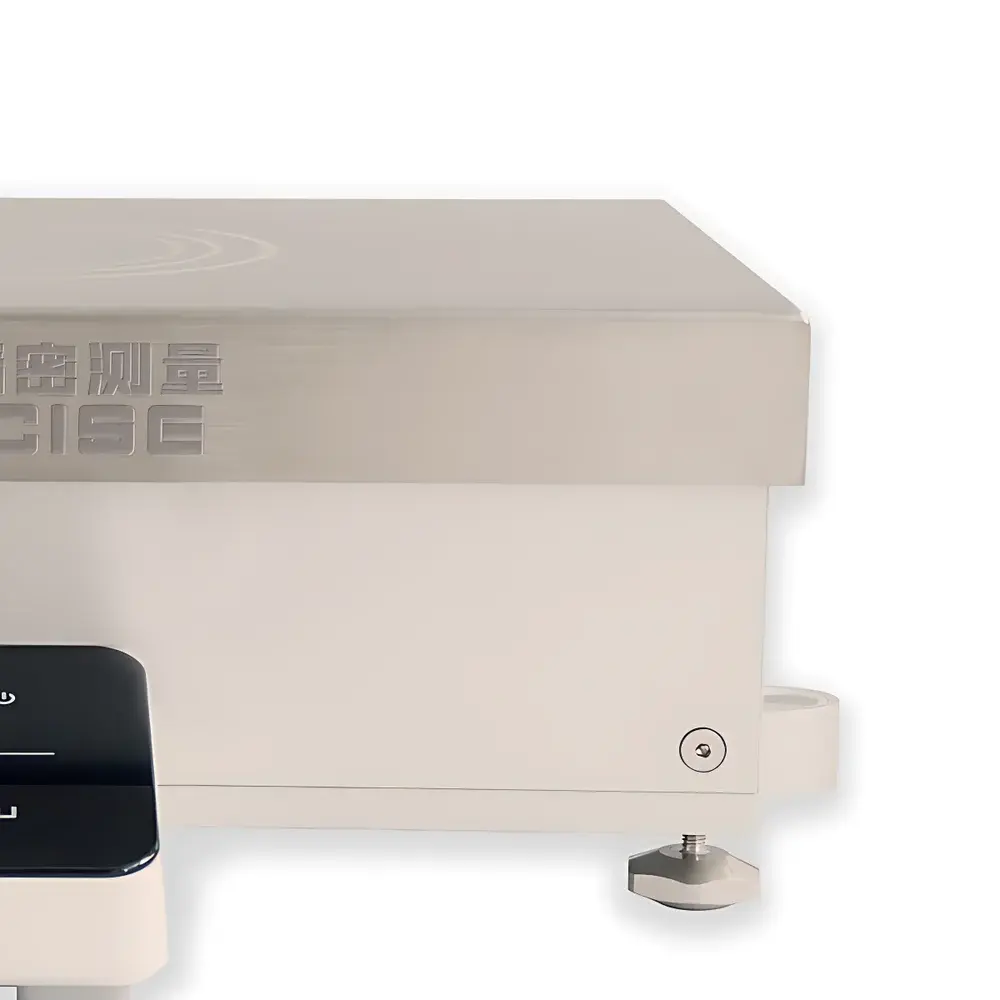
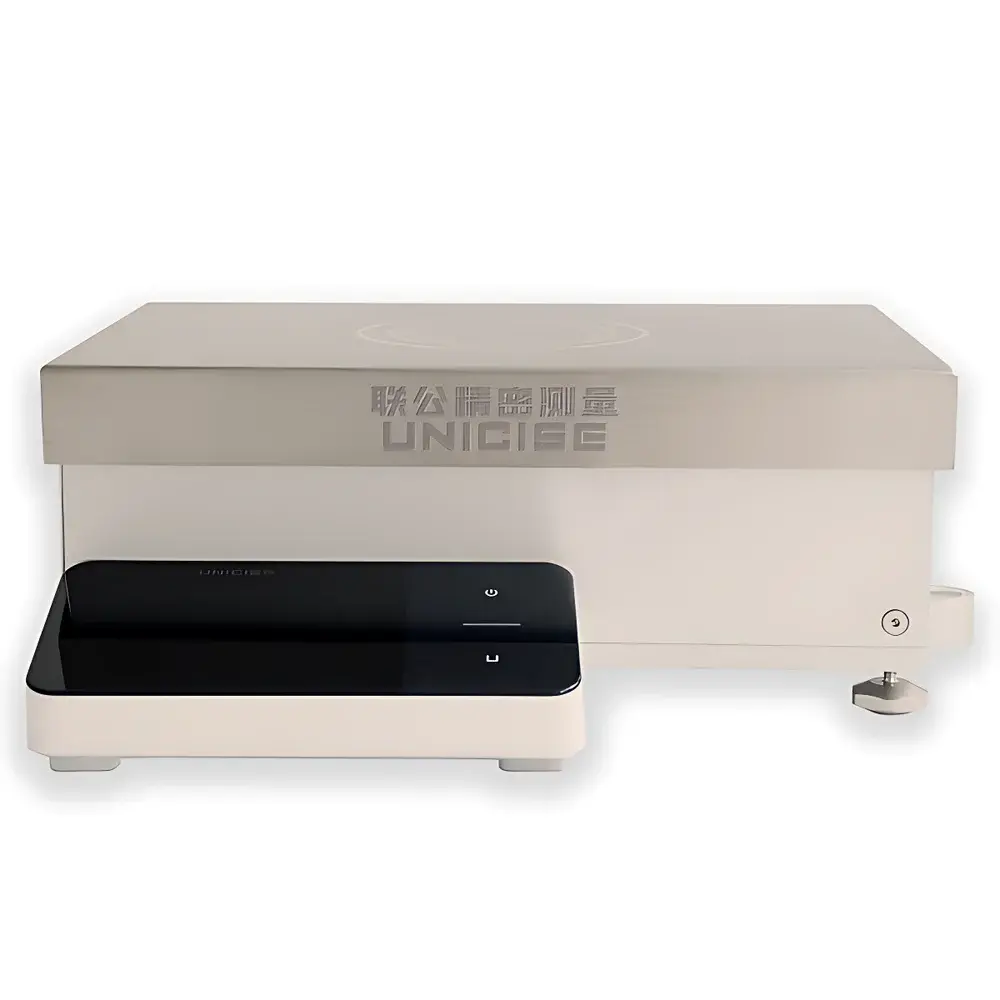
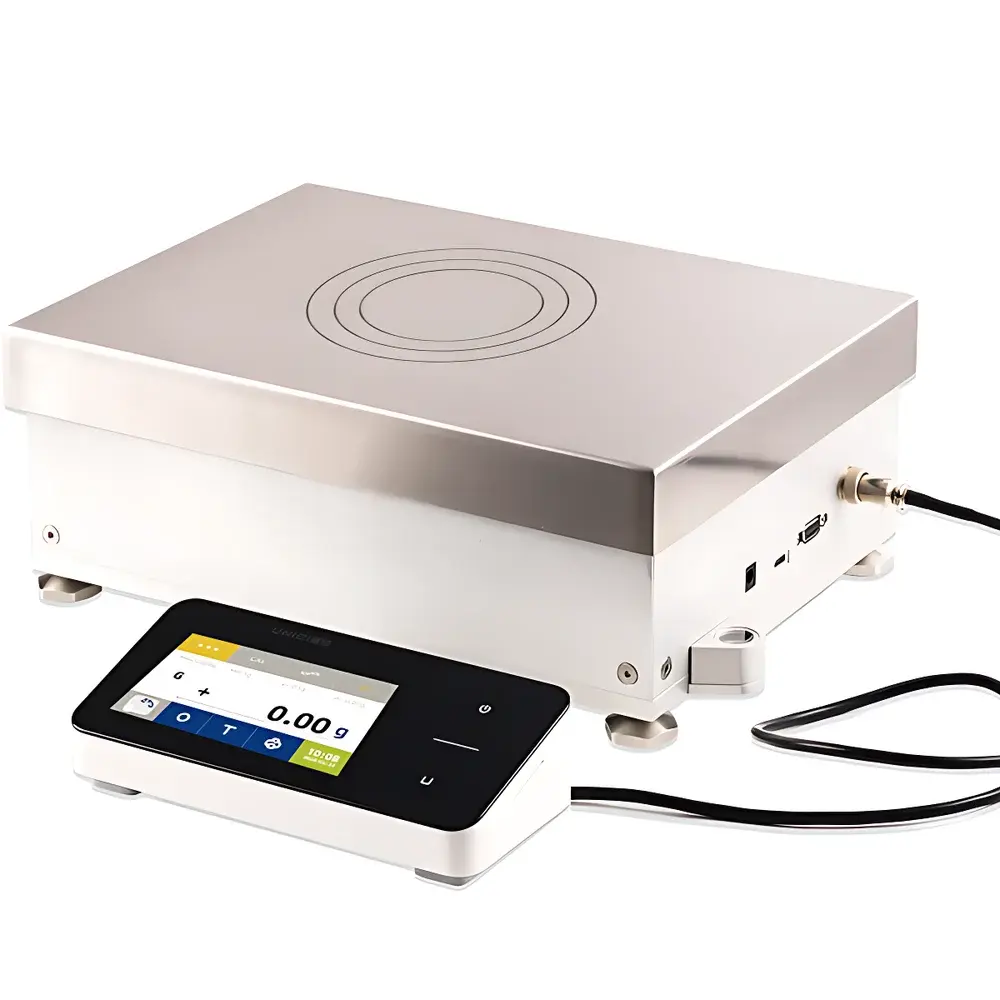
Unicise Zhengxiao Series Comparative Balance UMC22001C
| Key | Brand: Unicise Precision Measurement |
|---|---|
| Origin | Jiangsu, China |
| Manufacturer Type | Authorized Distributor |
| Country of Origin | China |
| Model | UMC22001C |
| Instrument Type | Comparative Balance |
| Max Capacity | 32 kg |
| Readability | 20 mg |
| Repeatability | 40 mg |
| Linearity | 60 mg |
| Eccentric Load Error | 5 mg/mm |
| Stabilization Time | 4 s |
| Calibration Method | External Calibration |
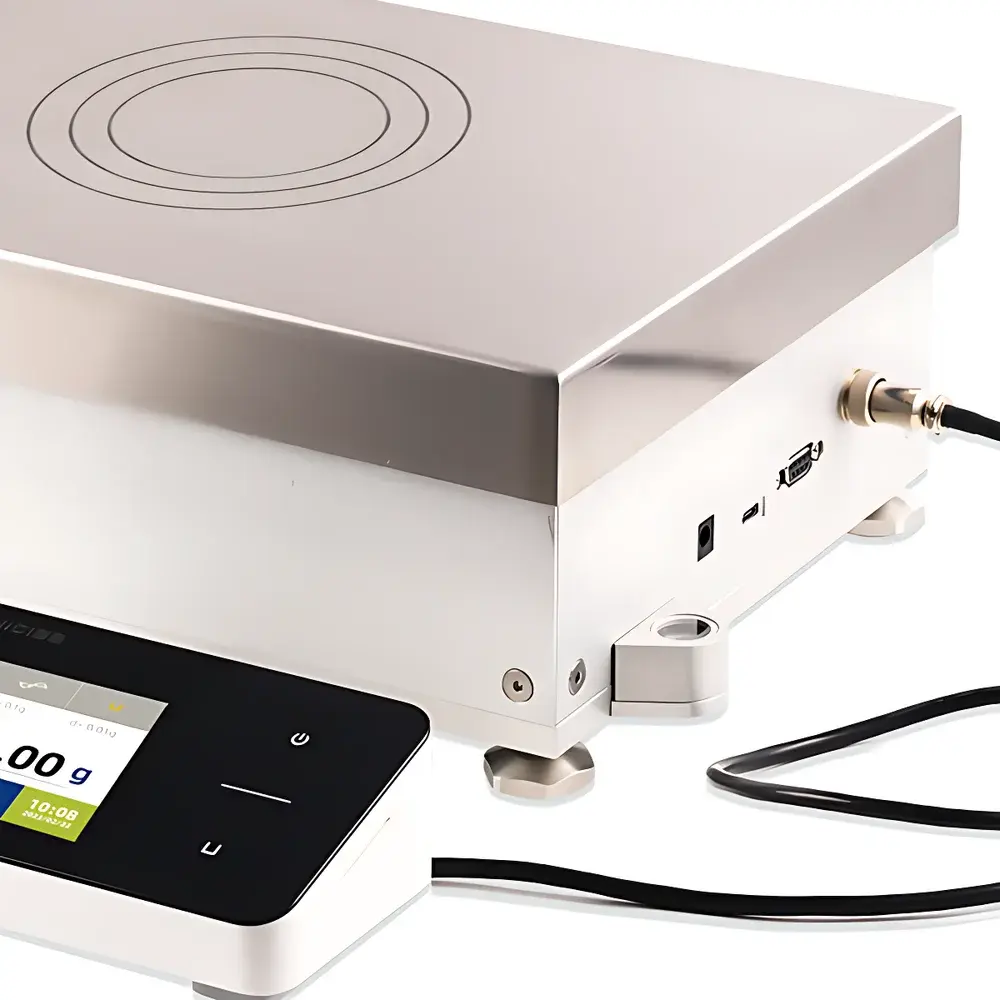
| Interface | DB9 (RS-232 compliant) & USB Type-C |
| Power Supply | AC adapter or external power bank compatible |
Overview
The Unicise Zhengxiao Series Comparative Balance UMC22001C is an industrial-grade electromagnetic force compensation balance engineered for high-reproducibility mass comparison in dynamic production and quality assurance environments. Unlike conventional analytical or precision balances, this comparative balance operates on a dual-mode principle—supporting both static mass verification and sequential differential weighing—making it especially suited for applications requiring rapid, repeatable comparisons between reference standards and test samples. Its monolithic electromagnetic force sensor delivers exceptional linearity and thermal stability across ambient temperature fluctuations typical in factory-floor settings. With a maximum capacity of 32 kg and 20 mg readability, the UMC22001C meets the metrological requirements for Class III and IV weighing per OIML R76, and supports traceable calibration workflows aligned with ISO/IEC 17025–accredited laboratories.
Key Features
- Electromagnetic force compensation sensor architecture ensuring long-term drift resistance and <5 ppm/year sensitivity shift under continuous operation.
- Modular hardware design with detachable high-brightness 5.7-inch TFT color touchscreen—enabling flexible mounting on benches, walls, or mobile carts without signal degradation.
- Adaptive digital filtering algorithm optimized for industrial vibration, air currents, and particulate interference—reducing noise-induced instability by up to 70% compared to standard filter configurations.
- Real-time continuous weight display system with zero-to-full-scale visualization, supporting dynamic load profiling for process monitoring and anomaly detection.
- Dual communication interface: RS-232 (DB9, SBI protocol compliant) and USB Type-C—enabling seamless integration with PLC-controlled assembly lines, MES platforms, and LIMS via ASCII command sets.
- Portable operational capability via external 5 V/2 A power bank input—validated for ≥8 hours of uninterrupted weighing at 1 Hz sampling rate under nominal load conditions.
Sample Compatibility & Compliance
The UMC22001C accommodates irregularly shaped, oversized, or thermally unstable samples within its 32 kg range—including castings, machined components, packaging units, and bulk materials in metallurgical or pharmaceutical secondary packaging validation. Its robust draft shield–free platform design allows direct placement of items up to 300 mm × 300 mm × 200 mm. The balance complies with OIML R76 Edition 2006 (Class III/IV), EN 45501:2015, and ANSI/NIST HB 105–2022 for non-automatic weighing instruments. It supports GLP/GMP audit trails when connected to compliant data acquisition software, and its external calibration procedure satisfies FDA 21 CFR Part 11 requirements for electronic records and signatures when paired with appropriate metadata logging.
Software & Data Management
The balance operates natively in standalone mode but interfaces with Unicise BalanceLink™ PC software (Windows 10/11, 64-bit) for advanced data handling. This application provides configurable report templates compliant with ISO 10012 and ASTM E899–21, including automatic calculation of repeatability (SD), linearity deviation, and eccentric load error per test point. All measurement events—including tare, calibration, and user-defined macros—are timestamped, user-ID tagged, and exportable in CSV, PDF, or XML formats. Audit trail functionality includes immutable logs of parameter changes, calibration history, and firmware versioning—critical for regulatory submissions in medical device manufacturing and food safety compliance.
Applications
- Comparative verification of master weights against national standards in metrology labs and regional calibration centers.
- In-line weight sorting and tolerance checking of automotive brake rotors, engine blocks, and battery modules during final assembly.
- Batch uniformity assessment in nutraceutical tablet coating lines where differential mass change must be tracked over time.
- Material loss monitoring in foundry sand reclamation systems using sequential empty/full container weighing.
- Field-deployable verification of crane scale accuracy prior to structural load testing—leveraging portable power and ruggedized enclosure design.
FAQ
What is the difference between a comparative balance and a standard precision balance?
A comparative balance prioritizes differential measurement repeatability and speed over absolute accuracy at microgram levels. It is calibrated against known reference masses and optimized for relative comparisons—not absolute mass determination—making it ideal for QC pass/fail decisions in industrial throughput environments.
Can the UMC22001C perform internal calibration?
No. It is designed exclusively for external calibration using certified weights traceable to NIM or BIPM standards. Internal calibration mechanisms are omitted to preserve mechanical stability and minimize thermal hysteresis in high-cycle usage.
Is the touchscreen operable with gloves?
Yes—the projected capacitive display supports operation with standard cotton or nitrile gloves (thickness ≤0.5 mm) and features adjustable touch sensitivity thresholds.
Does the balance support automatic data upload to cloud-based QA systems?
Not natively—but via BalanceLink™ software and optional OPC UA gateway configuration, it can feed real-time weight streams into Siemens MindSphere, PTC ThingWorx, or custom MQTT-enabled enterprise platforms.
What environmental conditions are recommended for optimal performance?
Operating temperature: 10–40 °C; relative humidity: 20–80% RH (non-condensing); vibration class: V2 per ISO 27888; no direct airflow >0.5 m/s across the weighing pan.