
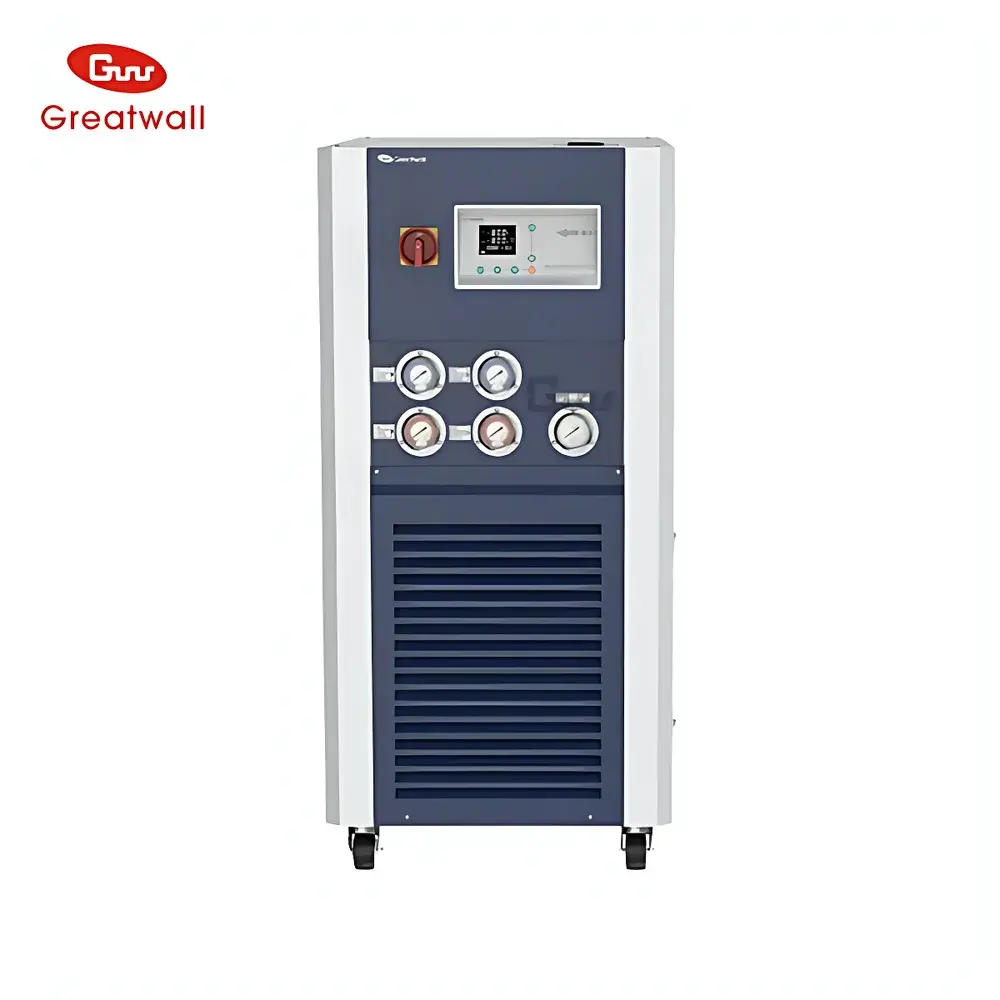
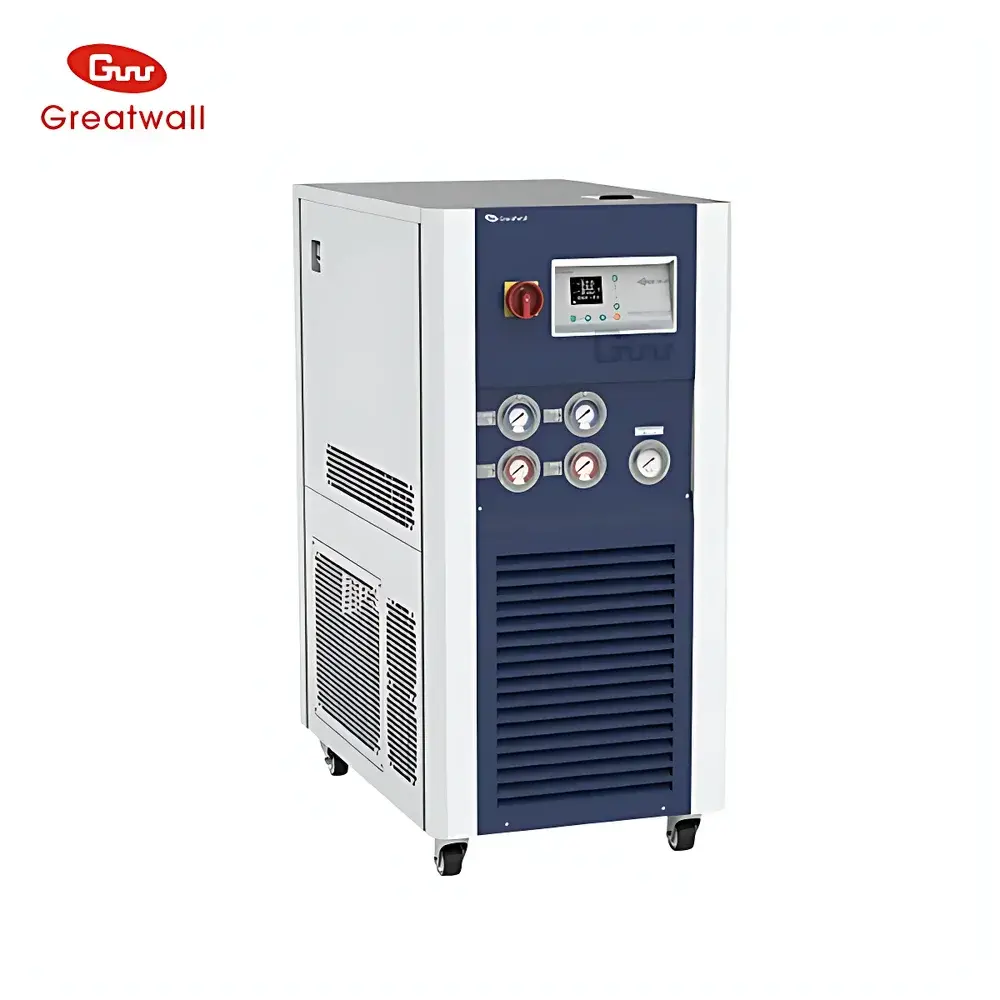
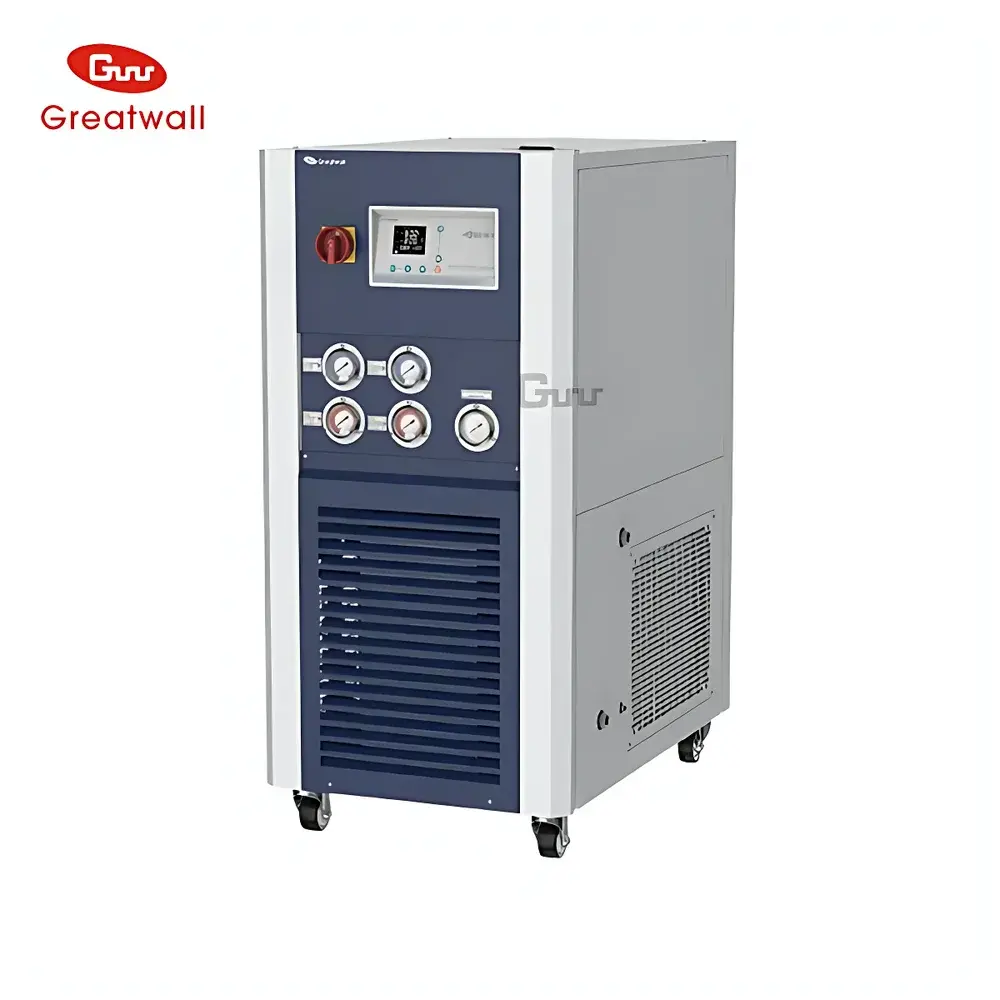
The Great Wall LT-20-80 Ultra-Low Temperature Circulating Chiller
| Brand | The Great Wall |
|---|---|
| Origin | Henan, China |
| Manufacturer Type | Direct Manufacturer |
| Product Category | Domestic |
| Model | LT-20-80 |
| Instrument Type | Integrated Unit |
| Cooling Method | Air-Cooled |
| Temperature Range | −80 °C to −40 °C |
| Refrigeration Capacity | 2000 W @ −40 °C |
| Temperature Stability | ±2 °C |
| Circulating Pump Pressure | 1.0 bar |
| Circulating Pump Flow Rate | 30 L/min |
| Operation Mode | Continuous |
Overview
The Great Wall LT-20-80 Ultra-Low Temperature Circulating Chiller is an integrated, air-cooled refrigeration system engineered for precise and stable thermal management in demanding laboratory and pilot-scale industrial applications. It operates on a closed-loop vapor-compression refrigeration cycle utilizing dual-stage or cascade refrigeration architecture—essential for achieving and sustaining temperatures as low as −80 °C without cryogenic consumables. Unlike single-stage chillers limited to −40 °C, the LT-20-80 employs optimized refrigerant staging (typically R23/R508B or equivalent low-GWP alternatives) to maintain consistent cooling performance across its full operational range. Its primary function is to supply externally connected equipment—such as jacketed reactors, calorimeters, spectroscopic cells, or material testing chambers—with a continuous, temperature-regulated heat transfer fluid (e.g., ethanol/water or silicone oil mixtures). This enables accurate simulation of sub-ambient process conditions required in pharmaceutical crystallization, polymerization kinetics studies, low-temperature catalysis, and cryogenic material characterization.
Key Features
- Integrated air-cooled design eliminates dependency on facility chilled water infrastructure, enabling flexible placement in fume hoods, gloveboxes, or ISO-classified cleanrooms.
- Closed-circuit circulation system minimizes fluid evaporation and moisture ingress—critical for maintaining viscosity stability and chemical compatibility over extended operation.
- Comprehensive safety architecture includes high-pressure cut-off switches, phase-sequence monitoring, compressor thermal overload protection, timed start-up delay (≥3 min), and overcurrent interruption per IEC 61000-4-5 standards.
- Overflow protection mechanism automatically discharges excess heat transfer fluid during filling, preventing seal damage and ensuring safe fluid level management.
- Robust stainless-steel reservoir and corrosion-resistant internal piping support long-term use with organic solvents and aqueous glycol blends.
- Continuous-duty operation rated for 24/7 thermal load cycling without derating—validated under sustained −40 °C output at full 2000 W capacity.
Sample Compatibility & Compliance
The LT-20-80 is compatible with standard heat transfer fluids meeting ASTM D6920 (for silicone oils) or ISO 6743-20 (for synthetic hydrocarbon coolants), including 30 % ethylene glycol/water, 50 % ethanol/water, and methyl silicone oil (cSt 10–50). Its sealed circulation path prevents oxidation and hydrolysis degradation—particularly important for GMP-aligned pharmaceutical process development where fluid integrity directly impacts batch reproducibility. While not certified to UL 61010-1 or CE Machinery Directive out-of-the-box, the unit conforms to basic EMC immunity requirements per EN 61326-1 and incorporates grounding continuity, double-insulated motor windings, and Class I electrical protection. Documentation packages support IQ/OQ protocol execution per FDA 21 CFR Part 11 guidelines when paired with validated temperature loggers and audit-trail-enabled control software.
Software & Data Management
The LT-20-80 features a programmable digital controller with real-time PID tuning, setpoint ramping, and hold functions accessible via front-panel keypad or optional RS485 Modbus RTU interface. When integrated into lab-wide SCADA networks, it supports time-stamped temperature logging (min/max/avg), alarm event history (with timestamp and cause code), and remote setpoint adjustment. Data export is available in CSV format via USB port; no proprietary drivers are required. For GLP-compliant environments, third-party data acquisition systems (e.g., LabVIEW, DeltaV, or Siemens Desigo CC) can poll status registers at configurable intervals (1–60 s), enabling traceable correlation between chiller output and reactor temperature profiles during critical process steps.
Applications
- Temperature control of glass- or stainless-steel jacketed reactors (1–50 L volume) during exothermic hydrogenations or low-T condensation reactions.
- Stabilizing detector housings in FTIR, Raman, and XRD instrumentation to reduce thermal noise and improve signal-to-noise ratio.
- Simulating arctic or aerospace thermal cycling profiles for polymer aging, battery electrolyte freeze-thaw testing, and composite resin cure validation.
- Providing cold sink capability for rotary evaporators operating under high vacuum to prevent solvent bumping and improve condensate recovery efficiency.
- Supporting cryo-milling and low-temperature grinding of thermolabile APIs and biopolymers without thermal degradation.
FAQ
What is the minimum achievable temperature at full flow rate?
At 30 L/min flow, the LT-20-80 sustains −70 °C under typical ambient conditions (25 °C, 50 % RH); −80 °C is attainable at reduced flow (≤15 L/min) with appropriate fluid selection.
Can this chiller be used with flammable solvents like acetone or THF?
Yes—provided the heat transfer fluid is non-flammable (e.g., silicone oil) and all external plumbing complies with NFPA 30 and local hazardous area classification requirements.
Is remote monitoring supported natively?
Basic Modbus RTU communication is built-in; Ethernet or Wi-Fi connectivity requires external gateway integration.
Does the unit include fluid level and temperature sensors for external interlock?
Yes—dry-contact alarm outputs (NO/NC) are provided for low-level shutdown and high-temperature cutoff, compatible with PLC-based safety instrumented systems (SIS).
What maintenance intervals are recommended for continuous operation?
Compressor oil analysis every 6,000 hours; condenser coil cleaning quarterly; refrigerant leak check annually per ISO 5149-2 guidelines.



