
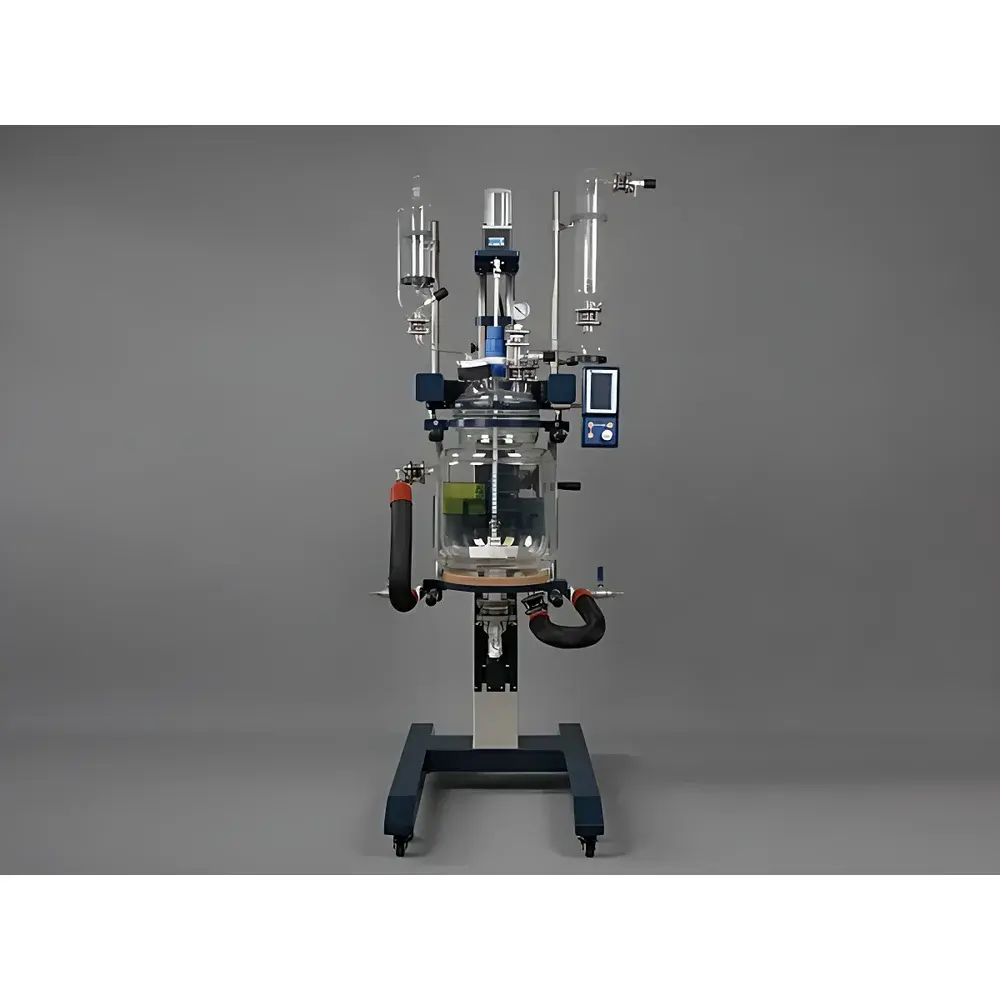
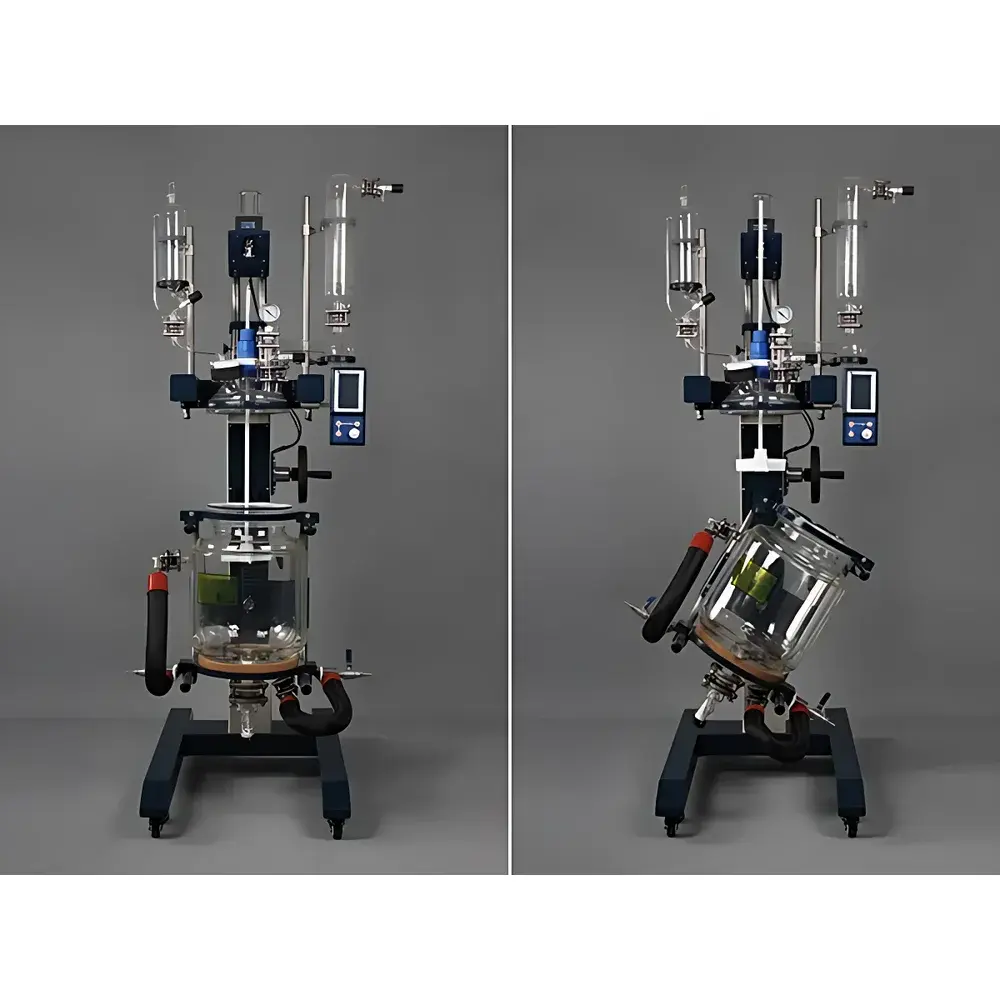
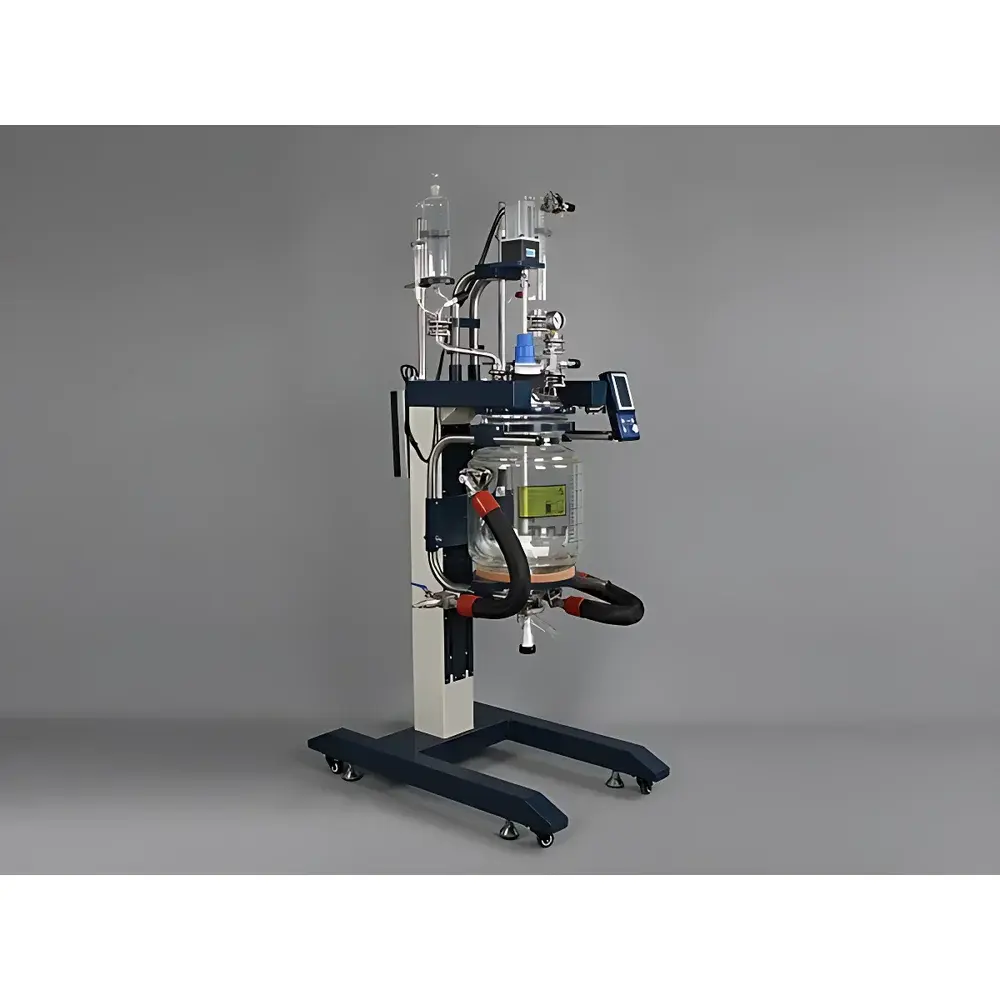
The Great Wall GRL-20CE Dual-Layer Lifting Glass Reactor
| Brand | The Great Wall |
|---|---|
| Origin | Henan, China |
| Manufacturer Type | Direct Manufacturer |
| Country of Origin | China |
| Model | GRL-20CE |
| Capacity | 20 L (working volume) |
| Material | Borosilicate Glass 3.3 |
| Operating Pressure Range | −0.1 to 0.0 MPa (vacuum to atmospheric) |
| Maximum Vacuum Level | 0.098 MPa |
| Jacket Volume | ~6.0 L |
| Condenser Heat Transfer Area | ~0.245 m² |
| Constant-Pressure Funnel Volume | 1000 mL |
| Temperature Range | −80 °C to +200 °C |
| Max. ΔT Between Inner/Outer Wall | ≤80 °C |
| Jacket Pressure Rating | ≤+0.03 MPa |
| Vacuum System Leak Rate | ≤2 kPa/h |
| Stirring Motor Power | 90 W |
| Speed Control | Frequency Inverter |
| Speed Range | 50–500 rpm |
| Temperature Sensor | Pt100 (SUS304 sheath + PTFE insulation) |
| Temp. Display Accuracy | ±0.1 °C |
| Sealing Material | PTFE |
| Discharge Valve Height | ~530 mm |
| Vertical Lifting Stroke | 400 mm |
| Power Supply | 220–240 V~, 50/60 Hz |
| Ambient Operating Conditions | 5–35 °C, RH ≤70% |
| Overall Dimensions (W×D×H) | ~850×1100×2050 mm |
| Mobility | Lockable Casters |
| Stirrer Type | Anchor/Paddle with PTFE-coated Blades |
| Shaft Material | SUS304 + PTFE Cladding |
| Stirring Shaft Bearing | Corrosion-Resistant Precision Bearing |
| Sealing | Dual-Stage Mechanical Seal with PTFE Components |
| Feed Port | 80# Standard Tapered Joint |
| Condenser Interface | 50# Flange |
| Vacuum Gauge Port | 35# Flange |
| Constant-Pressure Funnel Port | 35# Flange |
| Temp. Probe Port | 24# Standard Tapered Joint |
| Stirrer Insertion Port | 50# Flange |
| Jacket Inlet/Outlet | Rc 3/4 Threaded Fittings |
| Drain Design | Side-Mounted, No-Dead-Volume, PTFE-Lined Valve |
Overview
The Great Wall GRL-20CE Dual-Layer Lifting Glass Reactor is an engineered laboratory-scale synthesis platform designed for controlled chemical reactions under variable thermal and pressure conditions. Built around a seamless borosilicate glass 3.3 vessel system, it operates across an extended temperature range (−80 °C to +200 °C) and vacuum-compatible pressure regime (−0.1 to 0.0 MPa), enabling applications from cryogenic Grignard additions to high-temperature esterifications and solvent-free condensations. Its dual-layer construction integrates an inner reaction chamber and outer thermal jacket—hydraulically isolated yet thermally coupled—to support precise external heating or cooling via circulating media (e.g., silicone oil, ethylene glycol/water, or dry ice/acetone baths). Unlike fixed-height reactors, the GRL-20CE features motor-assisted vertical lifting (400 mm stroke) and 120° rotational capability, facilitating safe, ergonomic access to internal components during charging, sampling, cleaning, or maintenance without disassembly.
Key Features
- Structural integrity ensured by ASTM E438-compliant borosilicate glass 3.3 components—including reactor body, condenser, constant-pressure funnel, and all standard-taper joints—resisting thermal shock, alkali corrosion, and organic solvent swelling.
- Integrated lifting and rotation mechanism enables reproducible positioning for operator safety and procedural consistency; eliminates manual tilting risks during residue removal or catalyst recovery.
- PTFE-lined side-discharge valve with zero-dead-volume geometry ensures quantitative material transfer and prevents cross-contamination between batches—critical for GMP-aligned process development and API intermediate synthesis.
- Stirring system employs a frequency-controlled 90 W three-phase induction motor with digital RPM readout (50–500 rpm), coupled to a SUS304 shaft clad in PTFE and fitted with precision corrosion-resistant bearings to eliminate metallic particulate generation and extend seal life.
- Jacket inlet/outlet ports utilize Rc 3/4 stainless steel fittings connected via flexible PTFE-reinforced insulated hoses—eliminating mechanical stress transmission and preserving joint integrity during thermal cycling.
- Temperature monitoring uses a calibrated Pt100 sensor housed in a SUS304 probe sheath with secondary PTFE insulation, delivering ±0.1 °C display resolution and compatibility with external PID controllers or data loggers supporting IEEE 1451.2 transducer interfaces.
Sample Compatibility & Compliance
The GRL-20CE accommodates heterogeneous, viscous, and gas-evolving reaction mixtures—including slurries, polymerizations, hydrogenations (with optional H2-rated seals), and photochemical processes (when paired with quartz condensers). All wetted surfaces are chemically inert per ISO 17025 Annex A.3 guidelines for glassware validation. The reactor conforms to CE machinery directive 2006/42/EC for mechanical safety, and its electrical subsystem complies with IEC 61000-6-3 (EMC emission) and IEC 61000-6-2 (immunity). While not intrinsically rated for Class I Div 1 environments, it may be operated in explosion-proof enclosures per NFPA 495 when used with flammable solvents. Documentation includes factory calibration certificates for temperature sensor and vacuum gauge, traceable to NIM (China National Institute of Metrology).
Software & Data Management
The GRL-20CE operates as a stand-alone instrument with local digital controls; no proprietary software is required for basic operation. However, its analog output signals (0–10 V for temperature, 4–20 mA for RPM) and relay-triggered alarm contacts (over-temp, low vacuum, motor fault) support integration into third-party SCADA systems (e.g., Ignition, LabVIEW, or DeltaV) compliant with OPC UA 1.04. When deployed in regulated environments (e.g., pharmaceutical R&D labs under FDA 21 CFR Part 11), users may implement audit-trail-capable data acquisition using validated external loggers—ensuring electronic records meet ALCOA+ principles (Attributable, Legible, Contemporaneous, Original, Accurate, Complete, Consistent, Enduring, Available).
Applications
- Batch synthesis of fine chemicals, agrochemical intermediates, and specialty polymers requiring strict stoichiometric control and exotherm management.
- Process optimization studies—including residence time distribution analysis, kinetic profiling, and crystallization endpoint detection—under reproducible thermal/vacuum profiles.
- Extraction and concentration workflows (e.g., rotary evaporation alternatives) leveraging simultaneous jacket cooling and vacuum-assisted solvent removal.
- Education and training in unit operations: mass/energy balance verification, heat transfer coefficient measurement, and agitation power correlation (Np vs. Re).
- Material compatibility screening for novel catalysts or reagents under aggressive pH or redox conditions.
FAQ
What is the maximum allowable temperature differential between the reactor wall and jacket fluid?
The design limits ΔT to ≤80 °C to prevent thermal stress-induced microfractures in borosilicate glass 3.3.
Can the GRL-20CE be used for pressurized reactions?
No—it is rated only for vacuum-to-atmospheric operation (−0.1 to 0.0 MPa); positive pressure applications require alternative reactor designs with ASME Section VIII compliance.
Is the Pt100 sensor calibrated and certified?
Yes—each unit ships with a NIM-traceable calibration certificate covering the full −80 °C to +200 °C range at three points (−80 °C, 25 °C, 200 °C).
How is vacuum integrity verified during commissioning?
The system undergoes a 2-hour hold test at ≤0.098 MPa; acceptable leak rate is ≤2 kPa/h, measured via calibrated digital vacuum gauge per ISO 2859-1 sampling plan Level II.
Are spare glass parts available with documented dimensional tolerances?
Yes—glass components are supplied with GD&T drawings per ISO 1101, including taper angle tolerance (±0.1°) and wall thickness deviation (±0.3 mm), ensuring interchangeability across replacement cycles.



