
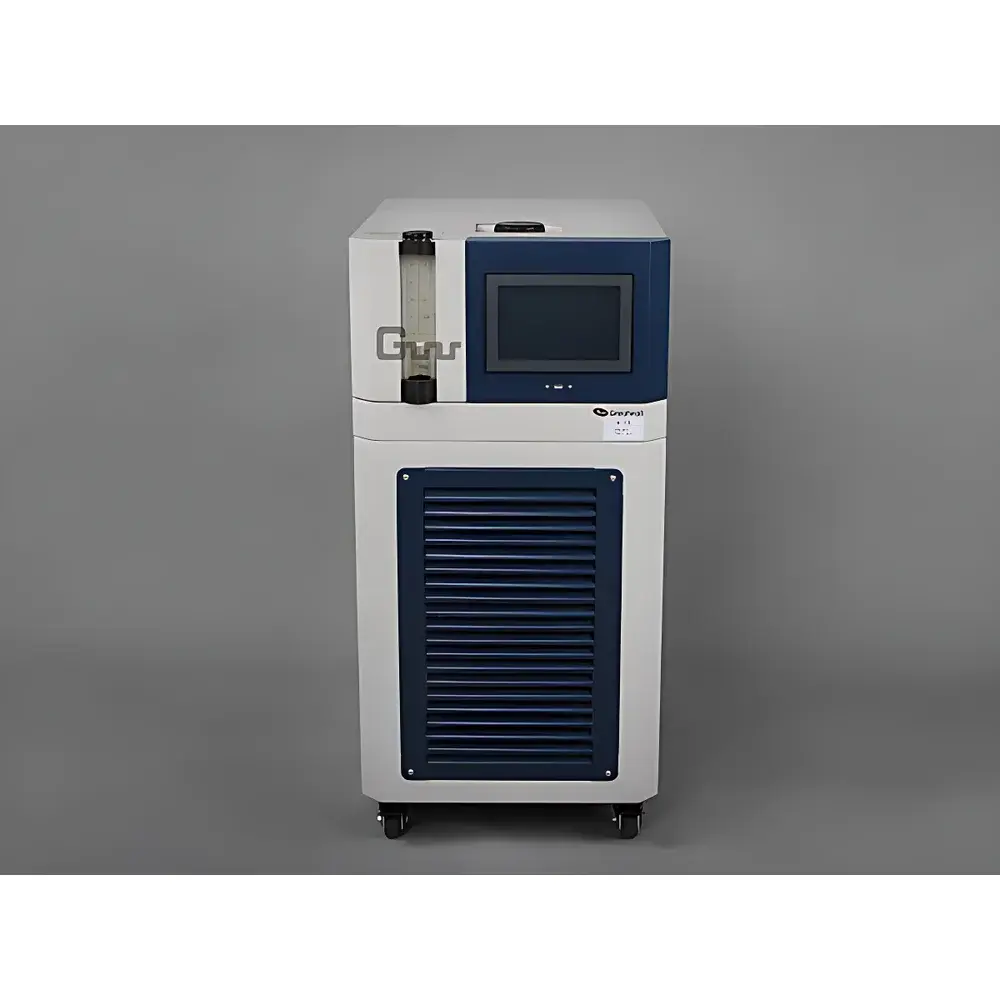
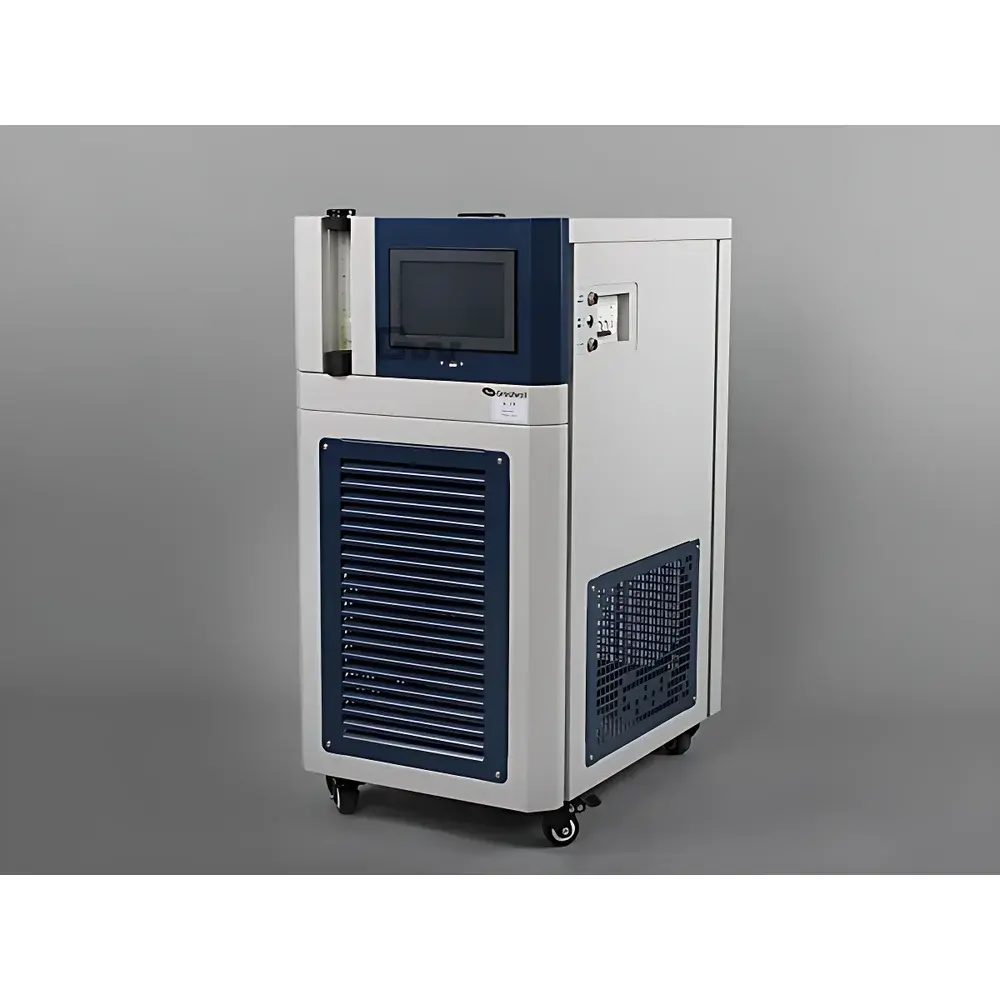
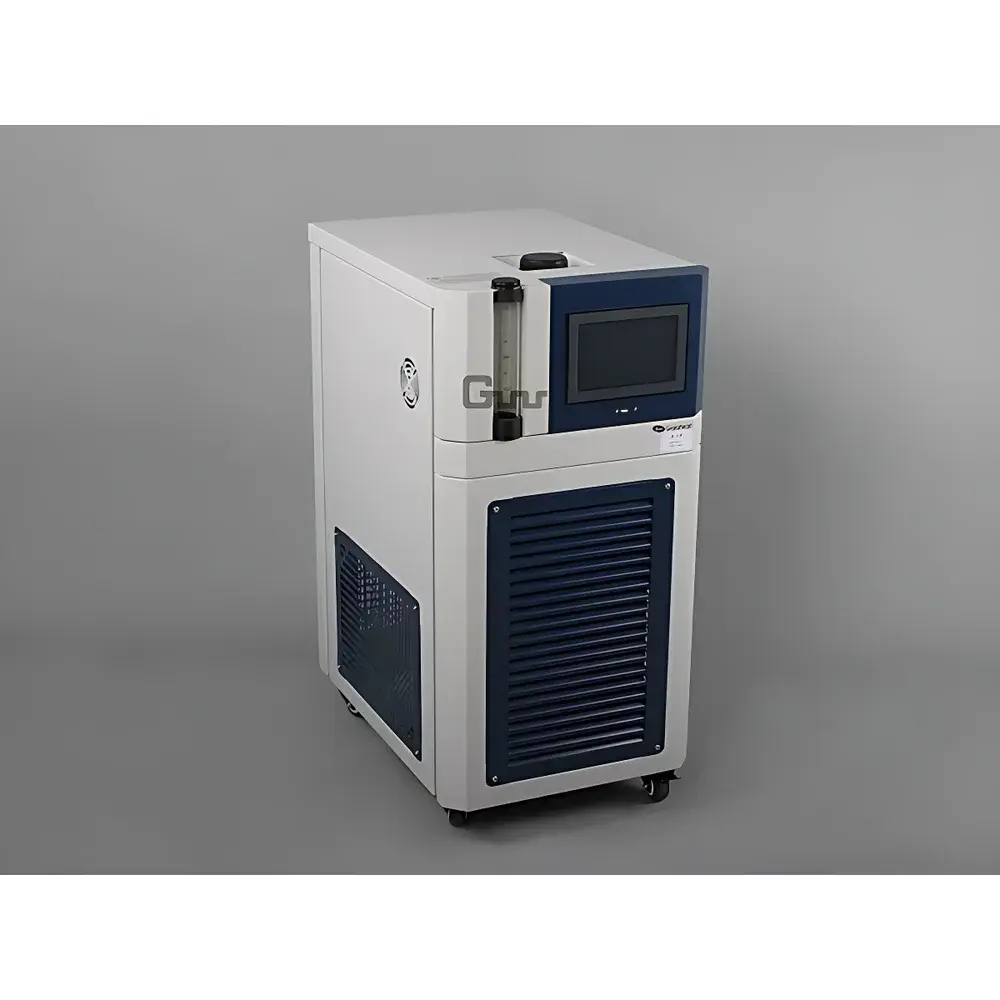
ZT-20-200-30H Closed-Loop Refrigerated & Heated Circulator (Air-Cooled) by The Great Wall
| Brand | The Great Wall |
|---|---|
| Origin | Henan, China |
| Manufacturer Type | Direct Manufacturer |
| Model | ZT-20-200-30H (Air-Cooled) |
| Temperature Range | −30 °C to +200 °C |
| Temperature Stability | ±0.5 °C |
| Power Supply | 220–240 V~, 50 Hz |
| Total Power Consumption | 4.7 kW |
| Heating Power | 3 kW |
| Cooling Capacity | 1.7 kW @ 200 °C |
| Refrigerant | R22 |
| Bath Fluid Volume | 10 L |
| Pump Flow Rate | 30 L/min |
| Pump Pressure | 1 bar |
| Dimensions (W×D×H) | 580 × 825 × 1370 mm |
| Weight | 172 kg |
Overview
The ZT-20-200-30H Closed-Loop Refrigerated & Heated Circulator (Air-Cooled) is an integrated thermal management system engineered for precise, stable, and bidirectional temperature control in laboratory-scale chemical and biological processes. Operating on a dual-mode refrigeration–heating principle, it utilizes a hermetic compressor-based vapor-compression cycle (R22 refrigerant) coupled with resistive electric heating elements to deliver continuous, programmable thermal energy transfer across a wide operational range—from −30 °C to +200 °C. Unlike open-bath or single-function units, this circulator maintains fluid integrity within a sealed loop, minimizing evaporation, oxidation, and contamination risks during extended operation. Its air-cooled condenser eliminates dependency on external chilled water infrastructure, enhancing installation flexibility in standard lab environments. Designed for external heat exchange via insulated tubing, it serves as a primary thermal interface for jacketed reactors, rotary evaporators, calorimeters, and other process vessels requiring dynamic thermal conditioning under controlled conditions.
Key Features
- Wide operational temperature span: −30 °C to +200 °C with ±0.5 °C stability under steady-state load conditions.
- Integrated dual-circuit architecture: independent refrigeration and heating subsystems enable rapid thermal ramping without cross-interference.
- Air-cooled condensing system: eliminates need for facility-supplied cooling water; suitable for labs lacking dedicated chilled water lines.
- High-flow circulation pump: delivers up to 30 L/min at 1 bar pressure, ensuring uniform thermal distribution even in high-resistance external loops.
- 10-liter stainless steel reservoir with level sensor and over-temperature/low-flow safety interlocks.
- Robust mechanical construction: powder-coated steel chassis, reinforced insulation, and vibration-dampened compressor mounting for long-term reliability.
- Optional explosion-proof configuration available (ATEX / IECEx compliant variants upon request) for hazardous environment applications.
Sample Compatibility & Compliance
The ZT-20-200-30H is compatible with common heat-transfer fluids including silicone oils (e.g., Dow Corning 200 Fluid), glycol–water mixtures, and specialized low-temperature baths—subject to viscosity and flash point constraints within the specified operating envelope. It meets CE marking requirements for electromagnetic compatibility (EMC Directive 2014/30/EU) and low-voltage safety (LVD Directive 2014/35/EU). While not certified to UL or CSA standards out-of-the-box, its electrical design adheres to IEC 61010-1:2010 for laboratory equipment safety. For GxP-regulated environments, optional data logging modules support audit-ready temperature traceability, aligning with GLP and basic GMP documentation expectations. Note: R22 refrigerant use complies with current Chinese regulatory allowances but is subject to phase-out timelines per Montreal Protocol Annex A, Group I; users planning long-term deployment are advised to consult refrigerant transition pathways.
Software & Data Management
The unit features a built-in microprocessor controller with dual-line LCD display and intuitive membrane keypad interface. It supports programmable ramp–soak profiles (up to 10 segments), real-time monitoring of bath temperature, outlet temperature, and system status flags (e.g., low fluid level, high head pressure, pump failure). Optional RS485 Modbus RTU communication enables integration into centralized lab automation platforms (e.g., LabVantage, STARLIMS) for remote parameter setting, alarm notification, and time-stamped temperature logging. When paired with validated third-party software, the system can generate 21 CFR Part 11–compliant electronic records—including user authentication, change history, and digital signature support—provided appropriate access controls and audit trail configuration are implemented at the host system level.
Applications
- Temperature-controlled synthesis in jacketed glass reactors (e.g., Grignard reactions, lithiation, hydrogenations).
- Condensation and solvent recovery in rotary evaporation systems requiring sub-ambient or elevated boiling point management.
- Calibration and validation of temperature-sensitive analytical instruments (e.g., DSC, TGA, viscometers).
- Cell culture incubator pre-conditioning and bioreactor jacket temperature profiling.
- Material testing under thermal cycling protocols (e.g., polymer crystallinity studies, elastomer hysteresis evaluation).
- Food science applications including accelerated shelf-life testing and enzymatic activity assays across defined thermal gradients.
FAQ
What is the maximum allowable viscosity of heat-transfer fluid for optimal pump performance?
The circulation pump is rated for fluids up to 500 cSt at operating temperature; higher viscosities may reduce flow rate and impair thermal uniformity.
Can this unit be used with flammable solvents in the external loop?
Direct contact with Class I flammable liquids is not recommended; use only non-flammable, thermally stable heat-transfer media unless configured with certified explosion-proof components.
Is R22 refrigerant service supported globally?
R22 servicing is restricted in many regions (e.g., EU, USA) due to ozone-depleting substance regulations; authorized technicians must hold appropriate refrigerant handling certifications where applicable.
Does the system include automatic leak detection or refrigerant charge monitoring?
No integrated refrigerant leak detection is provided; periodic maintenance checks for pressure decay and oil carryover are advised per manufacturer guidelines.
What maintenance intervals are recommended for sustained performance?
Compressor oil inspection every 2,000 operating hours; condenser coil cleaning every 6 months; full system performance verification annually or after major thermal cycling events.



