
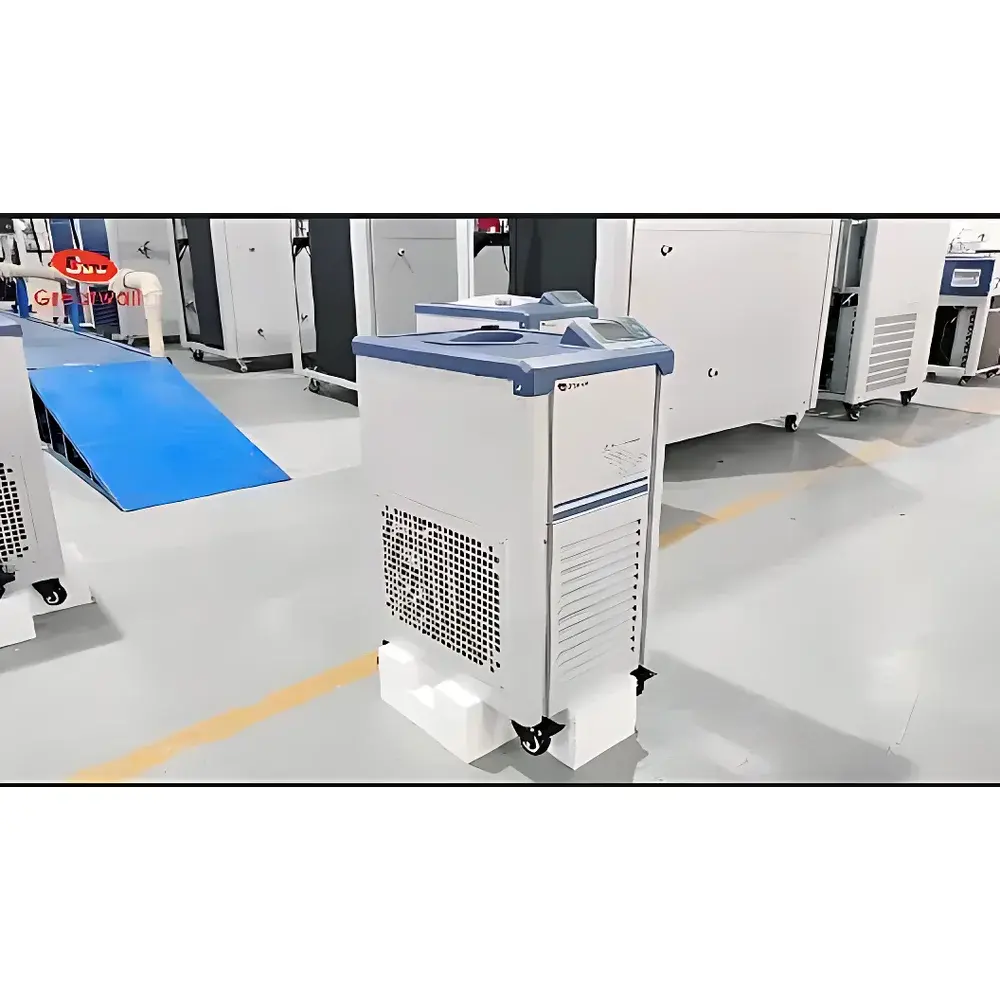
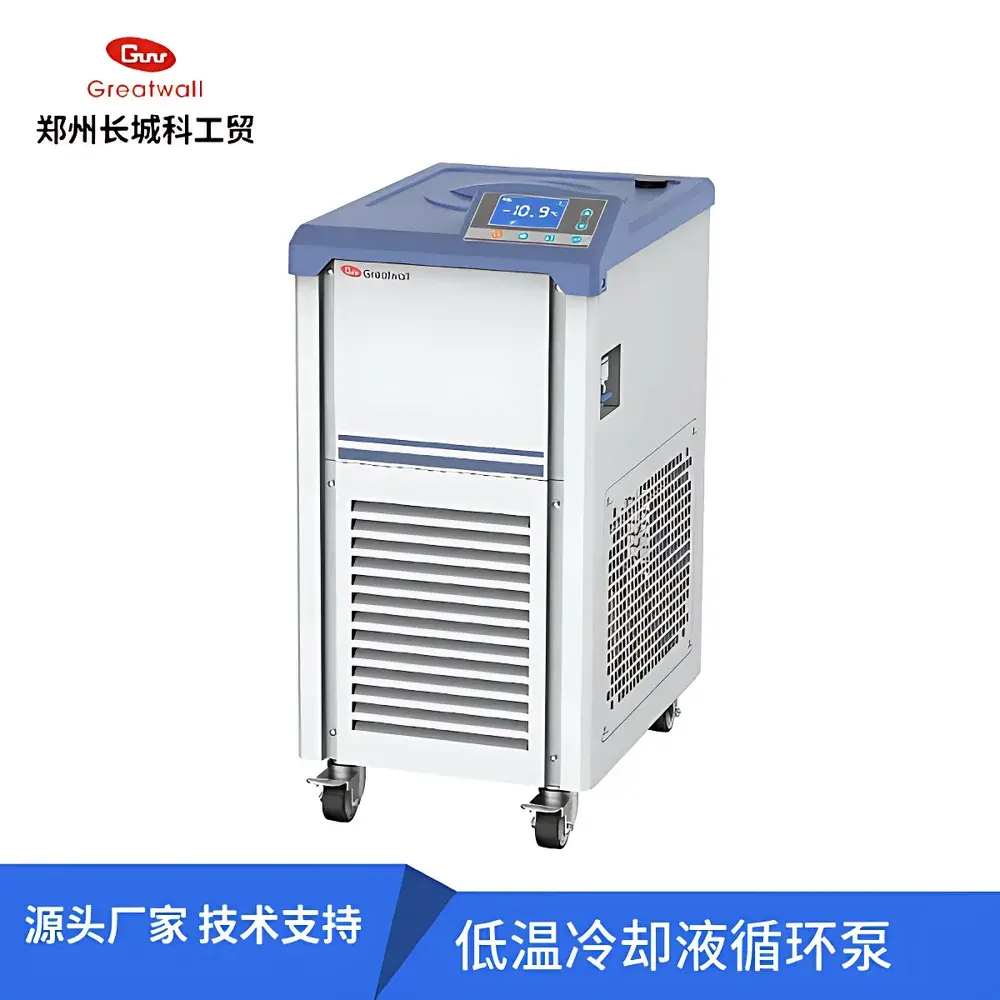
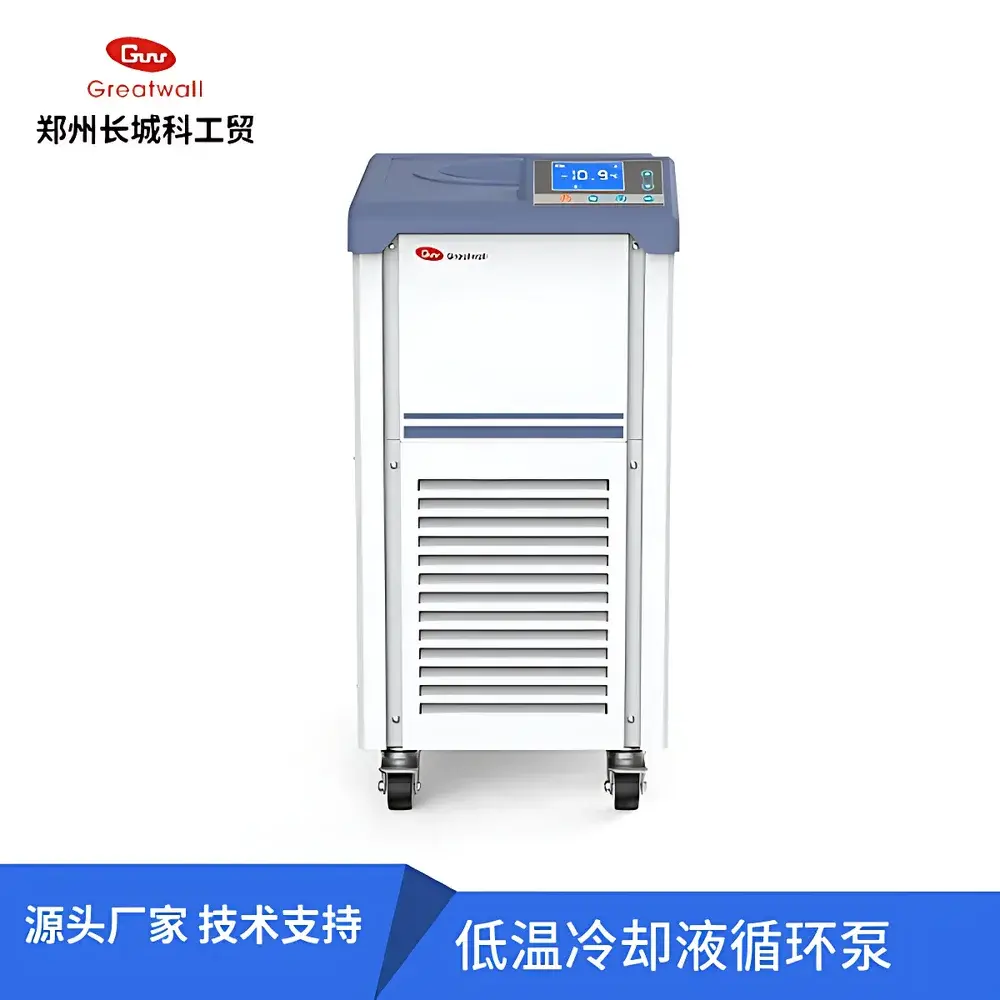
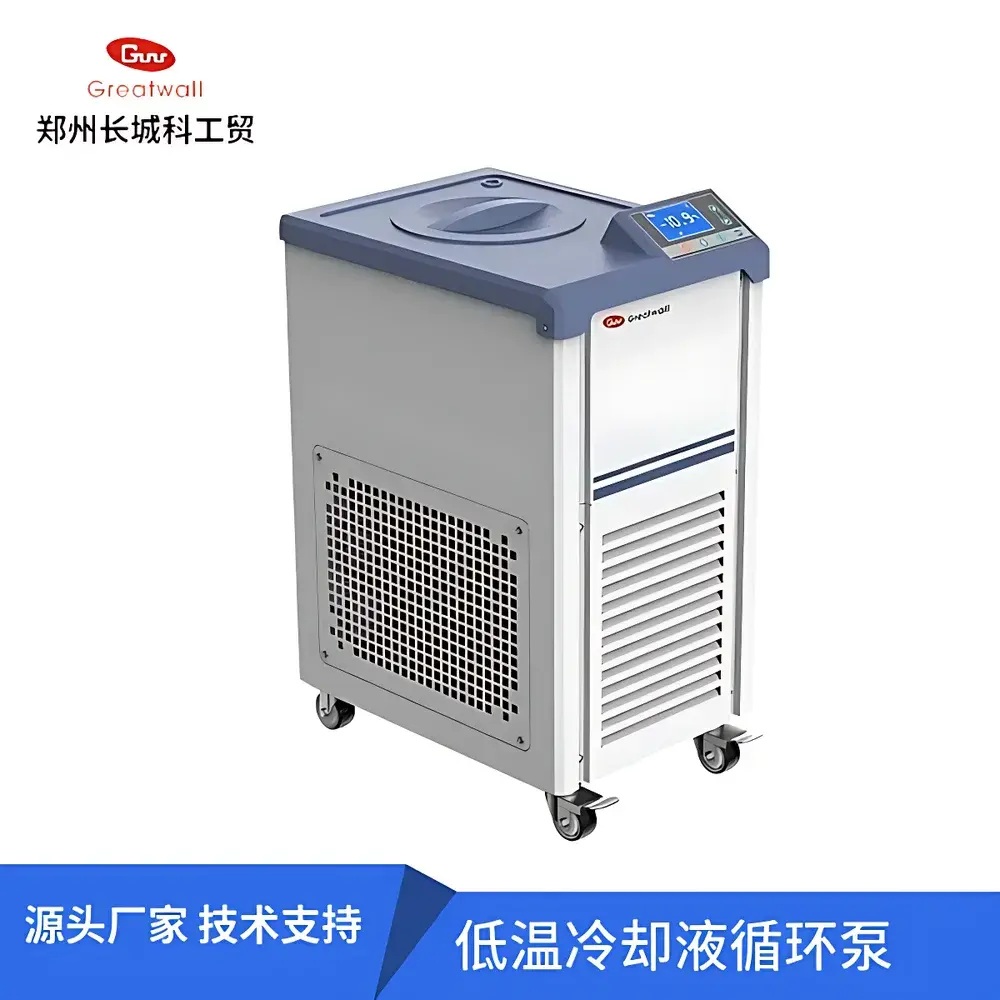
The Great Wall DLSB-5/20 Low-Temperature Circulating Chiller
| Brand | The Great Wall |
|---|---|
| Origin | Henan, China |
| Manufacturer Type | Direct Manufacturer |
| Product Type | Integrated Circulating Chiller |
| Cooling Capacity | 680 W at 10°C |
| Temperature Stability | ±2°C |
| Operating Temperature Range | −20°C to +25°C |
| Reservoir Volume | 5 L |
| Controller | LCD with Pt100 Sensor (0.1°C Resolution) |
| Refrigerant | R404A |
| Pump Flow Rate | 22 L/min (Max), 1.1 bar (Max Pressure) |
| Power Input | 220 V~, 50 Hz, 670 W |
| Protection | Overcurrent, Overheat, High-Pressure, Ground Fault, Delayed Start |
| IP Rating | IP20 |
| Ambient Operating Conditions | 5–35°C, ≤70% RH |
| Reservoir & Piping Material | 304 Stainless Steel |
| Evaporator | 304 Stainless Steel Coil-in-Tank Design |
| Compressor | Hermetic Piston Type |
| Condenser | Air-Cooled with Oxygen-Free Copper Finned Tube |
| Expansion Device | Capillary Tube |
| Communication Interface | RS485 / MODBUS RTU Protocol |
Overview
The Great Wall DLSB-5/20 Low-Temperature Circulating Chiller is an integrated refrigeration system engineered for precise thermal management in laboratory and pilot-scale applications. It operates on a vapor-compression refrigeration cycle—utilizing a hermetic piston compressor, air-cooled copper finned-tube condenser, capillary tube expansion device, and a 304 stainless steel coil-in-tank evaporator immersed directly in the coolant reservoir. This architecture ensures stable heat exchange under variable load conditions while maintaining structural integrity even during low-temperature operation where conventional chillers risk frost-induced stress or seal failure. Designed for continuous duty in controlled environments (5–35°C ambient, ≤70% RH), the unit delivers regulated coolant flow across a temperature range of −20°C to +25°C, making it suitable for dynamic thermal control tasks including rotary evaporator condenser cooling, material property testing under thermal cycling, semiconductor process stabilization, laser diode thermal management, and cryogenic sample conditioning in reaction vessels or test tubes.
Key Features
- Integrated design with compact footprint (335 × 473 × 684 mm) and 40 kg net weight—optimized for benchtop or under-bench installation in constrained lab spaces.
- Hermetic piston compressor offering high reliability, low acoustic emission (<62 dB(A)), and minimal vibration transmission—critical for sensitive optical or microgravimetric instrumentation.
- 304 stainless steel reservoir and circulation loop resistant to corrosion from common heat-transfer fluids (e.g., 30% ethylene glycol/water, silicone oils, or ethanol-water mixtures).
- LCD controller with Pt100 sensor input provides real-time temperature display with 0.1°C resolution and ±2°C stability over the full operating range.
- RS485 serial interface compliant with MODBUS RTU protocol enables integration into centralized lab automation systems for remote monitoring, setpoint scheduling, and audit-trail logging.
- Comprehensive safety architecture includes delayed compressor restart, high-pressure cut-off, overcurrent protection, ground-fault detection, and overtemperature shutdown—meeting IEC 61000-6-2/6-4 EMC immunity and safety requirements for Class II laboratory equipment.
Sample Compatibility & Compliance
The DLSB-5/20 supports a wide range of non-aggressive heat-transfer media compatible with its 304 stainless steel wetted parts and fluorocarbon-based refrigerant (R404A). It is routinely deployed in GLP-compliant pharmaceutical dissolution testing, ASTM E2293-compliant polymer thermal aging studies, and ISO 17025-accredited materials labs performing coefficient-of-thermal-expansion (CTE) measurements. While not certified to UL/CSA or CE for standalone medical device use, its electrical and mechanical design adheres to IEC 61010-1:2010 safety standards for laboratory equipment. All firmware logic implements fail-safe defaults upon communication loss or power interruption, supporting traceable operation in regulated QC/QA workflows requiring documented thermal history.
Software & Data Management
Native MODBUS RTU implementation allows seamless integration with third-party SCADA platforms (e.g., LabVIEW, Ignition, or Siemens SIMATIC WinCC) for time-stamped temperature logging, alarm event capture, and automated setpoint ramping. The controller stores local operational data—including cumulative run hours, compressor cycles, and fault codes—for maintenance planning. When paired with compliant data acquisition software, the system supports ALCOA+ principles (Attributable, Legible, Contemporaneous, Original, Accurate, Complete, Consistent, Enduring, Available) required under FDA 21 CFR Part 11 for electronic records in GMP environments. No proprietary software is required; configuration and diagnostics are performed via standard MODBUS register mapping accessible through open-source tools like QModMaster or ModScan.
Applications
- Cooling condensers of rotary evaporators (e.g., Buchi R-300, IKA RV 10) to maintain efficient solvent recovery at sub-ambient temperatures.
- Thermal conditioning of tensile test specimens per ASTM D638/D790 during mechanical property evaluation across temperature gradients.
- Stabilizing laser cavity temperatures in spectroscopy setups (e.g., Ti:sapphire oscillators, DPSS lasers) to minimize wavelength drift.
- Providing controlled cold baths for enzymatic assays, protein crystallization trials, or low-temperature NMR probe pre-cooling.
- Simulating industrial process temperature profiles in pilot reactors or electrochemical cells for kinetics modeling and scale-up validation.
FAQ
What is the minimum achievable temperature with full load capacity?
At rated cooling capacity (680 W), the system achieves stable operation down to 10°C. At −20°C setpoint, nominal cooling output reduces to 360 W due to thermodynamic limitations of the R404A cycle—users must derate capacity accordingly when sizing for extreme low-temperature applications.
Can this chiller be used with flammable solvents as coolant?
No. The unit is designed exclusively for non-flammable, low-volatility heat-transfer fluids. Use of acetone, ether, or hydrocarbon-based coolants violates safety certification boundaries and risks ignition within the pump housing or reservoir vent path.
Is the RS485 interface galvanically isolated?
Yes—the communication port incorporates opto-isolation to prevent ground-loop interference and protect connected host systems from voltage transients in shared lab power networks.
How often does the refrigerant require servicing or replacement?
R404A is sealed within a hermetically closed circuit. Under normal operation and proper maintenance (condenser coil cleaning every 6 months), no refrigerant top-up or replacement is required over the expected 10-year service life.
Does the controller support programmable temperature ramps or hold steps?
Basic models feature fixed-setpoint control only. Ramp-and-hold functionality requires external PLC or PC-based MODBUS master configuration—no onboard profile programming capability is included in the standard LCD interface.



