
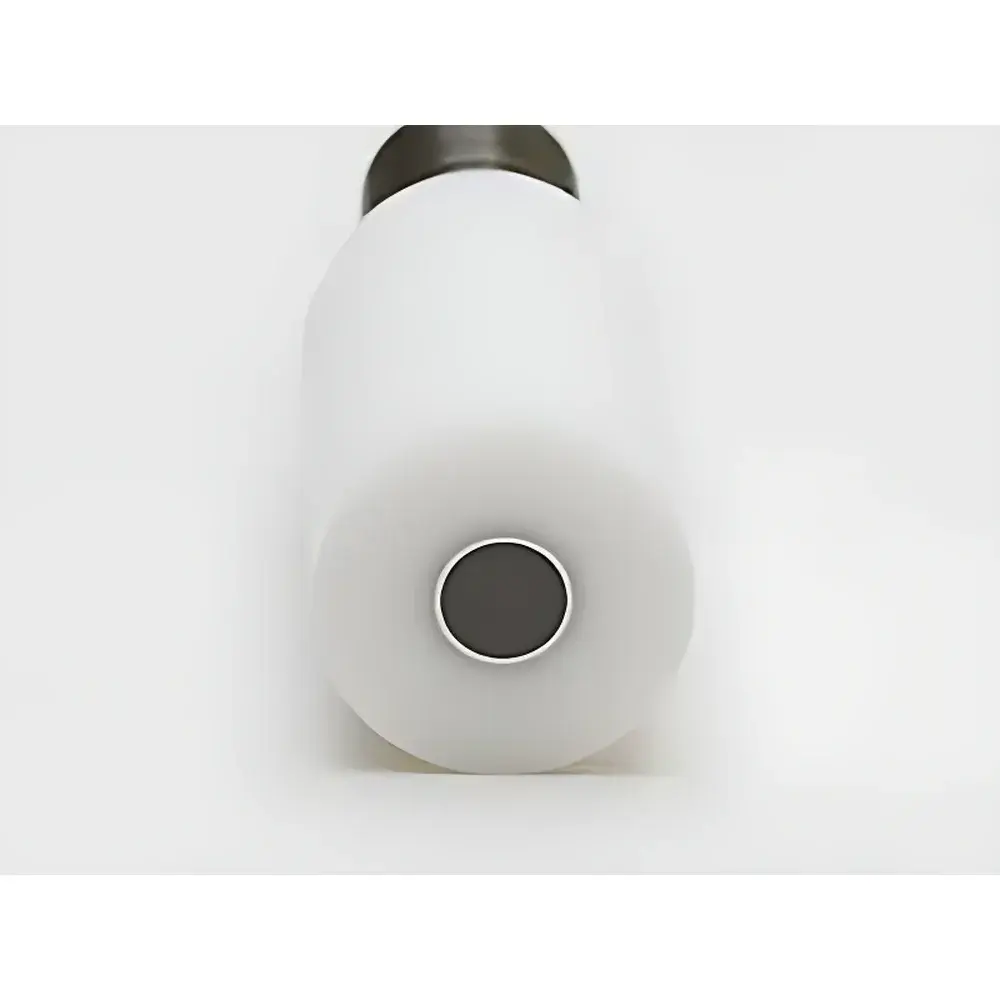
dc-energies RRDE-318 Rotating Ring-Disk Electrode (RRDE)
| Brand | dc-energies |
|---|---|
| Origin | Hubei, China |
| Manufacturer Type | Authorized Distributor |
| Regional Classification | Domestic (China) |
| Model | RRDE-318 |
| Ring-Disk Gap | 318 µm |
| Collection Efficiency | 37% |
| Operating Temperature Range | 10–25 °C |
| Disk Geometric Area | 0.2475 cm² |
| Ring Geometric Area | 0.1866 cm² |
| Glassy Carbon Disk Outer Diameter | 5.61 mm |
| Platinum Ring Outer Diameter | 7.92 mm |
| Platinum Ring Inner Diameter | 6.25 mm |
| Disk Material Options | Glassy carbon, platinum, gold |
| Ring Material Options | Glassy carbon, platinum, gold |
| Mechanical Interface | Precision external-threaded shaft for low-contact-resistance mounting |
Overview
The dc-energies RRDE-318 is a precision-engineered rotating ring-disk electrode system designed for quantitative dual-electrode electrochemical analysis under controlled hydrodynamic conditions. Based on the classical Levich-Koutecký theory and extended by the Schmidt collection efficiency model, the RRDE-318 enables simultaneous measurement of faradaic current at the disk (generation electrode) and the concentric ring (collection electrode), permitting real-time detection and quantification of short-lived intermediates generated during multi-step redox processes. Its fixed inter-electrode gap of 318 µm ensures stable, reproducible mass transport geometry across rotational speeds from 100 to 10,000 rpm. The device operates within a tightly regulated ambient temperature window (10–25 °C) to minimize thermal drift in kinetic parameter extraction—critical for accurate Tafel slope determination, electron transfer number (n) calculation, and reaction pathway discrimination in catalytic systems.
Key Features
- Precision-machined coaxial geometry with certified 318 µm radial gap between disk and ring edges, validated via SEM cross-section metrology
- High-collection-efficiency design (37% theoretical collection factor) optimized for detection of transient species such as H₂O₂, O₂•⁻, and metal-oxo intermediates
- Modular electrode material configuration: interchangeable disk and ring elements in glassy carbon, platinum, or gold—enabling systematic study of material-dependent kinetics and selectivity
- External-threaded stainless-steel shaft (M6 × 0.75) ensures low-impedance electrical contact and mechanical stability during high-speed rotation, minimizing signal noise and vibration-induced artifacts
- Geometrically defined active areas: disk area = 0.2475 cm²; ring area = 0.1866 cm²—calibrated per ASTM E2759-21 for consistent Levich plot normalization
- Compatible with standard rotating electrode controllers (e.g., Pine Research AFMSRX, BASi RE-1) and bipotentiostats supporting independent potential control of disk and ring
Sample Compatibility & Compliance
The RRDE-318 supports aqueous and non-aqueous electrolyte systems, including 0.1 M KOH, 0.5 M H₂SO₄, LiTFSI/DME, and EMIM-BF₄-based ionic liquids. Its inert materials (glassy carbon, Pt, Au) exhibit chemical stability across pH 0–14 and potentials up to +1.8 V vs. RHE (for Pt ring) and −1.2 V vs. RHE (for GC disk). All components comply with ISO 8502-3 for surface cleanliness prior to electrochemical use. While not certified to IEC 61010-1 as a standalone instrument, the RRDE-318 meets mechanical and electrical interface requirements for integration into GLP-compliant electrochemical workstations when used with traceable calibration standards (e.g., K₃Fe(CN)₆/ K₄Fe(CN)₆ redox couple for collection efficiency verification).
Software & Data Management
The RRDE-318 requires no proprietary firmware; it functions transparently with industry-standard electrochemical software platforms including AfterMath (Pine Research), NOVA (Metrohm Autolab), and EC-Lab (BioLogic). Experimental protocols—including stepped potential sweeps with synchronized rotation control, chronoamperometric ring collection triggered by disk oxidation pulses, and rotating disk voltammetry (RDV) coupled with ring current deconvolution—are fully scriptable. Data output conforms to IEEE 11073-10201 (medical device interoperability) and ASTM E2921-23 metadata conventions, enabling automated audit trails for FDA 21 CFR Part 11–compliant environments when paired with validated electronic lab notebooks (ELNs).
Applications
- Oxygen reduction reaction (ORR) mechanism studies in PEMFC catalyst layers, where ring current quantifies H₂O₂ yield to determine selectivity (n = 2 vs. n = 4 pathways)
- Lithium–oxygen battery cathode reaction monitoring: detection of superoxide (O₂•⁻) disproportionation products and parasitic Li₂CO₃ formation intermediates
- Electrocatalytic CO₂ reduction product distribution analysis—ring detection of CO, formate, or ethylene oxide precursors formed at the disk
- Enzyme-modified electrode kinetics: real-time observation of enzymatically generated H₂O₂ or NAD⁺ at the ring following substrate oxidation at the disk
- Corrosion science: localized anodic dissolution studies using ring collection of metal ions (e.g., Fe²⁺, Cu²⁺) generated at rotating disk defects
FAQ
What is the certified collection efficiency of the RRDE-318, and how is it verified?
The nominal collection efficiency is 37%, determined analytically from the geometric ratio of ring-to-disk diffusion layer thicknesses and confirmed experimentally using the [Fe(CN)₆]³⁻/⁴⁻ redox couple at 1600 rpm in 1 M KCl.
Can the disk and ring be operated at different potentials simultaneously?
Yes—the RRDE-318 is fully compatible with bipotentiostatic control; independent potential application to disk and ring is required for selective intermediate collection and background subtraction.
Is the electrode suitable for elevated temperature operation beyond 25 °C?
No—the specified 10–25 °C range reflects thermal expansion limits of the insulating sleeve and epoxy seal integrity; operation above 25 °C may compromise gap stability and collection efficiency reproducibility.
How is mechanical alignment maintained during long-term rotation?
The external-threaded shaft engages with a precision-machined collet chuck; runout is <5 µm at 5000 rpm, verified per ISO 1940-1 G2.5 balance grade.
Are replacement disks and rings available as consumables?
Yes—dc-energies supplies certified replacement electrodes with batch-specific geometric area certificates and material purity documentation (ASTM F2885 for Pt, ASTM D4709 for glassy carbon).
Related Products





