
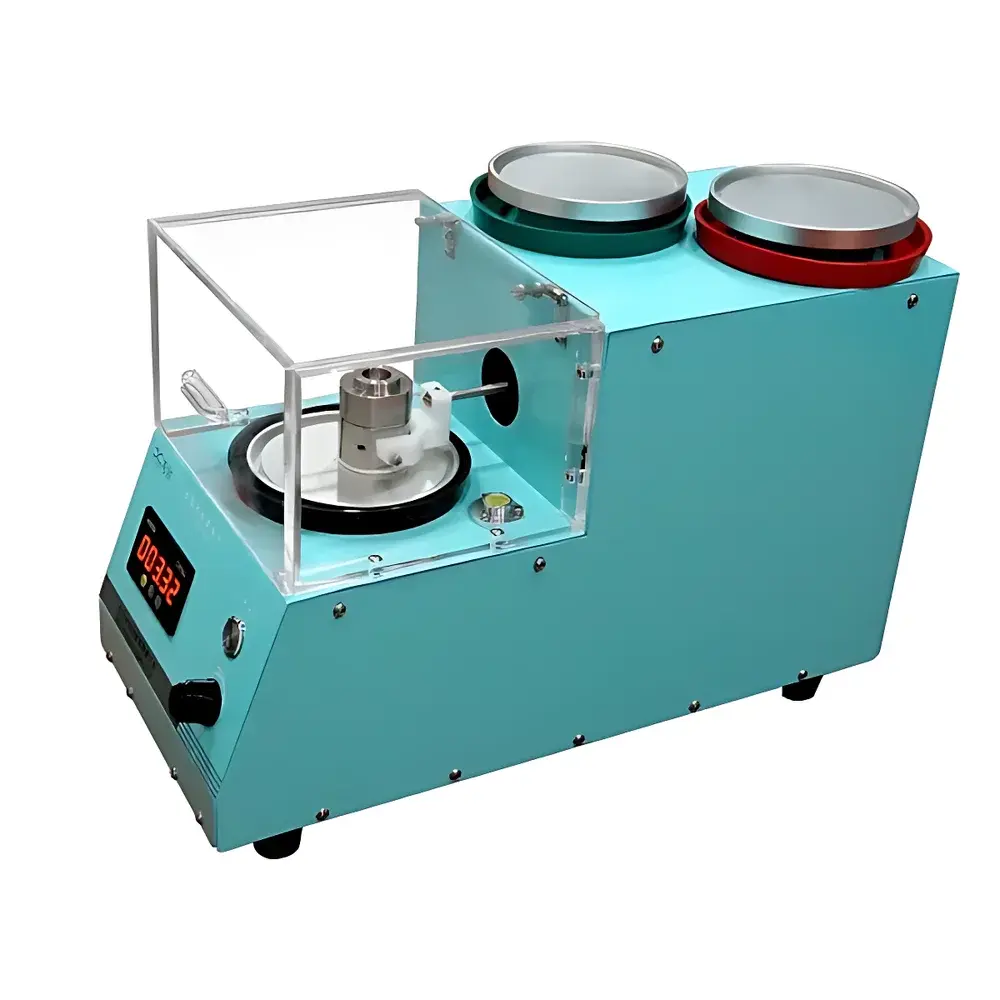
DCREP-180 Rotating Disk Electrode (RDE) Polisher by DC-Energies
| Brand | DC-Energies |
|---|---|
| Origin | Hubei, China |
| Model | DCREP-180 |
| Power Supply | AC 220 V |
| Rated Power | 25 W |
| Rotation Speed Range | 0–160 rpm |
| Polishing Stations | 1–2 |
| Polishing Disk Diameter | 70 mm |
| Sample Holder Diameter | 40 mm |
| Application | RDE/RRDE Electrode Preparation |
Overview
The DCREP-180 Rotating Disk Electrode (RDE) Polisher is an engineered precision instrument designed for the reproducible mechanical preparation of rotating disk and ring-disk electrodes used in fundamental electrochemical research. Based on controlled rotational polishing mechanics, it enables consistent removal of surface oxides, contaminants, and passivation layers from noble metal (e.g., Pt, Au, GC), carbon-based, and composite electrode tips—critical for achieving well-defined diffusion-controlled current responses in hydrodynamic voltammetry. Unlike manual polishing—a process highly susceptible to operator variability, inconsistent pressure, and non-uniform wear—the DCREP-180 delivers repeatable surface planarity and finish across multiple electrodes, directly supporting quantitative validation of Levich and Koutecký–Levich analyses. Its compact benchtop architecture integrates a low-vibration DC motor drive with adjustable speed regulation, ensuring stable rotation within the laminar flow regime required for standardized RDE characterization.
Key Features
- Adjustable rotational speed control (0–160 rpm) with digital feedback for precise, stepwise optimization of polishing aggressiveness and surface finish.
- Dual-station configuration supports simultaneous or sequential polishing of RDEs and RRDEs—ideal for comparative studies or high-throughput electrode conditioning.
- 70 mm diameter aluminum alloy polishing disk with standardized mounting interface for compatibility with common abrasive pads (e.g., 1 µm and 0.05 µm alumina suspensions on microcloth or nylon polishing cloths).
- 40 mm diameter concentric sample holder with spring-loaded clamping mechanism ensures axial alignment and minimizes lateral slippage during rotation—critical for maintaining electrode tip perpendicularity relative to the polishing surface.
- Low-power (25 W), thermally managed motor design reduces operational heat generation, preventing thermal drift in sensitive electrode substrates such as glassy carbon or polymer-modified composites.
- CE-compliant electrical architecture with reinforced insulation and grounded chassis, meeting IEC 61010-1 safety requirements for laboratory electrochemical equipment.
Sample Compatibility & Compliance
The DCREP-180 accommodates standard RDE geometries including 3 mm, 5 mm, and 6 mm shaft diameters (with optional adapter kits), as well as dual-ring RRDE configurations with outer ring diameters up to 6.5 mm. It is validated for use with Pt, Au, Ag, GC, Ni, and conductive polymer-coated electrodes. All mechanical contact surfaces are chemically inert (anodized aluminum, stainless steel fasteners), resisting degradation from common electrolyte residues (e.g., H2SO4, KOH, NaCl solutions). The device complies with ISO/IEC 17025:2017 recommendations for equipment used in accredited electrochemical testing laboratories and supports GLP documentation workflows through traceable parameter logging when integrated with external data acquisition systems.
Software & Data Management
While the DCREP-180 operates as a standalone electromechanical unit without embedded firmware or touchscreen interface, its analog speed control output is compatible with third-party DAQ systems (e.g., National Instruments USB-6009, Keysight 34972A) for time-synchronized logging of rotational speed, polishing duration, and environmental parameters (ambient temperature/humidity). Users may implement custom LabVIEW or Python scripts to generate audit-ready polishing protocols—including timestamped speed ramps, dwell times per abrasive grade, and operator ID tagging—facilitating compliance with FDA 21 CFR Part 11 requirements where electronic records are mandated for electrode qualification in regulated QC environments.
Applications
- Preparation of RDEs for kinetic studies of oxygen reduction reaction (ORR), hydrogen evolution reaction (HER), and CO2 reduction reaction (CO2RR).
- Surface regeneration of fouled electrodes prior to cyclic voltammetry (CV) or chronoamperometry (CA) experiments.
- Standardization of electrode geometry and roughness prior to impedance spectroscopy (EIS) measurements under rotating conditions.
- Teaching laboratory implementation for undergraduate electrochemistry courses requiring hands-on training in hydrodynamic electrode methodology.
- Quality assurance of commercial RDE assemblies prior to shipment or in-house deployment in battery R&D or fuel cell catalyst screening platforms.
FAQ
Is the DCREP-180 compatible with rotating ring-disk electrode (RRDE) assemblies?
Yes—it supports both single-disk and coaxial RRDE configurations via adjustable centering fixtures and dual-clamp positioning.
What abrasive materials are recommended for optimal polishing performance?
Standardized 1.0 µm and 0.05 µm α-alumina slurries applied to synthetic microfiber cloths (e.g., Buehler Microcloth™ or Struers TexMet™) yield reproducible sub-micron surface finishes suitable for quantitative electroanalysis.
Does the unit include polishing consumables?
No—abrasives, cloths, and cleaning solvents are supplied separately to allow user-specific selection based on electrode material and application requirements.
Can polishing parameters be exported for regulatory documentation?
Direct export is not supported onboard; however, analog voltage output (0–5 V proportional to rpm) enables integration with compliant DAQ hardware and validated software for full traceability.
What maintenance is required for long-term operational stability?
Biannual inspection of motor brush wear (if applicable), disk runout verification using dial indicator (10,000 hours of rated service life under typical academic lab usage profiles.
Related Products






