
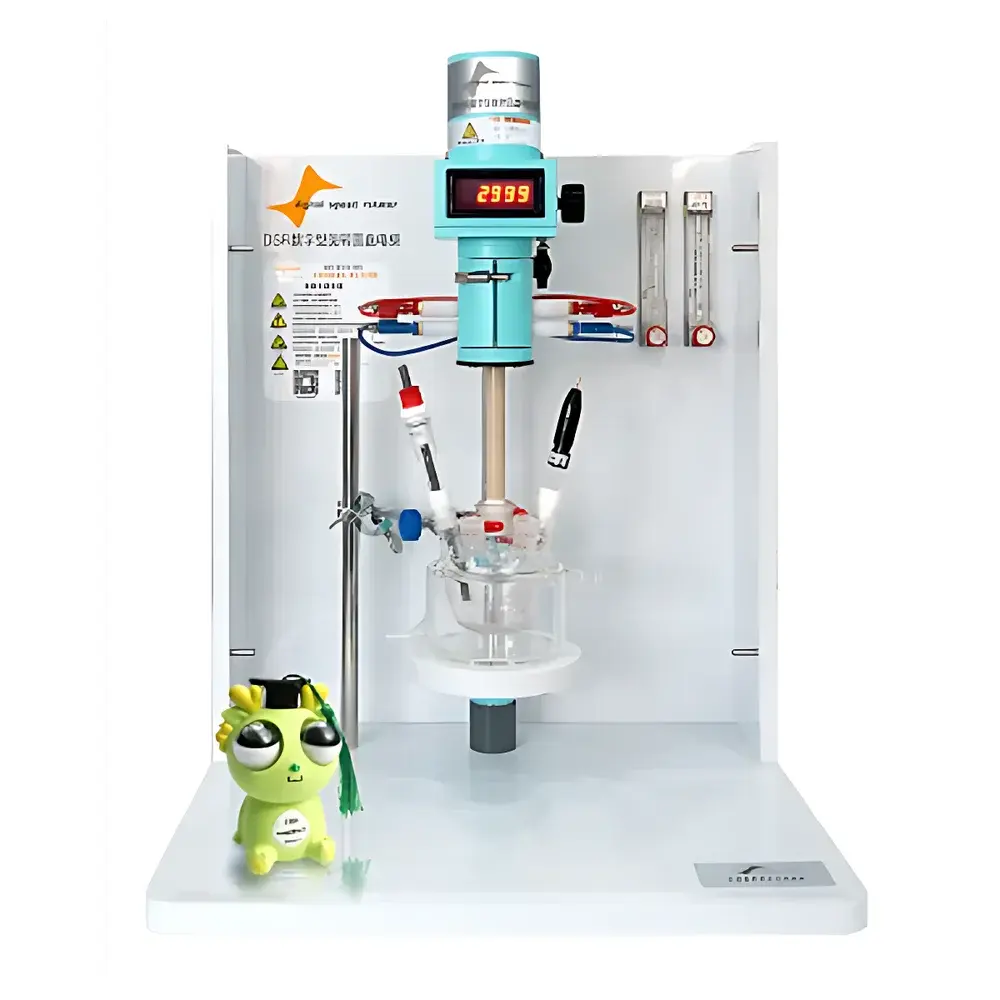
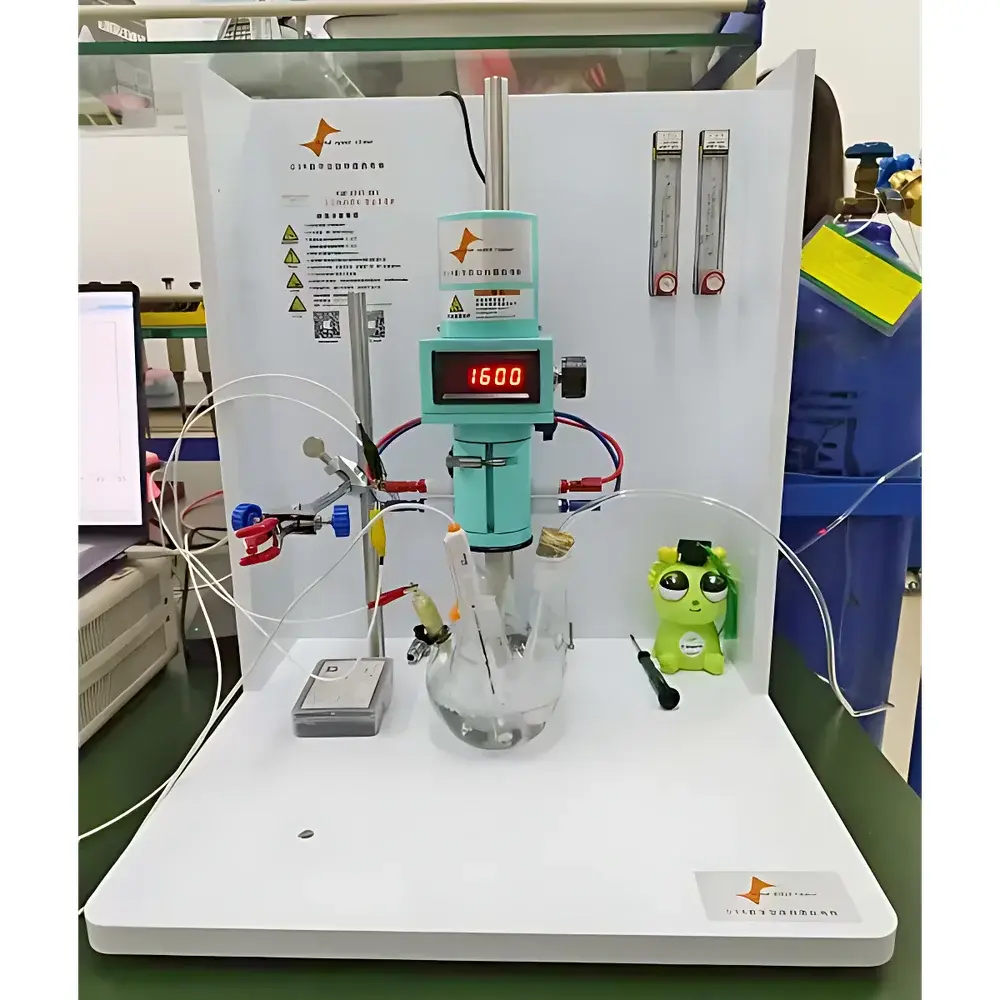
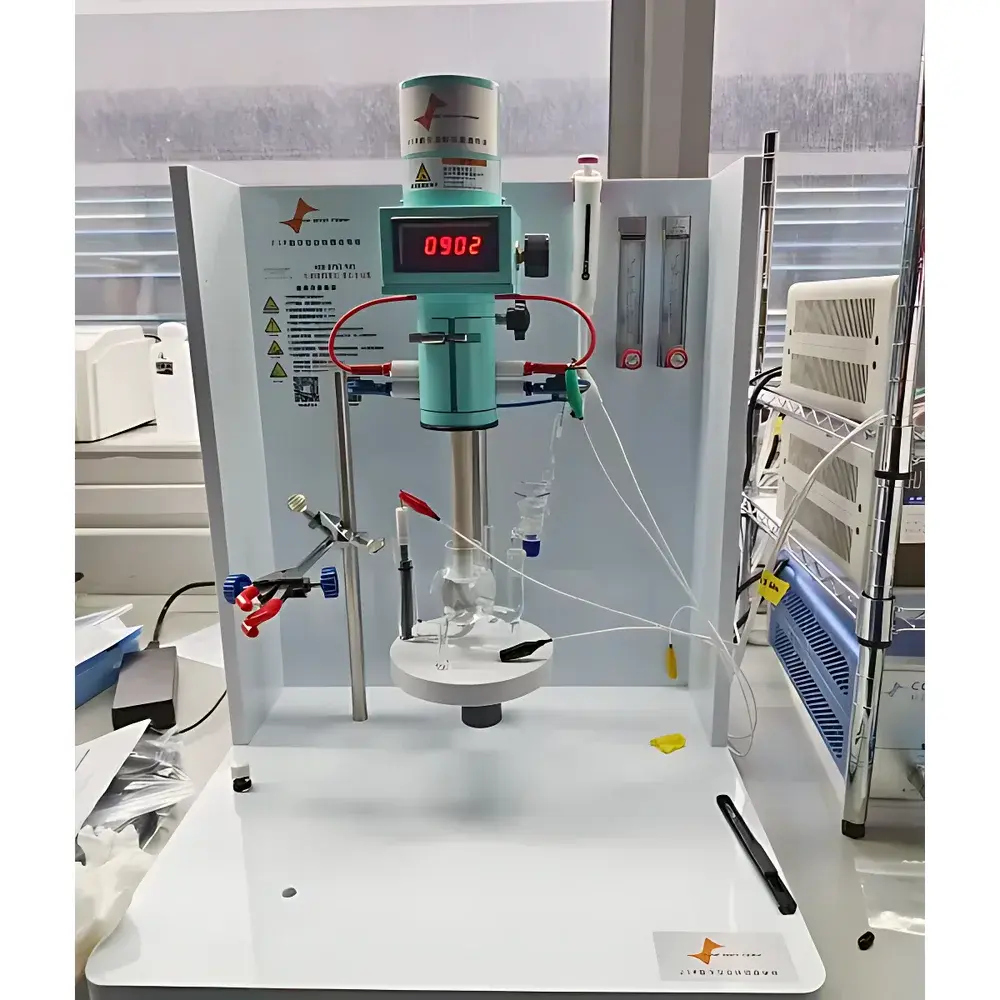
DC-ENERGIES DSR-M Rotating Disk Electrode (RDE) and Rotating Ring-Disk Electrode (RRDE) System
| Brand | DC-ENERGIES |
|---|---|
| Model | DSR-M |
| Origin | Hubei, China |
| Motor Power | 20 W |
| Speed Range | 0–10,000 rpm |
| Speed Accuracy | <1% error (default calibration: 1 mV per 1 rpm) |
| Contact Mechanism | Silver-plated carbon brushes |
| Rotating Shaft Length | 170 mm |
| Shaft Outer Diameter | 15 mm |
| Disk Electrode | Glassy Carbon (5.0 mm diameter), PTFE housing |
| RRDE Geometry | GC disk (5.61 mm), Pt ring (ID 6.25 mm, OD 7.92 mm), gap ≤320 µm, collection efficiency 37% |
| Dimensional Tolerance | ±0.01 mm |
| Control Interface | Analog voltage input/output (0–10 V), compatible with potentiostats and oscilloscopes |
| Enclosure Material | Chemical-resistant polypropylene |
| Explosion-Proof Design | Yes |
| Modular & Glovebox-Compatible Architecture | Yes |
| Replaceable Disk Assembly | U-CUP style for in-situ electrode exchange |
Overview
The DC-ENERGIES DSR-M Rotating Disk Electrode (RDE) and Rotating Ring-Disk Electrode (RRDE) System is an engineered electrochemical hydrodynamic measurement platform designed for quantitative kinetic and mechanistic studies under controlled mass transport conditions. Based on the Levich and Koutecký–Levich formalisms, the system enables precise determination of electron transfer kinetics, diffusion-controlled current densities, and reaction intermediates via dual-channel amperometric detection. Its modular architecture supports both standalone operation and seamless integration with commercial potentiostats—including those compliant with ASTM E2917, ISO 13824, and IEC 62304—making it suitable for fundamental electrocatalysis research, catalyst screening, and electrochemical sensor development in academic, industrial, and regulatory environments.
Key Features
- Precision speed control: 0–10,000 rpm continuous adjustment via front-panel rotary encoder or analog voltage input (0–10 V); real-time LED display with <1% speed deviation across full range.
- Low-noise electrical interface: Silver-plated carbon brush assembly ensures contact resistance <50 mΩ and minimal signal interference, critical for accurate microampere-level current acquisition during transient measurements.
- Glovebox-ready modularity: Detachable rotating shaft (170 mm length, 15 mm OD, internal thread M6) and compact base unit enable rapid installation inside inert-atmosphere gloveboxes for non-aqueous battery and fuel cell research.
- Chemically inert construction: Polypropylene chassis resists corrosion from strong acids, alkalis, and organic electrolytes; PTFE-insulated electrode bodies prevent parasitic leakage currents.
- Interchangeable electrode configurations: U-CUP-style disk holder allows tool-free replacement of glassy carbon (GC), platinum, gold, or custom-fabricated working electrodes; RRDE geometry certified to ≤320 µm disk–ring gap with ±0.01 mm dimensional repeatability.
- Synchronization capability: External waveform-driven rotation (sine, square, ramp) permits dynamic hydrodynamic modulation—essential for time-resolved studies of oxygen reduction (ORR), CO2 reduction (CO2RR), and hydrogen evolution (HER) mechanisms.
Sample Compatibility & Compliance
The DSR-M accommodates standard three-electrode electrochemical cells (e.g., 50–200 mL volume), including custom-designed flow cells and high-pressure autoclaves (with optional shaft extension kits). Disk electrodes feature 5.0 mm GC active area (RDE) or 5.61 mm GC / 6.25–7.92 mm Pt ring (RRDE), fully compatible with common reference electrodes (Ag/AgCl, Hg/HgO, reversible hydrogen electrode) and counter electrodes (Pt wire, graphite rod). All mechanical and electrical interfaces meet IEC 61000-6-3 (EMC emission) and IEC 61010-1 (safety) standards. The explosion-proof enclosure design complies with Class I, Division 2 hazardous location requirements per UL 1203, enabling safe operation in solvent-rich or H2-containing atmospheres.
Software & Data Management
While the DSR-M operates independently of proprietary software, its analog I/O architecture ensures native compatibility with leading electrochemical platforms—including BioLogic SP-300, Pine Research WaveDriver, and Metrohm Autolab PGSTAT series—enabling synchronized potentiostat–rotator triggering and real-time data logging. Voltage output (0–10 V proportional to rpm) can be fed into oscilloscopes or DAQ systems (e.g., National Instruments USB-6211) for timestamped correlation of rotational transients with current/potential responses. Audit trails, user access controls, and electronic signatures are supported when integrated within GLP/GMP workflows using FDA 21 CFR Part 11–compliant data acquisition software such as NOVA or EC-Lab.
Applications
- Oxygen reduction reaction (ORR) kinetics and peroxide yield quantification via RRDE collection efficiency calibration
- Hydrogen evolution (HER) and oxygen evolution (OER) mechanism analysis under controlled convection
- CO2 electroreduction product distribution studies (e.g., formate vs. CO vs. C2+ selectivity)
- Catalyst layer thickness optimization and ionomer distribution effects in PEMFC MEA testing
- Corrosion inhibitor efficiency evaluation through limiting current suppression and Tafel slope analysis
- Electrocatalyst stability assessment via accelerated stress tests (ASTs) with periodic rotation-rate stepping
- Mass transport coefficient (km) determination for redox mediators in flow battery electrolytes
FAQ
What is the default calibration factor between input voltage and rotational speed?
The system is factory-calibrated at 1 mV per 1 rpm (i.e., 10 V = 10,000 rpm), with linearity maintained to ±0.5% across the full range.
Can the DSR-M be used with non-aqueous electrolytes such as LiTFSI in DOL/DME?
Yes—the PTFE insulation, polypropylene body, and silver-plated carbon brushes are chemically stable in carbonate, ether, and sulfolane-based electrolytes; recommended for glovebox-integrated setups only.
Is the RRDE collection efficiency verified and traceable?
Each RRDE tip undergoes geometric verification via SEM metrology; collection efficiency of 37% is certified against the theoretical value for the specified disk–ring dimensions (5.61 mm / 6.25–7.92 mm) per Bard & Faulkner’s electrochemical method validation protocol.
Does the system support automated multi-step rotation sequences?
Not natively—but external programmable function generators or potentiostat-triggered TTL signals can drive predefined rpm waveforms (e.g., step, ramp, sine sweep) via the analog input port.
Are replacement electrodes and shafts available as spare parts?
Yes—DC-ENERGIES supplies certified GC disk inserts, Pt ring assemblies, extended-length shafts (220 mm, 300 mm), and U-CUP holders under part numbers DSR-M-GC5, DSR-M-PT-RING, DSR-M-SHAFT-220, and DSR-M-U-CUP.
Related Products





