
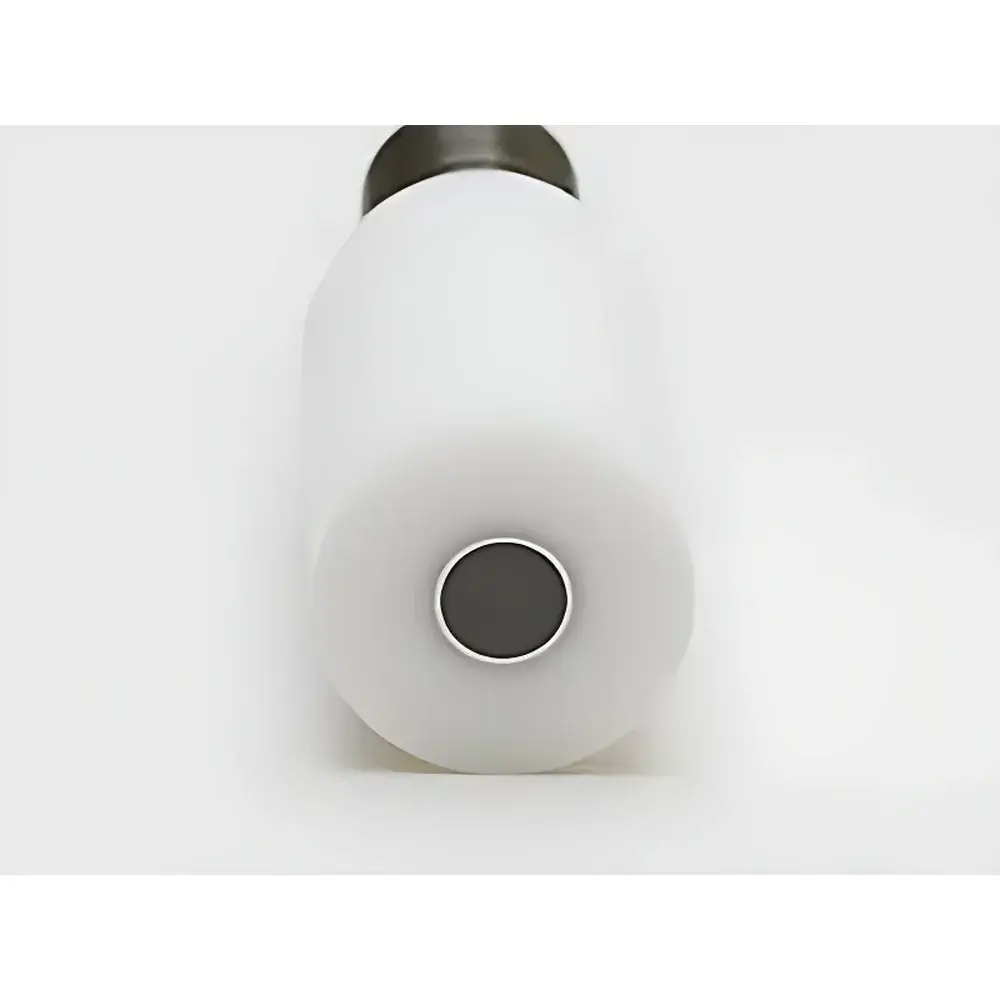
dc-energies RRDE-100 Rotating Ring-Disk Electrode (RRDE)
| Brand | dc-energies |
|---|---|
| Disk Material Options | Glassy Carbon, Platinum, Gold |
| Ring Material Options | Glassy Carbon, Platinum, Gold |
| Disk Diameter (GC) | 4.57 mm |
| Ring Inner Diameter | 4.93 mm |
| Ring Outer Diameter | 5.38 mm |
| Inter-electrode Gap | 118 µm |
| Collection Efficiency | 22% |
| Disk Geometric Area | 0.1639 cm² |
| Ring Geometric Area | 0.0364 cm² |
| Operating Temperature Range | 10–25 °C |
| Instrument Type | Electrochemical Working Electrode Assembly |
| Origin | Hubei, China |
Overview
The dc-energies RRDE-100 Rotating Ring-Disk Electrode (RRDE) is a precision-engineered electrochemical working electrode assembly designed for quantitative, dual-channel kinetic and mechanistic analysis in controlled hydrodynamic environments. Based on the classical Levich–Koutecký theory and extended by disk-ring collection efficiency calibration, the RRDE enables simultaneous measurement of faradaic current at the rotating disk (where electroactive species undergo primary electron transfer) and the concentric ring (where soluble intermediates or reaction products are selectively detected). This configuration provides direct experimental access to reaction pathways, including the identification and quantification of short-lived intermediates—critical for elucidating multi-step redox mechanisms such as oxygen reduction (ORR), oxygen evolution (OER), hydrogen peroxide generation, and catalytic decomposition kinetics. The RRDE-100 is optimized for integration with standard potentiostats and rotating electrode controllers compliant with ASTM D1308 and ISO 13883 methodologies for electrocatalyst evaluation under laminar flow conditions.
Key Features
- High-precision inter-electrode geometry: 118 µm radial gap between disk and ring ensures reproducible mass transport profiles and validated collection efficiency of 22%—calibrated against theoretical Koutecký–Levich predictions.
- Modular material selection: Independent disk and ring fabrication from glassy carbon, platinum, or gold allows tailored electrochemical window, overpotential tolerance, and surface reactivity—essential for pH-dependent or corrosive media studies.
- Robust mechanical design: External-threaded shaft interface ensures low-contact-resistance electrical connection and mechanical stability during high-speed rotation (up to 10,000 rpm), minimizing signal drift and vibration-induced noise.
- Geometrically defined active areas: Disk area = 0.1639 cm²; ring area = 0.0364 cm²—certified via optical profilometry and verified against SEM cross-sections for traceable electrochemical surface area normalization.
- Thermally stabilized operation: Validated performance within 10–25 °C ambient range, compatible with thermostatted electrochemical cells meeting ASTM E2847 requirements for temperature-controlled kinetic studies.
Sample Compatibility & Compliance
The RRDE-100 supports aqueous and non-aqueous electrolytes—including acidic (0.1 M HClO₄), alkaline (0.1 M KOH), and aprotic (LiTFSI in DME) systems—without compromising insulator integrity or inter-electrode sealing. Its construction complies with ISO/IEC 17025:2017 general requirements for electrochemical test equipment calibration traceability. When used in conjunction with GLP-compliant potentiostats (e.g., BioLogic SP-300, Pine Research WaveNow), the electrode supports audit-ready data acquisition aligned with FDA 21 CFR Part 11 electronic record integrity standards—particularly when paired with timestamped, user-authenticated software logs.
Software & Data Management
The RRDE-100 operates seamlessly with industry-standard electrochemical software platforms including EC-Lab (BioLogic), AfterMath (Pine Research), and NOVA (Metrohm Autolab). These environments support synchronized disk/ring potential control (e.g., disk held at ORR onset potential while ring is stepped to H₂O₂ oxidation potential), real-time collection efficiency correction, and automated Levich plot generation. All raw current-time and current-potential datasets export in standardized .txt or .mpt formats, enabling post-acquisition analysis in MATLAB, Python (with Pycse or ECpy libraries), or OriginLab for Tafel slope extraction, reaction order determination, and kinetic parameter fitting per IUPAC Technical Report guidelines.
Applications
- Quantitative ORR mechanism discrimination: Differentiation between 2e⁻ (H₂O₂-selective) and 4e⁻ (H₂O-selective) pathways via ring-current detection and Nernstian correction.
- Fuel cell catalyst screening: Evaluation of Pt-alloy, Fe/N/C, and single-atom catalysts under RDE/RRDE protocols aligned with DOE Hydrogen Program targets.
- Lithium–oxygen battery research: In situ detection of superoxide (O₂˙⁻) and LiO₂ intermediates during discharge/charge cycles in O₂-saturated non-aqueous electrolytes.
- Electrocatalytic CO₂ reduction: Identification of C₂+ product precursors (e.g., *CO dimerization intermediates) through ring-based chronoamperometric trapping.
- Corrosion science: Real-time monitoring of metal dissolution intermediates (e.g., Fe²⁺, Cu⁺) generated at the disk and oxidized at the ring in chloride-containing media.
FAQ
What is the certified collection efficiency of the RRDE-100, and how is it validated?
The nominal collection efficiency is 22%, determined experimentally using the reversible [Fe(CN)₆]³⁻/⁴⁻ redox couple and confirmed against theoretical models (Bard & Faulkner, Electrochemical Methods, 2nd ed.). Each batch undergoes independent verification via rotating disk voltammetry and ring current integration.
Can the disk and ring be independently modified or regenerated?
Yes—both electrodes feature replaceable, screw-mounted tips. Glassy carbon disks may be polished (0.05 µm alumina slurry), while Pt and Au rings tolerate electrochemical cleaning (cyclic voltammetry in H₂SO₄) without geometric distortion.
Is the RRDE-100 compatible with commercial rotating electrode holders?
It uses a standardized 6 mm outer diameter threaded shaft (M4 × 0.7 pitch), compatible with Pine Research AFMSRX, BASi RE-1, and CHI 660E rotator systems without adapters.
Does the electrode require recalibration after thermal cycling?
No—its fused ceramic insulator exhibits negligible thermal expansion mismatch (α < 2 × 10⁻⁶ K⁻¹), ensuring stable gap geometry across the specified 10–25 °C operating range.
How is electrochemical surface area (ECSA) determined for Pt ring/disk configurations?
Hydrogen underpotential deposition (H-UPD) charge integration in 0.1 M HClO₄ is performed separately on each electrode under stagnant conditions, referenced to polycrystalline Pt standards per ASTM E2339.





