JB-820/830 Series Motor Vehicle Comprehensive Testing System by Jiubin Instruments
| Key | Brand: Jiubin Instruments |
|---|---|
| Origin | Shanghai, China |
| Model | JB-820/830 Series |
| Display | 240×128 LCD with Chinese UI |
| Speed Resolution | 0.01 km/h |
| Power Supply | Internal DC 9.6 V (8×1.2 V / 800 mAh Ni-MH) or External DC 12 V / 5 A |
| Static Power Consumption | ≤1 W |
| Max Power Consumption | <3 W |
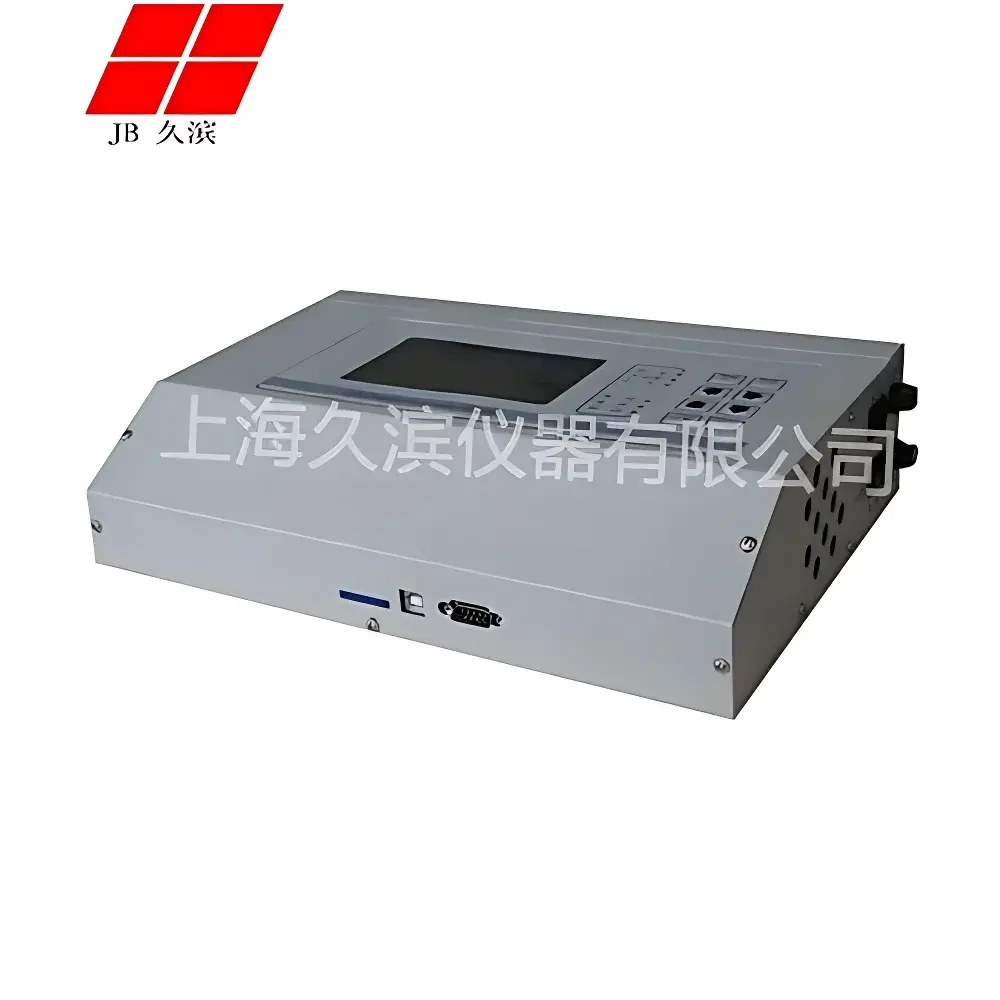
| Dimensions (JB-820) | 330 × 220 × 75 mm |
| Dimensions (CTM-830) | 210 × 150 × 60 mm |
| Weight (JB-820) | 2.0 kg (incl. battery) |
| Weight (CTM-830) | 0.6 kg (incl. battery) |
| Operating Temperature | −20 °C to +45 °C |
| Relative Humidity | 30–80 % RH |
| Data Storage | SD card + USB interface |
| Analog Output | 1 channel (0–5 V or 4–20 mA, configurable) |
| Optional Sensors | Non-contact photoelectric speed sensor, GPS-based speed sensor, dual-channel fuel flow sensor (for high-return diesel engines), pull-force transducer, rotational speed sensor, wheel speed sensor |
| Wireless Option | Bluetooth 4.0 module (optional) |
| Built-in Printer | Yes (JB-820) |
Overview
The JB-820/830 Series Motor Vehicle Comprehensive Testing System is an engineered field-deployable instrumentation platform designed for standardized on-road and chassis-dyno evaluation of powered two-wheelers, passenger cars, light- and medium-duty trucks, agricultural tractors, and specialized off-road vehicles. It implements multi-sensor fusion architecture—integrating time-synchronized inputs from non-contact optical encoders or GPS-derived velocity vectors, dual-channel volumetric fuel flow meters (capable of compensating for return-fuel recirculation), calibrated load cells, rotary encoders, and wheel-speed transducers—to quantify dynamic mechanical and energy-conversion performance parameters under real-world operating conditions. The system operates in accordance with the metrological traceability framework defined in GB/T 7258–2012 (“Technical Requirements for Safe Operation of Motor Vehicles”) and fulfills functional compliance requirements specified in GB 17993 (“General Technical Capability Requirements for Motor Vehicle Comprehensive Performance Inspection Stations”). Its modular hardware design supports both fixed-station deployment (JB-820) and handheld mobile use (CTM-830), enabling consistent data acquisition across regulatory inspection lanes, R&D test tracks, and roadside safety audits.
Key Features
- High-resolution real-time velocity measurement with 0.01 km/h resolution, selectable between GPS-referenced or optical encoder-based speed sensing
- Dual independent fuel flow sensor channels—engineered to maintain accuracy during high-return-rate diesel operation by subtracting return volume from gross delivery
- 240×128 monochrome LCD with native Chinese character rendering and context-aware graphical overlays for live parameter curves (e.g., deceleration vs. time, speed vs. distance)
- Non-volatile parameter storage: sensor calibration coefficients, test configurations, and user-defined thresholds persist through power cycles without manual re-entry
- Integrated data logging via removable SD card (FAT32 formatted) and USB 2.0 host interface—supports continuous recording at ≥10 Hz sampling rate for >72 hours per session
- Configurable analog output (0–5 V or 4–20 mA) compliant with industrial SCADA and DAQ systems for synchronized multi-instrument campaigns
- Three physical form factors: JB-820 (bench-mounted all-in-one unit with integrated thermal printer), CTM-830 (handheld unit with optional Bluetooth 4.0 wireless telemetry), and CTM-830-RF (Bluetooth + optional RF telemetry variant)
Sample Compatibility & Compliance
The system accommodates a broad spectrum of vehicle classes—from 50 cc scooters to 12-ton rigid trucks—through scalable sensor interface protocols (RS-485, CAN 2.0B, analog ±10 V). All transducers are calibrated against NIM-traceable reference standards prior to shipment. Test procedures adhere strictly to national mandatory standards: braking metrics conform to GB/T 22829–2008 (braking performance testing methods); coast-down tests follow GB/T 12544–2012; fuel consumption evaluations satisfy GB/T 12545.2–2001 (test cycles for commercial vehicles). While not certified to ISO/IEC 17025 for accredited laboratory use, the system’s measurement uncertainty budget—including timing jitter (<±1 ms), analog-to-digital quantization error (<0.1% FS), and thermal drift compensation (<±0.02%/°C)—is documented in the included calibration certificate and technical manual.
Software & Data Management
Data export is supported in CSV and Excel-compatible XLSX formats, with embedded metadata including UTC timestamps, GPS coordinates (if enabled), operator ID, vehicle VIN placeholder, and test sequence number. The onboard firmware implements write-once audit logging: every configuration change, sensor zeroing event, or test initiation is timestamped and cryptographically hashed to prevent post-hoc tampering—meeting baseline GLP documentation requirements. Optional PC software (Jiubin TestSuite v3.2) provides post-processing tools for MFDD derivation, acceleration curve smoothing using Savitzky–Golay filters, and automatic generation of GB-compliant test reports with digital signature fields. No cloud connectivity is implemented; all processing occurs locally to ensure data sovereignty and eliminate external dependency risks.
Applications
- Regulatory compliance verification for Type Approval (Annex 4, UN Regulation No. 13-H) and periodic roadworthiness inspections
- Vehicle development validation: longitudinal dynamics characterization, drivetrain efficiency mapping, and emission-correlated fuel economy benchmarking
- Traffic safety research: reconstruction of critical braking events, analysis of driver reaction latency, and correlation of speed variance with accident frequency
- Agricultural machinery certification: PTO power transfer efficiency, drawbar pull optimization, and slip ratio profiling under variable soil resistance
- Fleet management analytics: comparative fuel consumption trending across vehicle age, maintenance interval, and driver behavior cohorts
FAQ
Does the system support GPS-based speed measurement in tunnels or urban canyons?
GPS velocity mode requires ≥4 satellite lock for sub-0.1 km/h accuracy; signal loss triggers automatic fallback to optical encoder input if installed. No inertial navigation or dead-reckoning capability is provided.
Can the dual fuel sensors be used simultaneously on bi-fuel (CNG/gasoline) engines?
Yes—the system accepts independent volumetric flow signals from two distinct fuel circuits and computes weighted average consumption rates, though stoichiometric correction must be applied externally during post-processing.
Is firmware update possible via USB or SD card?
Firmware updates are distributed as signed .bin files and require authentication via hardware dongle; unauthorized modification voids calibration validity and regulatory compliance status.
What is the maximum sampling duration when recording full-parameter datasets at 10 Hz?
With a 32 GB SD card formatted as FAT32, continuous 10 Hz logging (12 analog + 4 digital channels) sustains ≥68 hours before buffer wraparound.
Are calibration certificates issued with NIST or BIPM traceability?
Calibration references are traceable to the National Institute of Metrology (NIM), China; international equivalence is established via APMP MRA signatory status—not direct NIST or BIPM linkage.