
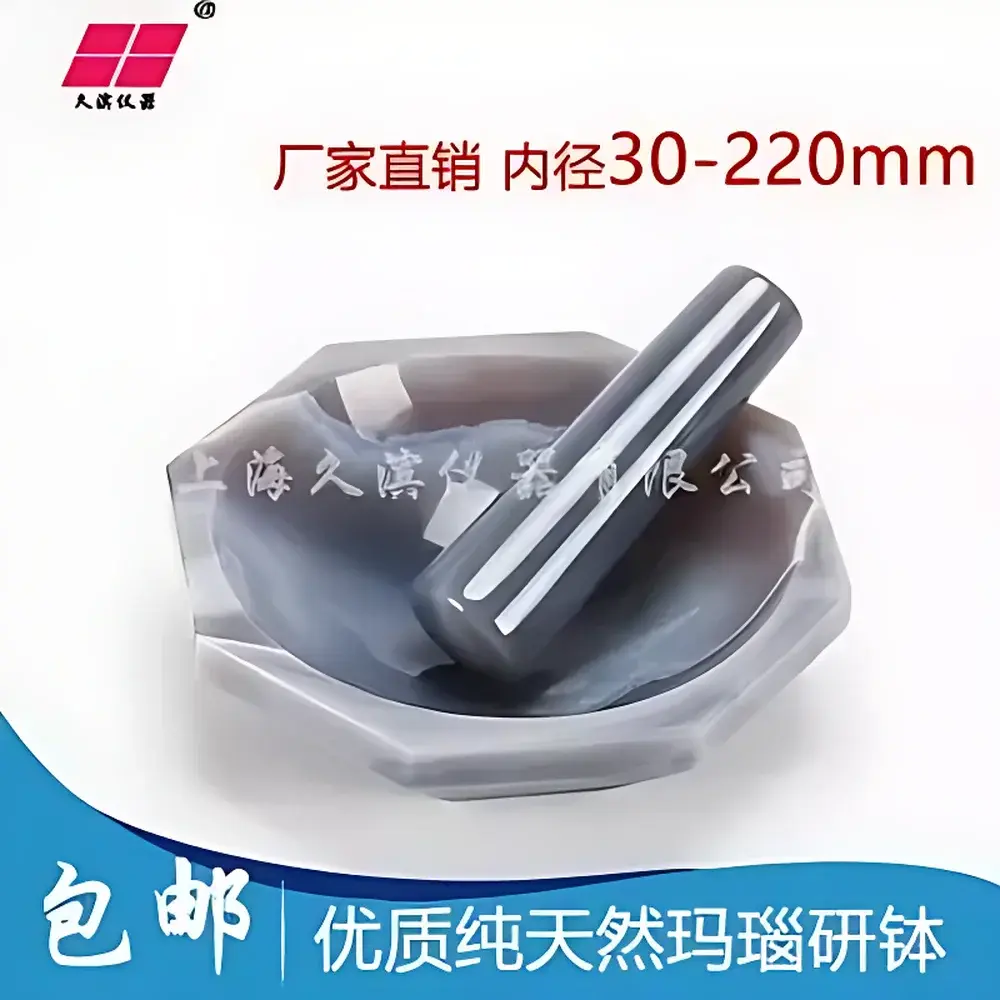
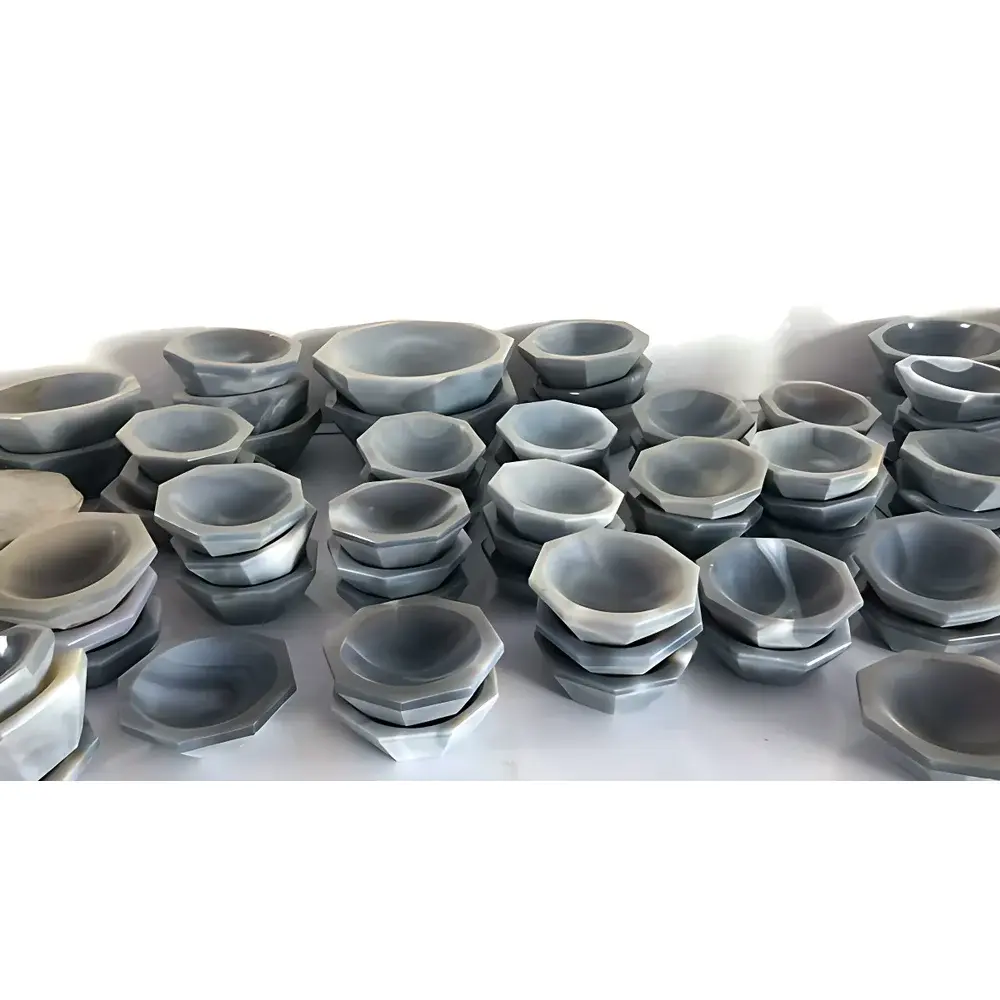
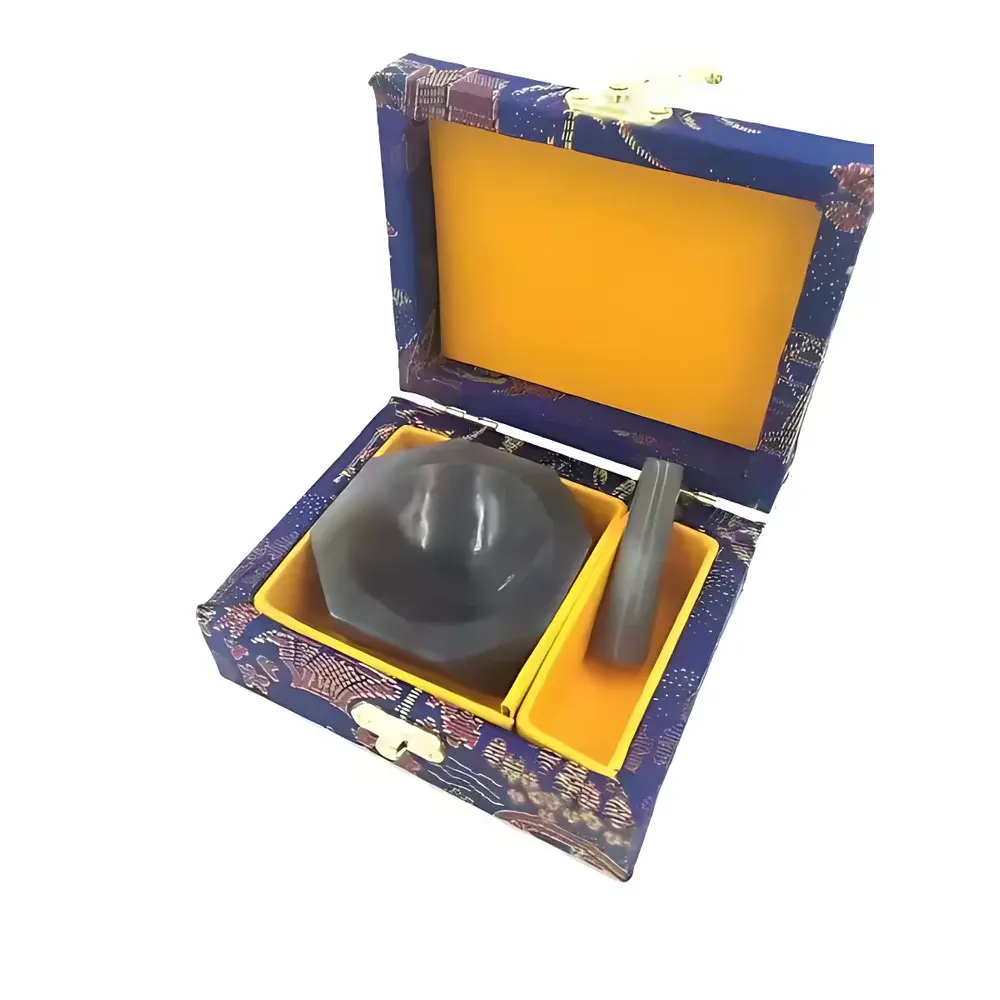
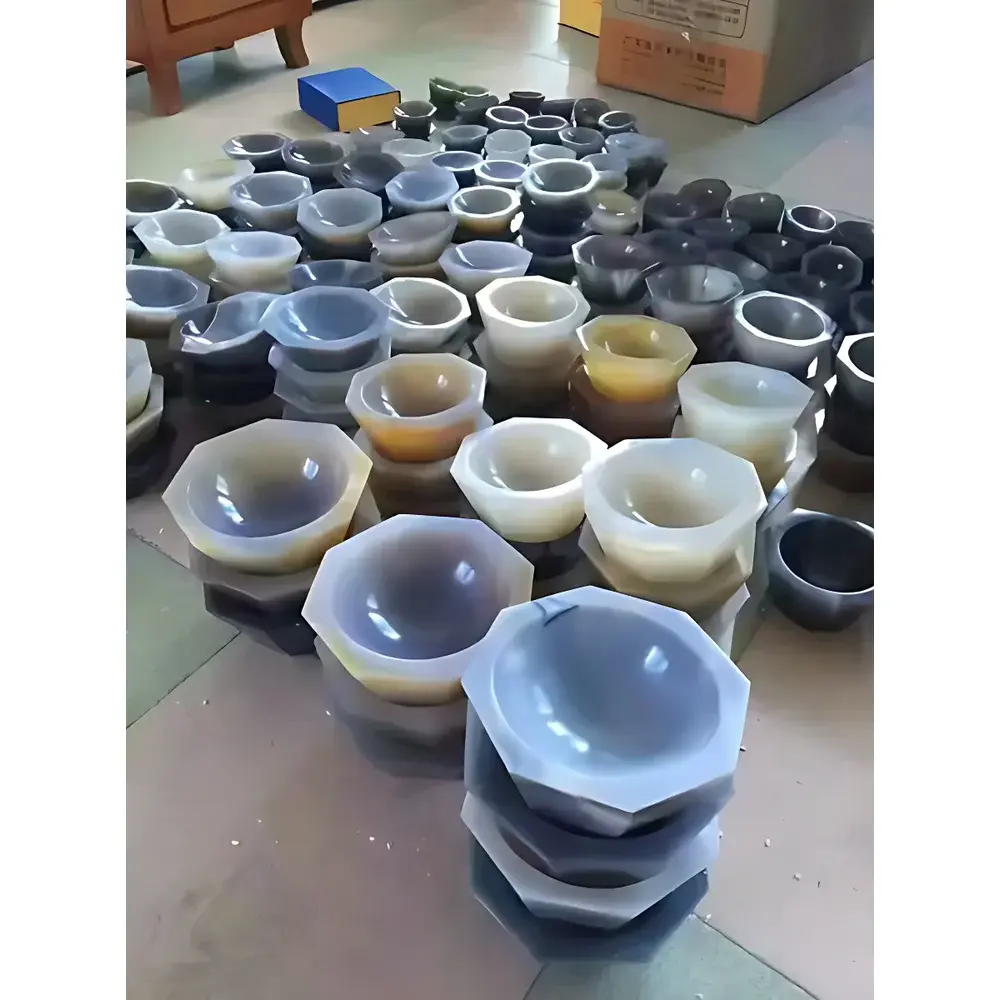
Jiubin Instruments Agate Mortar Set (40–220 mm Internal Diameter)
| Brand | Jiubin Instruments |
|---|---|
| Origin | Shanghai, China |
| Manufacturer Type | Authorized Distributor |
| Country of Origin | China |
| Model Range | 40–220 mm ID |
| Pricing | Available Upon Request |
Overview
The Jiubin Instruments Agate Mortar Set is a precision-ground laboratory tool engineered for contamination-free sample preparation in analytical, pharmaceutical, and materials science workflows. Constructed from naturally sourced agate—a cryptocrystalline variety of quartz (SiO₂) with a Mohs hardness of 6.5–7—the mortars exhibit exceptional resistance to chemical corrosion, mechanical wear, and thermal shock under ambient conditions. Unlike ceramic or stainless-steel alternatives, agate introduces zero metallic leaching or siliceous particulate carryover during grinding, making it indispensable for trace-element analysis (e.g., ICP-MS, AAS), high-purity synthesis, and USP particulate matter testing. Each mortar is hand-finished to achieve a surface roughness (Ra) < 0.4 µm, ensuring minimal sample adhesion and consistent particle size reduction across repeated use. The set covers an internal diameter range from 40 mm to 222 mm, accommodating applications from micro-scale assay prep (≤0.5 g) to bulk geological sample homogenization (up to 50 g).
Key Features
- Material integrity: Sourced exclusively from geologically verified natural agate deposits; no synthetic resins, fillers, or dye treatments.
- Dimensional precision: Internal diameter tolerance ±0.3 mm; wall thickness uniformity maintained to prevent asymmetric stress distribution during manual grinding.
- Surface finish: Mirror-polished interior cavity with optical-grade luster (reflectance > 85% at 550 nm), validated per ISO 10793-1 for optical clarity assessment.
- Mechanical resilience: Withstands compressive loads up to 120 MPa without microfracture—certified via ASTM C133 quasi-static compression testing on representative lot samples.
- Chemical inertness: Fully resistant to concentrated HCl, HNO₃, HF (≤5%), NaOH (≤10%), and organic solvents including acetone and chloroform—verified per ISO 17025-accredited corrosion immersion tests (72 h, 25°C).
Sample Compatibility & Compliance
This mortar series is compatible with solid, brittle, and moderately friable samples—including oxides, carbonates, silicates, pharmaceutical actives (APIs), and polymer pellets—provided they lack explosive sensitivity (e.g., perchlorates, azides) or extreme hygroscopicity. It complies with key regulatory expectations for labware used in GLP and GMP environments: non-reactivity aligns with USP Analytical Instrument Qualification guidance; absence of extractables satisfies FDA 21 CFR Part 211.65 requirements for drug manufacturing contact surfaces. While not classified as “medical device” under MDR 2017/745, its documentation supports audit readiness for ISO/IEC 17025:2017 clause 6.4.3 (equipment suitability verification). Note: Not intended for cryogenic grinding or autoclave sterilization.
Software & Data Management
As a passive, non-electronic laboratory consumable, the agate mortar requires no firmware, calibration software, or digital connectivity. However, Jiubin Instruments provides a traceable Certificate of Conformance (CoC) with each unit, including batch-specific material origin data, dimensional inspection reports (CMM-measured), and acid-resistance validation summaries. These documents are structured to integrate into LIMS or ELN systems via PDF metadata tagging (ISO 19005-1 compliant), supporting 21 CFR Part 11-aligned electronic record retention when paired with institutional digital signature protocols.
Applications
- Pharmaceutical QC labs: Grinding of tablet excipients and APIs prior to dissolution testing (USP ) or content uniformity analysis (USP ).
- Geochemical laboratories: Homogenization of rock powders for XRF and ICP-OES quantification—minimizing SiO₂ background interference.
- Materials R&D: Preparing nanocomposite precursors where Fe/Ni/Cr contamination from steel mortars would compromise catalytic activity.
- Electronics manufacturing: Milling of PZT and BaTiO₃ ceramics for capacitor dielectric characterization without electrode poisoning.
- Academic teaching labs: Demonstrating brittle fracture mechanics and stoichiometric mixing principles in inorganic chemistry courses.
FAQ
Can this mortar be used for cryogenic grinding with liquid nitrogen?
No. Thermal shock from rapid temperature differentials may induce subsurface microcracking undetectable by visual inspection. Use dedicated tungsten carbide or hardened steel mortars for cryo-applications.
Is cleaning validation data available for pharmaceutical use?
Yes. Jiubin provides a generic cleaning validation protocol template (based on TOC recovery and HPLC residual assay) upon request—intended for client-side adaptation per ICH Q5C and EU GMP Annex 15 requirements.
What is the maximum recommended sample volume relative to mortar capacity?
Do not exceed one-third of internal cavity volume. Overfilling impedes effective shear force transmission and increases risk of radial cracking during pestle rotation.
Does agate contain crystalline silica that poses inhalation hazards during cleaning?
Agate is non-fibrous and non-respirable in intact form. However, never sand, drill, or grind the mortar itself—such actions generate respirable crystalline silica (RCS) dust. Clean only with soft brushes and solvent rinses.
How often should dimensional verification be performed?
Annual verification using calibrated micrometers is recommended for GMP environments. For research labs, inspect visually before each use for hairline fractures or surface pitting—discontinue use if either is observed.




