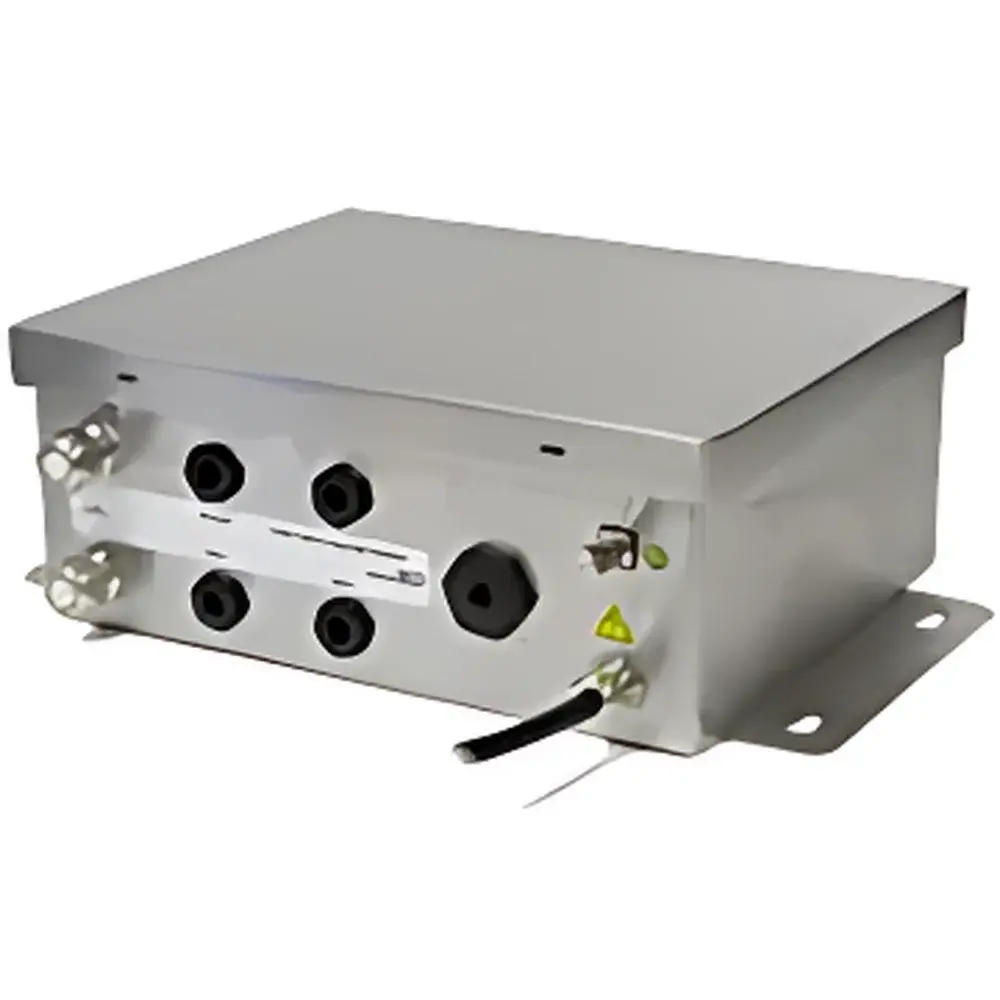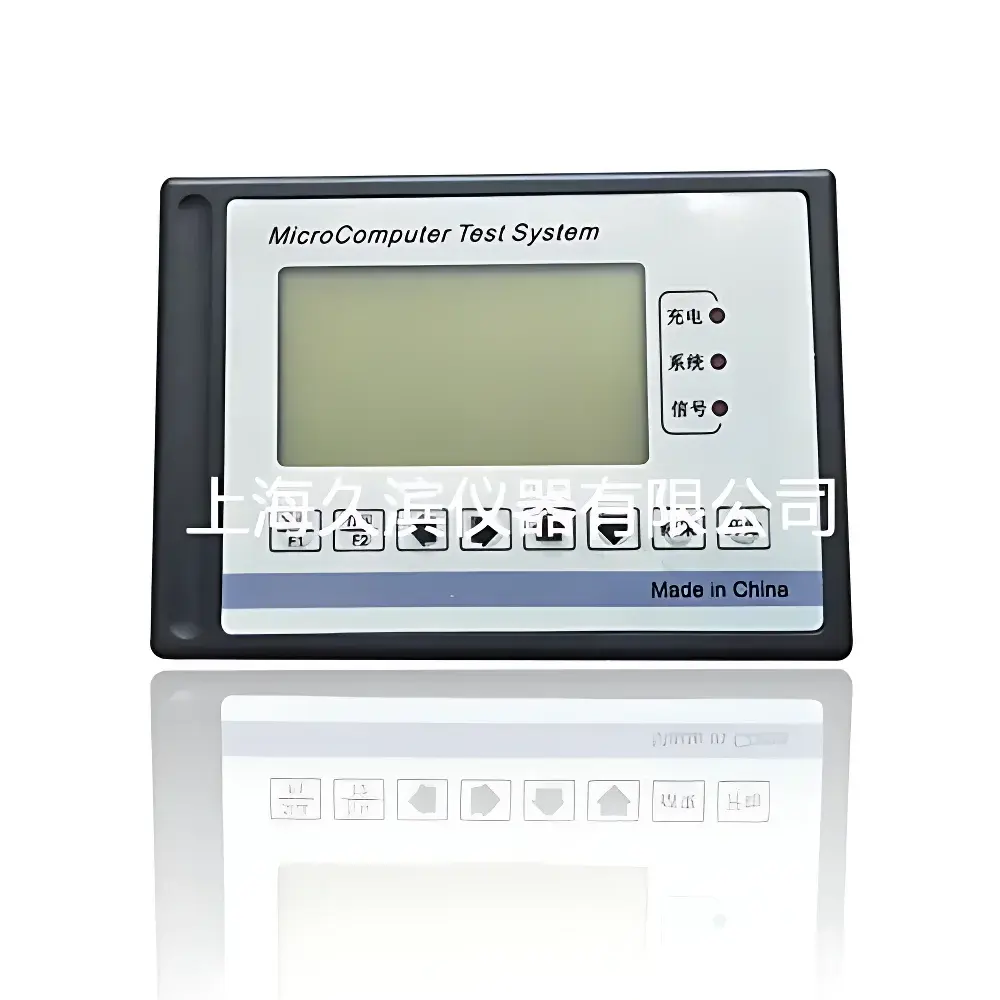
JB-830 Portable Non-Contact Vehicle Speed Analyzer
| Brand | Jiubin Instruments |
|---|---|
| Origin | Shanghai, China |
| Manufacturer Type | Authorized Distributor |
| Country of Origin | China |
| Model | JB-830 |
| Pricing | Available Upon Request |
Overview
The JB-830 Portable Non-Contact Vehicle Speed Analyzer is an embedded automotive performance testing instrument engineered for high-reliability field measurements in vehicle dynamics evaluation. Built around an ARM Cortex-M3 32-bit microcontroller and running the uC/OS-II real-time multitasking operating system, the device implements non-contact speed measurement via optical or GPS-based sensing modalities—eliminating mechanical coupling, wheel slippage errors, and calibration drift associated with contact tachometers. Its core function is to acquire, process, and log time-synchronized kinematic parameters—including instantaneous speed (0.01 km/h resolution), acceleration, distance, and timing events—with traceable timestamping for post-test kinematic reconstruction. Designed for compliance with ISO 15031-3 (on-board diagnostics) and aligned with SAE J227a test protocols for braking and acceleration validation, the JB-830 serves as a field-deployable metrology tool for OEM validation labs, third-party inspection agencies, road safety research units, and automotive engineering education programs.
Key Features
- Non-contact velocity acquisition using optional high-speed optical sensor (photoelectric shutter array) or certified GPS module (supporting NMEA 0183 v4.1 output, 10 Hz update rate)
- Real-time display on 240 × 128 monochrome LCD with Chinese/English bilingual interface and dynamic curve rendering (speed vs. time, distance vs. time)
- Eight configurable test modes for speed trials—including dual trigger conditions (e.g., speed threshold + time delay) and four termination criteria (distance, speed, time, or manual stop)
- Comprehensive braking analysis per UN Regulation No. 13-H and FMVSS 105: computes MFDD (Mean Fully Developed Deceleration), coordination time, pedal force (when paired with optional load cell interface), and deceleration profile derivatives
- Integrated data storage architecture: SD card (FAT32 formatted, up to 32 GB) for raw binary logs; USB 2.0 host port for direct PC connection and firmware updates
- Low-power embedded design: typical operating power draw <3 W; standby current <10 mA; powered by eight 1.2 V / 800 mAh Ni-MH cells (9.6 V nominal) or external 12 V DC input
- RS-232 serial interface compliant with EIA/TIA-232-F standard, supporting connection to thermal printers or legacy DAQ systems
- Bluetooth 4.2 BLE module option (IEEE 802.15.1) for wireless telemetry to Android/iOS tablets or Windows laptops running custom analysis software
Sample Compatibility & Compliance
The JB-830 supports testing across light-duty vehicles (M1/M2), commercial trucks (N1/N2), motorcycles (L3e), and agricultural machinery (T-series tractors), provided minimum reflective surface area (>0.1 m²) and motion path clearance are maintained for optical mode operation. It complies with electromagnetic compatibility requirements per CISPR 25 Class 3 and meets vibration resistance standards per ISO 16750-3 (Level III, 5–500 Hz, 3 g rms). Data integrity conforms to GLP principles: all stored files include embedded metadata (test ID, operator code, UTC timestamp, sensor configuration hash, battery voltage at start/end). Optional audit trail logging satisfies basic FDA 21 CFR Part 11 readiness when used in regulated R&D environments.
Software & Data Management
Test data is saved in structured binary format (.jbd) with header-based versioning and CRC-16 checksums. A Windows-compatible desktop application (JB-DataView v3.2) enables waveform replay, derivative calculation (jerk, acceleration integral), statistical summary (min/max/mean/std dev), and export to CSV, MATLAB .mat, or PDF report templates. The software supports batch processing of multiple .jbd files and includes built-in filters for noise suppression (moving average, Savitzky-Golay). All parameter configurations—including sensor scaling factors, trigger thresholds, and unit preferences—are retained in non-volatile memory and survive power cycles without reconfiguration.
Applications
- Braking system certification per ECE R13-H, GB 12676-2014, and ASE A5 standards
- Vehicle homologation testing for type approval under EU Regulation (EU) 2018/858
- Aftermarket brake pad friction characterization in workshop environments
- Driver behavior analysis in intelligent transportation systems (ITS) field studies
- Academic lab experiments in vehicle dynamics, control theory, and mechatronics curricula
- Periodic technical inspection (PTI) for commercial fleets and public transport authorities
- Calibration verification of onboard speedometers and ADAS longitudinal sensors
FAQ
What is the maximum measurable speed range in optical mode?
The optical sensor supports speeds from 0.1 km/h to 250 km/h, limited only by reflectivity and ambient lighting conditions (operational down to 10 lux).
Does the JB-830 support synchronized multi-sensor input?
No—only one primary speed sensor (optical or GPS) may be active at a time; however, analog pedal force input (0–5 V) can be recorded concurrently during braking tests.
Is firmware upgrade possible in the field?
Yes—via USB connection and JB-FlashTool utility; firmware images are digitally signed and verified prior to installation.
Can test reports be generated directly on the device?
No—the JB-830 does not include onboard report generation; printed output requires connection to an RS-232 thermal printer with ESC/POS command support.
What environmental certifications does the unit hold?
It meets IP54 ingress protection (dust-resistant, splash-proof) and operates reliably within –20 °C to +45 °C ambient temperature and 30–80% RH non-condensing humidity.