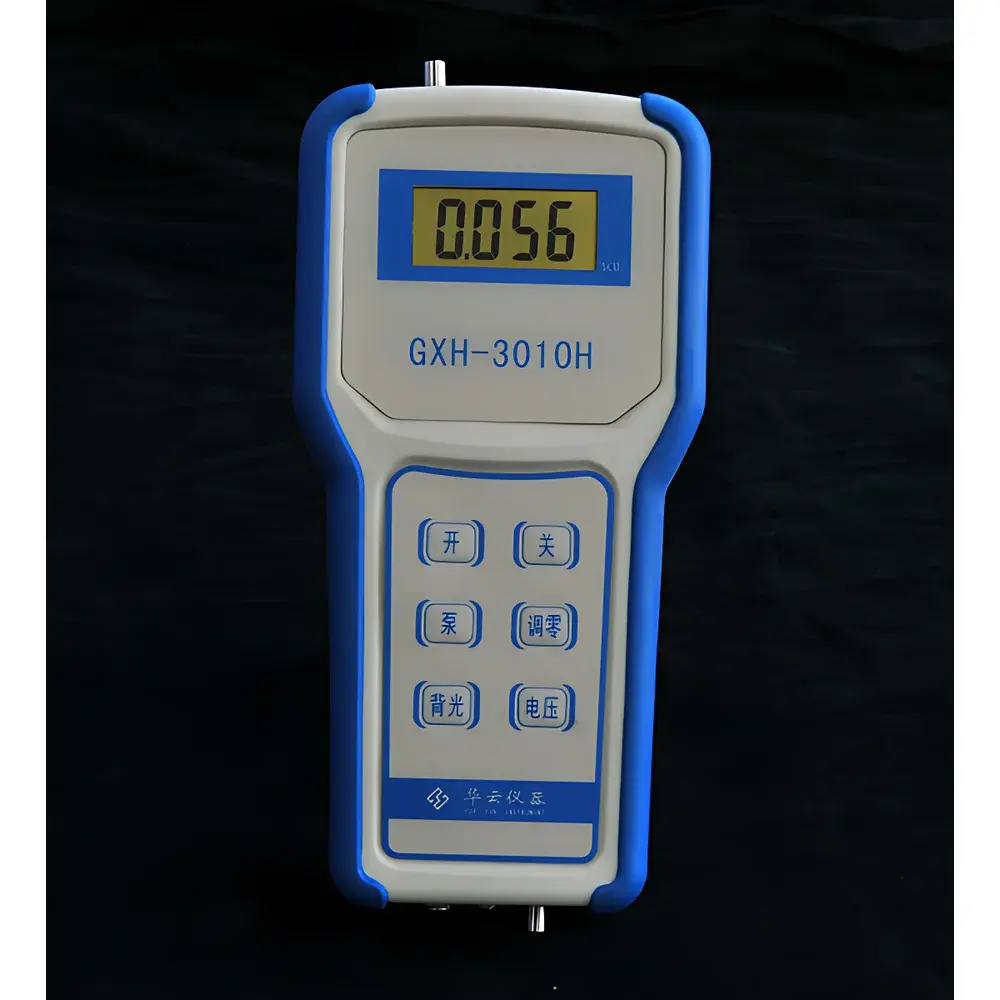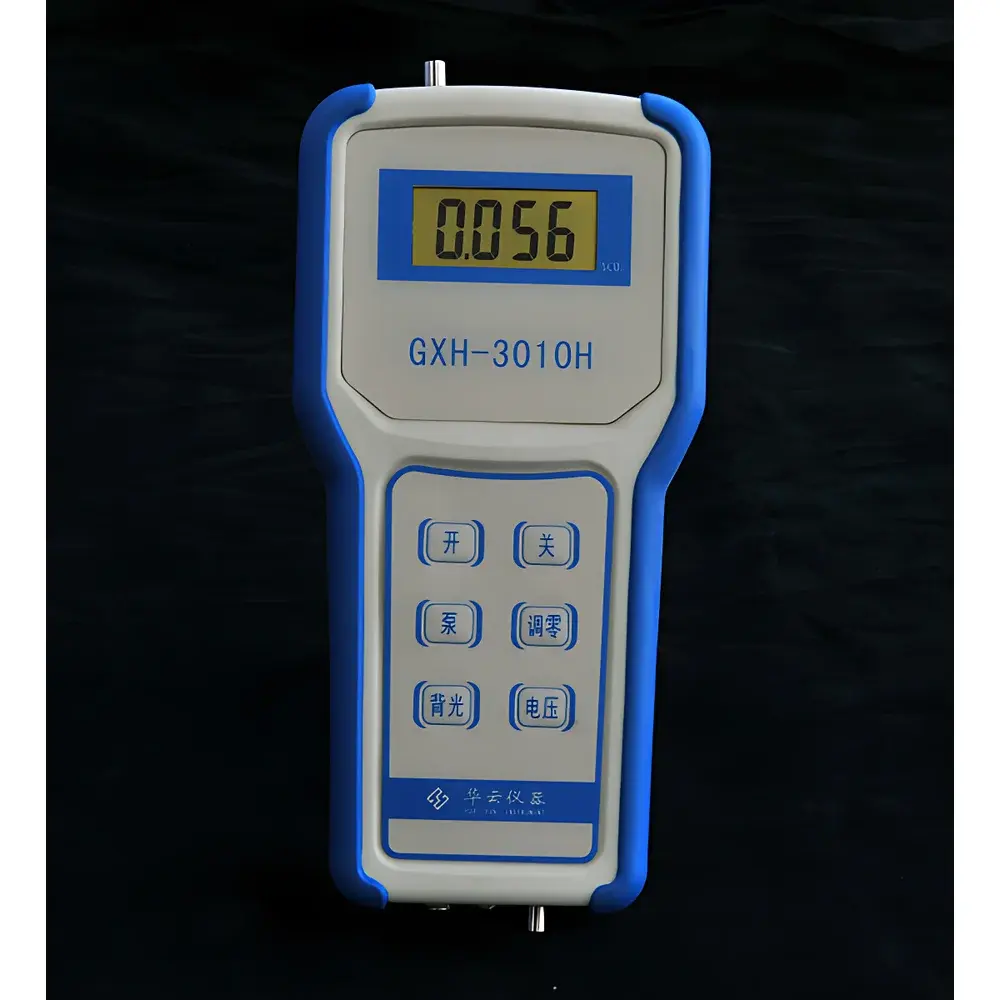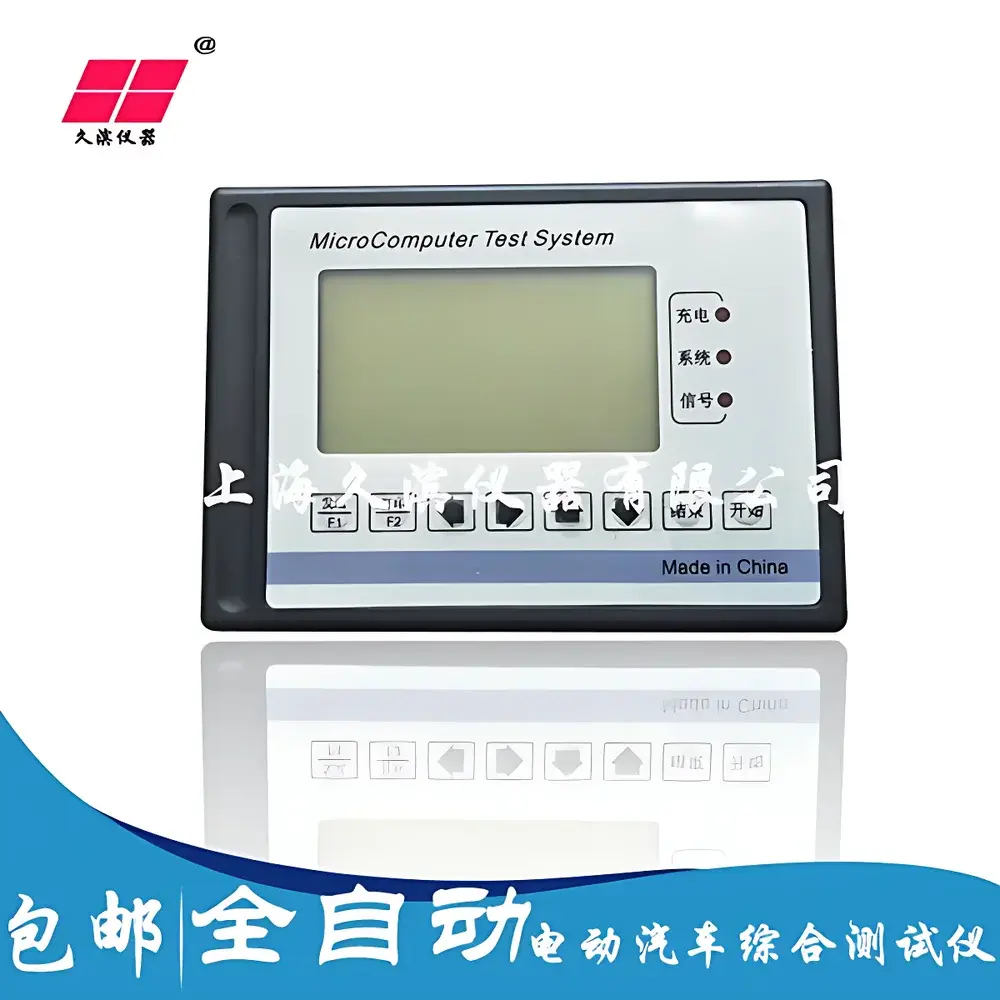
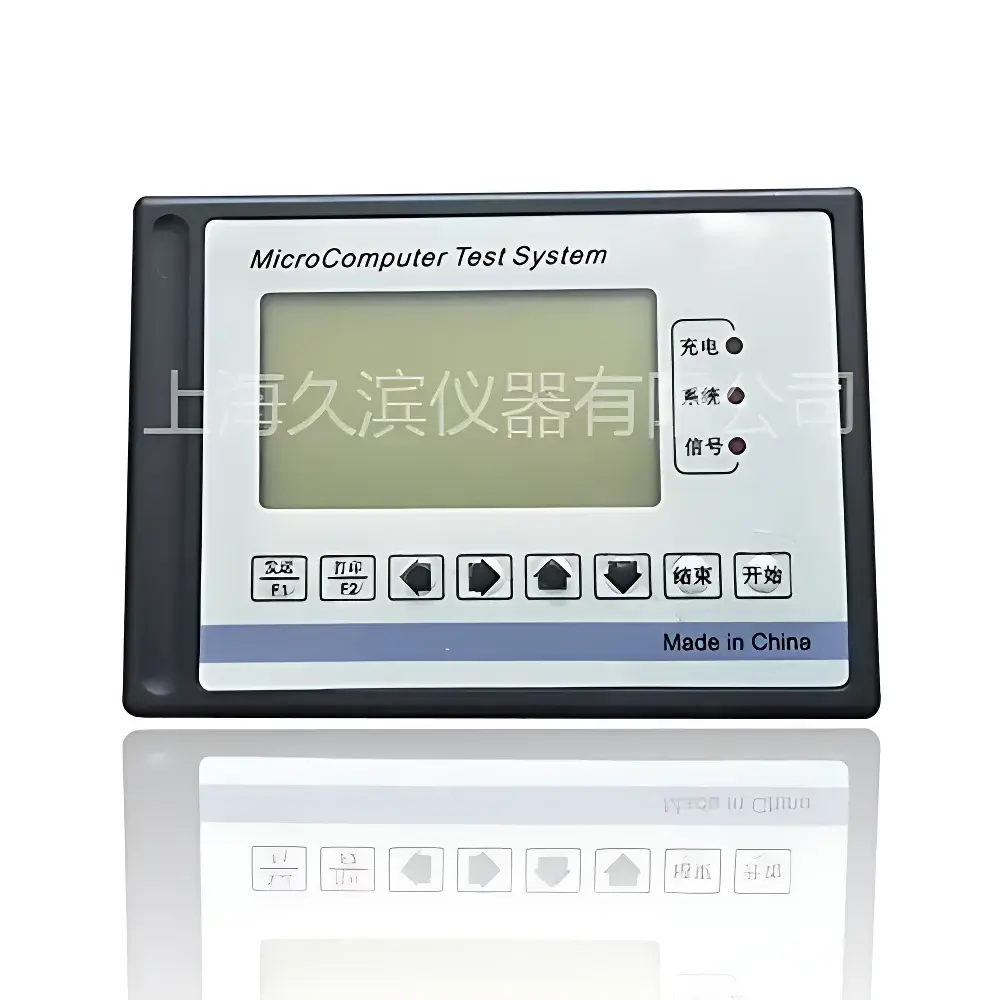
JB-860 Electric Vehicle Comprehensive Test System
| Brand | Jiubin Instruments |
|---|---|
| Model | JB-860 |
| Origin | Shanghai, China |
| Power Supply | DC 9.6 V (Ni-MH battery pack, 8 × 1.2 V / 800 mAh) or DC 12 V external |
| Dimensions | 330 × 220 × 75 mm |
| Weight | 1.2 kg (including battery) |
| Operating Temperature | −20 °C to +45 °C |
| Relative Humidity | 30–80 % RH |
| Static Power Consumption | ≤1 W |
| Max. Power Consumption | <3 W |
| Speed Range | 0–500.0 km/h |
| Speed Resolution | 0.01 km/h |
| Speed Accuracy | ±0.5 % |
| Distance Range | 0–999999.999 m |
| Distance Resolution | 1 mm |
| Distance Accuracy | ±0.2 % |
| Time Range | 0–99999.999 s |
| Time Resolution | 1 ms |
| Time Accuracy | ±0.1 % |
| Deceleration Range | 0–14.9 m/s² |
| Deceleration Resolution | 0.01 m/s² |
| Deceleration Accuracy | ±1 % |
| MFDD Range | 0–9.999 m/s² |
| MFDD Resolution | 0.001 m/s² |
| MFDD Accuracy | ±1 % |
| Pedal Force Range | 0–999 N |
| Pedal Force Resolution | 1 N |
| Pedal Force Accuracy | ±1 % |
| Voltage Input Range | 0–300 V (sensor-dependent) |
| Voltage Resolution | 0.1 V |
| Voltage Accuracy | ±0.5 % |
| Current Input Range | 0–500 A (sensor-dependent) |
| Current Resolution | 0.1 A |
| Current Accuracy | ±0.5 % |
| Display | 240 × 128 dot-matrix LCD with Chinese character interface |
| Data Storage | SD card (FAT32 formatted, up to 32 GB) and internal non-volatile memory |
| Communication Interfaces | Dual RS232 ports, USB 2.0 host/device, built-in thermal printer |
| Optional Sensors | Non-contact photoelectric speed sensor, GPS-based velocity sensor |
Overview
The JB-860 Electric Vehicle Comprehensive Test System is a portable, battery-powered instrumentation platform engineered for standardized performance evaluation of electric vehicles (EVs), hybrid electric vehicles (HEVs), and conventional internal combustion engine (ICE) vehicles. Designed in accordance with international automotive test protocols—including ISO 8767 (braking performance), ISO 15237 (vehicle dynamics measurement), and SAE J2954 (wireless power transfer characterization)—the system captures synchronized, time-stamped physical parameters across multiple domains: kinematic (speed, distance, time, deceleration), dynamic (pedal force, braking force), and electrical (voltage, current). Its architecture supports both regulatory compliance testing (e.g., type-approval verification per UN ECE R100 for EV safety) and R&D validation workflows, including acceleration profile analysis, regenerative braking efficiency quantification, and energy consumption mapping under controlled driving cycles (e.g., WLTP or CLTC).
Key Features
- High-resolution real-time acquisition: Simultaneous sampling at up to 1 kHz (configurable) across all analog and digital channels, ensuring temporal fidelity for transient event capture such as ABS activation or torque vectoring response.
- Dual-mode velocity sensing: Supports calibrated non-contact optical encoders for wheel-speed tracking on test benches or GPS-derived ground speed for on-road validation—enabling traceable velocity measurement per ISO/IEC 17025 requirements when paired with certified GNSS receivers.
- Embedded data integrity architecture: All measurements are timestamped using an internal temperature-compensated crystal oscillator (TCXO) with ±2 ppm stability over the full operating range; data files include metadata headers compliant with ASTM E2500-17 for instrument qualification documentation.
- Robust field-deployable design: IP54-rated enclosure, shock-absorbing elastomer housing, and low-power electronics (8 hours on rechargeable Ni-MH battery pack—validated per MIL-STD-810G for vibration and thermal shock resistance.
- Modular sensor integration: Standardized 4–20 mA, 0–5 V, and CAN 2.0B (ISO 11898-2) inputs accommodate third-party transducers (e.g., load cells, torque sensors, high-voltage differential probes), with automatic scaling and linearization applied during acquisition.
Sample Compatibility & Compliance
The JB-860 system is compatible with light-duty passenger EVs (up to Class M1), commercial battery-electric vans (Class N1), and low-speed neighborhood electric vehicles (NEVs). It meets electromagnetic compatibility (EMC) requirements per CISPR 25 Class 3 and EN 55025 for automotive environments. Calibration traceability is maintained through NIST-traceable reference standards for force (ISO 376), voltage (IEC 61000-4-30 Class S), and timing (IEEE 1588-2019 PTPv2). The system supports GLP-compliant audit trails via encrypted SD card logging with SHA-256 hash verification, and optional 21 CFR Part 11–compliant user authentication when operated with validated PC software.
Software & Data Management
Data is stored in ASCII-delimited CSV format with IEEE 1588-aligned timestamps, enabling direct import into MATLAB, Python (Pandas), or LabVIEW for post-processing. The included Windows-based analysis suite provides automated calculation of key metrics: Maximum Friction Deceleration (MFDD), stopping distance at defined speed thresholds, pedal travel-force hysteresis loops, and voltage-current phase angle under dynamic load. All reports generate PDF output with embedded calibration certificates, operator ID, and environmental condition metadata. Firmware updates are performed via USB without requiring proprietary tools, and version history is retained in non-volatile memory for regulatory review.
Applications
- EV drivetrain validation: Quantifying motor torque ripple, inverter switching losses, and battery state-of-charge (SOC) correlation with regenerative braking energy recovery.
- Braking system certification: Measuring MFDD, fade resistance, and pedal effort linearity per FMVSS 135 and GB/T 12676–2014.
- Charging infrastructure interoperability: Monitoring voltage sag, current harmonics, and thermal rise during DC fast-charging sessions (CCS/GB/T 20234.3).
- Academic research: Supporting capstone projects and thesis work in vehicle dynamics, power electronics, and energy management systems at universities accredited by ABET or EUR-ACE.
- Aftermarket diagnostics: Verifying OEM-specified performance benchmarks following component replacement (e.g., brake calipers, motor controllers, battery modules).
FAQ
Is the JB-860 system suitable for homologation testing required by EU type-approval authorities?
Yes—when used with ISO/IEC 17025-accredited sensors and documented calibration procedures, the JB-860 satisfies data acquisition requirements for UNECE Regulation 100 Annex 4 and EU Commission Regulation (EU) No 2017/1151 Annex XXI.
Can the system log CAN bus data from vehicle ECUs simultaneously with physical measurements?
Yes—the integrated CAN 2.0B interface supports configurable message filtering, baud rate (125 kbps to 1 Mbps), and DBC file mapping for signal decoding alongside analog channel data.
What is the maximum SD card capacity supported, and are files compatible with long-term archival standards?
The system supports SDHC cards up to 32 GB formatted as FAT32; CSV files comply with ISO 14721 (OAIS) baseline structure for digital preservation.
Does the built-in thermal printer support calibration certificate printing with digital signatures?
The printer outputs human-readable test summaries and pass/fail indicators; for signed calibration reports, export to the PC software and apply PKI-based digital signatures per eIDAS regulation.
How is measurement uncertainty quantified and reported for each parameter?
Total uncertainty budgets—combining sensor accuracy, ADC resolution, clock jitter, and thermal drift—are pre-calculated per GUM (JCGM 100:2008) and embedded in the metadata header of every exported file.