
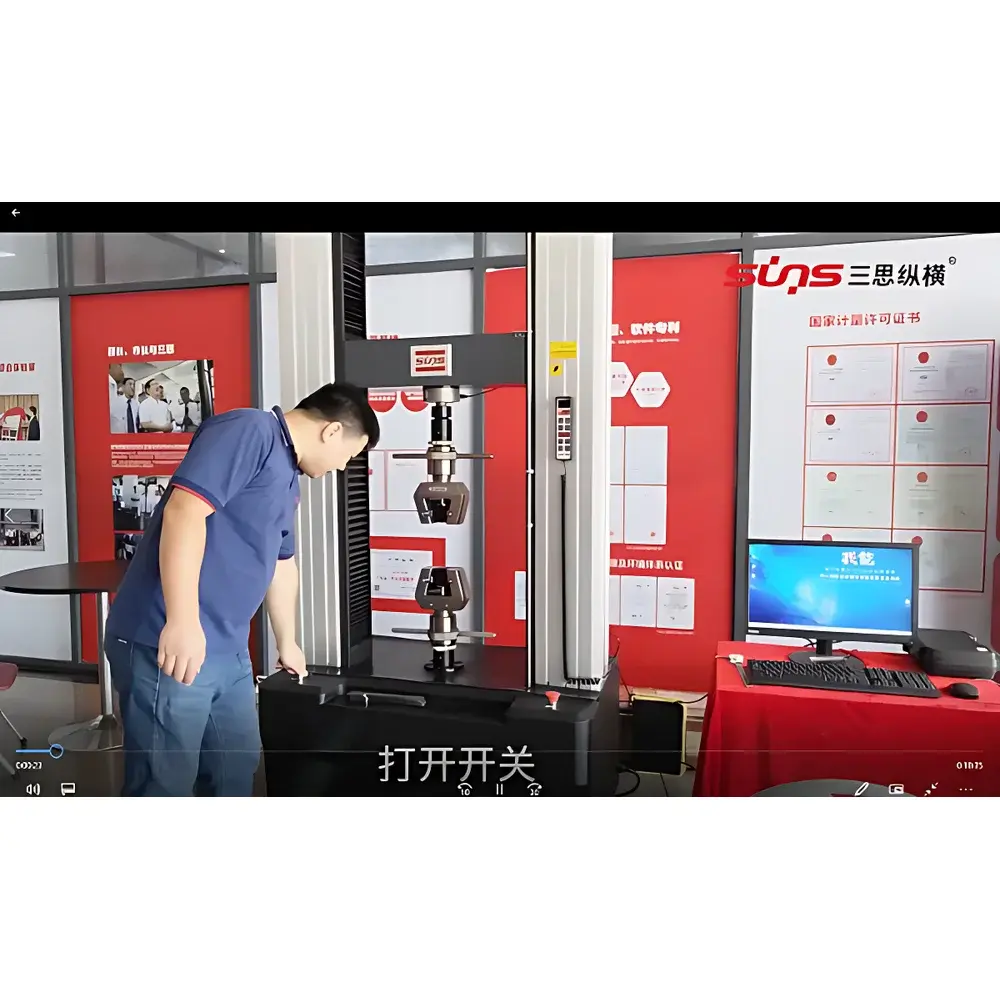
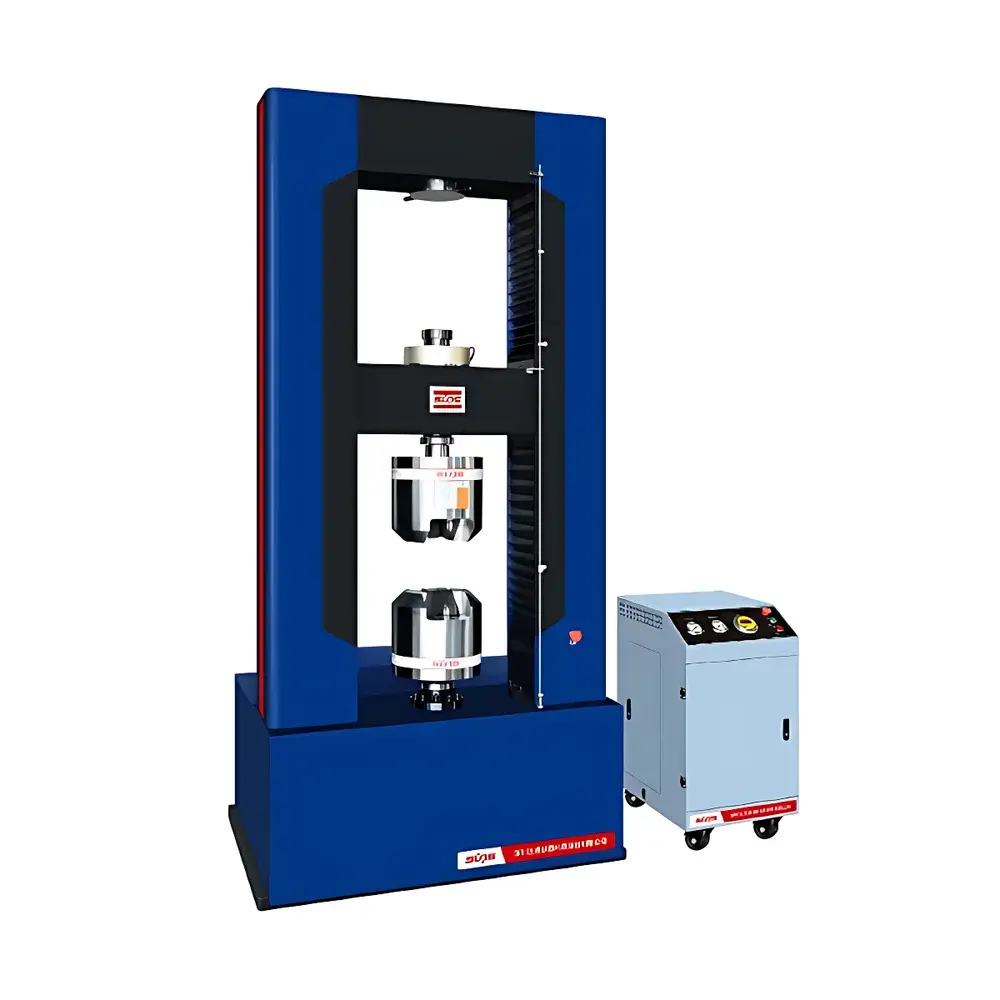
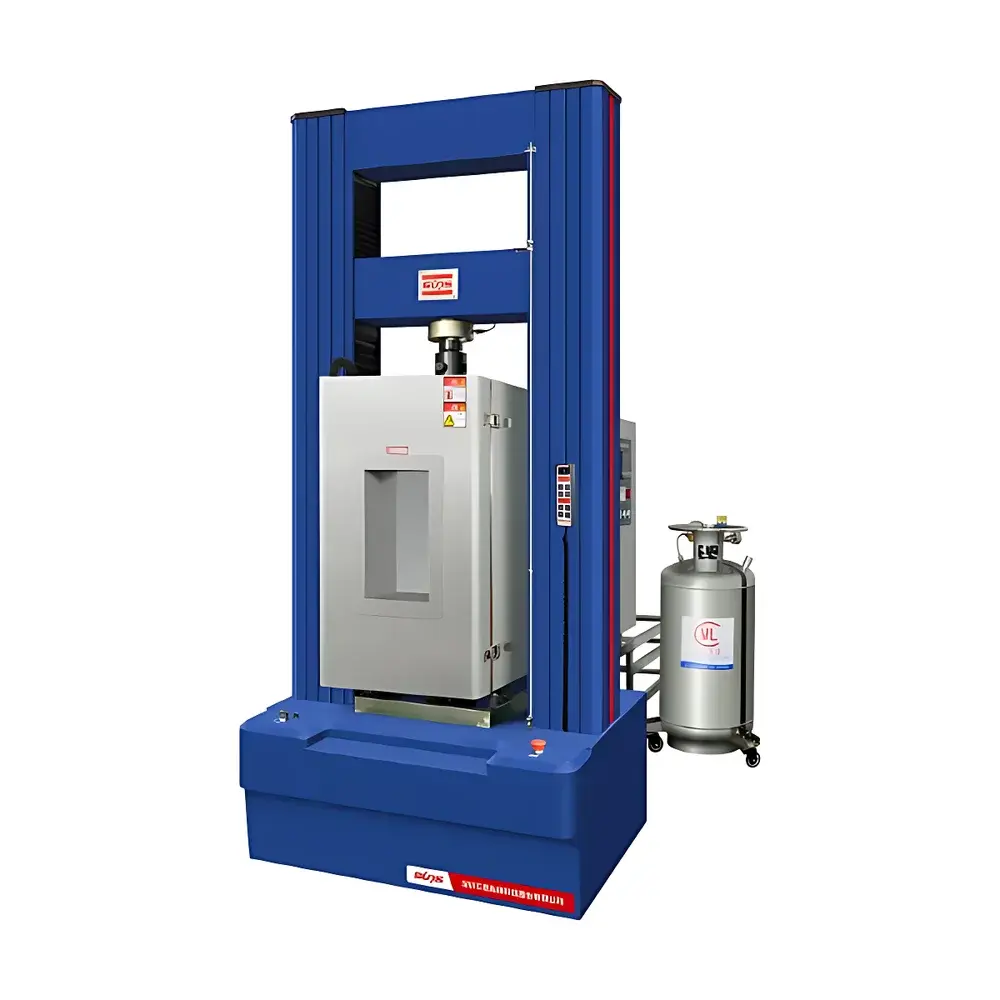
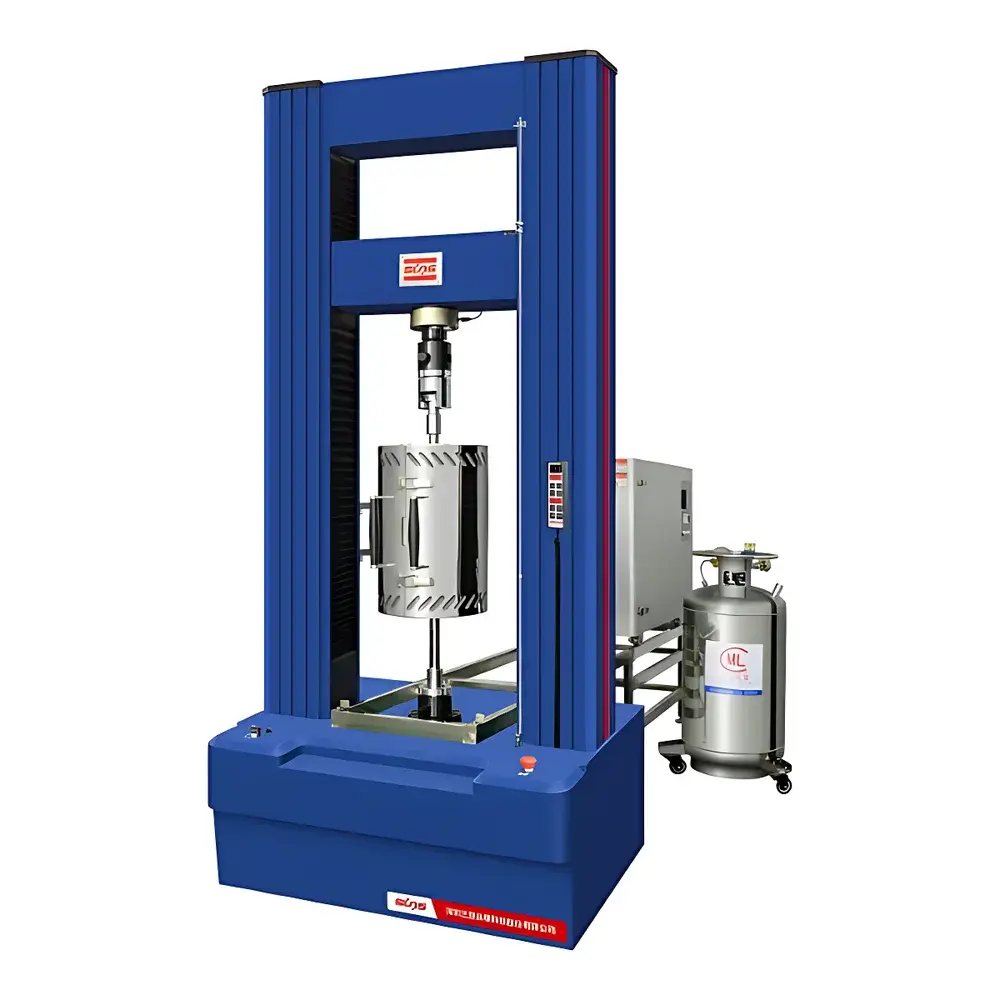
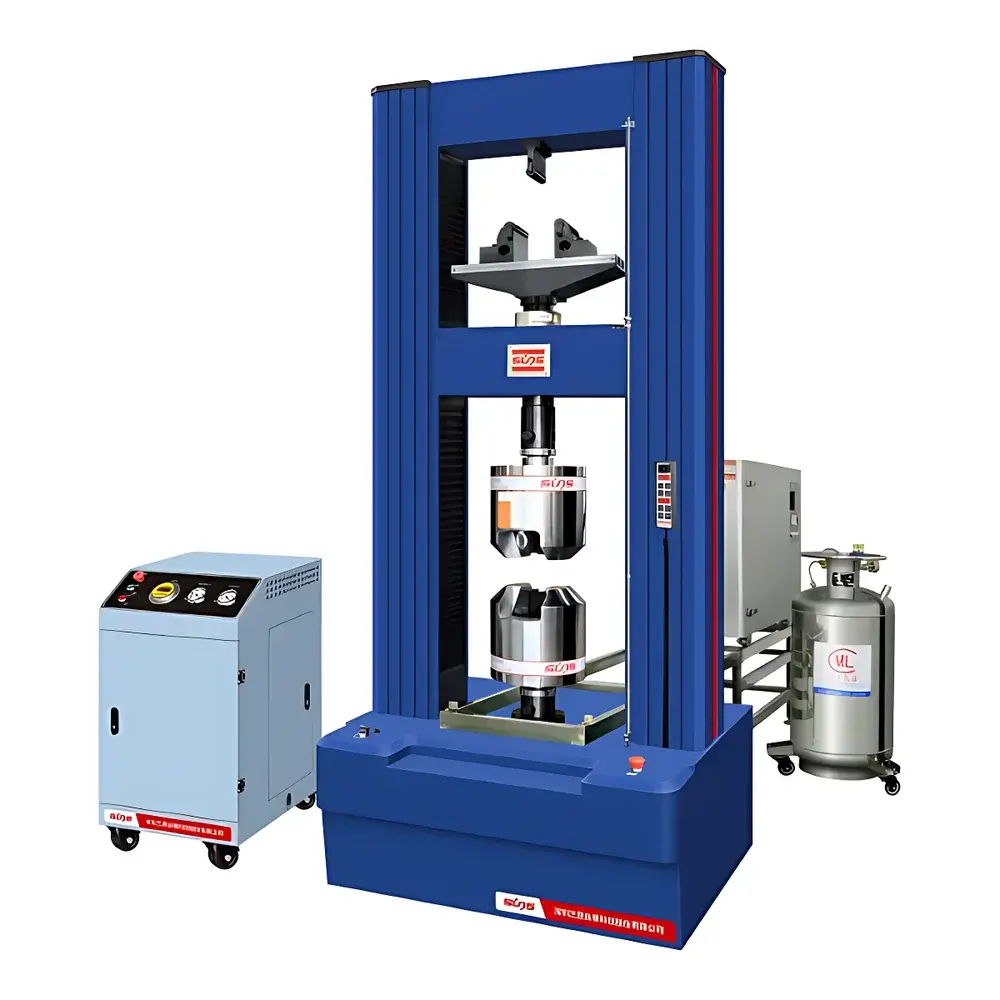
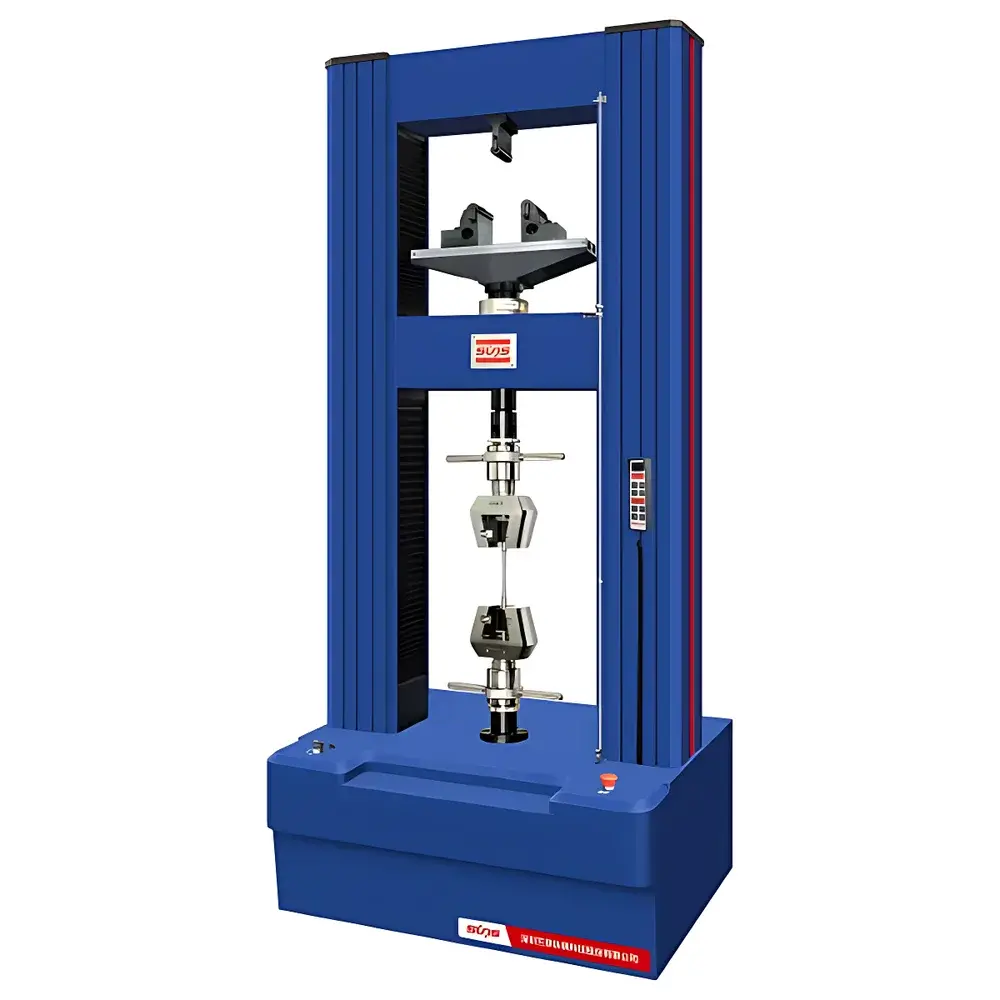
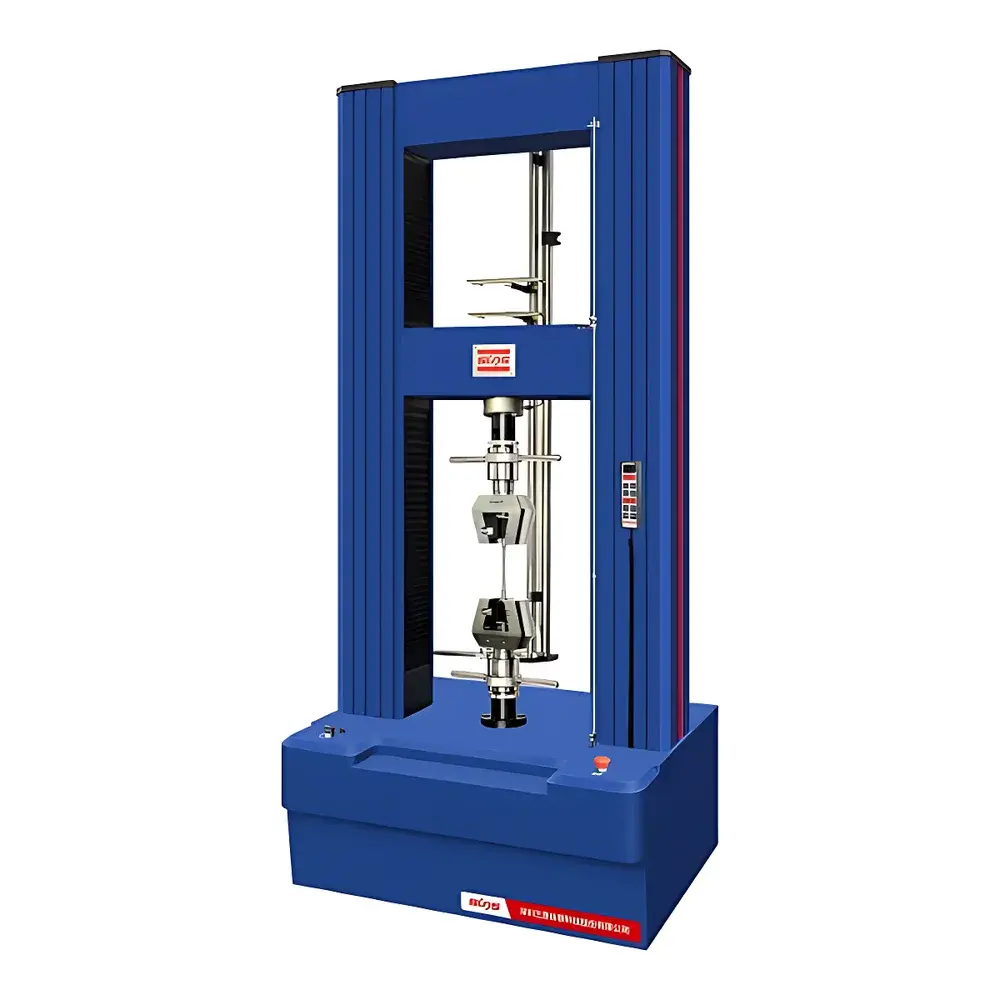
SUNS UTM5000 Series Electromechanical Universal Testing Machine
| Brand | SUNS |
|---|---|
| Origin | Shenzhen, China |
| Manufacturer Type | Direct Manufacturer |
| Product Category | Domestic |
| Model | UTM5000 Series |
| Instrument Type | Electromechanical Universal Testing Machine |
| Load Capacity Range | 0.02 N to 1000 kN |
| Load Accuracy | ±0.5% of reading |
Overview
The SUNS UTM5000 Series Electromechanical Universal Testing Machine is a high-rigidity, dual-column floor-standing system engineered for precision mechanical property characterization of metallic and non-metallic materials under static loading conditions. Based on servo-motor-driven electromechanical actuation and compliant with fundamental principles of uniaxial force-displacement transduction, the UTM5000 delivers traceable, repeatable, and standards-aligned performance across tensile, compression, flexural, shear, peel, and tear testing protocols. Its robust portal frame architecture—constructed with high-strength hardened guide columns and rigid crosshead assembly—minimizes deflection during high-load operation (up to 1000 kN), ensuring structural integrity and measurement fidelity even at full-scale capacity. Designed for integration into QC laboratories, R&D centers, and accredited testing facilities, the system supports full compliance with international material testing standards including ISO 6892-1, ASTM E4, ASTM E8/E8M, ASTM D638, ASTM D790, ASTM D3410, and GB/T 228.1.
Key Features
- High-rigidity dual-column portal frame with hardened precision guide rods and reinforced load frame—optimized for minimal axial deformation and long-term dimensional stability.
- Servo-motor-driven crosshead actuation with closed-loop digital motion control, enabling precise displacement rate regulation from 0.001 mm/min to 500 mm/min (±0.5% accuracy).
- Integrated high-resolution load cell with 1,000,000-count A/D resolution, delivering consistent 0.02 N minimum detectable force and full-range linearity without auto-ranging or hardware switching.
- Real-time synchronized data acquisition at 1000 Hz sampling and control frequency—ensuring accurate capture of transient mechanical responses, including yield onset, strain localization, and post-peak softening behavior.
- Dual-space configuration option (tensile/compression above and below the crosshead) and single-space variants—adaptable to diverse specimen geometries and standard-compliant fixture arrangements.
- Modular extensometer interface supporting clip-on, video, and non-contact strain measurement systems for ISO 527-2 and ASTM E83 Class B1/B2 compliance.
Sample Compatibility & Compliance
The UTM5000 accommodates specimens ranging from miniature metallic wires (diameter ≥0.1 mm) to large-section composites (up to 600 mm wide × 2300 mm traverse height). Standardized grips—including wedge-action, pneumatic, hydraulic, and custom-designed fixtures—ensure secure clamping without slippage or premature failure. The system is validated for use with ISO, ASTM, DIN, JIS, and GB/T test methods governing mechanical property determination. All calibration procedures align with ISO/IEC 17025 requirements; load cell certification includes traceability to national metrology institutes (e.g., NIM, NIST, PTB). For regulated environments, optional audit-trail-enabled software modules support 21 CFR Part 11 compliance, including electronic signatures, user access controls, and immutable raw data archiving.
Software & Data Management
Control and analysis are performed via SUNS TestSuite™—a Windows-based platform offering real-time graphical monitoring, multi-channel synchronized data logging, and automated report generation in PDF, Excel, and XML formats. The software implements configurable test templates aligned with ASTM E4, ISO 6892-1, and GB/T 228.1 workflows—including ramp-hold, cyclic loading, and multi-step stress-strain protocols. Built-in curve fitting algorithms calculate modulus, yield strength (0.2% offset), ultimate tensile strength, elongation at break, Poisson’s ratio, and fracture toughness indices (e.g., KIC via ASTM D5045). Raw data files are stored in open binary format (.UTD) with embedded metadata (operator ID, calibration timestamp, environmental conditions), facilitating third-party analysis and LIMS integration.
Applications
- Mechanical qualification of aerospace aluminum alloys (e.g., 2024-T3, 7075-T6) per AMS 4027 and MIL-STD-810.
- Tensile and compressive evaluation of carbon-fiber-reinforced polymer (CFRP) laminates per ASTM D3039 and D6641.
- Quality assurance of medical-grade stainless steel (ASTM F138) and titanium alloy (ASTM F136) implants.
- Characterization of elastomeric seals, thermoplastic elastomers (TPE), and rubber compounds per ASTM D412 and ISO 37.
- Structural validation of civil engineering materials—including concrete prisms (ASTM C39), mortar cubes (ASTM C109), and rebar (ASTM A615).
- Adhesion strength testing of coated substrates (e.g., automotive paint layers) using ASTM D4541 pull-off methodology.
FAQ
What is the maximum load capacity available in the UTM5000 Series?
The UTM5000 Series offers models rated from 50 kN up to 1000 kN, with standard configurations including 100 kN (UTM5105-F), 200 kN, 300 kN, 500 kN, 600 kN, and 1000 kN variants.
Does the system support ASTM E83 Class B1 extensometry?
Yes—when equipped with an optional high-accuracy clip-on extensometer (e.g., SUNS E200 series), the UTM5000 achieves Class B1 compliance per ASTM E83 for strain measurement down to 0.025 µm resolution.
Is the software compatible with laboratory information management systems (LIMS)?
Yes—the TestSuite™ platform provides ODBC and REST API interfaces for bidirectional data exchange with major LIMS vendors, supporting automated result transfer and instrument status reporting.
What power supply requirements does the 1000 kN model have?
The 1000 kN configuration requires three-phase 380 V ±10%, 50 Hz supply with dedicated 32 A circuit protection and grounding resistance ≤4 Ω.
Can the UTM5000 be used for fatigue testing?
No—the UTM5000 is designed exclusively for quasi-static mechanical testing. For dynamic or high-cycle fatigue applications, SUNS recommends the separate MTS-compatible electrodynamic or hydraulic servo systems.



