
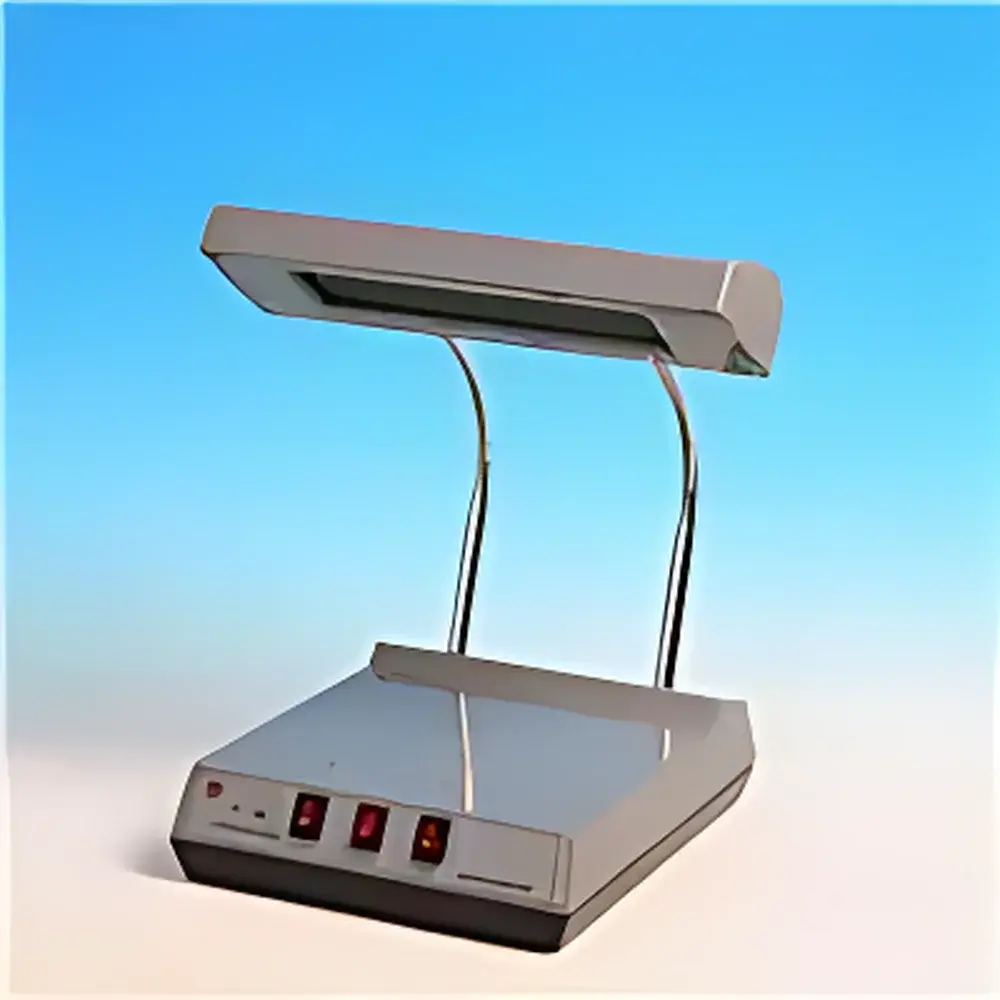
Chu Ding ZF-6 Triple-Wavelength UV Transilluminator and Gel Documentation System
| Brand | Chu Ding |
|---|---|
| Model | ZF-6 |
| Type | Benchtop UV/Blue Light Transilluminator & Gel Cutter |
| Wavelengths | 254 nm (short-wave UV), 365 nm (long-wave UV), Visible White Light (302 nm optional) |
| UV Filter Size | 200 × 50 mm |
| UV Lamp Power | 6 W (each UV channel), 4 W (visible) |
| Input Voltage | AC 220 V ±10%, 50 Hz |
| Dimensions (W×D×H) | 280 × 265 × 300 mm |
| Origin | Shanghai, China |
| Compliance | CE-marked for laboratory use per IEC 61010-1 |
Overview
The Chu Ding ZF-6 Triple-Wavelength UV Transilluminator and Gel Documentation System is a benchtop analytical instrument engineered for nucleic acid and protein visualization, gel documentation, and targeted excision of DNA/RNA bands under controlled ultraviolet and visible illumination. It operates on the principle of fluorescence excitation: when ethidium bromide (EtBr), SYBR® Safe, or other nucleic acid intercalating dyes are exposed to UV radiation at 254 nm or 365 nm, they absorb photons and re-emit visible light (typically orange-red), enabling rapid detection of electrophoretic bands in agarose or polyacrylamide gels. The system integrates three distinct excitation sources—short-wave UV (254 nm), long-wave UV (365 nm), and white visible light—within a compact, open-frame lamp-style housing, allowing direct real-time observation, manual gel cutting, and qualitative assessment without enclosure constraints. Its optical architecture includes high-transmission 200 × 50 mm UV-filter glass that blocks harmful stray radiation while maximizing signal-to-noise ratio for low-background imaging.
Key Features
- Benchtop, lamp-style design with adjustable height and tilt angle for ergonomic operation during gel inspection and excision
- Triple-wavelength excitation: independently switchable 254 nm (high-energy DNA cleavage & visualization), 365 nm (lower photodamage, ideal for sensitive samples and preparative work), and visible white light (for Coomassie- or silver-stained protein gels)
- Optional 302 nm wavelength module available for enhanced compatibility with newer low-toxicity dyes (e.g., GelRed®, GelGreen®)
- Stable, low-heat 6 W cold-cathode UV lamps with >5,000-hour service life and minimal spectral drift over time
- Integrated safety shutter and UV-blocking acrylic shield (removable for direct access) compliant with IEC 62471 photobiological safety classification for UV-A/UV-C exposure limits
- Robust aluminum alloy chassis with ESD-safe surface finish and IP20-rated electrical enclosure
Sample Compatibility & Compliance
The ZF-6 supports standard slab gels (up to 15 × 15 cm), mini-gels, TLC plates, and chromatographic strips. It is routinely employed in applications requiring regulatory traceability, including QC testing in pharmaceutical manufacturing (per USP and EP 2.6.12), food safety screening (aflatoxin B1 detection per AOAC 993.12), and forensic biological sample analysis. While not FDA 21 CFR Part 11–certified as a standalone data system, its output is compatible with externally validated image capture systems (e.g., CCD-based gel doc units) that support audit trails, electronic signatures, and raw file archiving per GLP/GMP requirements. All UV components meet RoHS 2011/65/EU and REACH SVHC criteria.
Software & Data Management
The ZF-6 is a hardware-only platform with no embedded firmware or proprietary software. It interfaces seamlessly with third-party imaging solutions—including ImageLab™ (Bio-Rad), AlphaView SA (ProteinSimple), and open-source tools like Fiji/ImageJ—via standard USB- or HDMI-connected cameras. Users may configure automated exposure logging, timestamped image metadata embedding (EXIF), and batch export to DICOM or TIFF formats for LIMS integration. When paired with validated acquisition software, full compliance with 21 CFR Part 11 Annex 11 (EU GMP) is achievable through external role-based access control and electronic record retention protocols.
Applications
- DNA/RNA band identification and semi-quantitative analysis in agarose and PAGE gels
- Preparative gel excision under 365 nm illumination to minimize thymine dimer formation and preserve template integrity for cloning or sequencing
- TLC plate development monitoring for alkaloids, steroids, antibiotics, and flavonoids in pharmacognosy and natural product chemistry
- Authentication of textile fibers (e.g., distinguishing wool from acrylic via differential autofluorescence)
- Crude oil fingerprinting and polymer additive screening in petrochemical QA labs
- Aflatoxin M1 and B1 detection in dairy and cereal matrices using immunoaffinity column–coupled UV visualization
FAQ
Is the ZF-6 suitable for UV crosslinking of nucleic acids to membranes?
No — it lacks the high-intensity 254 nm irradiance (>10 mW/cm²) and calibrated dose control required for efficient UV crosslinking. It is optimized for visualization and excision only.
Can I replace the 254 nm lamp with a 302 nm lamp without modification?
Yes — the lamp sockets and ballast are mechanically and electrically compatible; however, filter replacement (to match 302 nm transmission peak) is recommended for optimal performance.
Does the unit include a camera or imaging software?
No — the ZF-6 is a dedicated illumination platform. A separate camera system and analysis software must be selected and validated per user application requirements.
What safety certifications does the ZF-6 hold?
It conforms to IEC 61010-1 (Safety Requirements for Electrical Equipment for Measurement, Control, and Laboratory Use) and carries CE marking for the European Economic Area. UV emission profiles comply with IEC 62471 Risk Group 2 (Moderate Risk) for UV-A and UV-C spectral bands.
Is routine calibration required?
No scheduled calibration is mandated; however, annual verification of UV irradiance output using a NIST-traceable handheld radiometer (e.g., ILT950UV) is recommended for laboratories operating under ISO/IEC 17025 or CAP accreditation.
Related Products




