
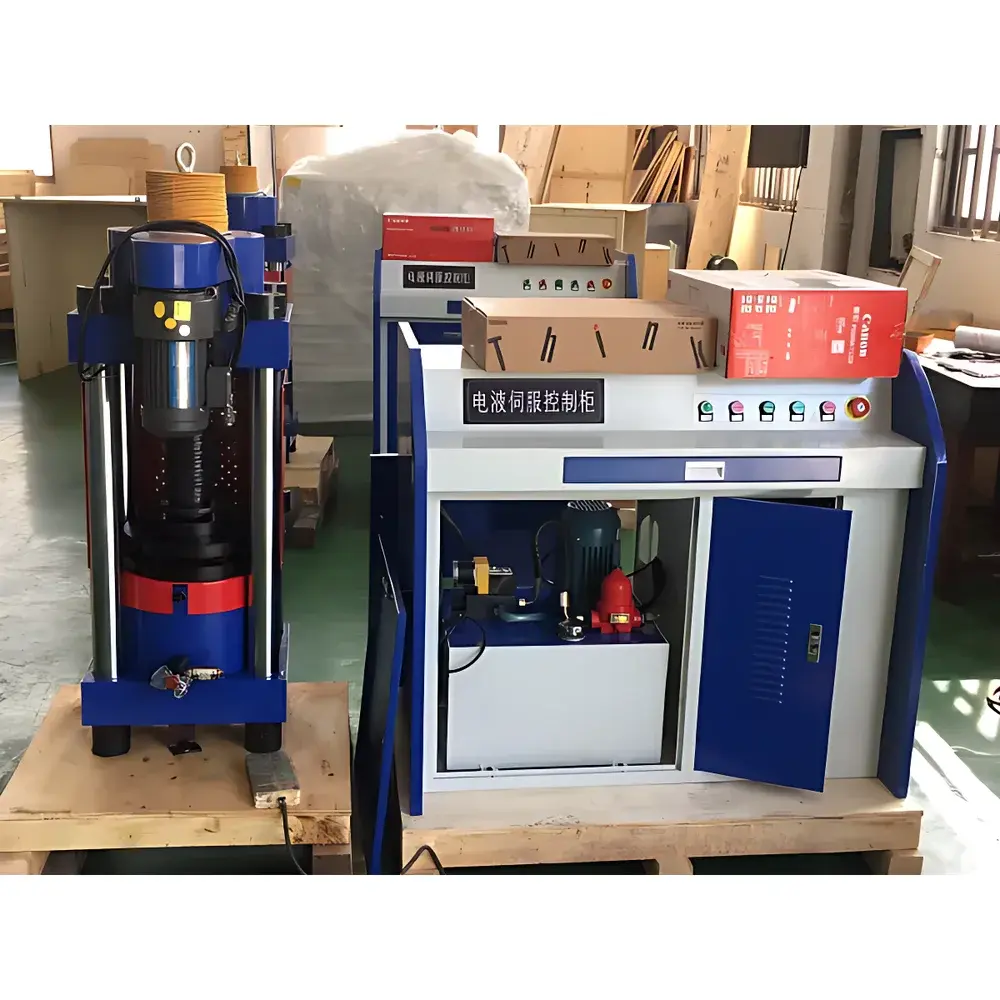
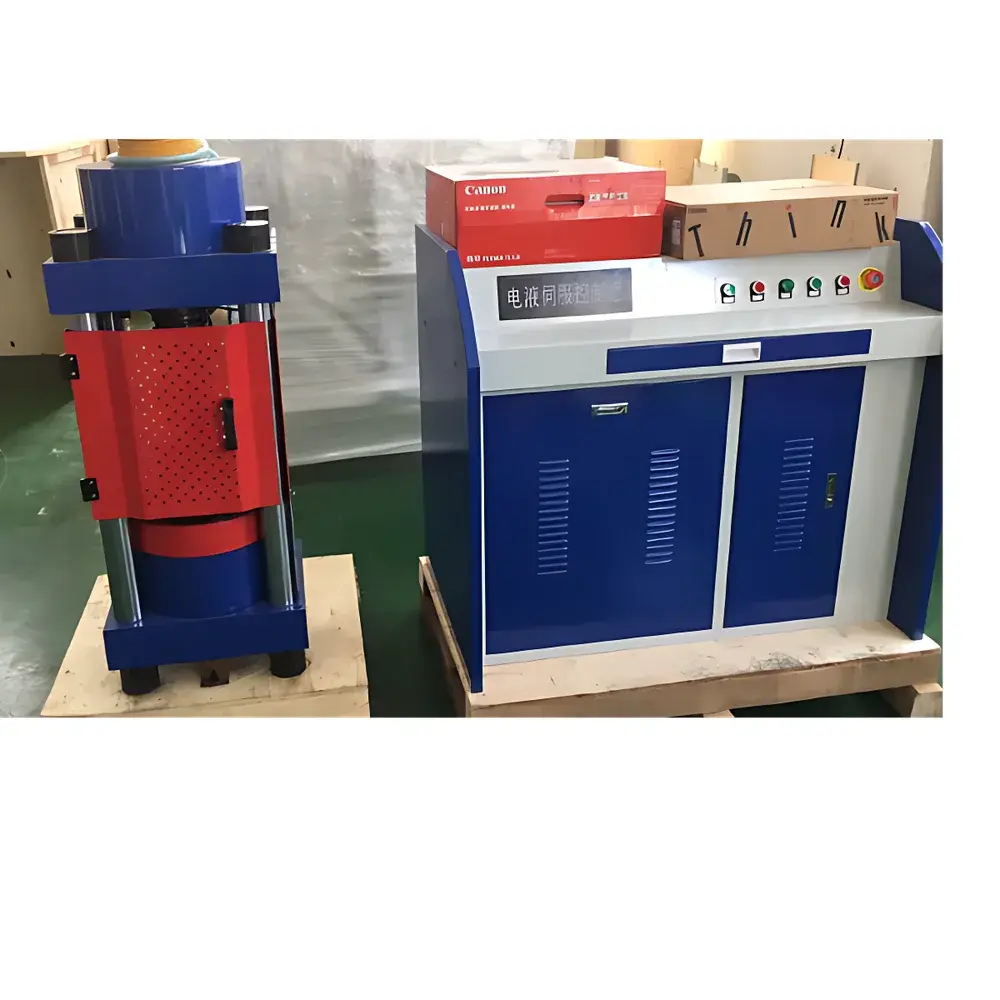
Qinji QJYL3000KN Constant-Stress Compression Testing Machine
| Brand | Qinji |
|---|---|
| Origin | Shanghai, China |
| Manufacturer Type | Authorized Distributor |
| Country of Origin | China |
| Model | QJYL3000KN |
| Max. Test Load | 3000 kN |
| Loading Rate | 1–15 mm/s (adjustable) |
| Platen Spacing (clear height) | 320 mm |
| Platen Dimensions | 320 × 320 mm or 400 × 400 mm |
| Accuracy Class | ISO 7500-1 Class I |
| Control System | Servo-controlled hydraulic actuation with PC-based closed-loop feedback |
| Compliance | ASTM C39/C109/C140, ISO 7500-1, GB/T 7742-2008, JGJ/T 70-2009 |
Overview
The Qinji QJYL3000KN Constant-Stress Compression Testing Machine is a high-capacity, servo-controlled mechanical testing system engineered for precise and repeatable uniaxial compressive strength evaluation of rigid construction materials—including concrete cubes and cylinders, fired clay bricks, natural stone specimens, autoclaved aerated concrete (AAC), and cementitious mortars. Operating on the principle of closed-loop stress-rate control, the machine maintains a user-defined constant stress gradient (MPa/s) throughout the loading phase by dynamically adjusting actuator displacement velocity in real time—ensuring compliance with standardized test protocols that require strict adherence to prescribed stress application rates (e.g., 0.2–0.6 MPa/s per ASTM C39). Its robust dual-column frame architecture, precision-ground platens, and high-resolution load cell (rated at 3000 kN with Class I accuracy per ISO 7500-1) deliver long-term dimensional stability and measurement repeatability under sustained high-load conditions.
Key Features
- Servo-hydraulic actuation system with proportional pressure control and integrated digital PID regulation for true constant-stress, constant-strain, and constant-displacement test modes
- Programmable loading rate from 1 to 15 mm/s, enabling full compatibility with international standard ramp profiles for concrete (ASTM C39), masonry units (ASTM C67), and geotechnical specimens
- Adjustable platen spacing (320 mm clear height) accommodates standard and oversized specimens—supporting both 150 mm and 200 mm concrete cubes, as well as 240 × 115 × 53 mm brick units
- Interchangeable platen sets: 320 × 320 mm and 400 × 400 mm hardened steel platens with parallelism tolerance ≤ 0.02 mm/m, certified per ISO 7500-1 Annex B
- PC-based control interface with real-time data acquisition (≥ 100 Hz sampling), dynamic curve plotting (load vs. displacement, stress vs. strain), and auto-stop logic upon peak load detection or preset deformation limit
- Integrated safety interlocks including emergency stop circuit, overload cut-off, and platen collision prevention via proximity sensors
Sample Compatibility & Compliance
The QJYL3000KN is validated for use with standardized specimen geometries defined in major national and international codes: ASTM C39 (concrete cylinders), ASTM C109 (mortar cubes), ASTM C67 (clay and concrete masonry units), EN 12390-3, ISO 679, GB/T 50081 (Chinese standard for concrete mechanical testing), and JGJ/T 70 (building mortar test methods). All force measurements are traceable to national metrological standards and conform to ISO/IEC 17025 requirements when operated within an accredited laboratory environment. The system supports GLP-compliant audit trails—including operator ID, timestamped parameter settings, raw data export (CSV, XML), and tamper-evident report generation—as required for regulatory submissions under FDA 21 CFR Part 11 when used in preconstruction material qualification workflows.
Software & Data Management
The embedded Windows-based testing software provides full IEC 61508-aligned functional safety during operation and enables multi-level user access control (administrator, technician, viewer). Test sequences are defined via intuitive wizard-driven templates aligned with ASTM, ISO, and GB standards. All acquired data—including instantaneous load, displacement, calculated stress/strain, and environmental metadata—are stored in a relational database with automatic versioning and daily backup scheduling. Export options include PDF test reports with embedded digital signatures, Excel-compatible datasets, and XML files compliant with ASTM E1447 for laboratory information management system (LIMS) integration. Audit logs record every parameter change, calibration event, and report generation action with immutable timestamps—meeting GMP documentation requirements for quality assurance departments in infrastructure contracting firms and third-party certification labs.
Applications
This machine serves as a core asset in civil engineering laboratories, ready-mix concrete plants, highway construction QA/QC divisions, building materials certification centers, and university structural materials research facilities. Typical applications include: compressive strength validation of Grade C20–C80 concrete batches; conformity assessment of fired clay bricks per ISO 3107; evaluation of compressive performance of recycled aggregate concrete; routine quality surveillance of precast concrete elements; and R&D testing of ultra-high-performance concrete (UHPC) formulations under controlled loading regimes. Its programmable multi-step protocols also support creep and relaxation studies when paired with optional extensometer modules.
FAQ
What standards does the QJYL3000KN comply with for calibration and verification?
It meets ISO 7500-1:2018 Class I accuracy requirements for static force measurement systems and is verified using certified reference loads traceable to NIM (China National Institute of Metrology) or equivalent NMIs.
Can the system be integrated into an existing LIMS or ERP platform?
Yes—via OPC UA or TCP/IP-based API interfaces, supporting bidirectional data exchange with common LIMS vendors (e.g., LabWare, STARLIMS) and enterprise resource planning systems.
Is remote diagnostics and firmware update capability supported?
The control unit includes Ethernet connectivity and supports secure remote maintenance through authenticated SSH tunneling and encrypted firmware OTA updates.
What is the recommended maintenance schedule for long-term accuracy retention?
Quarterly verification of load cell linearity and platen parallelism is advised; annual recalibration by an ISO/IEC 17025-accredited service provider is recommended for regulated environments.
Does the system support automated reporting in multiple languages?
Yes—the software interface and report templates support English, Spanish, French, Arabic, and Simplified Chinese with locale-specific units and formatting conventions.



