
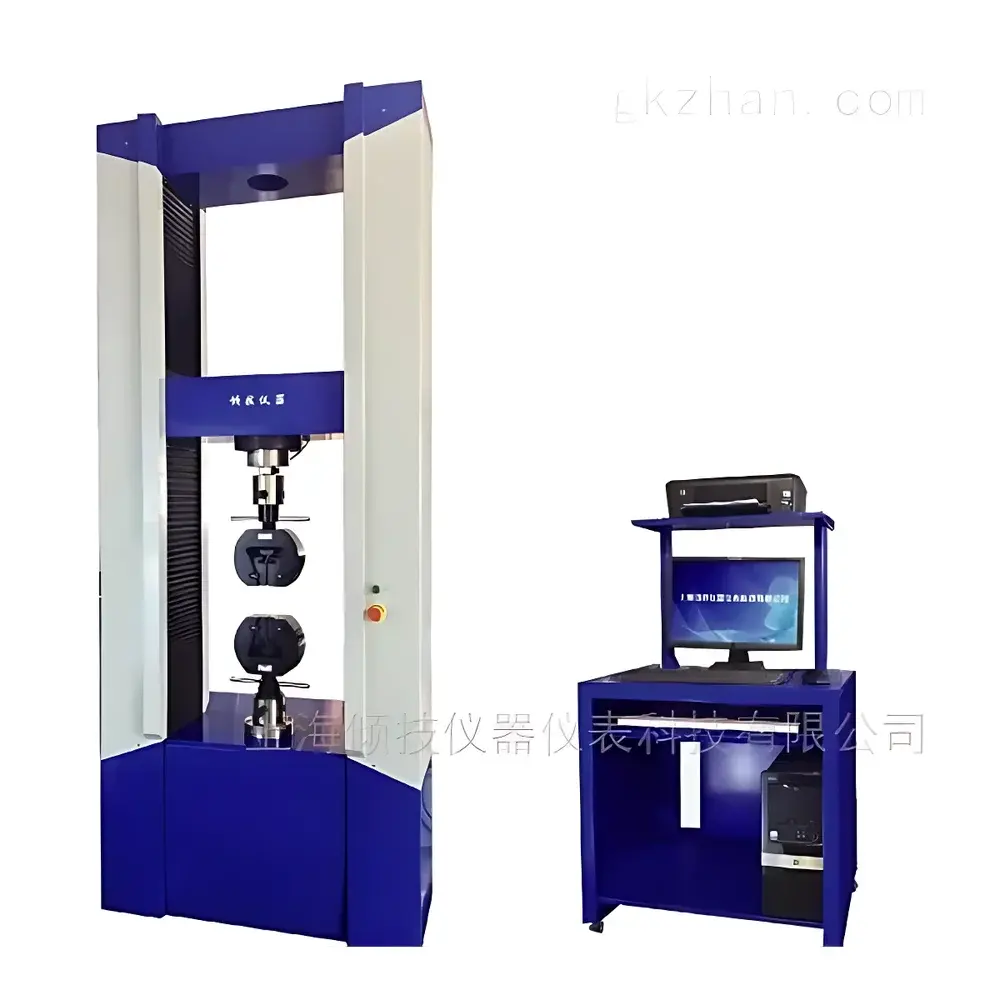
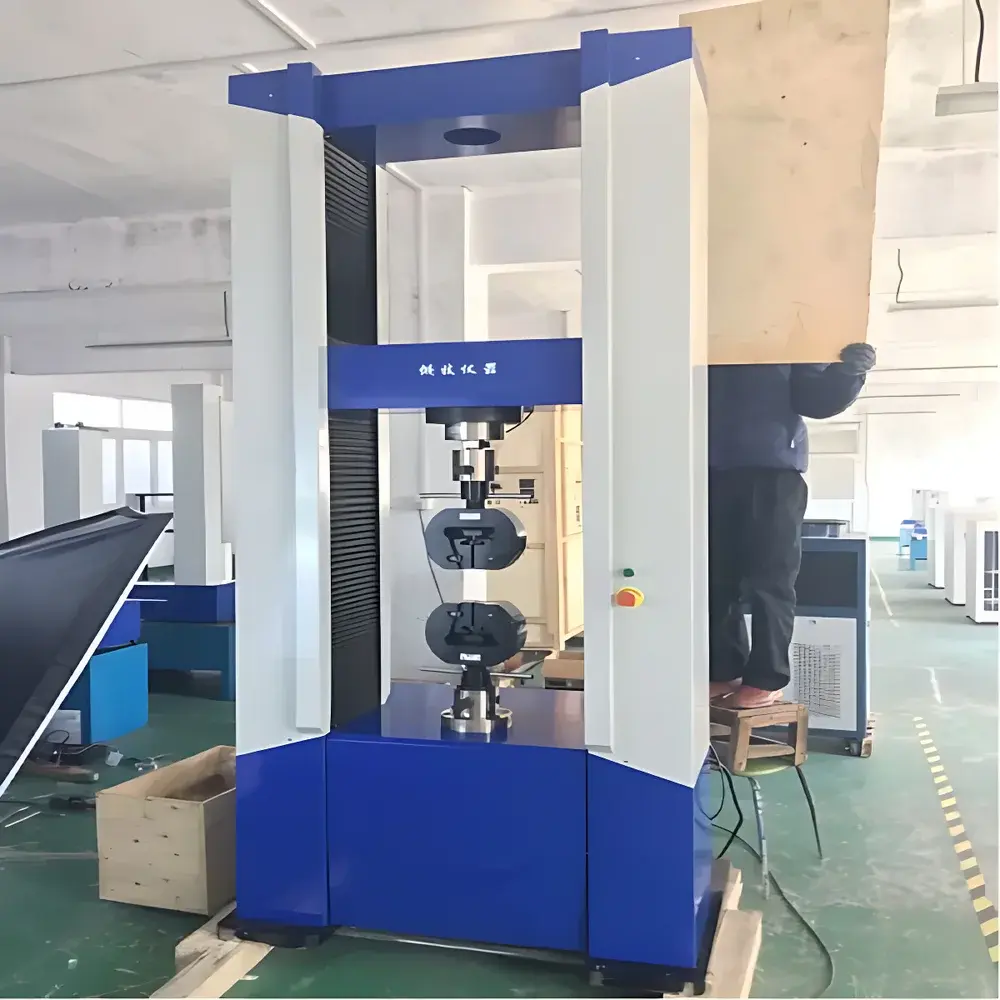
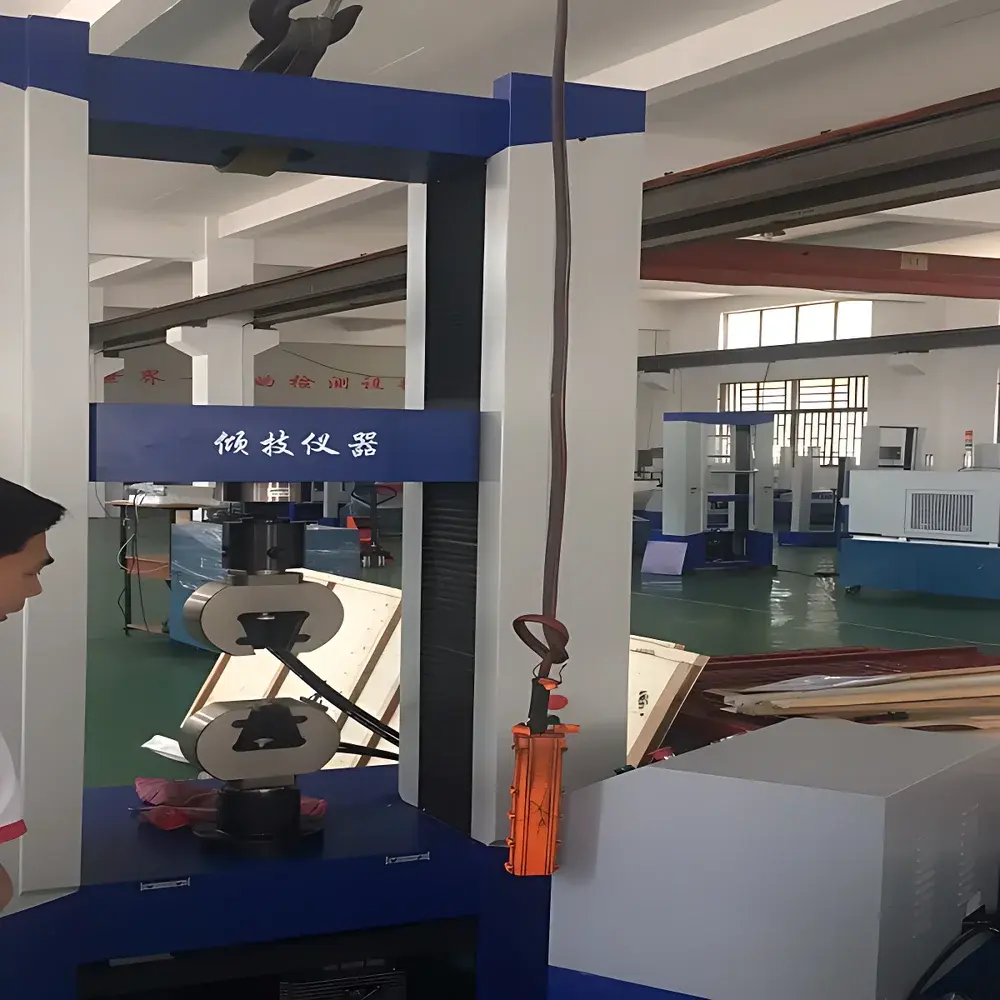
QJ-212 Universal Testing Machine (UTM) for Metallurgical and Steel Strength Testing
| Brand | Qinsun |
|---|---|
| Origin | Shanghai, China |
| Model | QJ-212 |
| Instrument Type | Electromechanical Universal Testing Machine |
| Load Capacity | 0.02 N to 500 kN |
| Load Accuracy | ±0.5% |
| Force Resolution | ±1/250,000 (full-scale, no range switching) |
| Effective Test Width | 500 mm |
| Effective Tensile Stroke | 600 mm or 800 mm |
| Test Speed Range | 0.001–1000 mm/min |
| Speed Accuracy | ±0.5% of indicated value |
| Displacement Measurement Accuracy | ±0.5% of indicated value |
| Strain/Deformation Measurement Accuracy | ±0.5% of indicated value |
| Crosshead Travel Control | Dual-speed (fast/slow) with jog function |
| Safety Protection | Electronic limit switch, overload protection at 110% of full scale |
| Return Mode | Manual or automatic post-test return |
| Dimensions (W×D×H) | 1000 × 680 × 2450 mm |
| Weight | 1250 kg |
| Compliance | ISO 6892-1, ASTM E8/E21, JIS Z2241, DIN 50125, GB/T 228.1 |
Overview
The QJ-212 Universal Testing Machine is an electromechanical materials testing system engineered for high-precision mechanical property evaluation of ferrous and non-ferrous metals, alloys, and structural steels used in metallurgical production, quality control, and R&D laboratories. Based on servo-controlled electrodynamic actuation and closed-loop force/displacement feedback architecture, the system performs standardized uniaxial tensile, compression, bending, shear, peel, and ring stiffness tests in accordance with ISO 6892-1 (metallic materials – tensile testing), ASTM E8/E21 (tension testing of metallic materials), JIS Z2241, DIN 50125, and GB/T 228.1. Its dual-range load cell design supports seamless measurement from ultra-low forces (0.02 N) up to 500 kN, enabling consistent characterization across thin foils, wire specimens, rolled plates, cast billets, and welded joints without manual sensor swapping.
Key Features
- High-resolution force measurement system with ±1/250,000 full-scale resolution—internally calibrated, no range switching required across the entire 0.02 N–500 kN span.
- Precision crosshead positioning with adjustable speed from 0.001 to 1000 mm/min, maintaining ±0.5% speed accuracy throughout the operational range.
- Dual-mode crosshead control: jog-enabled fast/slow travel for rapid specimen alignment and fine positioning during setup.
- Integrated electronic limit switches and programmable overload cutoff (triggered at 110% of selected load range) ensure operator safety and equipment integrity.
- Robust structural frame (1250 kg mass, 2450 mm height) minimizes deflection under peak load, supporting high-stiffness test configurations per ASTM E4 compliance requirements.
- Windows-based control software provides real-time dynamic curve visualization (load vs. displacement, stress vs. strain), digital filtering, and post-test data manipulation including curve overlay, zoom, offset correction, and export to CSV, PDF, or XML formats.
Sample Compatibility & Compliance
The QJ-212 accommodates standard metallurgical specimens per ISO 6892-1 (Type 1A, 2A, 5A geometries), ASTM E8 flat and round bar coupons, and custom-shaped samples up to 500 mm wide and 600–800 mm gauge length. Gripping systems support wedge-action, pneumatic, and hydraulic options (optional accessories) for high-friction steel surfaces and high-temperature testing fixtures. All firmware and software modules are designed to support audit-ready operation: test method configuration, user access logs, electronic signatures, and immutable raw data storage align with GLP/GMP documentation principles and FDA 21 CFR Part 11 readiness when deployed with validated IT infrastructure.
Software & Data Management
The embedded Windows OS platform runs proprietary Qinsun TestSuite v4.x, a deterministic real-time acquisition engine capable of sampling at ≥1 kHz. The interface supports multi-channel synchronization (load, displacement, extensometer, temperature if equipped), automated test sequencing, pass/fail logic based on user-defined criteria (e.g., yield point detection per ASTM E8 Annex A3), and batch reporting compliant with ISO/IEC 17025 laboratory accreditation requirements. Raw binary data files include metadata headers (operator ID, timestamp, calibration certificate ID, environmental conditions), ensuring traceability and reproducibility. Export functions comply with LIMS integration protocols via ODBC and HL7-compatible wrappers.
Applications
- Tensile strength, yield strength (upper/lower), elongation at break, and reduction of area measurement for hot-rolled coil, cold-rolled sheet, galvanized steel, and stainless grades (304, 316, duplex).
- Compression testing of sintered iron powder compacts, refractory bricks, and slag blocks per ASTM C133.
- Bending modulus and fracture toughness estimation for structural beams and rail sections using three-point loading per ISO 7438.
- Shear strength assessment of spot-welded joints and riveted assemblies in automotive chassis components.
- Ring stiffness evaluation of steel-reinforced polymer composites used in pipeline applications per ASTM D2412.
- Quality conformance verification against mill test reports (MTRs) and supplier certification packages in incoming inspection workflows.
FAQ
What standards does the QJ-212 support out-of-the-box?
ISO 6892-1, ASTM E8/E21, JIS Z2241, DIN 50125, and GB/T 228.1 test methods are preconfigured in the software; additional standards can be implemented via customizable test templates.
Is the system compatible with extensometers for true strain measurement?
Yes—the machine features analog and digital input channels for clip-on, video, or laser extensometers (e.g., Qinsun VEM-100 or MTS 632 series), with automatic zeroing and gauge length registration.
Does the controller support multi-step cyclic testing?
Yes—programmable waveform generators enable tension-compression fatigue profiles, creep hold sequences, and ramp-hold-ramp protocols with dwell time precision of ±0.1 s.
What maintenance intervals are recommended for long-term accuracy?
Annual recalibration of load cells and displacement encoders is advised; daily verification using certified reference standards (e.g., NIST-traceable deadweight sets) is required per ISO/IEC 17025 Clause 6.5.
Can test data be integrated into enterprise LIMS or MES platforms?
Yes—via configurable API endpoints, SQL database mirroring, or direct file drop integration using industry-standard SFTP or OPC UA protocols.



