
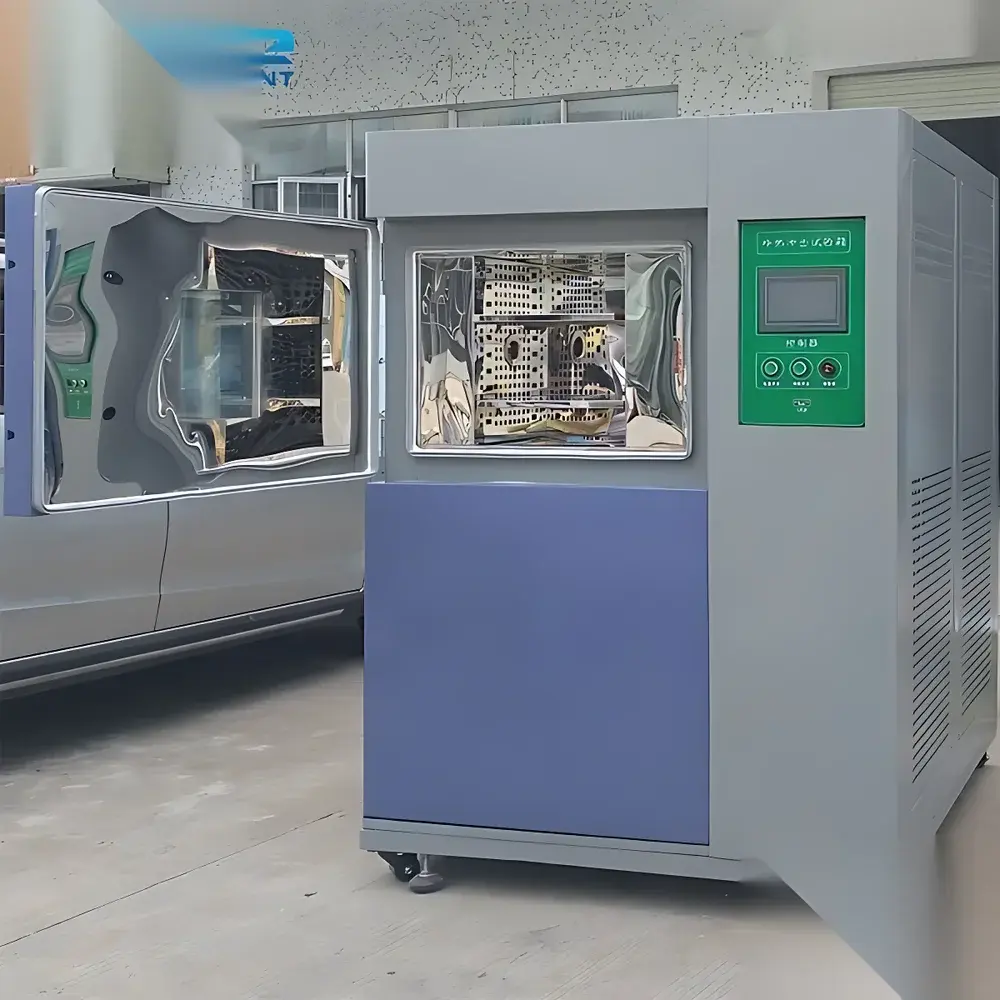
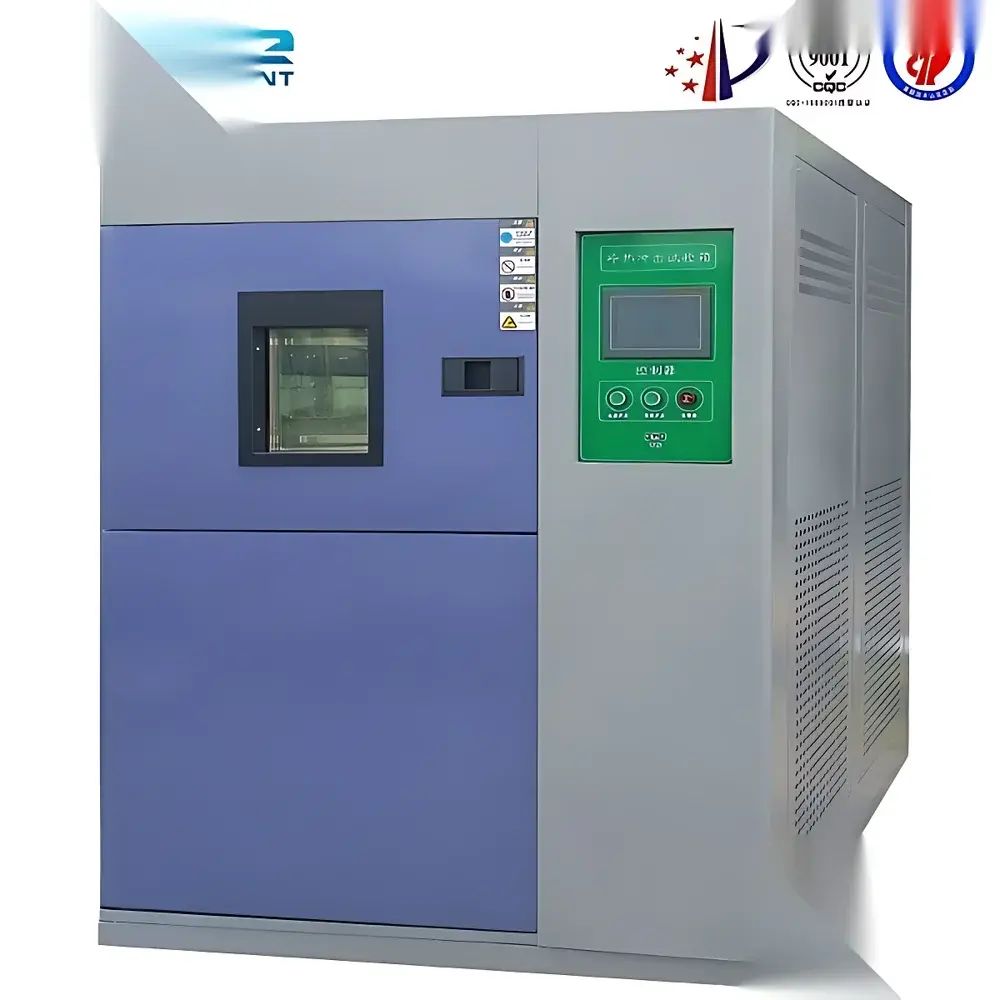
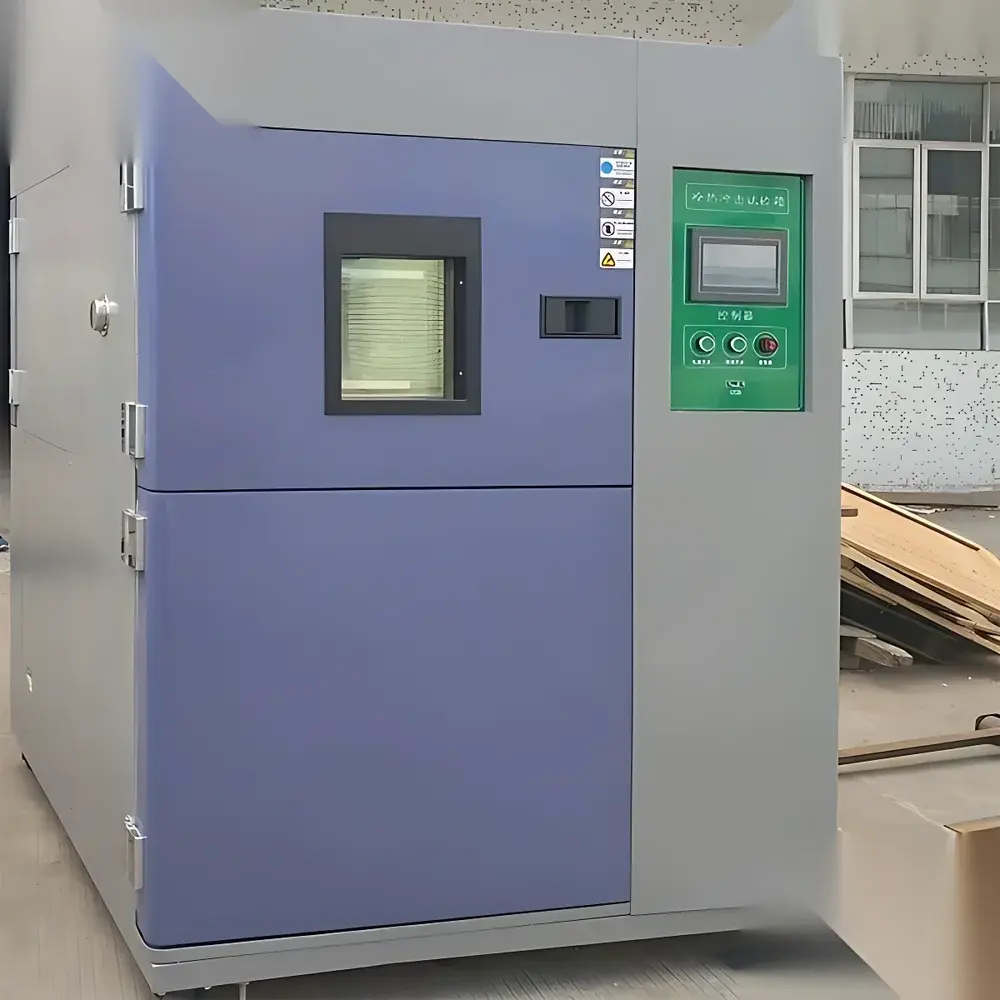
Thermal Shock Test Chamber – Rapid Temperature Transition Environmental Test System
| Brand | OEM / Custom Brand |
|---|---|
| Origin | Imported |
| Manufacturer Type | Authorized Distributor |
| Price | USD 14,500 (FOB) |
| Temperature Range | -65°C to +150°C |
| Transition Time | ≤15 s (between chambers) |
| Internal Volume | Standard 150 L, 250 L, 400 L, or 800 L configurations available |
| Compliance | IEC 60068-2-14, MIL-STD-810H Method 503.5, JIS Z 8702, GB/T 2423.22 |
Overview
The Thermal Shock Test Chamber – Rapid Temperature Transition Environmental Test System is an engineered solution for evaluating material and component reliability under extreme, rapid thermal cycling conditions. Based on the two-chamber (hot/cold) or three-zone (hot/ambient/cold) forced-air thermal shock methodology, this system subjects test specimens to abrupt temperature transitions—typically between −65 °C and +150 °C—in accordance with internationally recognized environmental stress screening (ESS) protocols. Unlike conventional temperature-humidity chambers, this instrument isolates thermal mass via physically separated high- and low-temperature zones, enabling sub-15-second transfer times and minimizing thermal lag. It is widely deployed in aerospace qualification, automotive electronics validation, semiconductor packaging testing, and LED/optoelectronic device certification where latent defects induced by coefficient-of-thermal-expansion (CTE) mismatch must be accelerated and identified prior to field deployment.
Key Features
- Double-chamber architecture with independent refrigeration and heating circuits—ensuring zero cross-contamination of thermal zones and eliminating recovery delay during transition cycles
- CNC-machined stainless-steel (SUS304) inner chamber with mirror-finish surface and electrostatically sprayed A3 steel outer casing for corrosion resistance and long-term dimensional stability
- Integrated 300 mm × 400 mm double-layer heated observation window with embedded LED lighting and anti-fog coating for real-time visual monitoring without thermal interference
- Standard 50 mm diameter cable/port access on left side wall, fitted with silicone gasket and clamping collar for secure external signal/power feedthrough
- Industrial-grade color touchscreen controller with PID auto-tuning algorithm, programmable ramp rates (0.5–10 °C/min), and user-accessible parameter lockout to prevent accidental modification during qualification runs
- Hermetically sealed French Tecumseh (or equivalent) semi-hermetic compressors paired with dual-circuit cascade refrigeration—enabling stable operation at −65 °C while maintaining compressor longevity and oil return integrity
Sample Compatibility & Compliance
This chamber accommodates standard test specimens up to 400 mm × 400 mm × 400 mm (W×D×H) across configurable internal volumes (150 L to 800 L). Fixtures, trays, and DUT mounting plates are compatible with IPC-9701, JEDEC JESD22-A104, and AEC-Q200 mechanical interface standards. The system meets full requirements of IEC 60068-2-14 (Test N: Change of temperature), MIL-STD-810H Method 503.5 (Temperature Shock), and JIS Z 8702. Optional calibration certificates traceable to NIST or PTB standards are available upon request. All electrical components comply with CE, UL 61010-1, and RoHS directives; optional explosion-proof variants meet ATEX Category 2G requirements for hazardous area use.
Software & Data Management
The embedded controller supports CSV export of time-stamped temperature logs (sampling interval: 1–60 s), cycle count tracking, and alarm history with timestamped event codes (e.g., “CHAMBER_DOOR_OPEN”, “TEMP_DEVIATION_EXCEED_±2°C”). Optional Ethernet/IP or RS-485 Modbus RTU interface enables integration into LabVIEW, MATLAB, or MES platforms for automated test sequencing and SPC analysis. For regulated environments, a validated software package compliant with FDA 21 CFR Part 11 is available—including electronic signatures, audit trail, and role-based access control. Data retention exceeds 12 months onboard; external USB logging supports long-duration qualification campaigns exceeding 1,000 thermal cycles.
Applications
- Aerospace: Validation of avionics enclosures, MEMS inertial sensors, and composite structural joints per DO-160 Section 4.6
- Automotive: Screening of ADAS camera modules, battery management ICs, and powertrain control units against ISO 16750-4 and GMW3172
- Semiconductors: Reliability assessment of wafer-level CSP, flip-chip packages, and SiC MOSFETs under JEDEC JESD22-A104D
- Optoelectronics: Life-cycle stress testing of OLED displays, VCSEL arrays, and fiber-optic transceivers subjected to repeated solder-joint fatigue
- Medical Devices: Verification of sterilization-resistant housing integrity and sensor drift behavior in implantable diagnostic hardware
FAQ
What is the minimum dwell time per temperature zone required for valid thermal shock testing?
Per IEC 60068-2-14, minimum dwell time is defined by specimen thermal mass and required equilibrium—typically ≥15 minutes for PCB assemblies and ≥30 minutes for molded plastic housings. Controller presets include default dwell profiles aligned with JEDEC and MIL-STD thresholds.
Can the chamber operate continuously for extended qualification cycles (e.g., 1,000+ shocks)?
Yes. Designed for industrial duty cycles, the system supports unattended operation up to 72 hours with scheduled maintenance intervals every 500 operational hours. Compressor oil life is extended via phase-separated lubrication recovery and low-suction-pressure safeguards.
Is remote monitoring and alarm notification supported?
Standard Ethernet connectivity enables SNMP-based network alerts (email/SMS via SMTP gateway) for critical events including over-temperature, door open timeout, or refrigerant pressure deviation beyond ASHRAE Class A tolerances.



