
Graphene Foam Sheet
| Brand | Hefei Kejing |
|---|---|
| Origin | Anhui, China |
| Manufacturer Type | Authorized Distributor |
| Origin Category | Domestic |
| Model | Graphene Foam Sheet |
| Price Range | USD 0.15 – 1,500 (FOB) |
| Carbon Purity | ≥99% |
| Metal-Free Support | Yes |
| Average Pore Size | 580 µm |
| Density | 4 mg/cm³ |
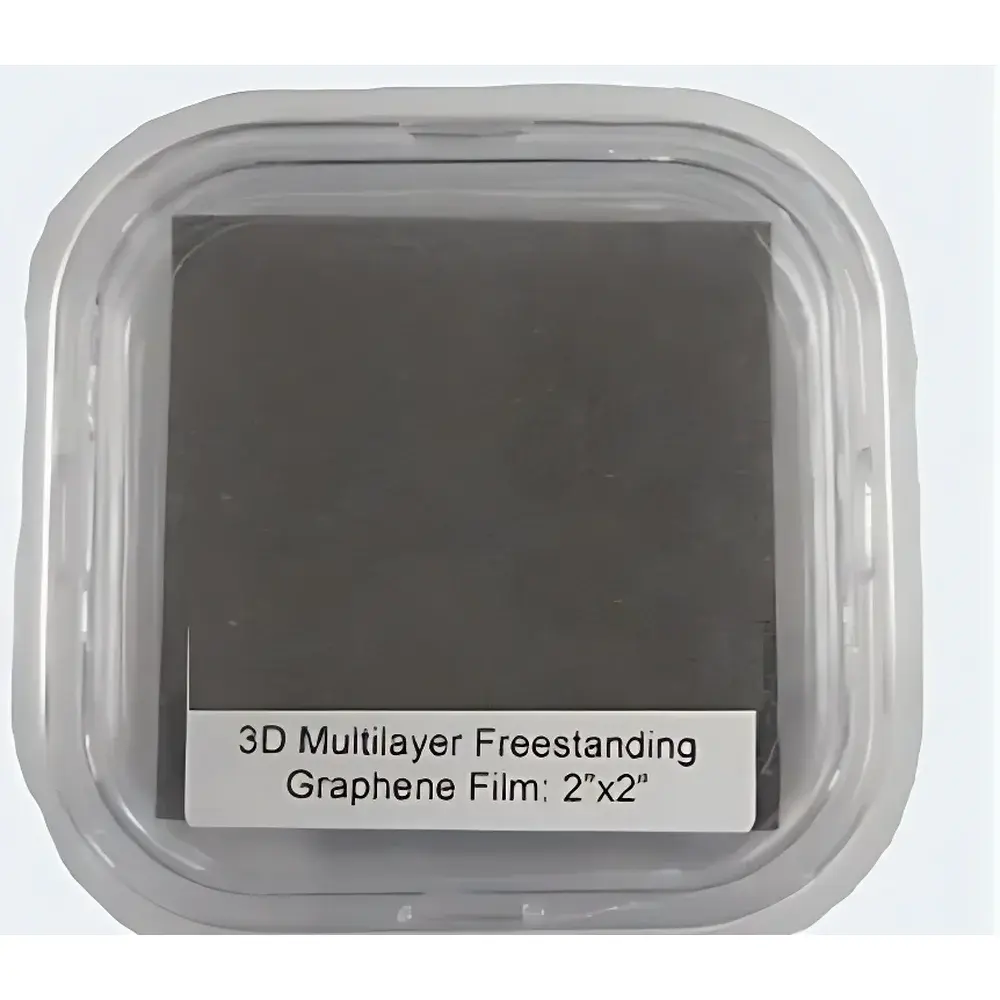
| Dimensions | 50.8 mm × 50.8 mm × 1.2 mm |
| Packaging | Vacuum-sealed in Class 100 cleanroom bags, housed in Class 1000 cleanroom rigid boxes |
Overview
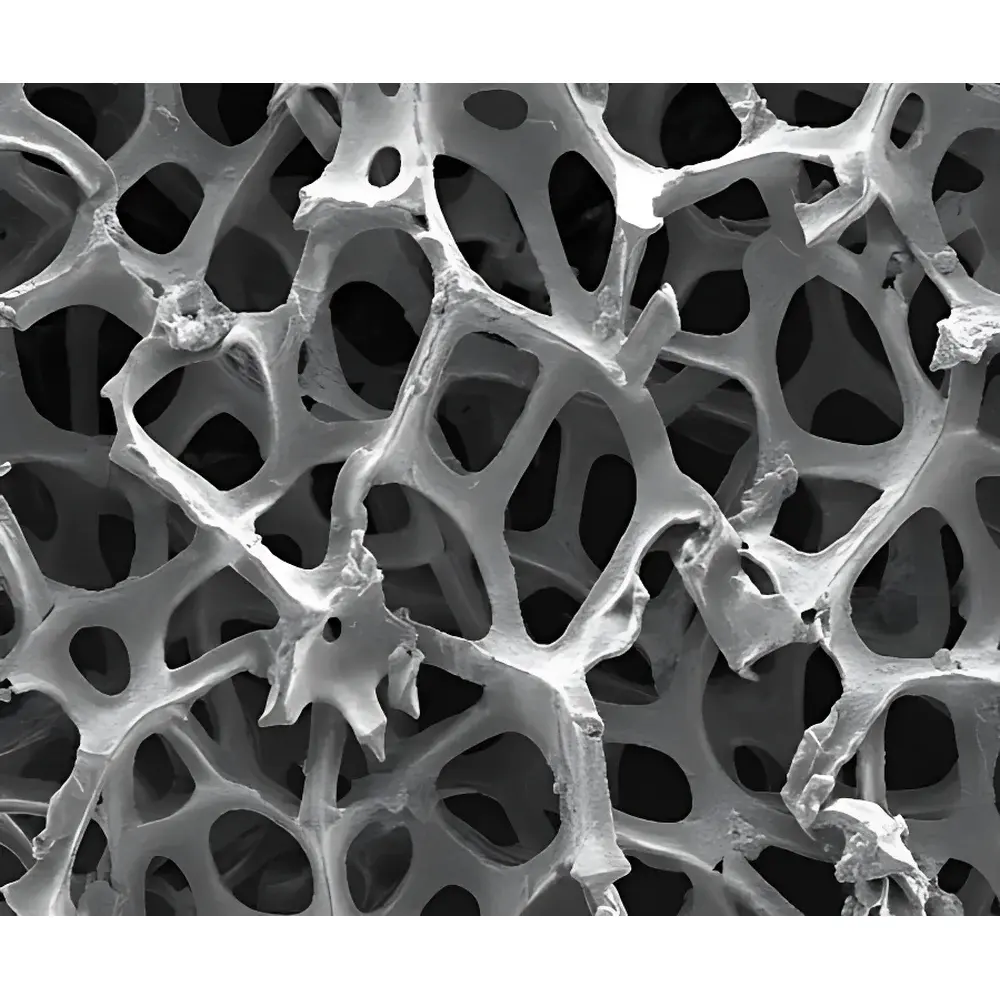
The Graphene Foam Sheet is a freestanding, three-dimensional macroscopic carbon architecture engineered via chemical vapor deposition (CVD) on sacrificial metal templates—subsequently removed to yield a continuous, monolithic, metal-free graphene network. Unlike graphene oxide aerogels or reduced graphene oxide foams, this material retains the sp²-hybridized crystallinity and electronic continuity of CVD-grown graphene across its entire porous scaffold. Its primary function within electrochemical instrumentation—particularly as a transducer substrate for Quartz Crystal Microbalance (QCM) systems—is to provide an ultra-high surface-area, conductive, chemically stable, and mechanically compliant interface. When integrated into QCM-D (Quartz Crystal Microbalance with Dissipation monitoring) or electrochemical QCM platforms, the foam serves as both a functional electrode and a mass-sensitive host matrix, enabling real-time, label-free detection of interfacial phenomena—including adsorption kinetics, polymer film swelling, biomolecular binding, and gas-phase analyte capture—while preserving piezoelectric signal integrity through minimal viscoelastic damping.
Key Features
- Metal-free architecture: Complete removal of Ni or Cu catalyst residues ensures electrochemical inertness and eliminates background Faradaic interference during potentiostatic QCM operation.
- Controlled hierarchical porosity: Uniform 580 µm macropores facilitate rapid mass transport and full electrolyte infiltration—critical for high-fidelity dissipation tracking in liquid-phase QCM-D measurements.
- Ultra-low density (4 mg/cm³): Minimizes parasitic mass loading on the quartz resonator, preserving fundamental resonance frequency stability and enhancing mass sensitivity (Δf resolution < 0.1 Hz achievable).
- High carbon purity (≥99%): Confirmed by XPS and Raman spectroscopy; supports reproducible surface functionalization (e.g., diazonium grafting, EDC/NHS coupling) without carbonaceous impurity masking.
- Dimensional stability under cyclic electrochemical polarization: Maintains structural integrity between −1.0 V and +0.8 V vs. Ag/AgCl over >500 CV cycles—enabling long-term in situ QCM studies under redox-active conditions.
Sample Compatibility & Compliance
The Graphene Foam Sheet is compatible with standard 5–10 MHz AT-cut quartz crystals (diameter: 14 mm) when affixed via conductive silver epoxy or low-viscosity carbon ink. It meets ISO 14644-1 Class 5 (ISO Class 5 / Federal Standard 209E Class 100) cleanliness specifications post-packaging, ensuring compatibility with semiconductor-grade QCM sensor fabrication workflows. While not certified to ASTM E2500 or IEC 61010-1 as a standalone instrument, its material properties align with GLP-compliant sensor development protocols for regulated electrochemical biosensing applications. No USP or FDA device classification applies, as it functions exclusively as a consumable transducer substrate—not an active diagnostic or therapeutic device.
Software & Data Management
This material does not include embedded firmware or proprietary software. However, it is fully interoperable with industry-standard QCM data acquisition platforms—including Q-Sense Analyzer (Biolin Scientific), IC3 (Iowa Thin Film Technologies), and open-source QCM-D control suites built on LabVIEW or Python (e.g., PyQCM). When used with dissipation-enabled systems, raw frequency (Δf) and energy dissipation (ΔD) time-series data are recorded in vendor-native formats (e.g., .qdt, .csv) and support audit-trail generation per FDA 21 CFR Part 11 requirements when deployed within validated laboratory information management systems (LIMS).
Applications
- In situ monitoring of solid-electrolyte interphase (SEI) formation in Li–air battery cathodes via QCM-D during O₂ reduction/evolution cycling.
- Real-time gravimetric quantification of polymer electrolyte membrane (PEM) hydration/dehydration dynamics under variable RH and temperature gradients.
- Label-free kinetic profiling of antibody–antigen binding events on carboxylated foam surfaces, with simultaneous viscoelastic validation via ΔD trends.
- Gas-phase trace analyte sensing (e.g., NO₂, NH₃) using QCM-based microgravimetric response coupled with in situ Raman verification of adsorption configuration.
- Template-assisted electrodeposition of nanomaterials (e.g., Pt, Co₃O₄) within foam struts—followed by QCM mass calibration of deposited catalyst loading.
FAQ
Is this graphene foam electrically conductive?
Yes—the interconnected graphene walls form a percolating network with sheet resistance typically ranging from 120–350 Ω/sq (measured at 50 µm probe spacing), suitable for direct integration into 3-electrode electrochemical QCM cells.
Can the foam be transferred onto quartz crystals without cracking?
Yes—its mechanical compliance (elastic recovery >92% after 60% compressive strain) enables dry transfer via soft PDMS stamping or wet-transfer using PMMA-assisted release, both validated for 14 mm diameter resonators.
Does the 580 µm pore size affect QCM sensitivity to sub-nanogram mass changes?
No—pore size governs transport kinetics, not intrinsic mass sensitivity. The foam’s low density and high surface area amplify measurable Δf response per unit adsorbed mass compared to flat graphene films.
What cleaning protocol is recommended prior to use?
Rinse sequentially with acetone, isopropanol, and deionized water (1 min each, ultrasonication at 40 kHz), followed by N₂ blow-dry and 1 h UV-O₃ treatment—standard for QCM substrate activation.
Is custom sizing available beyond 50.8 mm × 50.8 mm × 1.2 mm?
Yes—custom dimensions (including wafer-scale sheets up to 100 mm × 100 mm) and thicknesses (0.5–5.0 mm) are available under OEM agreements; minimum order quantity applies.





