
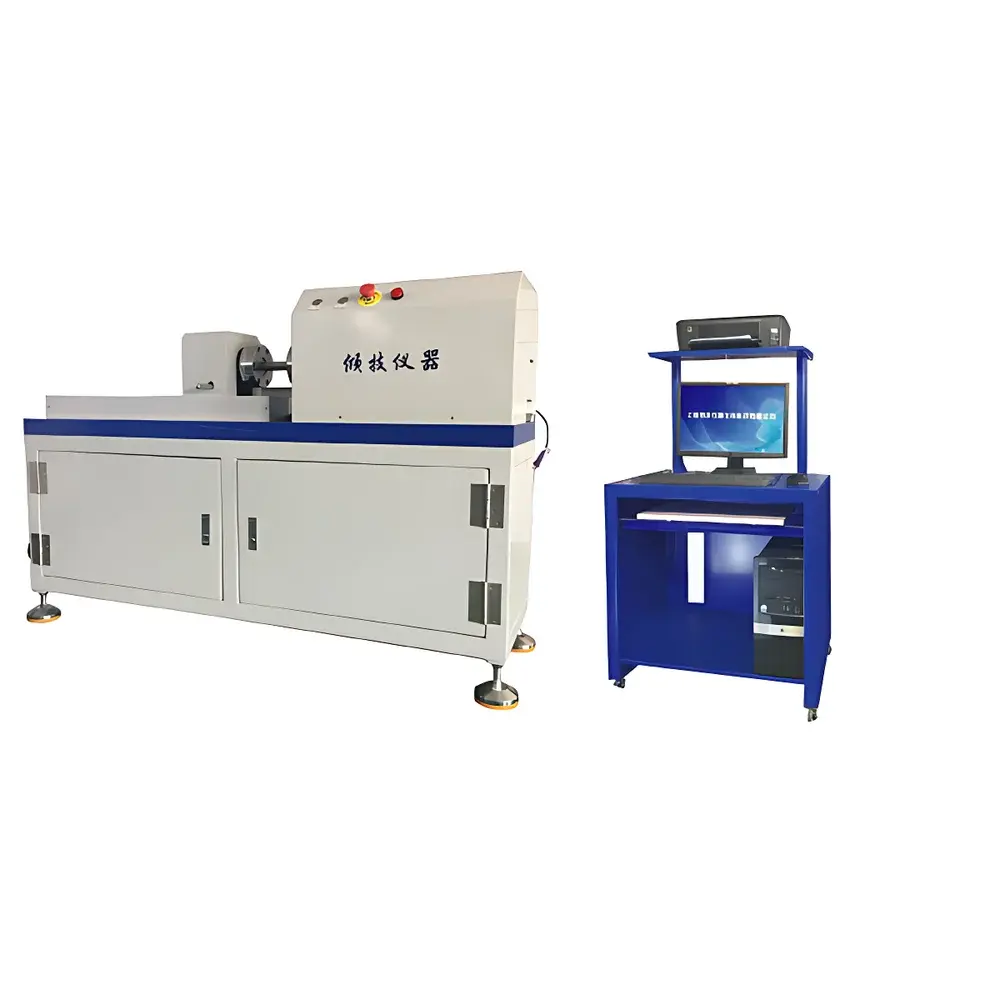
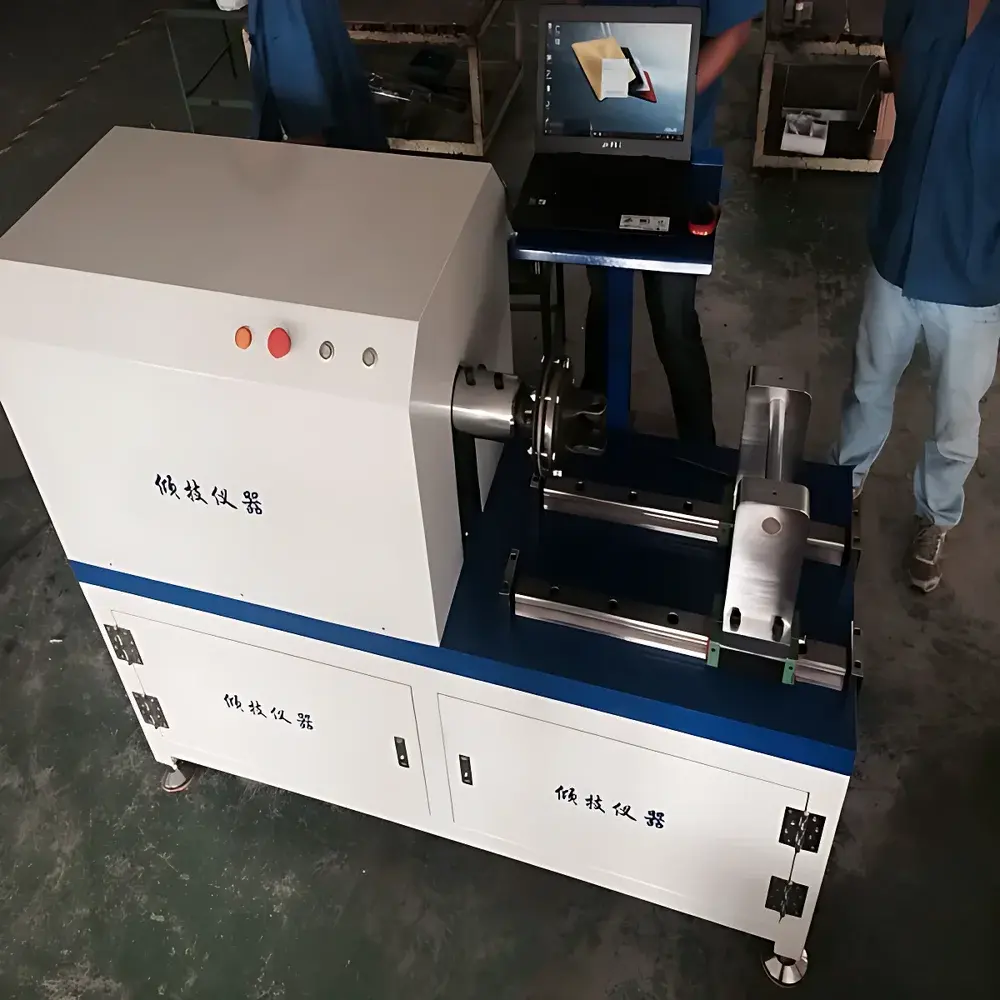
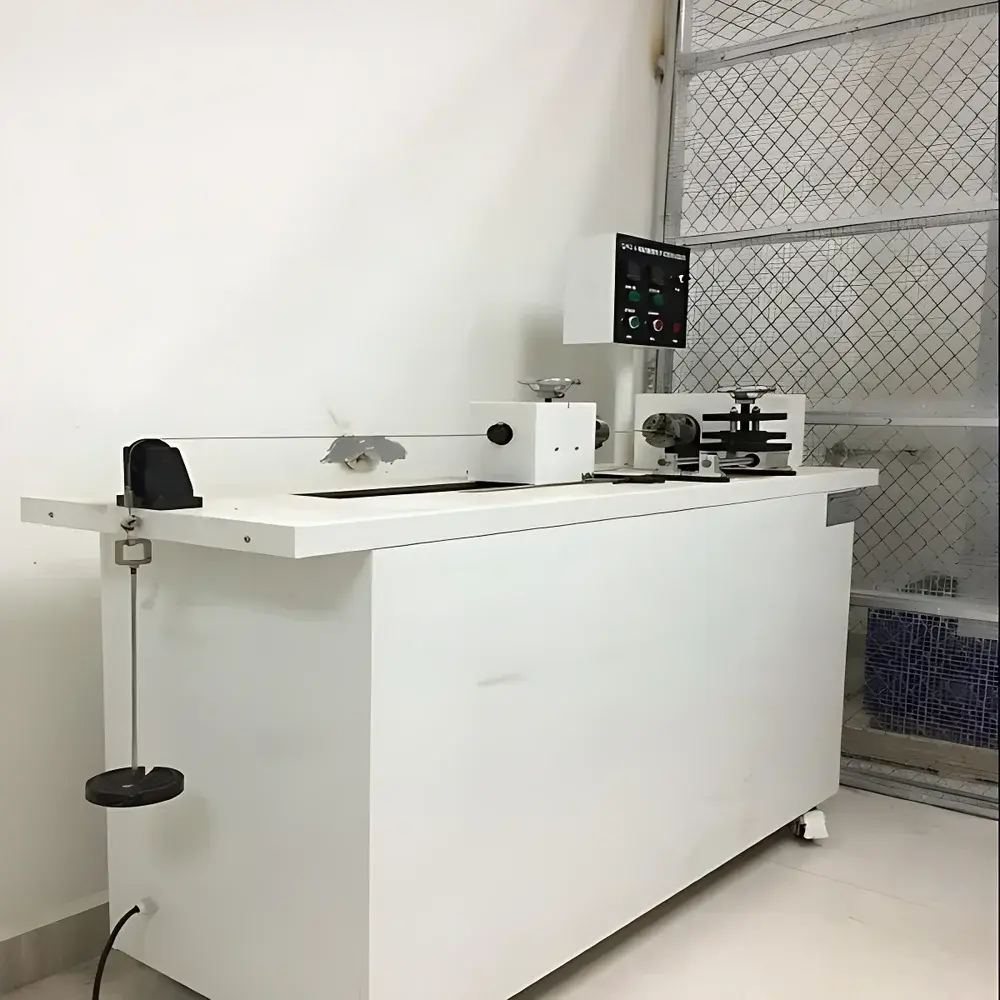
Qinji QJNZ-50 Advanced Electromechanical Torsion Testing Machine
| Brand | Qinji |
|---|---|
| Origin | Shanghai, China |
| Model | QJNZ-50 |
| Max Torque | 10,000 N·m |
| Torque Measurement Range | 50–5,000 N·m |
| Torque Resolution | ±0.001° (angular) |
| Torsion Angle Range | 0 to ±100,000° (4-digit digital display) |
| Motor Power | 5 kW |
| Torque Measurement Accuracy | ±0.5% of reading |
| Torsion Angle Accuracy | ±0.009° |
| Angular Velocity Range | 0.01–1,000 °/min (infinitely variable) |
| Speed Accuracy | ±0.2% of set value |
| Torque Resolution (digital) | 1/350,000 full scale, unsegmented |
| Gauge Length Adjustment | 1,500 mm |
| Specimen Clamping Diameter | Φ8–Φ40 mm (expandable) |
| Overall Dimensions (L×W×H) | 2800 × 4700 × 1250 mm |
| Weight | 1,500 kg |
Overview
The Qinji QJNZ-50 Advanced Electromechanical Torsion Testing Machine is a high-precision, microprocessor-controlled system engineered for static and quasi-static torsional characterization of metallic and non-metallic materials, structural components, and mechanical assemblies. It operates on the principle of controlled angular displacement under applied torque, enabling direct measurement of torsional stiffness, yield torque, ultimate torsional strength, plastic deformation behavior, and torsional fatigue initiation thresholds. The machine complies with internationally recognized standards including GB/T 9370–1999 (Methods for Determination of Torsional Properties of Metallic Materials), GB/T 239–1999 (Torsion Testing of Metallic Wires), and JJG 269–1981 (Verification Regulation for Torque Measuring Instruments), ensuring metrological traceability and test result comparability across laboratories and quality control environments.
Key Features
- High-capacity electromechanical actuation system delivering up to 10,000 N·m nominal torque with continuous 5 kW servo motor drive and precision planetary gearbox
- Unsegmented torque resolution of 1 part in 350,000 over the full 50–5,000 N·m operational range, eliminating range-switching artifacts and ensuring consistent fidelity across low- and high-torque regimes
- Dual-axis high-resolution encoder system providing torsion angle measurement with ±0.001° angular resolution and ±0.009° absolute accuracy over ±100,000° total travel
- Infinitely variable angular velocity control from 0.01 to 1,000 °/min, with speed stability maintained within ±0.2% of setpoint
- Adjustable gauge length of 1,500 mm and modular chuck system accommodating specimens from Φ8 mm to Φ40 mm (customizable for larger diameters)
- Rigid welded steel frame with vibration-damped foundation mounting, designed to minimize parasitic bending moments and ensure pure torsional loading
- Integrated safety interlocks, emergency stop circuitry, and overload protection compliant with IEC 61800-5-2 functional safety requirements
Sample Compatibility & Compliance
The QJNZ-50 accommodates solid cylindrical rods, hollow tubes, fasteners, drive shafts, springs, and composite laminates—provided geometric symmetry and uniform cross-section are maintained within the clamping zone. Its mechanical architecture supports both free-end and fixed-end boundary conditions via optional fixtures. All measurement subsystems are calibrated against national metrological standards traceable to CNAS-accredited reference laboratories. Test protocols align with ISO 7800 (Metallic materials — Torsion testing), ASTM E143 (Standard Test Method for Shear Modulus at Room Temperature), and USP (Mechanical Testing of Pharmaceutical Packaging Components) where applicable. Data acquisition meets GLP audit requirements with timestamped raw data logging and configurable user-access levels.
Software & Data Management
The system employs a Windows-based virtual instrumentation platform built on LabVIEW RT architecture. It provides real-time closed-loop control, synchronized multi-channel acquisition (torque, angle, time, temperature if equipped), and automated calculation of shear modulus (G), non-proportional torque limit (Tp), torsional yield strength, and angle-at-break. Reports conform to ISO/IEC 17025 documentation templates and support PDF export with embedded metadata (operator ID, calibration certificate IDs, environmental conditions). Audit trail functionality satisfies FDA 21 CFR Part 11 requirements—including electronic signatures, change history, and immutable record retention—for regulated industries such as aerospace component validation and medical device R&D.
Applications
- Determination of torsional elastic modulus (G) and plastic flow behavior in aluminum alloys, stainless steels, titanium grades, and polymer composites
- Validation of torque-tension relationships in bolted joint assemblies per ISO 16047
- Characterization of torsional fatigue life in automotive driveline components (half-shafts, CV joints, steering columns)
- Quality conformance testing of threaded fasteners, torsion springs, and orthopedic implant stems
- Research into shear-induced phase transitions in shape-memory alloys and viscoelastic biomaterials
- Calibration verification of industrial torque transducers and wrenches per ISO 6789-2
FAQ
What standards does the QJNZ-50 comply with for torque calibration and test methodology?
It conforms to GB/T 9370–1999, GB/T 239–1999, JJG 269–1981, ISO 7800, and ASTM E143; calibration certificates are issued with uncertainty budgets referenced to national torque standards.
Can the system be integrated into an existing LIMS or MES environment?
Yes—via OPC UA or TCP/IP protocol support, enabling bidirectional data exchange with laboratory information management systems and enterprise manufacturing execution platforms.
Is remote diagnostics and firmware update capability supported?
The embedded controller supports secure SSH access and over-the-air firmware updates through authenticated corporate network channels, minimizing onsite service intervention.
What is the warranty coverage and long-term service support model?
Standard warranty covers parts and labor for 12 months; extended service agreements include annual metrological recalibration, preventive maintenance, and priority response SLAs for critical production environments.
Are custom fixtures or environmental chambers available as accessories?
Yes—Qinji offers application-specific chucks (e.g., spline, hex, flange), elevated-temperature torsion stages (up to 300°C), and cryogenic cooling modules (-70°C), all mechanically and thermally decoupled from the main frame to preserve measurement integrity.



